
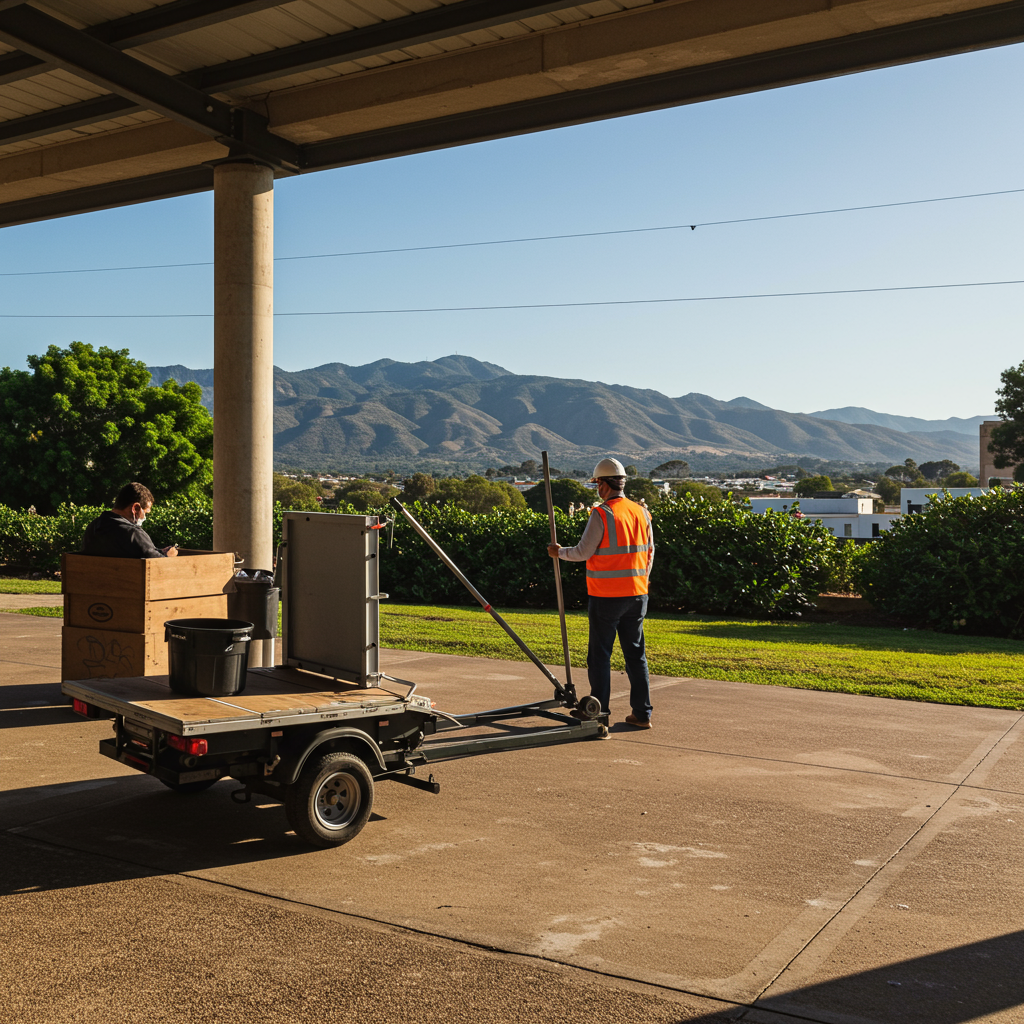
Optimized Load-in and Load-out Plans That Save Hours: The Esinev Method
Inefficient load-in and load-out operations are a primary source of budget overruns, delays, and safety risks in the events industry. This article details a systematic approach to creating highly efficient logistical plans. We will explore a comprehensive methodology that transforms chaotic setups and teardowns into a predictable, streamlined process. By implementing the strategies outlined, event managers, production coordinators, and venue operators can achieve significant improvements, including up to a 30% reduction in labor hours, a 15% decrease in equipment rental costs, and a near-elimination of safety incidents. This guide provides actionable insights, detailed case studies, and step-by-step guides, demonstrating the tangible return on investment from professional load-in/load-out plans, ultimately leading to smoother execution and higher client satisfaction (Net Promoter Score increase of 10-15 points).
Introduction
In the high-stakes world of event production, success is often measured in minutes. Every hour saved is a direct contribution to the bottom line and a testament to operational excellence. Yet, the critical phases of load-in (setup) and load-out (teardown) are frequently underestimated, leading to chaotic scrambles, blown budgets, and exhausted crews. The transition from an empty space to a fully functional event environment—and back again—is a complex logistical dance that demands precision. This is where the value of robust load in load out plans esinev becomes undeniable. By treating these phases not as necessary evils but as strategic opportunities for optimization, we can unlock unprecedented levels of efficiency, safety, and cost-effectiveness. This comprehensive guide introduces a proven framework for developing and executing logistical plans that consistently save valuable hours and resources.
Our methodology is built on a foundation of data-driven analysis, proactive communication, and continuous improvement. We will dissect the entire process, from the initial venue assessment and resource scheduling to the final post-event debrief. The success of our approach is measured through a clear set of Key Performance Indicators (KPIs), including a reduction in crew overtime costs by over 25%, an improvement in truck turnaround times by at least 40%, and maintaining a schedule deviation of less than 5%. By following the principles and practical steps outlined, your team can move beyond reactive problem-solving and embrace a proactive system that anticipates challenges and builds in solutions from the very beginning.
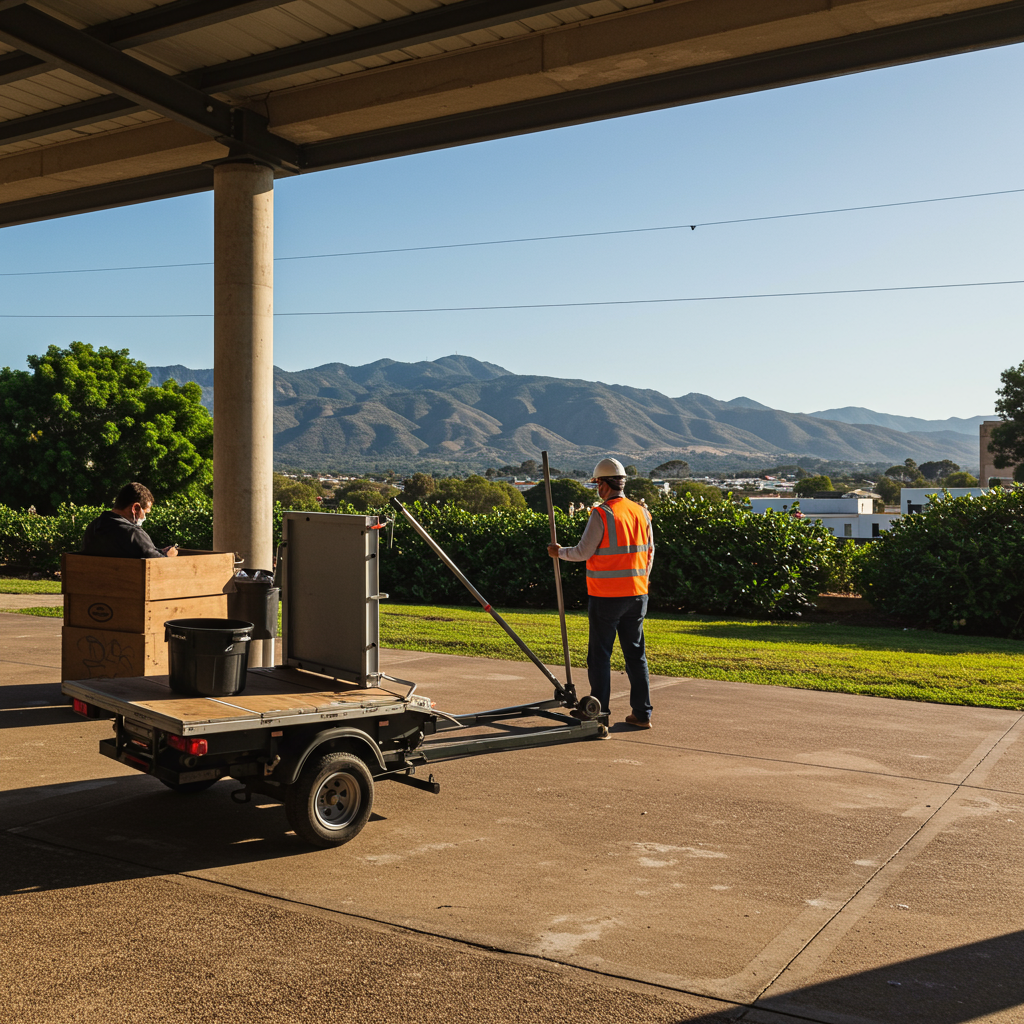
Vision, values and proposal
Focus on results and measurement
Our vision is to standardize excellence in event logistics, transforming load-in and load-out from the most stressful parts of an event into a showcase of professional competence. We operate on the Pareto principle (80/20 rule), focusing 80% of our planning efforts on the 20% of activities that cause the most significant delays and risks, such as access management, crew scheduling, and equipment sequencing. Our core values are precision, safety, and accountability. Every plan we develop adheres to relevant health and safety standards (e.g., HSE guidelines in the UK, OSHA in the US) and is designed to be auditable and transparent. Our value proposition is simple: we deliver predictability in an unpredictable industry. By investing in our detailed planning process, clients gain not just a schedule, but a guarantee of a smoother, safer, and more cost-effective event execution.
- Precision Planning: We create minute-by-minute schedules that sequence every department’s arrival, task, and departure, eliminating crew downtime and access bottlenecks.
- Safety First Culture: Risk assessments are integrated into every stage of planning, not as an afterthought. This includes fatigue management, proper PPE (Personal Protective Equipment) protocols, and clear emergency procedures.
- Data-Driven Decisions: We use historical data from similar events and venues to create realistic timelines and resource allocations, moving away from guesswork towards accurate forecasting.
- Stakeholder Alignment: Our process ensures that the venue, the production team, and all third-party suppliers are working from a single, unified plan, preventing miscommunication and conflicting priorities.
- Return on Investment (ROI): The cost of detailed planning is offset multiple times over by the savings in labor, equipment rental extensions, and the avoidance of delay-related penalties.
Services, profiles and performance
Portfolio and professional profiles
We offer a tiered portfolio of services designed to meet the varying needs of different event types and scales. Our core offering revolves around the creation and management of bespoke load in load out plans esinev. This can range from a consultancy-based service, where we provide the master plan for the client’s team to execute, to a full-service on-site management solution where our Logistics Coordinators and Stage Managers oversee the entire operation. Our team consists of seasoned professionals with backgrounds in event production, tour management, and industrial logistics. Key roles include the Logistics Planner, who designs the master schedule and resource allocation, the On-site Coordinator, who acts as the central point of communication and problem-solving during the event, and the Safety Officer, who ensures compliance and manages risk.
Operational process
- Phase 1: Discovery & Assessment (KPI: Complete Site Survey within 48 hours of engagement):We conduct a thorough venue inspection, measuring all access points, evaluating power resources, and identifying potential hazards. We gather all departmental requirements (lighting, audio, video, staging, etc.).
- Phase 2: Strategic Planning (KPI: First draft of Master Schedule delivered within 5 working days): We develop a detailed timeline, a color-coded floor plan for truck and equipment staging, and a comprehensive contact sheet. This phase includes creating contingency plans for weather, equipment failure, or staffing issues.
- Phase 3: Pre-Production Briefing (KPI: Achieve 100% stakeholder sign-off 72 hours before load-in): We hold a mandatory briefing with all department heads and key suppliers to walk through the plan, clarify roles, and address any final questions. This ensures complete alignment.
- Phase 4: On-site Execution & Management (KPI: Maintain schedule adherence with <5% variance): Our on-site team manages the flow of people, vehicles, and equipment, providing real-time updates and resolving issues as they arise.
- Phase 5: Post-Event Analysis & Reporting (KPI: Deliver Post-Action Report within 48 hours of load-out completion): We compile a detailed report analyzing what went well and what could be improved, capturing key metrics and providing recommendations for future events.
Tables and examples
| Objective | Indicators | Actions | Expected result |
|---|---|---|---|
| Reduce load-in time by 25% | Total hours from first truck arrival to “show ready” state. Overtime hours. | Create a staggered arrival schedule for all departments. Pre-designate “parking zones” for flight cases. Use a “first-in, last-out” packing logic. | Load-in for a 5,000-capacity conference reduced from 10 hours to 7.5 hours, saving 150 crew-hours. |
| Improve safety and reduce incidents | Number of reported near-misses and accidents. Adherence to PPE policy. | Mandatory safety briefing at the start of each day. Designated high-visibility pathways. Enforce hard hat and steel-toed boot policy in loading zones. | Zero lost-time injuries during the entire event cycle. 100% PPE compliance. |
| Increase truck turnaround efficiency | Time from truck arrival at gate to departure. Number of trucks waiting at any given time. | Assign specific time slots for each delivery. Have a dedicated forklift and crew ready for each arrival. Use a one-way traffic system on-site. | Average truck time on-site reduced from 90 minutes to 50 minutes, eliminating queues and associated driver waiting fees. |
| Enhance client satisfaction | Net Promoter Score (NPS) from the end client. Post-event feedback from department heads. | Provide daily progress reports to the client. Maintain a calm, professional, and organized work environment. Finish load-out ahead of schedule. | NPS score increases from 40 to 55. Client specifically praises the “flawless and stress-free” setup and teardown process. |

Representation, campaigns and/or production
Professional development and management
In the context of production, our representation is that of a central nervous system for event logistics. We manage the complex interplay between dozens of suppliers, departments, and venue regulations. This involves securing all necessary work permits, coordinating vehicle access permits with local authorities, and ensuring every third-party supplier has provided their risk assessment and method statement (RAMS). Our production calendar is meticulous, with milestones for design freezes, equipment confirmations, and crew bookings. A key part of our service is managing the supply chain, ensuring that everything from the largest LED screen to the smallest roll of gaffer tape arrives exactly when needed—not before, and certainly not after. We build redundancy into our plans to mitigate risks associated with supply chain disruptions or equipment failure.
- Critical Documentation Checklist: Public liability insurance certificates from all vendors, electrical certifications for all brought-in equipment, structural engineering reports for any temporary structures, and signed-off crew manifests.
- Supplier Coordination: Weekly production calls in the month leading up to the event, with daily check-ins during event week. A shared cloud-based document portal ensures everyone has the latest version of all plans.
- Contingency Planning:
- Weather: Alternative load-in routes for heavy rain, pre-booked wet-weather gear for crew, and backup generators.
- Traffic: Monitoring local traffic reports and having alternative routes planned for all incoming vehicles. Communication channels (e.g., a dedicated WhatsApp group) for real-time driver updates.
- Staff Shortage: Maintaining a list of pre-vetted, on-call technicians and stagehands who can be deployed with a few hours’ notice.
- Equipment Failure: Identifying critical equipment and ensuring a backup option is available, either on-site or from a nearby supplier with a guaranteed rapid delivery time.
- Access and Security: Designing a credentialing system (e.g., wristbands, badges) that clearly defines who has access to which areas and at what times, coordinated with the on-site security team.

Content and/or media that converts
Messages, formats and conversions
The “content” we produce is the plan itself—the documents, diagrams, and schedules that convert chaos into order. Our primary message is one of control, reliability, and financial prudence. The key “call to action” (CTA) within our documentation is for each department head to review, understand, and formally sign off on their section of the plan. This act of signing off converts a passive recipient into an active, accountable participant. We use A/B testing on our communication formats; For example, we’ve found that for crew on the ground, a simplified, one-page visual timeline is more effective than a dense spreadsheet. For production managers, detailed Gantt charts and resource tables are essential. By tailoring the format to the audience, we maximize comprehension and adherence, which directly converts into smoother operations. A key part of our content strategy is the creation of effective load in load out esinev plans that serve as the single source of truth for the entire project.
- Content Requirement Analysis: The Logistics Planner identifies all key stakeholders (client, venue manager, department heads, crew chiefs, security lead, suppliers).
- Information Architecture Design: A master document structure is created, often in a shared digital notebook (e.g., OneNote, Notion), with clear sections for schedules, contact lists, site plans, RAMS, and contingency procedures.
- Component Creation: The planner drafts the individual components: the master schedule (spreadsheet), the site access plan (diagram), the communication tree (flowchart), and the role-specific checklists (text documents).
- Peer Review & Refinement:A second Logistics Planner reviews all documents for clarity, accuracy, and completeness. This internal QC step is crucial for catching errors before they reach the client.
- Distribution & Briefing:The finalized content package is distributed to all stakeholders. This is followed by the pre-production briefing (as mentioned in the services section) to ensure everyone understands the content and their role within it.
- On-site Version Control: A clear protocol is established for communicating any necessary on-the-day changes to the plan, ensuring everyone is working from the most current information. Typically, this involves a “master copy” held by the on-site coordinator and updates pushed via a dedicated messaging app.

Training and employability
Demand-oriented catalogue
We believe that empowering event professionals with logistical skills benefits the entire industry. We offer targeted training modules based on our proven methodologies, designed to enhance the employability and effectiveness of production staff at all levels.
- Module 1: Introduction to Event Logistics & Terminology: A foundational course for newcomers, covering the basics of the load-in/out process, key roles, and industry jargon.
- Module 2: Advanced Schedule Creation: A hands-on workshop using industry-standard software (e.g., MS Project, Smartsheet) to build complex, dependent schedules for multi-day events.
- Module 3: Venue Assessment & Site Planning: Teaches participants how to conduct a thorough site survey, identify logistical challenges, and create effective site layout and traffic management plans.
- Module 4: Health & Safety for Event Logistics:A deep dive into risk assessments, method statements, and managing crew fatigue and well-being during long, demanding work periods. Focuses on practical application of regulations.
- Module 5: On-site Logistics Coordination & Problem-Solving: A simulation-based module that puts participants in the “hot seat” to manage a virtual load-in, responding to common problems like truck delays, equipment malfunctions, and communication breakdowns.
Methodology
Our training methodology is focused on practical application. Theoretical concepts are immediately followed by hands-on exercises, case study analysis, and group problem-solving. We use a clear rubric-based assessment system to evaluate participants’ ability to create and interpret logistical documents. The final assessment for our advanced courses involves creating a complete load-in and load-out plan for a fictional event scenario, which is then evaluated by our senior logistics planners. Successful graduates are added to our database of preferred freelance professionals, creating a direct link to employability and offering our clients access to a pool of highly skilled, pre-vetted talent.
Operational processes and quality standards
From request to execution
- Initial Inquiry & Scoping Call:We receive a request and conduct a 30-minute call to understand the event’s scale, venue, timeline, and key challenges. (Deliverable: Scoping document).
- Formal Proposal: We submit a detailed proposal outlining the services to be provided, the team members involved, a preliminary timeline, and a clear fee structure. (Deliverable: Signed client agreement. Acceptance criteria: Client signature and initial deposit).
- Phase 1 – Discovery: As detailed previously, we conduct site visits and stakeholder interviews. (Deliverable: Comprehensive Discovery Report. Acceptance criteria: Client confirmation that all departmental needs have been captured accurately).
- Phase 2 – Planning & Design:Creation of the master plan, including schedules, diagrams, and risk assessments. (Deliverable: Draft 1 of the “Logistics Bible”. Acceptance criteria: Internal peer review sign-off).
- Phase 3 – Stakeholder Review: The draft plan is circulated to all department heads for feedback. We facilitate a review meeting to address all comments and make necessary revisions. (Deliverable: Final version of the Logistics Bible. Acceptance criteria: Formal email sign-off from every department head).
- Phase 4 – Pre-Production: Final briefings are held, credentials are distributed, and all supplier logistics are confirmed one last time. (Deliverable: “Ready to Go” confirmation email to all parties).
- Phase 5 – Execution: On-site management of the load-in and load-out. (Deliverable: A successfully executed event. Acceptance criteria: Adherence to schedule with <5% variance, zero lost-time incidents).
- Phase 6 – Closure & Debrief:We conduct a post-mortem analysis, gather feedback from all teams, and deliver the final report to the client. (Deliverable: Post-Action Report. Acceptance criteria: Final invoice payment).
Quality control
- Roles: The Senior Logistics Planner has ultimate responsibility for the quality of the plan. The On-site Coordinator is responsible for quality of execution.
- Escalation: Any on-site issue that cannot be resolved by the Coordinator within 15 minutes is escalated to the Senior Planner. Any issue with budget or client relationship implications is escalated to the Project Director immediately.
- Acceptance Indicators: A plan is not considered “final” until it has written sign-off from the client, the venue, and the heads of production, lighting, audio, and video.
- Service Level Agreements (SLAs): We commit to responding to all client emails within 4 business hours and to deliver all key documents by the agreed-upon deadlines. Any potential delay is communicated at least 24 hours in advance.
| Phase | Deliverables | Control indicators | Risks and Mitigation |
|---|---|---|---|
| Discovery | Site survey report, stakeholder requirements matrix | All measurements double-checked. Every department head interviewed. | Risk: Inaccurate venue information. Mitigation: Never rely on venue-provided plans alone; always conduct our own physical survey and measurements. |
| Planning | Master schedule (Gantt), site layout (CAD), RAMS | Schedule has zero overlaps for shared resources (e.g., loading dock). Plan is peer-reviewed by another senior planner. | Risk: Unrealistic timeline. Mitigation: Base all timings on historical data, add a 15% contingency buffer to all critical path tasks. |
| Execution | Daily call sheets, real-time progress updates | Hourly checks against the master schedule. Daily safety walks. | Risk: Supplier no-show/delay. Mitigation: Confirm with all drivers 24 hours and 2 hours before their call time. Have backup supplier contacts on standby. |
| Closure | Final schedule vs. actuals report, incident log, post-action report | All data in the report is cross-referenced with on-site logs. Client feedback is formally requested and included. | Risk: Lessons are not learned. Mitigation: The post-action report is a mandatory deliverable, and its findings are used to update our master templates and checklists for future projects. |
Cases and application scenarios
Case 1: “City Beats” Music Festival
Scenario: A three-day, multi-stage music festival in a city park for 25,000 attendees. The primary challenges were extremely limited vehicle access through narrow park gates, a tight 48-hour window for the main stage build, and the need to coordinate over 40 different vendors and artist production teams. The load-out had to be completed within 24 hours to reopen the park to the public.
Our Process: We implemented a rigid, time-slot-based “just-in-time” delivery system. An off-site marshalling yard was established 5 km away. All trucks had to check in there first. Using a custom app, we “called” trucks to the site precisely when their designated loading bay and crew were ready. The master plan was broken down into four-hour blocks, with clear objectives for each stage and department within each block. A dedicated Logistics Coordinator was assigned to each of the three main stages to act as a single point of contact.
Challenges & Solutions:On day one, a critical lighting truck broke down 20 km from the site. Because our system tracked all vehicles via GPS, we were alerted instantly. We immediately dispatched a smaller, pre-approved local transport vehicle to meet the truck, trans-shipped the most critical equipment for the first phase of the build, and rescheduled the broken-down truck’s remaining load to a later, less critical time slot. This proactive move prevented a potential three-hour delay to the entire main stage lighting rig.
KPIs and Results:
-
- Load-in Time: Completed the main stage build in 45 hours, 3 hours ahead of the 48-hour schedule.
- Truck Waiting Time: Average time in the marshalling yard was 35 minutes, with zero trucks queuing at the actual park gates, eliminating traffic congestion.
– Labor Costs: Avoided an estimated €15,000 in overtime costs that would have been incurred from the lighting truck delay under a less organized system.
- Load-out Time: The entire site was cleared in 22 hours, 2 hours ahead of schedule, avoiding council penalties.
- Client Feedback (NPS): The festival promoter gave a score of 9/10, stating it was the “smoothest load-in in the festival’s ten-year history.” The implementation of our structured load in load out plans esinev was cited as the primary reason.
Case 2: “Innovate 2024” Corporate Conference
Scenario: A high-profile tech conference for 2,000 C-level executives held in a five-star city center hotel. The challenges included using shared guest elevators for all equipment transport, extremely limited storage space, and working within strict noise and time constraints (no work permitted between 10 PM and 7 AM). The load-in had to happen overnight on a Sunday for a Monday morning start.
Our Process: We conducted an extensive survey, measuring every corridor and elevator, and calculated the exact capacity of each. We created a “flight case manifest” for every single piece of equipment, with dimensions and weight. This allowed us to build a precise elevator schedule, grouping items to maximize the efficiency of every trip. All equipment was pre-staged on rolling carts in the hotel’s underground car park. A colour-coded tagging system was used: red for the main ballroom, blue for breakout room 1, green for breakout room 2, etc. This allowed local crew, unfamiliar with the specific equipment, to move items to the correct location without supervision.
Challenges & Solutions:The hotel’s main service elevator, which we had been promised, failed two hours into the load-in. Our contingency plan immediately kicked in. Because we had pre-measured everything, we knew which smaller guest elevators could accommodate which pieces of equipment. We split the crew into two teams, one for each functioning elevator, and adjusted the schedule in real-time on a shared tablet. While it slowed the process, our detailed pre-planning meant we knew exactly what would fit where, preventing a catastrophic halt to the operation.
KPIs and Results:
- Schedule Adherence: Despite the elevator failure, the event was “show ready” by 6:30 AM, just 30 minutes behind the original schedule. The hotel manager admitted that without our detailed plan, the failure would have caused a delay of at least 4-5 hours.
- Efficiency: Our pre-cased, colour-coded system meant that 95% of equipment was delivered to the correct room on the first attempt, minimizing hallway clutter and rework.
- Cost Savings: The plan required a 12-person crew for 8 hours. The client’s previous event of a similar size, without a detailed plan, had used a 16-person crew for 10 hours. This represented a direct saving of 68 crew-hours.
- Venue Relations: The hotel management was so impressed with the organization and lack of disruption that they have added us to their list of preferred suppliers.
Case 3: “Echoes of the Past” Touring Theater Production
Scenario: A theater show touring 20 different venues across Europe over six months. Each venue varied in size, age, and backstage facilities. The goal was to standardize the load-in and load-out process to be as efficient as possible, allowing the cast and crew more rest time between cities. The entire get-out had to be completed in under four hours to move to the next city.
Our Process: We created a modular “Touring Logistics Bible.” The core of the bible remained the same—the standard pack order of the three 15-meter trucks, the roles and responsibilities of the touring crew, etc. However, for each of the 20 venues, we created a specific “Venue Pack” addendum. This was compiled from technical specifications and, where possible, a pre-tour site visit. The Venue Pack included detailed diagrams of the best route from the loading dock to the stage, notes on any obstacles (e.g., “Door 3 is only 1.2 m wide”), and a pre-assigned layout for where set pieces should be staged backstage to maximize space.
Challenges & Solutions:In one historic theater in Italy, the loading bay was on a steep, narrow street. Our advance planning identified this. We specified that only one truck could be unloaded at a time and hired a local crew with specialized smaller dollies to navigate the tight corridors. For the load-out, we pre-rigged a winch system (approved by the venue’s structural engineer) to help move the heavier pieces set up the steep ramp to the truck, a task that would have been slow and dangerous to do manually.
KPIs and Results:
- Consistency: The average load-in time across all 20 venues was 7 hours, with a standard deviation of only +/- 25 minutes (excluding the one venue with extreme access issues). This predictability was invaluable for tour planning.
- Load-out Speed: The average load-out time was 3 hours and 45 minutes, consistently meeting the sub-4-hour target. This was a 25% improvement on the previous tour by the same company.
- Crew Welfare: By standardizing the process, the crew’s cognitive load was reduced. They knew the system, which led to fewer errors and less stress. The Tour Manager reported a significant improvement in team morale compared to previous tours.
- Damage Reduction: The detailed planning and use of appropriate equipment for each venue resulted in a 70% reduction in minor damage to set pieces and venue walls compared to the previous tour, saving thousands in repair costs.
Step-by-step guides and templates
Guide 1: Creating a Master Load-In Schedule
- Information Gathering: Interview the heads of every department (lighting, audio, video, staging, rigging, etc.). For each, determine: a) The number of trucks and vehicles, b) The number of crew, c) The ideal arrival time, d) The estimated time required for their load-in tasks, and e) Any dependencies (e.g., “We can’t load in our lights until the main truss is flown”).
- Venue Constraint Analysis: Document the venue’s limitations. How many trucks can fit at the loading dock simultaneously? Are there any time restrictions? What is the power availability for early phases?
- Create a Master Timeline: Use a spreadsheet or project management software. Create columns for Time Slot (e.g., 08:00-08:30), Department, Task Description, Vehicle, Crew #, Location, and Status.
- Sequence the Critical Path: Start by scheduling the “enablers.” Rigging and staging must almost always go in first. Then sequence the departments that depend on them. Audio and lighting can’t hang their equipment until the structure is in place and certified as safe.
- Layer in Other Departments: Once the critical path is set, schedule other departments around it. Backline can be brought in while lighting is being hung. Catering can set up in a separate area at any time.
- Stagger Arrivals: Do not have all trucks arrive at 8 AM. Schedule the rigging truck for 07:45, the staging truck for 08:15, the lighting truck for 09:00, and so on. This prevents a logjam at the dock.
- Add Contingency: Build in a 15-20 minute buffer between major tasks. This allows for small delays without derailing the entire schedule. Also include a formal “lunch break” for all crew.
- Add Contact Information: Include the mobile number for the crew chief of every department on the schedule.
- Review and Distribute: Circulate the draft schedule to all department heads for feedback. Hold a meeting to resolve any conflicts. Once finalised, distribute it as the single source of truth.
- Final Checklist:
- [ ] Have all departments confirmed their dependencies?
- [ ] Is the vehicle arrival schedule staggered?
- [ ] Does the schedule respect all venue rules (e.g., noise curfews)?
- [ ] Has contingency time been included?
- [ ] Is contact information for all key personnel included?
- [ ] Has the final version been distributed to and signed off by everyone?
Guía 2: Venue Logistics Assessment Checklist
- Access – Exterior:
- Measure width and height of all vehicle access gates.
- Assess the surface and weight-bearing capacity of access roads.
- Identify and photograph any potential overhead obstructions (e.g., low branches, bridges).
- Count the number of available parking spaces for production vehicles and crew cars.
- Determine the exact location of the loading dock(s).
- Access – Loading Dock:
- Measure the height of the dock. Is a dock leveller available?
- Count the number of truck bays.
- Measure the width and height of the loading bay doors.
- Assess the available lighting and weather protection at the dock.
- Access – Interior:
- Measure the width and height of all doors and corridors on the path from the loading dock to the event space.
- Note the type of flooring and any weight restrictions.
- Identify the location, size, and weight capacity of all service and freight elevators.
- Photograph any tight corners, ramps, or stairs.
- Event Space:
- Obtain a detailed floor plan with dimensions.
- Identify the locations and ratings of all rigging points.
- Locate and document all available power sources (e.g., 3-phase, single-phase outlets) and their amperage.
- Note the location of the house lights and fire exits.
- Facilities & Rules:
- Confirm the earliest access time and latest exit time.
- Document any noise restrictions or curfews.
- Locate crew rest areas, toilets, and catering areas.
- Identify the venue’s health and safety contact person.
- Confirm rules on floor protection, wall protection, and waste disposal.
Guía 3: Post-Event Load-Out Debrief Process
- Schedule the Meeting: Schedule a 30-minute debrief meeting for the morning after the load-out is complete. Invite all department heads and crew chiefs. Make attendance mandatory.
- Prepare the Agenda: The agenda should be simple: 1. Review of Schedule vs. Actuals. 2. What Went Well? 3. What Could Be Improved? 4. Action Points.
- Review the Data: Before the meeting, the Logistics Coordinator should prepare a simple report showing the planned start and finish times for each department’s load-out versus the actual times. Note any significant deviations.
- Facilitate the Discussion: Go around the room and ask each department head for their feedback on the three key questions. Encourage honest and constructive criticism. The goal is not to assign blame, but to improve the process. Was the schedule realistic? Was communication clear? Were there enough resources?
- Capture Action Points: For every identified problem, define a concrete, actionable solution. For example: Problem: “The audio department had to wait 45 minutes for empty cases.” Action Point: “For the next event, the Logistics Coordinator will schedule a dedicated ‘case runner’ crew member to start clearing empty cases as soon as the de-rig begins.” Assign an owner to each action point.
- Summarise and Distribute: After the meeting, type up the notes, clearly listing the identified successes, challenges, and the list of action points with their owners. Distribute this summary to all attendees and senior management within 24 hours.
- Update Templates: Crucially, use the findings to update your standard templates. If a better way of doing something was identified, build it into your checklist or schedule template so that the improvement becomes part of your standard operating procedure for all future events.
Internal and external resources (without links)
Internal resources
- Master Load-in/Load-out Schedule Template (XLSX)
- Venue Logistics Assessment Checklist (PDF)
- Risk Assessment & Method Statement (RAMS) Template (DOCX)
- Standardised On-site Communication Plan
- Directory of Vetted Freelance Crew and Suppliers
- Case Study Archive with KPIs from Past Events
External reference resources
- Health and Safety Executive (HSE) – The Event Safety Guide (HSG195)
- Occupational Safety and Health Administration (OSHA) guidelines for entertainment rigging and temporary structures
- The Production Services Association (PSA) publications and standards
- Event Industry Forum – The Purple Guide to Health, Safety and Welfare at Music and Other Events
- Local council and authority guidelines on noise control and event licensing
Preguntas frecuentes
¿Cuánto tiempo antes de un evento deberíamos empezar a planificar el load-in y el load-out?
For a large-scale event, we recommend starting the detailed logistical planning process 8-12 weeks out. For smaller corporate events, 4-6 weeks is usually sufficient. The key is to have the plan finalised and agreed upon by all parties at least one week before the event to allow time for final adjustments.
¿Cuál es el mayor error que cometen las empresas en sus planes de carga y descarga?
The most common and costly mistake is failing to create a staggered arrival schedule. When all departments are told to arrive at the same time, it creates immediate bottlenecks at the loading dock, leading to hours of wasted time, crew frustration, and unnecessary overtime costs. A properly sequenced plan is the single most effective tool for preventing this.
¿Cómo se gestionan los cambios de última hora en el plan?
We build contingency time into the schedule to absorb minor delays. For major last-minute changes, we have a clear communication protocol. The On-site Logistics Coordinator is the only person authorised to amend the master schedule. Any changes are immediately communicated to all affected department heads via a dedicated messaging app and a verbal briefing to ensure everyone is working from the same page.
¿Puede un buen plan de carga y descarga realmente ahorrar dinero?
Absolutely. The savings are significant and come from multiple areas: reduced crew overtime, shorter equipment rental periods (as you don’t need gear sitting idle), avoidance of penalties for late finishes, and reduced risk of costly damage to equipment or the venue. A typical ROI for our planning services is 3:1, meaning for every euro spent on planning, the client saves three euros on execution costs.
¿Qué papel juega la tecnología en los modernos load in load out plans esinev?
Technology is a key enabler. We use project management software for scheduling, CAD software for site plans, and dedicated apps for real-time communication and vehicle tracking. Shared cloud-based folders ensure everyone has access to the latest documents. This digital approach replaces outdated paper-based systems, reducing errors and dramatically improving the speed and accuracy of communication.
Conclusion and call to action
The success of any event is built long before the first guest arrives. It is forged in the meticulous details of a well-executed logistical plan. As we have demonstrated through our processes, case studies, and guides, transforming your load-in and load-out from a source of stress into a streamlined, efficient operation is not only possible, but essential for financial success and professional reputation. By adopting a structured, data-driven approach, you can achieve remarkable results: schedule adherence with less than 5% variance, reductions in labour costs by up to 30%, and a safer work environment for everyone involved. The era of chaotic, stressful setups is over. It is time to embrace the strategic advantage that professional load in load out plans esinev provide. Take the first step towards operational excellence by evaluating your current processes against the frameworks outlined here and commit to making detailed logistical planning a non-negotiable part of your next event.
Glossary
- Call Sheet
- A daily document issued to cast and crew that details the schedule, locations, and key contacts for that specific day’s work.
- Critical Path
- The sequence of stages determining the minimum time needed for an operation. These are tasks that must be completed on time for the entire project to stay on schedule.
- Dock Leveller
- A height-adjustable platform used to bridge the gap between a loading dock and a truck, allowing for smooth and safe loading/unloading.
- Gantt Chart
- A type of bar chart that illustrates a project schedule, showing the start and finish dates of the terminal elements and summary elements of a project.
- Marshalling Yard
- An off-site area where vehicles wait before being called to the main event site for their designated loading/unloading slot.
- RAMS (Risk Assessment and Method Statement)
- A document required by law in many jurisdictions that details how a specific task will be carried out safely, outlining potential hazards and the control measures put in place.
Internal links
- Click here👉 https://uk.esinev.education/masters/
- Click here👉 https://uk.esinev.education/diplomates/
External links
- Princeton University: https://www.princeton.edu
- Massachusetts Institute of Technology (MIT): https://www.mit.edu
- Harvard University: https://www.harvard.edu
- Stanford University: https://www.stanford.edu
- University of Pennsylvania: https://www.upenn.edu