
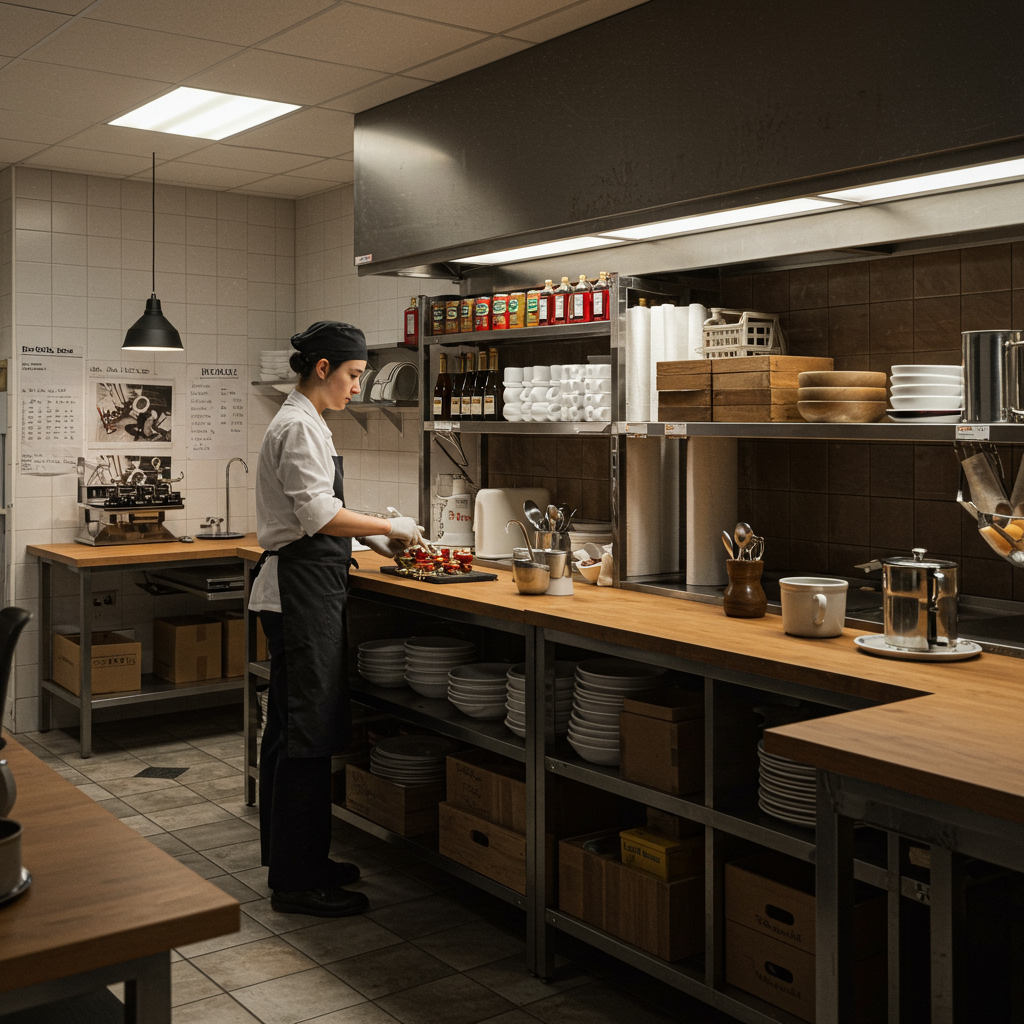
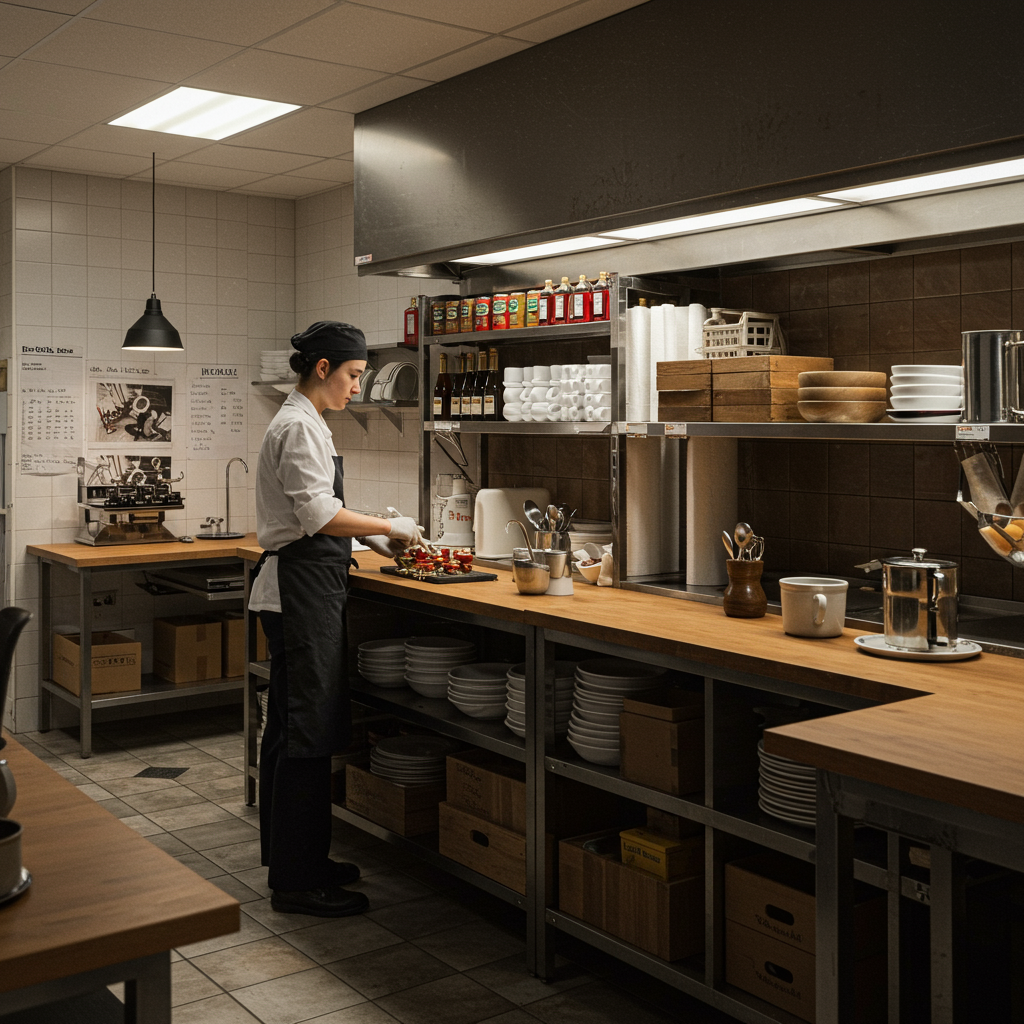
Back of House Design: A Guide to Optimizing Storage, Staff Well-being, and Operational Flows
This article offers an in-depth exploration of the concept of back-of-house (BOH) design, the operational heart of any business in hospitality, retail, or services. Often overlooked in favor of front-of-house areas, a well-planned BOH is fundamental to profitability and sustainability. We will explore methodologies for analyzing and optimizing workflows, designing efficient storage systems, and creating spaces that promote team well-being and productivity. Through step-by-step guides, quantified case studies with key KPIs (such as reducing cycle times by 15% or increasing employee satisfaction by 20 points) and operational templates, this content is aimed at operations managers, architects and business owners looking to maximize the performance of their internal operations. The value proposition lies in a holistic approach that balances efficiency, ergonomics, and quality of the work environment.
Introduction
The engine that drives the success of a restaurant, hotel, or store isn’t always visible. Hidden behind swinging doors and service corridors lies the Back of House (BOH), the epicenter of all operations. A business’s efficiency, service quality, and profitability depend critically on a smart and well-executed back of house design. From receiving goods to order preparation, and even staff breaks, every square inch and every second counts. Poor design creates bottlenecks, increases staff stress, causes waste, and ultimately negatively impacts the customer experience. Conversely, an optimized BOH is a silent but powerful competitive advantage.
This guide addresses BOH design from a holistic perspective, merging principles of process engineering, ergonomics, and architecture. The proposed methodology is based on a continuous improvement cycle: diagnosis (flow analysis and pain points), design (spatial planning and equipment selection), implementation (change management and training), and measurement (KPI evaluation). Key indicators will be measured, such as reduced cycle time per task, increased storage capacity per square meter (kg/m²), decreased workplace accidents, improved Employee Net Promoter Score (eNPS), and the return on investment (ROI) of the redesign project, which typically ranges from 18 to 30 months.
Vision, Values, and Proposal
Focus on Results and Measurement
Our vision is to transform the back-of-house (BOH) from a cost center into a strategic value driver. This is achieved by applying the Pareto principle (80/20): we focus on improvements that generate 80% of the impact, such as optimizing core workflows (receiving-storage-order picking) and improving conditions in personnel areas. The values that guide every project are efficiency, safety, and human dignity. We believe that a safe, clean, and ergonomic work environment is not a luxury, but a requirement for operational excellence. We comply with rigorous technical standards, such as HACCP (Hazard Analysis and Critical Control Points) regulations for food safety, occupational risk prevention regulations (ergonomics, signage), and sustainable design principles (energy efficiency, waste management).
- Value Proposition: Increase profitability through operational efficiency, reduce staff turnover by improving employee well-being, and minimize legal and operational risks by ensuring regulatory compliance.
- Quality Criteria: A design is successful if it reduces the steps required to complete a task by at least 20%, increases usable storage capacity by 15% without expanding the footprint, and achieves a team satisfaction score above 8/10 in post-implementation surveys.
- Decision Matrix for BOH Investments:
- X-Axis (Impact) Operational): Low (aesthetic improvement) to High (eliminates critical bottleneck).Y-axis (Cost/Complexity): Low (reorganization of shelving) to High (structural renovation).
Priority 1 (Upper Right Quadrant): High impact, low cost. Example: Implementing a 5S labeling system.
Priority 2 (Upper Left Quadrant): High impact, high cost. Example: Installing a new cold storage room. Requires detailed ROI analysis.
- X-Axis (Impact) Operational): Low (aesthetic improvement) to High (eliminates critical bottleneck).Y-axis (Cost/Complexity): Low (reorganization of shelving) to High (structural renovation).
Services, Profiles, and Performance
Portfolio and Professional Profiles
We offer a suite of modular services to address any challenge related to back of house design. These range from quick audits to turnkey design and execution projects. The ideal team for a project of this scale is multidisciplinary, including architects specializing in commercial spaces, process engineers with experience in Lean Manufacturing, food and occupational safety consultants, and project managers.
BOH Audit and Diagnostic: Workflow analysis (“spaghetti diagrams”), time and motion studies, ergonomic workstation evaluation, storage capacity analysis, and regulatory compliance review.
Conceptual Design and 2D/3D Floor Plans: Creation of optimized layouts, area zoning (clean, dirty, dry, cold), equipment specification, and custom furniture design.
Project Management and Implementation: Coordination of trades, procurement management, installation supervision, and transition planning to minimize business disruption.
Training and Change Management: of the staff in the new workflows, use of equipment, and safety and cleaning protocols.
Operational Process
- Phase 1: Immersion and Diagnosis (1-2 weeks): Interviews with staff, direct observation of operations, data collection (service times, losses, accidents). KPI: Delivery of a diagnostic report with at least 10 quantified opportunities for improvement.
- Phase 2: Design and Proposal (2-3 weeks): Development of 2-3 layout alternatives, 3D modeling, detailed budget, and ROI calculation. KPI: Budget deviation of the final proposal < 10% compared to the actual cost.
- Phase 3: Planning and Procurement (3-6 weeks): Selection of suppliers, detailed execution planning, license management. KPI: 100% of critical materials and equipment on site before the start of construction.Phase 4: Execution and Supervision (according to scope): Construction management, quality control, weekly progress meetings. KPI: Schedule adherence with a maximum deviation of 5%.
Phase 5: Commissioning and Optimization (1-2 weeks): Team training, support during the first few days, final adjustments. KPI: 95% resolution of incidents within the first 48 hours.
Tables and Examples
Improve employee well-beingTurnover rate, eNPS, number of absences due to musculoskeletal injuries.Install ergonomic flooring, improve lighting (≥ 500 lux), design a suitable rest area.Reduction in turnover by 5 percentage points, increase in eNPS by +20, reduction in absences by 25%.Optimize storage spaceStorage capacity (kg/m²), inventory accuracy.Install high-density shelving, implement a visual FIFO (First-In, First-Out) inventory system.20% increase in storage capacity, Inventory accuracy > 99%.
| Objective | Key Performance Indicators (KPIs) | Key Actions | Expected Result |
|---|---|---|---|
| Reduce order preparation time | Cycle time (from order to delivery) | Redesign the linear workflow, bringing high-turnover storage closer to the preparation area. | 15% decrease in average time (from 12 to 10.2 minutes). |
| Reduce energy costs | Electricity consumption (kWh/month), water consumption (m³/month). | Select equipment with A++ energy certification, install low-flow faucets. | Energy savings of 10-15% on monthly bills. |

Representation, campaigns and/or production
Professional development and project management
Executing a BOH redesign project is a complex logistical operation that requires professional management to minimize disruption to core business activities. Detailed planning is essential. This includes obtaining all necessary licenses and permits in advance, precise coordination of multiple suppliers (bricklayers, plumbers, electricians, equipment installers), and creating a phased implementation schedule. Often, the most disruptive work is scheduled during off-peak hours or planned closures to avoid impacting service.
- Critical Documentation Checklist:
- Current and renovation plans (architecture and installations).
- Technical and quality specifications.
- Building permit and municipal authorizations.
- Health and safety plans.
- Contracts and insurance policies for all suppliers.
- Stock Management and Alternatives: Before starting, a plan must be developed for managing existing stock. This may involve reducing purchasing levels, moving merchandise to a temporary warehouse, or coordinating just-in-time deliveries with suppliers during the transition.Contingency Plans: It is vital to have a plan B. What if a key piece of equipment doesn’t arrive on time? Alternative suppliers or rental solutions should be identified. What if the work is delayed? All stakeholders should be notified in advance, and the operational plan adjusted accordingly. A contingency fund of 10-15% of the total budget is a best practice for unforeseen events.
Figure
Gantt chart for the execution of a BOH renovation project. loading=”lazy”>
A detailed Gantt chart is an indispensable tool for coordinating the different phases of a project, managing dependencies, and minimizing the risk of delays.
Content and/or Media that Convert
Messages, Formats, and Conversions: The Business Case for Back of House Design
To “convert” management or investors, it’s necessary to present the BOH redesign project not as an expense, but as a strategic investment. The key content is a solid business case that uses data and financial projections. The main hook is not aesthetics, but the impact on the profitability and sustainability of the business. The call to action (CTA) is budget approval and project initiation. A/B testing can be performed on proposal presentations: one focused purely on financial ROI and another that combines ROI with intangible benefits such as improved employer branding and reduced risk. Conversion metrics include project approval rate and time to greenlight.
Phase 1: Data Collection (Responsible: Analyst/Operations Manager): Gather data from the last 12 months on personnel costs (turnover, absences), waste, service times, energy costs, and customer complaints related to slowness or errors.
Phase 2: Document Creation (Responsible: Project Manager): Structure the business case: executive summary, problem analysis (with photos and data), proposed solution (with plans and budget), financial analysis (ROI, NPV, payback calculations), risk analysis, and implementation plan.
Phase 3: Presentation Design (Responsible: Designer/Communications): Create a visually appealing and easy-to-understand presentation for senior management, highlighting the Key KPIs and the final impact on the P&L (Profit and Loss).
Phase 4: Presentation and Defense (Responsible: Operations Director/Project Sponsor): Present the case to the management committee, answering questions and defending the project’s viability and necessity.
Phase 5: Follow-up (Responsible: Project Manager): Proactively follow up to obtain final approval.

Training and employability
Demand-driven catalog
Once the new BOH is designed and implemented, its long-term success depends on staff using it correctly and efficiently. Training is a fundamental pillar. The modules should be practical, focused on daily tasks, and designed to reinforce the new workflows.
Module 1: Ergonomics and Occupational Risk Prevention. Lifting techniques, correct postures in workstations (cutting, assembly), use of personal protective equipment (PPE), and action protocols in case of an accident.
Module 2: New Workflows and Lean Principles. Training on the new layout, the optimal flow of materials, the 5S system (Sort, Set in order, Shine, Standardize, Sustain), and the principles of Mise en Place to maximize efficiency.
Module 3: Use and Maintenance of New Equipment. Hands-on training on the operation, cleaning, and basic preventive maintenance of any newly installed equipment, with the aim of extending its useful life and preventing downtime. Breakdowns.
Module 4: Food Safety Protocols (HACCP). Reinforcement of critical control points in the new flow: temperature control, prevention of cross-contamination, traceability systems, and allergen management.
Module 5: Efficient Waste Management. Training on the new waste segregation system (organic, glass, plastic, cardboard) to comply with regulations and reduce management costs.
Methodology
Training should be primarily practical (“learning by doing”). Assessment rubrics are used to certify that each employee has acquired the necessary skills. For example, a rubric for Module 2 could assess the employee’s ability to follow the correct preparation sequence, keep their workstation organized according to the 5S standard, and explain the rationale behind the new flow. The training takes place in the actual work environment. As a result, a 50% reduction in operational errors is expected during the first month, along with a measurable improvement in individual productivity. In the long term, this training increases the versatility and employability of staff, contributing to their professional development within the company.
Operational Processes and Quality Standards
From Request to Execution
- Initial Diagnosis: A consultant visits the site to understand the client’s needs and conduct a visual and data audit. Deliverable: Preliminary Diagnostic Report. Acceptance Criteria: The client validates that the report accurately reflects their operational pain points.
- Detailed Proposal: A technical and financial proposal is developed, including conceptual drawings, a detailed budget, and an ROI estimate. Deliverable: Complete Commercial Proposal. Acceptance Criteria: Client signature of the contract.
- Pre-production / Executive Design: Creation of all execution drawings, final selection of materials and equipment, and development of the detailed schedule (Gantt chart). Deliverable: Project Documentation Package. Acceptance Criteria: Formal approval of the drawings and schedule by the client.
- Execution and Construction Management: Physical implementation of the project under the supervision of a site manager. Deliverable: Weekly Progress Reports. Acceptance Criteria: Compliance with schedule milestones and passing quality inspections.
- Closure and Handover: Final handover of the project, as-built documentation, staff training, and commissioning. Deliverable: Project Acceptance Certificate. Acceptance Criteria: The client signs the acceptance certificate after verifying that everything functions as specified.
- Post-Project Monitoring: Measurement of KPIs at 3 and 6 months to verify the project’s impact and actual ROI. Deliverable: Impact Report. Acceptance Criteria: The KPIs meet or exceed the goals established in the proposal.
Quality Control
- Roles: The Project Manager is ultimately responsible for quality. The Site Manager performs daily inspections. External inspectors may be hired for key validations (e.g., electrical installations).
- Escalation: Any deviation or nonconformity detected by the Site Manager is reported to the Project Manager within 24 hours. If the solution involves a cost or schedule deviation greater than 5%, it is escalated to the client for approval.
- Acceptance Indicators and SLAs (Service Level Agreements):
- Floor Flatness: Maximum deviation of 3 mm in 2 m.
- Lighting: Minimum 500 lux in work areas and 200 lux in passageways.
- Noise Level: Maximum 65 dB in preparation areas during operation.
- Post-delivery Incident Response Times: 48 hours for non-critical incidents, 4 hours for critical incidents.
Design2D/3D plans, technical specificationsRegulatory compliance (health, safety). Review and validation by an expert operator. Flow simulation.Risk: The design is aesthetically pleasing but not functional. Mitigation: Involve kitchen/warehouse staff in the design process. Use simulation software.ExecutionCompleted work according to plansDaily inspection checklists. Functional testing of all equipment and installations.Material certifications.Risk: Poor quality of finishes, delays. Mitigation: Constant on-site supervision, penalties for delays in supplier contracts.Start-upTrained personnel, stable operationTraining assessments passed (>80% success rate). Measurement of operational KPIs in the first week. Staff satisfaction survey.Risk: Resistance to change from staff. Mitigation: Change management plan, constant communication, involving internal “champions.”
| Phase | Key Deliverables | Quality Control Indicators | Risks and Mitigation |
|---|---|---|---|
| Diagnosis | Report of current flows and KPIs | Accuracy of measured data (margin of error <5%). Alignment with staff perception. | Risk: Incorrect data leads to poor design. Mitigation: Triangulate data from multiple sources (observation, systems, interviews). |
Case studies and application scenarios
Case 1: Redesigning the Back of House of a High-Turnover Urban Restaurant
Challenge: A 150 m² restaurant in the city center suffered from constant kitchen bottlenecks during peak hours. The back of house space, at only 40 m², was chaotic. Dish turnaround times exceeded 20 minutes, generating customer complaints (NPS of 35) and a high level of stress for the team (60% annual turnover). Storage was inefficient, with poorly organized products and losses of 8% due to expiration or spoilage.
Solution: A back-of-house design project focused on Lean principles was implemented. The kitchen layout was completely redesigned, creating a unidirectional, U-shaped workflow. Crossings between the dirty dishwashing and clean preparation areas were eliminated. High-density vertical shelving and worktables with integrated refrigerated storage were installed to optimize mise en place. A small but functional break area for staff was designed.
Results:
-
- Implementation time: 3 weeks (during holiday closure).
- Investment: €22,000.
- Reduction in average order time: From 21 to 14 minutes (-33%).
- Increase in service capacity: +20% of tables served during peak hours.
- Reduction in waste: From 8% to 3%.
Annual savings of approximately €6,000.
- NPS Improvement: From 35 to 60.
- Staff Turnover Reduction: From 60% to 25% in the first year.
- ROI: Achieved in 16 months.
Case 2: Warehouse and Staff Area Optimization in a Boutique Hotel
Challenge: A 50-room hotel had serious inventory management problems with linens and amenities. Annual losses exceeded €10,000. The main warehouse was a disorganized space, and staff were wasting a lot of time searching for products. Furthermore, the staff areas (changing rooms and cafeteria) were small, dark, and unwelcoming, contributing to low morale and an eNPS of -10.
Solution: The project focused on two areas. First, the warehouse was redesigned using the 5S methodology. Modular shelving with a clear color-coded labeling system was installed, and inventory management software with scanners was implemented. A clear flow for receiving, storage, and picking was defined. Second, the changing rooms and staff cafeteria were completely renovated, doubling the space, improving the lighting with LEDs, installing larger lockers, and creating a break area with comfortable furniture and a small kitchenette.
Results:
- Implementation time: 6 weeks (implemented in phases to avoid service interruption).
- Investment: €45,000.
- Inventory accuracy: Increased from 85% to 99.5%.
- Reduction in inventory losses: -90% (savings of ~€9,000/year).
- Reduction in cleaning cart setup time: -25%.
- Improvement in eNPS: From -10 to +45.
- ADR (Average Daily Rate): Remained stable, but the improvement in operational efficiency increased the GOPPAR (Gross Operating Profit Per Available Room) margin by 3%. points.
Case 3: Back-of-House Design for a Fashion Retail Flagship Store
Challenge: A fashion brand was opening its 1,000 m² flagship store and needed a back-of-house (BOH) that could handle high sales volume, manage massive stock, and facilitate omnichannel operations (Click & Collect, online returns). The 300 m² BOH had to include the receiving area, the warehouse, an alterations workshop, offices, and staff areas. The goal was for any product to be on the sales floor in less than 5 minutes from the time it was requested.
Solution: Distribution center logistics principles were applied to the retail back-of-house design. A double-height warehouse with a high-density mobile shelving system was designed to maximize capacity. A circular flow was created: merchandise enters via a loading dock, is processed (unpacked, tagged, and steamed) in a designated area, and is stored using a dynamic sorting system. A Click & Collect counter with direct access to the warehouse was designed to expedite deliveries. Staff areas were designed to be an inspiring and comfortable space, reflecting the brand’s image.
Resultados (Proyectados y Medidos post-apertura):
- Capacidad de almacenamiento: +40% respecto a un diseño tradicional en la misma superficie.
- Tiempo de reposición en tienda: Tiempo medio de 3,5 minutos desde la solicitud.
- Tiempo de entrega de Click & Collect: 95% de los pedidos entregados en menos de 2 minutos.
- Satisfacción del personal: Encuestas iniciales mostraron una puntuación de 9/10 en cuanto a la funcionalidad y comodidad de su entorno de trabajo.
- Coste de implementación BOH: 450 €/m².
- Impacto en ventas: La rápida disponibilidad de producto se estimó que contribuyó a una reducción del 5% en la tasa de “ventas perdidas por falta de talla/modelo”.
Guías paso a paso y plantillas
Guía 1: Cómo Realizar una Auditoría de tu BOH en 10 Pasos
- Define tus objetivos: ¿Qué quieres mejorar? ¿Velocidad, capacidad, seguridad, bienestar?
- Crea un plano a escala: Dibuja un plano simple de tu BOH actual, incluyendo todos los equipos y zonas de almacenamiento.
- Realiza un “Spaghetti Diagram”: Sigue a un empleado durante un ciclo de trabajo completo (ej. desde que llega una comanda hasta que sale el plato) y dibuja su recorrido en el plano. Una maraña de líneas indica un flujo ineficiente.
- Mide tiempos y movimientos: Cronometra las tareas clave. ¿Cuánto se tarda en ir a la cámara frigorífica? ¿Cuánto en encontrar un producto específico?
- Habla con tu equipo: Realiza entrevistas cortas. Pregúntales: “¿Cuál es la parte más frustrante de tu trabajo aquí? ¿Qué cambiarías si pudieras?”. Son la mejor fuente de información.
- Evalúa la ergonomía: Observa las posturas de trabajo. ¿Hay empleados que se agachan constantemente? ¿Las superficies de trabajo están a la altura correcta (aprox. a la altura del codo)?
- Revisa la seguridad: ¿Están los pasillos despejados? ¿La señalización de emergencia es visible? ¿Los extintores son accesibles? ¿Hay riesgo de resbalones?
- Analiza el almacenamiento: ¿Se aplica el principio FIFO? ¿Está todo etiquetado? ¿Se aprovecha la altura? Calcula tu densidad de almacenamiento actual.
- Evalúa las zonas de personal: ¿Son limpias, seguras y cómodas? ¿Invitan al descanso o generan más estrés?
- Consolida tus hallazgos: Crea un informe con fotos, los diagramas, los datos recopilados y una lista priorizada de al menos 5 áreas de mejora.
Guía 2: Checklist para la Selección de Equipamiento de Cocina Profesional
- Funcionalidad y Polivalencia: ¿El equipo cumple la función principal de manera excelente? ¿Puede realizar múltiples tareas para ahorrar espacio (ej. horno mixto)?
- Dimensiones y Capacidad: ¿Encaja en el espacio designado en el plano? ¿Su capacidad de producción se ajusta a tus picos de demanda?
- Eficiencia Energética y de Agua: Compara las etiquetas energéticas. Un mayor coste inicial puede amortizarse rápidamente con ahorros en las facturas. Busca certificaciones como Energy Star.
- Durabilidad y Materiales: Prioriza el acero inoxidable (AISI 304 es un buen estándar) por su durabilidad e higiene. Revisa la calidad de soldaduras y acabados.
- Facilidad de Limpieza: ¿Tiene superficies lisas, esquinas redondeadas y piezas desmontables? Un equipo fácil de limpiar ahorra tiempo y garantiza la seguridad alimentaria.
- Ergonomía y Seguridad: ¿Los controles son intuitivos? ¿Tiene elementos de seguridad (ej. parada de emergencia)? ¿La altura de trabajo es cómoda?
- Servicio Técnico y Garantía: Investiga la reputación del proveedor. ¿Ofrecen un buen servicio postventa en tu zona? ¿Cuál es el plazo de respuesta garantizado? ¿Qué cubre la garantía?
- Coste Total de Propiedad (TCO): No mires solo el precio de compra. Considera los costes de instalación, consumo energético, mantenimiento y vida útil esperada.
- Opiniones y Referencias: Habla con otros profesionales que usen ese modelo. Busca reseñas y pide referencias al proveedor.
- Integración: ¿Cómo se integra este equipo con el resto de tu cocina y tu flujo de trabajo?
Guía 3: Implementando el Sistema 5S en tu Almacén
- Seiri (Clasificar):
- Reúne a tu equipo y vacía una sección del almacén.
- Crea tres zonas: “Mantener”, “Reubicar/Donar”, “Eliminar”.
- Revisa cada objeto y decide en equipo a qué zona pertenece. Sé implacable: si no se ha usado en 6 meses, probablemente no es necesario.
- Seiton (Ordenar):
- Para los objetos en la zona “Mantener”, asigna un lugar lógico para cada uno.
- Principio clave: “Un lugar para cada cosa, y cada cosa en su lugar”.
- Utiliza criterios de frecuencia de uso: lo más usado, más cerca y más accesible.
- Usa estanterías, cajas y divisores. Etiqueta todo claramente. Dibuja siluetas de herramientas en los paneles.
- Seiso (Limpiar):
- Realiza una limpieza profunda del área.
- La limpieza no es solo estética, es una forma de inspección. Busca fugas, desgastes, etc.
- Establece una rutina de limpieza diaria/semanal.
- Seiketsu (Estandarizar):
- Crea reglas visuales y simples para mantener el orden y la limpieza.
- Toma fotos del estado ideal (“así es como debe estar”).
- Crea checklists de tareas y asígnalas a roles específicos.
- Usa códigos de colores para diferenciar zonas o tipos de productos.
- Shitsuke (Mantener/Disciplina):
- Es la fase más difícil. Se trata de convertirlo en un hábito.
- Realiza auditorías 5S periódicas (semanales al principio, luego mensuales).
- Comunica los resultados de las auditorías de forma visible.
- Reconoce y recompensa al equipo por mantener los estándares.
Recursos internos y externos (sin enlaces)
Recursos internos
- Plantilla de Auditoría de BOH (Checklist)
- Catálogo de Equipamiento Estándar Recomendado
- Manual de Buenas Prácticas de Ergonomía en Hostelería
- Guía de Implementación del Sistema 5S
- Plantilla de Business Case para Proyectos de Reforma
- Protocolo de Formación para Nuevos Flujos de Trabajo
Recursos externos de referencia
- Normativa APPCC (Análisis de Peligros y Puntos de Control Crítico)
- Normativa sobre Prevención de Riesgos Laborales (específica de cada país)
- Guías del Instituto Nacional de Seguridad y Salud en el Trabajo (INSST) sobre ergonomía en hostelería
- Principios de Lean Manufacturing aplicados a servicios (Lean Service)
- Estándares de construcción y edificación (Código Técnico de la Edificación – CTE en España)
- Certificaciones de sostenibilidad para edificios como BREEAM o LEED.
Preguntas frecuentes
¿Cuál es el coste aproximado de un proyecto de back of house design?
El coste varía enormemente según el alcance, pero como referencia, una reforma media puede oscilar entre 250 €/m² y 700 €/m². Una simple reorganización puede tener un coste mínimo, mientras que un proyecto que incluye obra civil y la compra de todo el equipamiento nuevo puede superar los 1.000 €/m². Es crucial realizar un presupuesto detallado para cada caso.
¿Cuánto tiempo se tarda en ver el retorno de la inversión (ROI)?
Típicamente, el ROI de un proyecto de BOH bien ejecutado se sitúa entre los 18 y los 36 meses. El retorno proviene de una combinación de factores: aumento de la productividad (más ventas o menos personal necesario), reducción de mermas, ahorros energéticos y disminución de los costes asociados a la alta rotación de personal.
¿Cómo puedo minimizar la interrupción del negocio durante la reforma?
La clave es una planificación meticulosa. Se pueden ejecutar los trabajos por fases, trabajar en horarios de cierre (noches, fines de semana) o planificar la reforma durante un período de vacaciones o temporada baja. La comunicación transparente con el equipo y los clientes también es fundamental para gestionar las expectativas.
¿Qué impacto real tiene un buen BOH en la satisfacción del personal?
El impacto es inmenso. Un entorno de trabajo limpio, seguro, organizado y ergonómico reduce drásticamente el estrés físico y mental. Facilita el trabajo, reduce la frustración y hace que los empleados se sientan valorados. Esto se traduce directamente en un mejor ambiente laboral, mayor compromiso y una menor tasa de rotación, un factor crítico en la industria de servicios.
¿Cuáles son los errores más comunes al diseñar un BOH?
Los errores más frecuentes son: 1) No involucrar al personal que trabajará allí en el proceso de diseño. 2) Priorizar el ahorro en equipamiento de baja calidad que falla rápidamente. 3) Subestimar las necesidades de almacenamiento. 4) No planificar flujos de trabajo lógicos, creando cruces y cuellos de botella. 5) Olvidarse por completo de las zonas de personal, tratándolas como un espacio residual.
Conclusión y llamada a la acción
En conclusión, el back of house design es mucho más que una simple distribución del espacio; es la arquitectura de la eficiencia. Invertir en un diseño inteligente para las áreas de almacenamiento, las zonas de preparación y los espacios de bienestar del personal no es un gasto, sino una inversión estratégica con un retorno medible y multifacético. Un BOH optimizado se traduce en operaciones más rápidas, reducción de costes operativos (mermas, energía, rotación), cumplimiento normativo, y lo más importante, un equipo más feliz, saludable y productivo. Estos beneficios internos se proyectan inevitablemente hacia el exterior, resultando en una mejor experiencia para el cliente y un negocio más rentable y sostenible.
El primer paso no tiene por qué ser una reforma completa. Comience hoy mismo realizando una auditoría de su BOH utilizando nuestra guía. Hable con su equipo, observe los flujos y identifique los puntos de fricción. Cuantificar el problema es el primer paso para justificar la solución. Un back of house design bien planificado es la base sobre la que se construye la excelencia operativa duradera.
Glosario
- Back of House (BOH)
- Se refiere a todas las áreas de un negocio de servicios que no están a la vista del cliente, como la cocina, almacenes, oficinas, vestuarios del personal, etc.
- Front of House (FOH)
- Son las áreas del negocio abiertas al público, como el comedor de un restaurante, la recepción de un hotel o la sala de ventas de una tienda.
- Ergonomía
- Disciplina que se encarga del diseño de lugares de trabajo, herramientas y tareas, de modo que coincidan con las características fisiológicas, anatómicas y psicológicas de los trabajadores.
- Flujo de Trabajo (Workflow)
- La secuencia de pasos que se deben seguir para completar una tarea o proceso, desde su inicio hasta su finalización.
- APPCC (HACCP)
- Análisis de Peligros y Puntos de Control Crítico. Es un sistema preventivo de gestión de la inocuidad alimentaria reconocido internacionalmente.
- Sistema 5S
- Metodología de gestión japonesa basada en cinco principios para crear lugares de trabajo mejor organizados, más ordenados y más limpios, y así aumentar la productividad y mejorar el entorno laboral.
Internal links
- Click here👉 https://uk.esinev.education/masters/
- Click here👉 https://uk.esinev.education/diplomates/
External links
- Princeton University: https://www.princeton.edu
- Massachusetts Institute of Technology (MIT): https://www.mit.edu
- Harvard University: https://www.harvard.edu
- Stanford University: https://www.stanford.edu
- University of Pennsylvania: https://www.upenn.edu