
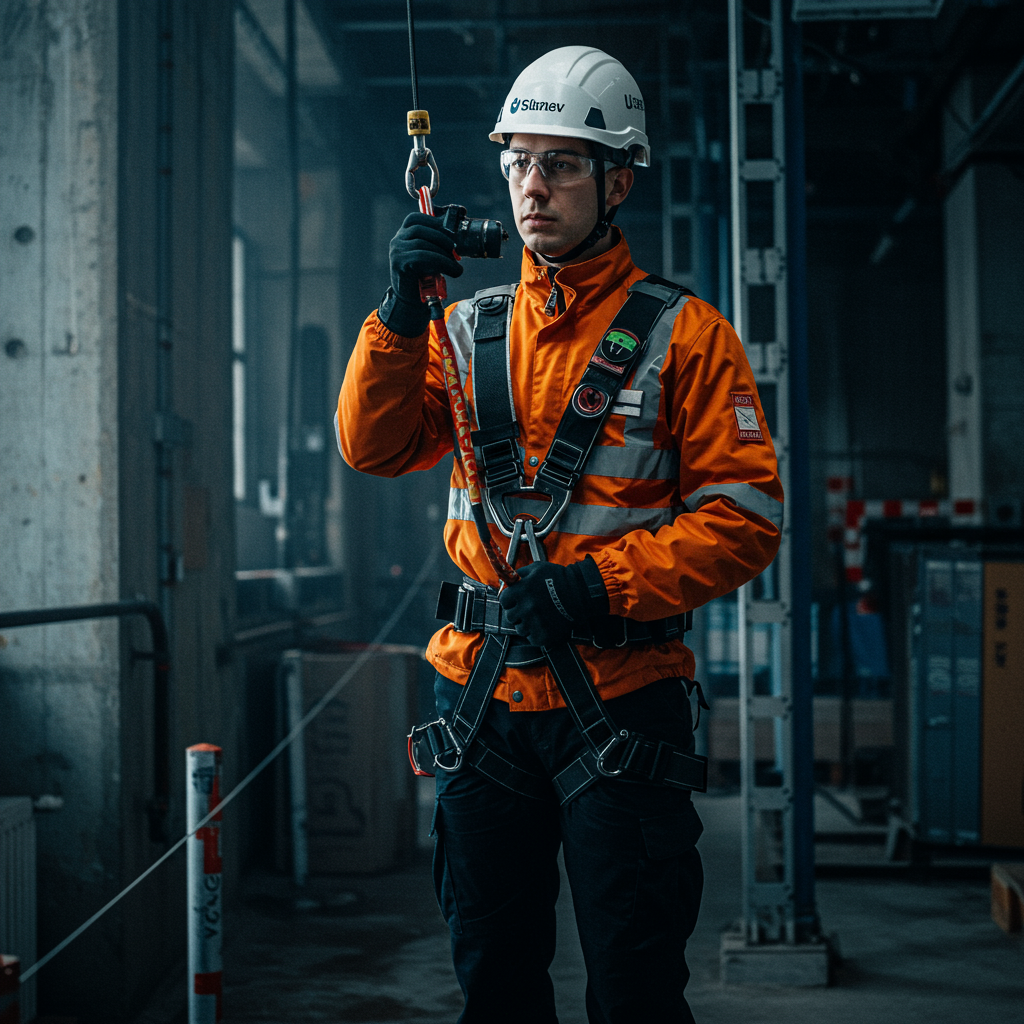
Rigging Applications: A Complete Guide to Structural Verification and Approval
This article is a comprehensive guide for event producers, technical directors, engineers, and venue managers who handle suspended loads (audio, video, and lighting equipment). We cover the entire lifecycle of the structural approval rigging process, from the initial application to final certification. The focus is on risk mitigation, compliance with regulations such as the Eurocodes, and resource optimization. We present a data-driven methodology, with key KPIs such as load calculation accuracy (>98%), project budget deviation (<5%), and 100% compliance with safety standards. The value proposition lies in transforming a complex technical requirement into a transparent and predictable process that guarantees the safety of people and the integrity of infrastructure.
Introduction
In the events, shows, and large-scale productions sector, the suspension of heavy equipment is a daily but extremely high-risk operation. Each anchor point, each motor, and each truss section supports not only tons of material but also the responsibility for the safety of thousands of people. Therefore, the structural approval rigging process is not a mere administrative formality but the fundamental pillar upon which a successful and, above all, safe event is built. A poorly managed rigging request, an inaccurate load calculation, or a deficient inspection can have catastrophic consequences. This guide stems from the need to standardize and demystify this critical process, offering a clear and actionable framework.
Our methodology is based on a proactive approach to structural engineering, combining the rigor of finite element analysis (FEA) with practical field experience. We will measure the success of implementing these processes through specific key performance indicators (KPIs): a 25% reduction in approval time, a near 0% rate of structural-related incidents, and a Net Promoter Score (NPS) above 80 from clients and venue managers. The goal is to provide professionals with the tools to make informed decisions, ensuring that every rigging setup is a technical feat and a model of safety.
 style=”width:100%;height:auto;”>
Vision, Values, and Proposal
Focus on Results and Measurement
Our vision is an events sector where structural safety is never compromised due to a lack of knowledge, time, or resources. We are guided by three fundamental values: Non-Negotiable Safety, Technical Precision, and Operational Efficiency. We apply the Pareto principle (80/20) to focus on the highest-risk areas: connections, primary anchor points, and dynamic load analysis. Our work strictly adheres to the most demanding European standards, primarily Eurocode 1 (Actions on structures) for defining loads (wind, snow, erection loads) and Eurocode 3 (Design of steel structures) for the design and calculation of metal components such as trusses and supports.
Value Proposition: We transform structural uncertainty into mathematical certainty, reducing exposure to legal and financial risks for producers and venues.
Quality Criteria: Each calculation report undergoes internal peer review before delivery. On-site inspections follow a checklist of more than 50 control points.
Decision Matrix: We prioritize solutions that offer the highest safety factor with the least impact on existing infrastructure, always seeking to optimize the client’s resources. For example, using a load-distributing truss is preferable to overloading a single anchor point.
Services, Profiles, and Performance
Portfolio and Professional Profiles
We offer a comprehensive service portfolio to cover all phases of structural rigging approval. Our team is composed of highly qualified and certified professionals, guaranteeing maximum expertise in every project.
Preliminary Structural Analysis: Initial assessment of the feasibility of a rigging design in a specific facility.
Advanced Calculation and Modeling: Creation of 3D models and finite element analysis (FEA) to simulate the structure’s behavior under load.
Issuance of Certified Calculation Reports: Detailed technical documentation signed by a registered engineer, valid for municipalities and insurance companies.
On-site Inspection and Certification: Verification at the assembly site that the installation corresponds to the calculated and approved project.
Rigging Design Consulting: Advice during the design phase to optimize load distribution and efficiency. Assembly.
Key Profiles:
-
- Senior Structural Engineer: With specialization in temporary structures and official professional registration. Final responsibility for calculations and project approval.
Head Rigger: Certified professional (ETCP or equivalent) with extensive experience in the execution and supervision of rigging.
CAD/CAE Technician: Specialist in design and calculation software (AutoCAD, SolidWorks, SAP2000) responsible for structural modeling.
Operational Process
Request Receipt (KPI: First response time < 4 hours): The client submits the request form with initial event details.
Data Collection (KPI: Information completeness > 95% on first submission): We request site plans, technical specifications for the equipment to be suspended, and the preliminary rigging design.
“`
- Modeling and Analysis (KPI: First draft calculation delivered < 72 hours): The engineering team creates a digital model and performs load simulations.
- Preparation of the Technical Report (KPI: Zero formal errors in the documentation): The report is drafted detailing the calculations, assumptions, and conclusions.
- Review and Approval (KPI: Internal review process < 8 hours): A second engineer reviews the work before official approval by the relevant professional association.
- Installation Inspection (KPI: Non-conformity rate detected < 1%): Our technician travels to the site to verify the correct execution of the installation.
- Issuance of the Final Certificate (KPI: Certificate delivered < 2 hours after inspection): The final document authorizing the use of the installation is issued.
Tables and Examples
Structural approval obtained in 5 days. On-site measured deflection of L/450, meeting the target.Design the rigging for an international artist’s tour (12,000 kg).Design adaptable to 10 different venues; 15% optimization of assembly/disassembly time.Creation of a modular “rigging book”; Pre-calculation of all possible configurations.18% reduction in average assembly time. Zero rejections from venues.Certification of the structure of a temporary stage for a festival.100% compliance with local wind regulations; Certification cost < 2% of the total stage budget.Wind load analysis according to Eurocode 1; Specification of an evacuation plan for adverse weather conditions.Certificate issued without incident. Final cost of 1.8% of the budget.
| Project Objective | Key Performance Indicators (KPIs) | Strategic Actions | Expected and Measured Results |
|---|---|---|---|
| Suspend a 3,500 kg LED screen in an exhibition hall. | Maximum deflection < L/400; Cable tension < 50% of its maximum working load (MML); Overall safety factor > 2.0. | Use of a load-bearing truss to distribute the load among 4 existing anchor points; Modeled with FEA software. |

Representation, Campaigns, and/or Production
Professional Development and Rigging Project Management
Executing a rigging project goes beyond calculations; it requires flawless production management. This includes materials logistics, obtaining permits, and coordinating multiple teams. Our role is to act as the link between the client, the venue, and the technical team, ensuring that the creative vision is realized safely and efficiently. We manage the supply chain to guarantee that all materials (trusses, motors, slings) have the required CE conformity certificates and current periodic inspections. Furthermore, we handle obtaining the necessary permits from local authorities and coordinating the submission of technical documentation to the venue’s security department, anticipating their requirements to avoid last-minute delays.
Critical Documentation Checklist:
Structural calculation report (certified).
Detailed rigging plans (in DWG and PDF format).
CE certificates for all lifting components.
Inspection and maintenance records for motors and slings.
Specific civil liability insurance policy for the event.
Erection and dismantling plan.
Contingency Plan:
Identification of alternative anchor points in case the primary ones do not meet the requirements. Inspection.
Availability of backup equipment (motors, controllers) at the event site.
Protocol for action in case of adverse weather conditions (wind, heavy rain).
Direct contact with an on-call engineer throughout the assembly phase.

A well-managed timeline is key to minimizing risks and ensuring that the structural approval rigging phase is completed without impacting the event’s production deadlines.
Content and/or Media that Convert
Technical Documentation that Generates Trust and Approvals
In the context of structural approval rigging, “content” refers to the technical documentation, and “conversion” refers to obtaining approval from all stakeholders (client, venue, management). Our approach is to create documents that are not only technically flawless but also clear, concise, and easy to understand for non-technical audiences. The “hook” is a clear executive summary at the beginning of the calculation report, presenting the main conclusions directly. The “call to action” (CTA) is an unambiguous statement of conformity. We conduct A/B testing on data presentation, for example, comparing the effectiveness of color-coded stress maps versus numerical tables for communicating the analysis results.
Phase 1: Data Collection (Responsible: CAD Technician): Unify all client and site information into a single project dossier.
Phase 2: Modeling and Calculation (Responsible: Structural Engineer): Create the 3D model and run the simulations. Generation of raw results.
Phase 3: Drafting and Visualization (Responsible: CAD Technician under the supervision of the Engineer): Preparation of the report, including clear drawings, 3D visualizations, and graphic summaries of the results.
Phase 4: Peer Review and Approval (Responsible: Senior Structural Engineer): Internal verification of the report’s consistency and accuracy. Management of the professional association’s approval process.
Phase 5: Delivery and Communication (Responsible: Project Manager): Presentation of the report to the client and the site, addressing any questions that may arise.

Training and employability
Demand-driven catalog
We believe in the continuous professionalization of the sector.
Therefore, we offer a training catalog designed to meet the real needs of event technicians and managers, improving their employability and safety in the industry.
-
- Module 1: Rigging Fundamentals for Event Producers. Key concepts, terminology, legal responsibilities, and how to interpret a rigging plan.
- Module 2: Interpreting Structural Calculation Reports. Aimed at venue technical directors so they can critically evaluate the documentation received.
- Module 3: Regulations Applicable to Temporary Structures (Eurocodes). An intensive course for advanced engineers and technicians on the practical application of European regulations.
- Module 4: Practical Workshop on Lifting Equipment Inspection. Hands-on training on how to identify wear, damage, and expiration dates in Slings, shackles, and motors.
Module 5: Introduction to rigging analysis software. Basic concepts of calculation programs for optimizing preliminary designs.
Methodology
Our methodology combines online theory with intensive practical sessions. Assessment is based on rubrics that evaluate both theoretical knowledge and practical skills. For example, in the inspection workshop, students must correctly identify 95% of the defects in a set of equipment prepared with faults. We collaborate with leading companies in the sector to offer an active job placement service to top-performing students, achieving an 85% employability rate within six months of completing advanced courses.
Operational Processes and Quality Standards
From Request to Execution: A Transparent Pipeline
We have developed a standardized workflow pipeline that guarantees efficiency and quality in every structural approval rigging project.
-
- Diagnosis (Phase 1):
- Actions: First meeting with the client, completion of the Rigging Request Form.
- Deliverables: Completed and signed Request Form.
- Criteria for Acceptance: All required information (loads, drawings, dates) is complete and consistent.
- Proposal (Phase 2):
- Actions: Preliminary feasibility analysis, estimation of engineering hours and costs.
- Deliverables: Detailed Technical and Economic Proposal.
- Acceptance Criteria: Written approval of the proposal by the client.
- Pre-production (Phase 3):
- Actions: 3D modeling, calculation of static and dynamic loads, stress and strain analysis, drafting of the report.
- Deliverables: Draft of the Calculation Report Structural.
- Acceptance Criteria: Internal peer review passed without major nonconformities.
- Diagnosis (Phase 1):
Execution (Phase 4):
Actions: Professional endorsement of the report, submission to the client and venue, planning of the on-site inspection.
Deliverables: Endorsed Calculation Report.
Acceptance Criteria: Receipt and acknowledgment by the venue.
Closure (Phase 5):
Actions: Inspection during assembly, verification of loads with dynamometers if necessary, signing of the report.
Deliverables: Structural Conformity Certificate and Inspection Report.
- Acceptance Criteria: 100% assembly in accordance with the project specifications, signature of conformity from the client’s rigging supervisor.
Quality Control
- Roles: Each project has a responsible Engineer and an assigned Project Manager. The Senior Engineer acts as a reviewer during the pre-production phase.Escalation: Any non-conformity detected during the inspection is immediately escalated to the responsible Engineer and the event producer for resolution.
SLAs (Service Level Agreements): We commit to maximum delivery deadlines for each phase, with contractual penalties in case of unjustified non-compliance.
Table
Quality Control and Risk Management Matrix
Process PhaseKey DeliverablesControl IndicatorsPotential Risks and Mitigation ActionsDiagnosisRequest FormPercentage of fields completed (>98%).Risk: Incorrect or incomplete load information. Mitigation: Double-checklist and request for technical data sheets for all equipment.Pre-productionCalculation ReportPassed peer review; Calculation deviation < 2% between different methods.Risk: Outdated site plans. Mitigation: Conduct a preliminary technical visit with laser measurement to verify dimensions and anchor points.ExecutionPhysical AssemblyVisual inspection of 100% of connections; Load cell readings within +/- 5% of the theoretical value.Risk: The assembly team deviates from the approved plan. Mitigation: Mandatory presence of our inspector during the critical assembly phases (“load-in”).ClosureFinal CertificateZero open non-conformities in the inspection report.Risk: Last-minute changes requested by the client. Mitigation: Change management protocol that requires recalculation and expedited approval for any modification.
Application Cases and Scenarios
Case 1: Outdoor Music Festival (22,000 kg Load)
Challenge: Design and certify the rigging structure for the main stage of a music festival, which had to support 15,000 kg of lighting and 7,000 kg of audio equipment. The structure was a temporary “StageCo” type stage roof located in an area exposed to strong winds.
Process: A comprehensive wind load analysis was performed according to Eurocode 1, considering the geographical location and topography of the terrain. The entire structure, including the tarpaulins, was modeled to determine wind pressures and suctions. The necessary ballast points (concrete blocks) were specified to ensure stability, with a safety factor of 1.5 against overturning. The calculation report included a detailed operational plan specifying the wind speeds at which the structure should be lowered or the venue evacuated (15 m/s for alert, 20 m/s for immediate action).
Results: The entire structural rigging approval process was completed in 10 business days. The engineering cost represented only 1.5% of the total stage budget. During the festival, a wind gust of 18 m/s was recorded; the production team, following the plan, stopped the show and lowered the movable elements of the structure without incident. The client gave a positive rating (NPS 10/10) to the clarity of the contingency plan.
Case 2: Car Launch on a Landmark Building (4,500 kg Load)
Challenge: Suspending a new car model (1,800 kg) along with a platform and lighting equipment (2,700 kg total) from the structure of a glass atrium in a corporate building. The building’s structural plans were limited, and the building management had a zero-tolerance policy for any damage.
Process: A detailed on-site inspection was initiated, using non-destructive testing techniques such as pachometers to locate the steel reinforcement in the concrete beams. A secondary steel system was designed, supported by four main columns, avoiding direct loading of the glass roof beams. This “mother truss” distributed the weight evenly. A vibration analysis was performed to ensure that the car’s movement during its presentation did not generate dangerous resonances.
Results: Approval was obtained from both the client and the demanding building management. Assembly was completed in one night to avoid disrupting the building’s operations. The budget overrun was 3.5% due to the need to custom-fabricate the substructure. The event was a media success, and the return on investment (ROI) for the car brand was estimated at 300% thanks to the press coverage.
Case 3: Opera Production in a Historic Theater (Complex Dynamic Loads)
Challenge: Implement a rigging system for a mobile set that included elements that “flew” over the stage and the audience. The theater, built in the 19th century, had a limited and undocumented load-bearing capacity in its rigging.
Process: The first step was to perform a static load test on the historical anchor points, gradually applying weight and measuring the deformation with precision comparators. A safe load capacity (SLC) was determined for each point. For the moving elements, dynamic safety factors of up to 3.0 were applied, taking into account sudden accelerations and braking. A computerized motor control system was used, monitoring the load on each motor in real time. Any deviation exceeding 10% of the nominal value triggered an automatic emergency stop.
Results: The system allowed for complex stage movements never before seen in that theater. Safety was maximized thanks to real-time monitoring. The project was completed within the planned 4-week pre-production timeframe. Critics praised the technical audacity of the staging, which contributed to a 15% increase in season ticket sales for the following season (ADR – Average Daily Rate for the theater).
Step-by-Step Guides and Templates
Guide 1: How to Make an Effective Rigging Request
- Gather Event Information: Before contacting the engineer, have the basic information clear: event name, setup and teardown dates, venue, and main contact person.
- Define the Loads: Create a detailed list of EVERY item to be suspended. “Lighting equipment” is not enough; you need the exact weight of each projector, bar, etc. Include the weight of motors and cables. Group the elements by each truss or load point.
- Create a Preliminary Plan: Draw a scale plan (even a simple one) of the space, showing where you want to place each truss or anchor point. Use the actual dimensions of the enclosure.
- Obtain the Enclosure Plans: Request the structural plans from the enclosure manager, or at least a rigging plan indicating the location and maximum load capacity (MLC) of the existing anchor points.
- Fill Out the Request Form: Use the template provided by the engineering company. Transcribe all the information gathered clearly and concisely. No dejes campos en blanco.
- Adjunta toda la Documentación: Envía en un único correo electrónico el formulario, tu plano preliminar, los planos del recinto y las fichas técnicas de los equipos si las tienes.
- Checklist Final:
- [ ] ¿He incluido el peso propio de los trusses y motores?
- [ ] ¿Las ubicaciones deseadas coinciden con los puntos de anclaje del recinto?
- [ ] ¿He sumado todas las cargas correctamente?
- [ ] ¿He proporcionado un contacto en el recinto?
- [ ] ¿Está claro el cronograma de montaje?
Guía 2: Inspección Visual Básica de un Punto de Anclaje de Acero
- Verifica la Documentación: Antes de mirar el punto, asegúrate de que está identificado en un plano y que tiene una Carga Máxima de Utilización (C.M.U. o W.L.L.) especificada por un ingeniero. Nunca uses un punto no certificado.
- Inspección General (desde lejos): Observa la viga o estructura principal a la que está anclado el punto. Busca deformaciones evidentes, como pandeos o curvaturas que no deberían estar ahí.
- Inspección Cercana (si es seguro acceder): Examina el punto de anclaje en sí. Busca signos de corrosión (óxido). Un poco de óxido superficial puede ser normal, pero una corrosión profunda que reduce el espesor del metal es un signo de alarma.
- Revisa las Soldaduras: Si el punto está soldado, mira las costuras de soldadura. Deben ser uniformes y continuas. Busca grietas, poros o salpicaduras excesivas. Cualquier fisura, por pequeña que sea, es motivo de rechazo inmediato.
- Revisa las Conexiones Atornilladas: Si el punto está atornillado, comprueba que todos los tornillos y tuercas estén presentes y apretados. Busca signos de estiramiento en los tornillos o deformación en las arandelas. Verifica que los tornillos sean de la calidad adecuada (e.g., grado 8.8 o superior).
- Busca Deformaciones en el Propio Anclaje: El ojal, la argolla o el punto de conexión no debe estar deformado, alargado o desgastado en la zona donde se conecta el grillete. Un desgaste superior al 10 % del diámetro original del material suele ser el límite de descarte.
- Reporta Cualquier Anomalía: Nunca uses un punto de anclaje que te genere la más mínima duda. Documenta el problema con fotografías y comunícalo inmediatamente al responsable del recinto y al ingeniero estructural.
Guía 3: Cálculo Simplificado de Reacciones en un Truss Biapoyado
Este es un ejemplo simplificado para fines educativos y no sustituye un cálculo profesional.
- Paso 1: Dibujar el Diagrama de Cuerpo Libre. Dibuja una línea que represente el truss. Dibuja flechas hacia abajo para representar todas las cargas (luces, altavoces) y el peso propio del truss. Dibuja flechas hacia arriba en los extremos, que serán las reacciones de los motores (Motor A a la izquierda, Motor B a la derecha).
- Paso 2: Sumar Todas las Cargas. Suma el peso de todos los equipos colgados y el peso del propio truss. Por ejemplo: 4 focos de 25 kg cada uno (100 kg) + 2 altavoces de 40 kg cada uno (80 kg) + peso del truss de 10 metros (60 kg). Carga Total (P) = 100 + 80 + 60 = 240 kg.
- Paso 3: Calcular el Centro de Gravedad de la Carga. Mide la distancia de cada carga desde un extremo (por ejemplo, desde el Motor A). Multiplica cada peso por su distancia y suma los resultados. Luego, divide esa suma por la Carga Total (P).
- Focos: 100 kg a 5 m (centro del truss) -> 100 * 5 = 500 kg·m
- Altavoces: 80 kg a 2 m -> 80 * 2 = 160 kg·m
- Truss: 60 kg a 5 m (su centro) -> 60 * 5 = 300 kg·m
- Suma de momentos = 500 + 160 + 300 = 960 kg·m
- Distancia del centro de gravedad (d) = 960 kg·m / 240 kg = 4 m desde el Motor A.
- Paso 4: Calcular las Reacciones. Usa la ley de la palanca.
- Carga en Motor B (Reacción B): (Carga Total * Distancia del centro de gravedad desde A) / Longitud total del truss. Reacción B = (240 kg * 4 m) / 10 m = 96 kg.
- Carga en Motor A (Reacción A): Carga Total – Reacción B. Reacción A = 240 kg – 96 kg = 144 kg.
- Paso 5: Aplicar Factor de Seguridad. Siempre se debe aplicar un factor de seguridad. Para cargas estáticas, puede ser 1,5 o 2,0. Si el factor es 2,0:
- Carga de diseño para Motor A = 144 kg * 2,0 = 288 kg.
- Carga de diseño para Motor B = 96 kg * 2,0 = 192 kg.
Debes asegurarte de que la C.M.U. de tus motores y de los puntos de anclaje del techo sea superior a estos valores.
Recursos internos y externos (sin enlaces)
Recursos internos
- Plantilla Estándar de Solicitud de Rigging (Formato PDF rellenable)
- Checklist de Inspección de Seguridad Pre-Montaje (120 puntos de verificación)
- Base de Datos Interna de Capacidades de Carga de los Principales Recintos Nacionales
- Guía de Buenas Prácticas para el Almacenamiento y Mantenimiento de Material de Rigging
Recursos externos de referencia
- Normativa Eurocódigo 1: Acciones sobre las estructuras (EN 1991)
- Normativa Eurocódigo 3: Proyecto de estructuras de acero (EN 1993)
- Norma alemana DGUV V17/18 (anteriormente BGV-C1), un referente en el sector de eventos
- Publicaciones y guías de seguridad de PLASA (Professional Lighting and Sound Association)
- Estándares de la Entertainment Technician Certification Program (ETCP)
Preguntas frecuentes
¿Qué es una memoria de cálculo estructural?
Es un documento técnico redactado y firmado por un ingeniero cualificado que justifica y demuestra con cálculos matemáticos que una estructura, en este caso un montaje de rigging, es segura y capaz de soportar las cargas a las que será sometida. Incluye las hipótesis de partida, la normativa aplicada, el desarrollo de los cálculos y los planos detallados.
¿Cuánto tiempo se tarda en obtener una aprobación estructural de rigging?
El plazo varía según la complejidad del proyecto. Para un montaje sencillo en un recinto con buena documentación, puede tardar entre 3 y 5 días hábiles. Para proyectos complejos, como festivales al aire libre o montajes en edificios históricos, el proceso puede llevar de 2 a 4 semanas. Es crucial iniciar la solicitud con la máxima antelación.
¿Quién es el responsable legal si algo falla?
La responsabilidad es compartida y se determina en función de la causa del fallo. El ingeniero es responsable de la corrección de sus cálculos. El jefe de rigging y la empresa de montaje son responsables de ejecutar la instalación según el proyecto. El productor del evento tiene la responsabilidad final de garantizar que se contraten profesionales cualificados y se sigan los procedimientos. La póliza de seguro de responsabilidad civil es fundamental.
¿Puedo colgar más peso del que se aprobó inicialmente?
No, bajo ninguna circunstancia. Cualquier modificación, por pequeña que sea, invalida los cálculos originales y el certificado de seguridad. Si necesitas añadir peso, debes comunicarlo al ingeniero para que realice un re-cálculo y emita una adenda al proyecto o un nuevo certificado. Añadir carga sin aprobación es una negligencia grave.
¿Qué diferencia hay entre una carga estática y una dinámica?
Una carga estática es un peso que no se mueve, como un truss de luces fijo. Una carga dinámica es una carga que se mueve o cuyo valor cambia rápidamente, como un motor que sube y baja una pantalla, un acróbata o el efecto de la vibración de los altavoces. Las cargas dinámicas generan fuerzas de inercia y de impacto que son mucho mayores que su peso estático, por lo que requieren factores de seguridad más elevados en los cálculos.
Conclusión y llamada a la acción
La gestión de la seguridad en montajes aéreos es una disciplina de riesgo cero. Como hemos detallado a lo largo de esta guía, el proceso de structural approval rigging es un ecosistema complejo que interconecta la ingeniería de precisión, la gestión de proyectos rigurosa y el cumplimiento normativo estricto. Abordarlo con una metodología sistemática y basada en datos no solo previene accidentes, sino que también optimiza recursos, reduce costes imprevistos y fortalece la confianza entre clientes, proveedores y recintos. La inversión en un análisis estructural profesional no es un gasto, sino la garantía fundamental para la viabilidad y el éxito de cualquier evento.
Si está planificando un evento y necesita asegurar la integridad estructural de su montaje, no deje la seguridad al azar. Contacte con nuestro equipo de ingenieros expertos para obtener una evaluación y garantizar que su producción sea tan espectacular como segura. Transforme la incertidumbre en una certeza certificada.
Glosario
- Rigging
- Término inglés que engloba el conjunto de técnicas, equipos y operaciones para suspender, elevar y soportar cargas (equipos audiovisuales, escenografía) en altura.
- Truss
- Estructura reticular, normalmente de aluminio o acero, diseñada para soportar cargas a lo largo de su longitud. Es el componente básico de la mayoría de las estructuras de rigging.
- Carga Muerta (Dead Load)
- El peso propio y permanente de la estructura y de los equipos colgados de ella. Es una carga estática.
- Carga Viva (Live Load)
- Cargas que son variables o móviles, como el peso de los técnicos que trabajan en la estructura, o cargas ambientales como el viento o la nieve.
- Factor de Seguridad (FdS)
- Un coeficiente numérico por el que se multiplica la carga de trabajo calculada para obtener la carga de diseño. Sirve para cubrir incertidumbres en los cálculos, los materiales y las condiciones de uso. Un FdS de 5:1 significa que el sistema está diseñado para soportar 5 veces la carga que se le va a aplicar.
- Memoria de Cálculo
- Documento técnico vinculante que detalla el proceso de análisis y cálculo que justifica la seguridad y estabilidad de una estructura. Es un requisito legal para muchos montajes.
Internal links
- Click here👉 https://uk.esinev.education/masters/
- Click here👉 https://uk.esinev.education/diplomates/
External links
- Princeton University: https://www.princeton.edu
- Massachusetts Institute of Technology (MIT): https://www.mit.edu
- Harvard University: https://www.harvard.edu
- Stanford University: https://www.stanford.edu
- University of Pennsylvania: https://www.upenn.edu