
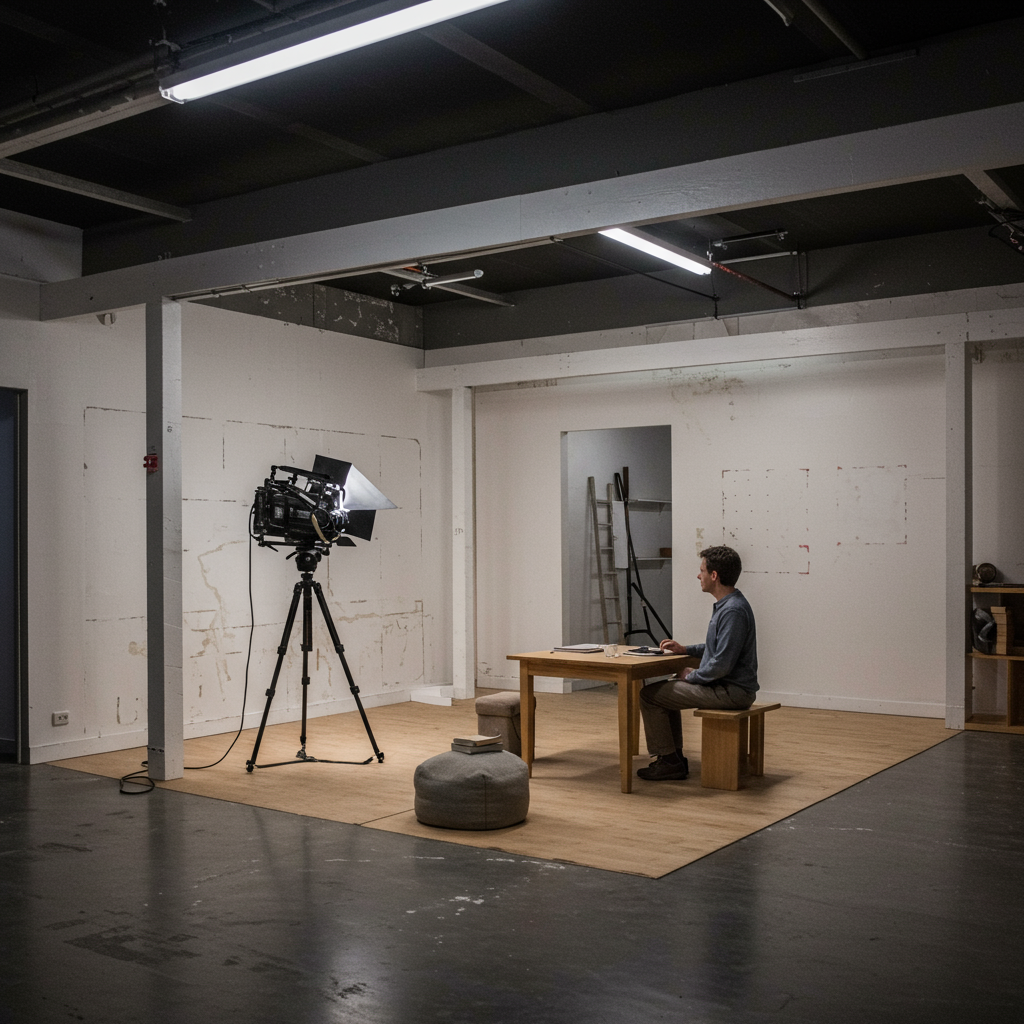
Sustainable Set Design: Modularity, Rental, and Reuse Methods for Efficient Production
The entertainment industry faces a critical challenge: its environmental impact. This article offers a comprehensive guide to sustainable set design methods, a strategic approach that transforms audiovisual and stage production. We explore three fundamental pillars: modularity for adaptability, rental as an alternative to purchasing, and reuse as a principle of the circular economy. Through auditable processes, measurable KPIs (such as an 85% reduction in waste or a 30% cost savings) and real case studies, we demonstrate how sustainability is not a cost, but a competitive advantage. This guide is aimed at art directors, production managers, designers, and any professional in the industry looking to optimize resources, improve operational efficiency, and align their projects with the values of an increasingly conscious audience and market.
Introduction
The audiovisual industry, known for its ability to create imaginary worlds, often leaves behind a very tangible reality: tons of waste. Traditionally, many sets are built for single use and discarded after filming, generating an unsustainable economic and environmental cost. In this context, the adoption of sustainable set design methods is not only an ethical trend, but an operational and financial necessity. This approach rethinks the entire life cycle of a set, from conception to dismantling, prioritizing resource efficiency and minimizing negative impact. By integrating principles of modularity, encouraging the rental of elements, and planning for systematic reuse, production companies can transform their operations, achieving more agile, cost-effective, and environmentally friendly productions.
The methodology presented below is based on a continuous improvement approach and rigorous measurement.
This isn’t about symbolic gestures, but rather an integrated system audited through Key Performance Indicators (KPIs). We will measure success not only in creative terms, but also through quantifiable metrics such as the percentage of waste diverted from landfill (target >85%), the reduction in carbon footprint per day of filming (kg CO2e), the cost saved per square meter of set (€/m²), and the return on investment (ROI) of sustainable practices. This article provides the tools, processes, and practical guides to effectively implement these methods in any type of production, from a commercial to a feature film or television series.
 loading=”lazy”>
Vision, Values, and Proposal
Focus on Results and Measurement
Our vision is to transform the entertainment industry into a circular economy model, where every resource is valued and used to its fullest potential. We are guided by the Pareto principle (80/20): we focus on actions that generate 80% of the positive impact with 20% of the effort, such as material selection and dismantling planning. The values that guide our proposal are efficiency, innovation, and responsibility. We adopt technical standards such as ISO 14001 (Environmental Management Systems) and material certification guidelines such as FSC (Forest Stewardship Council) for wood or low Volatile Organic Compound (VOC) seals for paints and adhesives. Our value proposition is not just “being green,” but being smarter, faster, and more profitable through sustainability.
- Main Value Proposition: Reduce production costs by 15% to 35% and decrease the waste footprint by more than 85% by implementing a circular set design and management system.
- Quality Criteria: All designs must meet a triple constraint: creative feasibility (fulfilling the director’s vision), operational feasibility (efficient assembly and disassembly), and sustainable feasibility (measurable and optimized life cycle).
- Material Decision Matrix:
- Is it available for rent? Top priority. If yes, it is rented.
- Can it be built modularly for reuse? Medium priority. If so, it is designed for disassembly.
- Should it be single-use? Last resort. If so, the material with the highest percentage of recycled content and greatest recyclability is chosen, and a waste management plan is ensured.
- Continuous Innovation: We constantly research and test new materials (such as mycelium, 3D-printed recycled plastics) and lightweight construction techniques to further optimize the process.
Services, Profiles, and Performance
Portfolio and Professional Profiles
We offer a suite of integrated services that address the entire lifecycle of set design, designed to effectively implement sustainable set design methods. These services are performed by a team of specialized professionals:
- Sustainability Consulting and Auditing: Analysis of scripts and production plans to identify opportunities for improvement. Profile: Eco-Manager or Production Sustainability Consultant.
- Modular and Circular Set Design: Creation of sets from concept, with reuse and dismantling as central principles. Profile: Production Designer specializing in Ecodesign.
- Inventory and Rental Management (Asset Management): Coordination with rental companies and management of an inventory of modular elements to maximize their use. Profile: Props and Assets Coordinator.
- Sustainable Construction and Dismantling: Construction using certified materials and low-impact techniques, and management of dismantling for the classification and recovery of materials. Profile: Construction Manager with training in waste management.
- Impact Measurement and Reporting: Quantification of environmental savings and benefits (carbon footprint, waste, etc.) for sustainability and ESG reports. Profile: Environmental Data Analyst.
Operational Process
- Phase 1: Diagnosis and Planning (Pre-production). Analysis of the script to create a “Green Breakdown.” The sustainability budget is defined and KPIs are established. KPI: 95% of set elements classified according to the decision matrix (rent/reuse/purchase).
- Phase 2: Design and Acquisition. Design of the sets applying modularity principles. Search and selection of suppliers of sustainable materials and rental properties. KPI: Material cost per m² 20% lower than the traditional market average.
- Phase 3: Construction and Assembly. Workshop construction and on-set assembly minimizing waste. Use of high-efficiency power tools and energy consumption control. KPI: Construction waste generation < 5% of total material used.
- Phase 4: Filming and Maintenance. Set operation with an on-set waste management plan (clear recycling points) and optimized energy use. KPI: On-set recycling rate > 90%.
- Phase 5: Dismantling and Closure (Strike & Wrap). Execution of a planned dismantling, classifying each material for return to inventory, donation, recycling, or final disposal. KPI: >85% of materials diverted from landfill.
- Phase 6: Final Report. Preparation of a detailed report with the KPIs achieved, the cost savings, and the reduced environmental impact. KPI: Report delivery within 2 weeks post-production.
Tables and Examples
| Objective | Key Performance Indicators (KPIs) | Key Actions | Expected Result |
|---|---|---|---|
| Reduce construction waste | Landfill deviation percentage | Modular design, use of screws instead of glue, reverse disassembly plan. | >90% of materials reused, donated, or recycled. |
| Optimize art budget | Total cost of construction and props (€) | Prioritize renting over buying (target 60% of props rented), use in-house inventory. | 25% reduction in the art department budget. |
| Minimize carbon footprint | CO2e emissions (transport and materials) | Select local suppliers (<50 km), use FSC-certified wood, LED lighting. | 40% reduction in the carbon footprint associated with the set. |
| Improve operational efficiency | Setup/teardown time (hours) | Use of quick-connect systems, clear disassembly plans for the equipment. | 30% reduction in assembly and disassembly times. |

Representation, Campaigns, and/or Production
Professional Development and Management
The successful implementation of sustainable set design methods depends on impeccable logistics and proactive production management. It’s not just about designing differently, but about managing the entire supply chain and execution schedule with a new mindset. This involves coordinating with an ecosystem of suppliers who share the same sustainability values. Licensing and permit management may include additional checks, such as ensuring that waste will be handled by an authorized carrier or that materials salvaged from other locations meet safety regulations for use on set. The implementation schedule must include time for sourcing second-hand materials or for careful dismantling, which may be slower than demolition, but whose economic and environmental benefits more than compensate for it.
Supplier Selection Checklist:
Do they offer rental or buyback options for materials?
Do they provide certifications for their products (FSC, PEFC, Cradle to Cradle)?
Does their packaging policy minimize the use of single-use plastics?
Are they geographically located nearby to reduce the transportation footprint?
Can they provide an end-of-life report for their products?
Sustainability Documentation Checklist:
Does the Waste Management Plan have been documented and communicated to everyone. team.
- Inventory of assets with traceability (origin, uses, final destination).
- Certificates for all sustainable materials acquired.
- Contracts with authorized waste management companies.
- Final impact report with verifiable data.
- Contingency Plans:
- Unavailable material stock: Have a list of sustainable material alternatives pre-approved by the production designer.
- Supplier failure: Maintain a database of validated secondary suppliers.
- Damage to rental items: Purchase insurance that covers repairs with sustainable materials and techniques.
- Underestimated dismantling time: Plan a 15% buffer in The schedule for dismantling and sorting.

Content and/or media that convert
Messages, formats, and conversions: Communicating sustainability
Adopting sustainable practices not only optimizes production but also generates a powerful communication asset.
Communicating sustainability efforts and achievements can enhance a production company’s reputation, attract committed talent, and connect with an audience that values corporate responsibility. The key is authenticity: it’s not about greenwashing, but about showcasing measurable results. Calls to action (CTAs) can be geared towards encouraging other industry professionals to adopt similar practices, or to encouraging the public to support responsible productions. We can conduct A/B testing on social media, comparing messages focused on the creativity of the set with others that highlight the innovative approach of sustainable set design methods and their impact. Conversion metrics wouldn’t just be clicks, but also engagement rate, sentiment from comments, and mentions in specialized media.
- Behind the Scenes Content Production Workflow
- Phase 1: Milestone Identification (Responsible: Eco-Manager). During pre-production, key milestones to be documented are marked on the calendar (e.g., arrival of certified wood, modular construction day, waste sorting process).
- Phase 2: Footage Capture (Responsible: EPK/Making-of Team). Short videos are recorded and high-quality photographs are taken of these milestones, including brief interviews with the production designer or construction manager.
- Phase 3: Content Creation (Responsible: Social Media Manager). Content pieces are edited for different Formats:
- Instagram/TikTok: 30-second Reels showing the “before and after” of recycled materials or a time-lapse montage of the modular set.
- LinkedIn: Detailed article on the project’s sustainability KPIs, focused on the business case.
- Production Company Website/Blog: A complete case study with data, testimonials, and photographs.
- Phase 4: Publication and Dissemination (Responsible: Social Media Manager). Content is scheduled to coincide with the production launch or key dates such as Earth Day.
- Phase 5: Measurement and Reporting (Responsible: Marketing Analyst). Engagement, reach, and sentiment are monitored and included in the final production report as added value. the sustainable strategy.
-

Communicating sustainable practices is not an extra cost, but an investment in marketing and reputation that aligns with business objectives and strengthens the producer’s brand.

Training and employability
Demand-driven catalog
The transition to sustainable production requires new skills and knowledge. Training is essential to bridge the gap between traditional practices and innovative methods. We offer a catalog of training modules designed to empower professionals in the sector and improve their employability in an increasingly demanding market.
-
- Module 1: Introduction to the Circular Economy in Audiovisual Production. Key concepts, business models, and a case study for sustainability.
- Module 2: Ecodesign and Sustainable Materials for Set Design. Design principles for dismantling (DfD), life cycle assessment (LCA) of materials, certifications, and innovative alternatives.
- Module 3: Sustainable Project Management (Eco-Management). How to create a sustainability plan, calculate carbon footprints, conduct audits, and manage documentation and KPIs.
- Module 4: Practical Modular Construction Workshop. Assembly and dismantling techniques, Use of reusable hardware and zero-waste construction.
Module 5: Reverse Logistics and Waste Management on Set. Dismantling planning, sorting systems, and coordination with donation, reuse, and recycling centers.
Module 6: Sustainability Communication and Marketing. How to effectively communicate achievements without resorting to greenwashing, creating brand value.
Methodology
Our training methodology is eminently practical and results-oriented. Assessment is carried out using rubrics that measure the student’s ability to solve real-world problems. Students develop a final project consisting of creating a complete sustainability plan for a fictional production, from script breakdown to impact report. We encourage internships at partner companies and maintain an active job board, connecting newly trained professionals with production companies seeking to implement these sustainable set design methods. The expected results are clear: upon completion of the training, the professional will be able to reduce project costs by 15-20% and waste generation by more than 80%, becoming a highly valuable asset to any production team.
Operational Processes and Quality Standards
From Request to Execution
A standardized process is crucial to guaranteeing quality and efficiency in every project. Our operational pipeline guides the client and the team through a clear and measurable path.
- Diagnosis (1 week): Script and creative requirements received. First meeting with the director and production designer. An initial sustainability audit (Green Breakdown) is conducted to identify the main challenges and opportunities. Deliverable: Preliminary Diagnostic Report with a landfill diversion target.
- Proposal (1 week): Development of a detailed proposal that includes the sustainability plan, a preliminary itemized budget (differentiating rental, purchase, and waste management costs), a timeline, and project-specific KPIs. Acceptance criteria: Proposal approved and signed by the production company.
- Pre-production (3-6 weeks): Final set design applying eco-design principles. Sourcing and contracting of suppliers. Detailed logistical planning for assembly and, crucially, dismantling. Deliverable: Final plans, confirmed bill of materials, Waste Management Plan.
- Execution (variable): Construction, assembly, filming, and dismantling. Continuous monitoring of KPIs through a shared dashboard. The Eco-Manager oversees operations on set to ensure adherence to the plan. Acceptance criteria: Meeting schedule milestones with a deviation of <5%.
- Closure and Evaluation (2 weeks): Collection of all data (invoices, waste delivery notes, energy consumption). Preparation of the Final Sustainability Report, comparing the results with the initial objectives. Post-mortem meeting to identify lessons learned. Deliverable: Final Impact and Savings Report.
Quality Control
Quality control is an ongoing process involving the entire team and is based on clear indicators and service level agreements (SLAs).
- Roles: The Production Designer is responsible for the creative quality and feasibility of the ecodesign. The Construction Manager ensures structural quality and minimal waste. The Eco-Manager audits compliance with the entire sustainability process.Escalation: Any deviation >10% in a KPI (e.g., waste generation) is immediately escalated to the Production Manager and the Eco-Manager for corrective action.
Acceptance Indicators: A set is not considered “completed” until its dismantling and end-of-life management plan is approved. A project is not considered “closed” until the impact report has been submitted and validated.
SLAs: We guarantee a minimum landfill deviation rate of 80%. If the target is not met due to reasons attributable to our management, a contractual penalty of 5% of our management fees will be applied.
ExecutionSet assembled, recycling points operational, waste log.Construction waste generation rate (<5%), adherence to assembly deadlines (deviation <5%), zero safety accidents.Risk: Cross-contamination of waste streams. Mitigation: Clear signage, initial training (toolbox talk) for the entire team, and daily supervision by the Eco-Manager.ClosureSet dismantled and sorted, impact report.Landfill diversion rate (>85%), accuracy of report data (verifiable with delivery notes), customer satisfaction (NPS > 8).Risk: Loss of data or documentation. Mitigation: Immediate digitization of all delivery notes and records via a mobile app on set.
| Phase | Key Deliverables | Quality Control Indicators | Risks and Mitigation |
|---|---|---|---|
| Pre-production | Eco-design plans, bill of materials, waste management plan. | % of materials from sustainable sources (>75%), % of rented/reused elements (>50%), complete dismantling plan. | Risk: The design is not functionally modular. Mitigation: Prototyping of joints and review by the construction team. |
Application Cases and Scenarios
Case 1: Historical Fiction Series (“The Stone Legacy”)
Scope: Construction of 5 main sets for an 8-episode series, set in the 18th century. The sets included a ballroom, a library, a tavern, and two street exteriors. Timeframe: 12 weeks.
Challenge: Achieving period authenticity, which often requires fine materials and robust construction, within a framework of sustainability and a tight budget.
Challenge:
Solution: Sustainable set design methods were applied intensively. 70% of the furniture and props were rented from antique shops. For the walls, instead of building massive wooden structures, standard modular frames covered with lightweight recycled plasterboard panels were used. Intricate moldings and ornamental details were 3D printed with PLA (a compostable bioplastic) instead of carving wood or using toxic resins. Patinas and paints were all water-based and low in VOCs. The dismantling plan was key: all the walls were designed to be unscrewed, allowing the frames to be recovered intact.
Results and KPIs:
- Cost: 32% savings in the art department budget compared to a similar previous production (€250,000 vs. €367,000).
- Waste: 92% of materials diverted from landfill. The frames were stored for future productions, the plasterboard was recycled, and the PLA was sent to an industrial composting plant.ROI: The direct savings of €117,000 represented a 5:1 return on investment on the additional cost of the Eco-Manager and planning.
Timeline: Dismantling time was reduced by 40%, freeing up the set 3 days ahead of schedule.
Case 2: Commercial Spot for a Technology Brand (“Connected Future”)
Scope: Creation of a futuristic and minimalist set for a 2-day shoot. The space had to be white, sterile, and with integrated lighting elements.
Challenge: Advertising sets are typically disposable, with an extremely short lifespan and high impact per day of use. The high-gloss finish and curved shapes usually require plastic materials and industrial paints.Solution: The design was based on a modular panel system made of recycled aluminum with a quick-assembly system. Instead of painting, the panels were covered with reusable white vinyl. The curves were achieved with second-hand methacrylate pieces, polished for the occasion. All the lighting consisted of energy-efficient LED strips, rented along with their DMX control system. The floor was a rented platform covered with white linoleum, which was returned to the supplier.
Resultados y KPIs:
- Eficiencia: Tiempo de montaje de 8 horas y desmontaje de 4 horas, permitiendo el rodaje en un solo día de alquiler de plató.
- Circularidad: 100% del set fue reutilizado o devuelto a proveedores. Cero residuos enviados a vertedero.
- Huella de Carbono: Se estimó una reducción del 70% de las emisiones asociadas al set en comparación con una construcción tradicional con madera y pintura de poliuretano.
- NPS: El cliente (la marca tecnológica) valoró muy positivamente el enfoque innovador, con un Net Promoter Score de 9, y usó el “making-of” sostenible en su propia campaña de RSC.
Caso 3: Producción Teatral Itinerante (“Voces en el Viento”)
Alcance: Diseño y construcción de una escenografía para una obra de teatro que realizaría una gira por 20 ciudades durante 6 meses.
Desafío: La escenografía debía ser ligera para reducir costes de transporte, extremadamente duradera para soportar montajes y desmontajes constantes, y montable por un equipo reducido de 2-3 personas en menos de 4 horas.
Solución: Se abandonó la madera como material principal. La estructura se diseñó con perfiles de aluminio estructural (tipo truss) de alquiler. Los elementos escenográficos (rocas, árboles estilizados) se crearon con una estructura interna de aluminio y una “piel” de tejido de PET reciclado (hecho de botellas de plástico) tensado y texturizado con una mezcla de látex natural y serrín recuperado. Este método resultó en piezas muy ligeras y resistentes. El anclaje entre piezas se realizó con cierres rápidos y pasadores, sin necesidad de herramientas complejas.
Resultados y KPIs:
- Logística: El peso total de la escenografía fue un 60% menor que el de una versión en madera, lo que redujo los costes de transporte en un 45% a lo largo de la gira.
- Operatividad: Tiempo medio de montaje de 3 horas y 15 minutos, por debajo del objetivo de 4 horas.
- Durabilidad: Tasa de fallos o roturas durante la gira inferior al 1%. Solo se necesitaron reparaciones menores en el tejido.
- Fin de vida: Al final de la gira, la estructura de aluminio se devolvió, y los tejidos fueron donados a una escuela de arte para proyectos de upcycling.
Guías paso a paso y plantillas
Guía 1: Checklist de Auditoría de Sostenibilidad en Pre-Producción
Esta checklist debe ser completada por el Eco-Manager junto con el Jefe de Producción y el Diseñador de Producción antes de empezar a construir.
- Análisis del Guion: ¿Se han identificado todos los sets y atrezo clave? ¿Hay escenas que puedan adaptarse para usar localizaciones existentes en lugar de construir sets?
- Estrategia de Materiales: ¿Se ha aplicado la matriz de decisión (alquilar > reutilizar > comprar sostenible) a cada elemento?
- Madera y Derivados: ¿Toda la madera nueva (Lauan/Plywood) está certificada como FSC o PEFC? ¿Se ha contactado con centros de reutilización para obtener madera de segunda mano?
- Pinturas y Adhesivos: ¿Se ha creado una paleta de colores basada en pinturas con bajo o nulo contenido en COV? ¿Se priorizan uniones mecánicas (tornillos) sobre adhesivos?
- Plásticos y Metales: ¿Se ha investigado la disponibilidad de plásticos reciclados (rPET, HDPE reciclado)? ¿Se prioriza el aluminio (infinitamente reciclable) sobre el acero?
- Textiles: ¿Se han buscado opciones de tejidos orgánicos, reciclados o de segunda mano?
- Atrezo y Mobiliario: ¿Se ha realizado una búsqueda exhaustiva en casas de alquiler antes de considerar la compra o construcción?
- Energía: ¿Se ha planificado el uso de generadores de bajas emisiones o conexión a la red con energía renovable? ¿Toda la iluminación será LED?
- Transporte: ¿Se ha creado un plan para optimizar las rutas y agrupar las entregas de proveedores? ¿Se ha seleccionado a proveedores locales?
- Residuos: ¿Se ha elaborado un Plan de Gestión de Residuos que identifique los flujos (reciclaje, compost, donación, etc.) y los responsables?
- Catering: ¿Se ha contratado un catering que minimice el desperdicio alimentario y el plástico de un solo uso?
- Comunicación: ¿Se ha planificado una reunión inicial (kick-off) para explicar el plan de sostenibilidad a todo el equipo?
- Checklist Final de Verificación:
- [ ] Plan de sostenibilidad firmado por los jefes de departamento.
- [ ] Presupuesto de sostenibilidad aprobado.
- [ ] KPIs definidos y sistema de medición establecido.
- [ ] Proveedores clave confirmados y con políticas de sostenibilidad validadas.
Guía 2: Proceso para Diseñar un Set Modular Básico
Guía para diseñadores y constructores para crear un sistema de bastidores y paneles reutilizables.
- Paso 1: Estandarización de Medidas. Definir 2 o 3 tamaños de bastidor estándar que serán la base del sistema. Por ejemplo: 2,5 m x 1,2 m y 2,5 m x 0,6 m. Esto facilita el almacenamiento y la combinación.
- Paso 2: Elección del Material del Bastidor. Usar madera certificada FSC (listones de 70×30 mm es una buena medida) o perfiles de aluminio. La madera es más barata, el aluminio es más duradero y ligero.
- Paso 3: Diseño del Sistema de Unión. Evitar clavos y pegamento. Utilizar tornillos y tuercas mariposa para unir los bastidores entre sí. Para uniones más rápidas, investigar sistemas de anclaje rápido como los “coffin locks”. Marcar y numerar cada unión.
- Paso 4: Elección de los Paneles de Cobertura. Utilizar paneles de madera contrachapada de bajo grosor (ej. 5 mm) o materiales más ligeros como el cartón pluma reciclado. La clave es que los paneles se atornillen al bastidor, no se claven ni peguen, para poder cambiarlos fácilmente.
- Paso 5: Sistema de Acabado Reversible. En lugar de pintar directamente sobre el panel, considerar forrarlo con telas o vinilos que puedan quitarse. Si se pinta, aplicar una capa de imprimación base que facilite el repintado futuro.
- Paso 6: Creación de un Manual de Montaje. Documentar el sistema con diagramas simples, numerando cada tipo de pieza y cada tipo de unión. Esto es crucial para que cualquier equipo pueda montar y desmontar el set correctamente sin dañarlo.
- Paso 7: Planificación del Almacenamiento. Diseñar carros o flight cases a medida para almacenar y transportar los bastidores y paneles de forma segura y ordenada.
Guía 3: Protocolo de Desmontaje (Strike) Circular
El desmontaje es tan importante como el montaje. Un proceso ordenado maximiza la recuperación de materiales.
- Paso 1: Reunión Pre-Strike (30 min). El día antes del desmontaje, el Jefe de Construcción y el Eco-Manager reúnen al equipo. Se revisan los planos de desmontaje y se asignan roles. Se explica el sistema de clasificación de residuos.
- Paso 2: Preparación del Área de Clasificación. Se delimita una zona amplia y bien iluminada. Se colocan contenedores o sacas claramente etiquetados:
- REUTILIZAR (Inventario): Bastidores, tornillería, elementos especiales.
- DEVOLVER (Alquiler): Mobiliario, atrezo, equipos.
- DONAR: Materiales en buen estado pero no necesarios (ej. sobrantes de pintura, madera cortada).
- RECICLAR (Madera): Madera no tratada, limpia.
- RECICLAR (Metal): Tornillos rotos, cables, perfiles.
- RECICLAR (Cartón/Papel).
- COMPOST: Materiales orgánicos (ej. vegetación del set).
- VERTEDERO: Solo lo absolutamente inevitable.
- Paso 3: Desmontaje Inverso. Se sigue el orden inverso al montaje. Primero se retira el atrezo y los elementos delicados. Luego se desmontan los paneles de cobertura, y finalmente los bastidores estructurales. Se desatornilla todo con cuidado.
- Paso 4: Clasificación Inmediata. Cada miembro del equipo lleva el material que desmonta directamente al contenedor correspondiente. El Eco-Manager supervisa para evitar contaminación.
- Paso 5: Inventario y Empaquetado. Los elementos para “REUTILIZAR” se limpian, se revisan, se inventarían y se empaquetan en sus carros de transporte. La tornillería se guarda en cajas clasificadas.
- Paso 6: Gestión Final. Se coordinan las recogidas con la empresa de reciclaje, las organizaciones para donación y el transporte al almacén. Se pesa cada flujo de residuos para obtener los datos para el informe final.
Recursos internos y externos (sin enlaces)
Recursos internos
- Catálogo de Inventario de Sets Modulares y Atrezo.
- Plantilla de Plan de Gestión de Sostenibilidad (formato .xlsx).
- Base de Datos de Proveedores Sostenibles Verificados.
- Manual de Buenas Prácticas Ambientales para el Equipo de Producción.
- Calculadora de Huella de Carbono para Producciones (basada en Excel).
Recursos externos de referencia
- Norma ISO 14001: Sistemas de Gestión Ambiental.
- Certificación Forestal: Forest Stewardship Council (FSC) y Programme for the Endorsement of Forest Certification (PEFC).
- Guías de Producción Sostenible de BAFTA (Albert).
- Principios de la Economía Circular de la Fundación Ellen MacArthur.
- Estándares de construcción sostenible como LEED o BREEAM (aplicables a la construcción de estudios).
Preguntas frecuentes
¿Implementar métodos de diseño de sets sostenibles es más caro?
Es un mito común. Puede haber una inversión inicial ligeramente mayor en la planificación (ej. el coste de un Eco-Manager) o en materiales duraderos. Sin embargo, este coste se amortiza rápidamente. El ahorro generado por el alquiler en lugar de la compra, la reducción de los costes de gestión de residuos (las tasas de vertedero son altas) y la reutilización de materiales en futuras producciones generan un ahorro neto significativo, que hemos medido entre el 15% y el 35% del presupuesto de arte.
¿Limita la creatividad del diseñador de producción?
Al contrario, la fomenta. La sostenibilidad introduce una nueva capa de resolución de problemas que puede llevar a soluciones visuales más innovadoras y únicas. Trabajar con materiales inesperados o diseñar para la modularidad son desafíos creativos, no limitaciones. La clave es integrar al Eco-Manager desde el inicio del proceso creativo para que las soluciones sostenibles y las ideas artísticas crezcan juntas.
¿Es difícil encontrar proveedores y materiales sostenibles?
Cada vez es más fácil. El mercado está respondiendo a la demanda. Existen directorios de empresas de alquiler, proveedores de madera certificada, fabricantes de pinturas ecológicas y centros de reutilización de materiales de construcción. Requiere un esfuerzo inicial de investigación y creación de una base de datos, pero una vez establecida, el proceso se agiliza enormemente.
¿Qué pasa si un elemento es absolutamente imprescindible y no existe una alternativa sostenible?
La sostenibilidad no es un dogma inflexible, sino un principio de optimización. Se aplica la regla del 80/20. Si un elemento es crucial para la narrativa y no tiene sustituto, se utiliza. Lo importante es que esta sea la excepción, no la regla. En esos casos, nos centramos en planificar su fin de vida de la manera más responsable posible (donación a otras producciones, a escuelas de arte, o un reciclaje especializado si es posible).
¿Cuánto tiempo extra añade la sostenibilidad a la planificación de una producción?
Añade tiempo en la fase de pre-producción, pero lo ahorra con creces en la fase de desmontaje y gestión de residuos. La planificación adicional al principio (estimamos un 10-15% más de tiempo en diseño y búsqueda de proveedores) se traduce en un desmontaje hasta un 50% más rápido y eficiente y elimina por completo los imprevistos relacionados con la gestión de residuos al final del proyecto.
Conclusión y llamada a la acción
La adopción de métodos de diseño de sets sostenibles ha dejado de ser una opción para convertirse en un imperativo estratégico en la industria del entretenimiento. Como hemos demostrado a través de procesos detallados, casos de estudio y guías prácticas, la sostenibilidad no solo responde a una demanda ética y social, sino que es un motor de eficiencia, innovación y rentabilidad. La modularidad, el alquiler y la reutilización son las herramientas que permiten reducir drásticamente los costes (con ahorros de hasta el 35%), minimizar la huella ambiental (desviando más del 90% de los residuos de vertedero) y optimizar los tiempos de producción. Los KPIs no mienten: un enfoque circular es un enfoque inteligente.
El momento de actuar es ahora. No esperes a que la regulación o la presión del mercado te obliguen a cambiar. Empieza hoy a integrar estos principios en tu próxima producción. Comienza con una auditoría de tus procesos, forma a tu equipo en ecodiseño y establece una colaboración con proveedores que compartan tu visión. La transformación hacia una industria verdaderamente sostenible es un esfuerzo colectivo, y cada producción cuenta. Contacta con nosotros para evaluar cómo podemos ayudarte a implementar estos métodos y convertir tus sets en un ejemplo de creatividad y responsabilidad.
Glosario
- Economía Circular
- Un modelo de producción y consumo que implica compartir, alquilar, reutilizar, reparar, renovar y reciclar materiales y productos existentes durante el mayor tiempo posible. En este contexto, se opone al modelo lineal de “tomar, hacer, desechar”.
- COV (Compuestos Orgánicos Volátiles)
- Sustancias químicas que se liberan como gases de ciertos productos sólidos o líquidos. Las pinturas, adhesivos y barnices tradicionales suelen tener un alto contenido en COV, que son perjudiciales para la salud y el medio ambiente. Las alternativas de bajo o nulo COV son preferibles.
- FSC (Forest Stewardship Council)
- Una organización no gubernamental internacional que promueve el manejo responsable de los bosques del mundo. La certificación FSC asegura que los productos de madera provienen de bosques gestionados de manera sostenible.
- LCA (Análisis del Ciclo de Vida)
- Una técnica para evaluar los impactos ambientales asociados a todas las etapas de la vida de un producto, desde la extracción de materias primas hasta su procesamiento, fabricación, distribución, uso, reparación y disposición final.
- Ecodiseño (Diseño para el Desmontaje – DfD)
- El diseño de productos teniendo en cuenta el impacto ambiental a lo largo de todo su ciclo de vida. El Diseño para el Desmontaje es una de sus estrategias clave, que facilita la separación de componentes para su reutilización o reciclaje.
- Greenwashing
- Una práctica de marketing en la que se gastan más tiempo y dinero en publicitar que una empresa es “verde” que en minimizar realmente su impacto ambiental. Se combate con transparencia y datos medibles (KPIs).
Internal links
- Click here👉 https://uk.esinev.education/masters/
- Click here👉 https://uk.esinev.education/diplomates/
External links
- Princeton University: https://www.princeton.edu
- Massachusetts Institute of Technology (MIT): https://www.mit.edu
- Harvard University: https://www.harvard.edu
- Stanford University: https://www.stanford.edu
- University of Pennsylvania: https://www.upenn.edu