
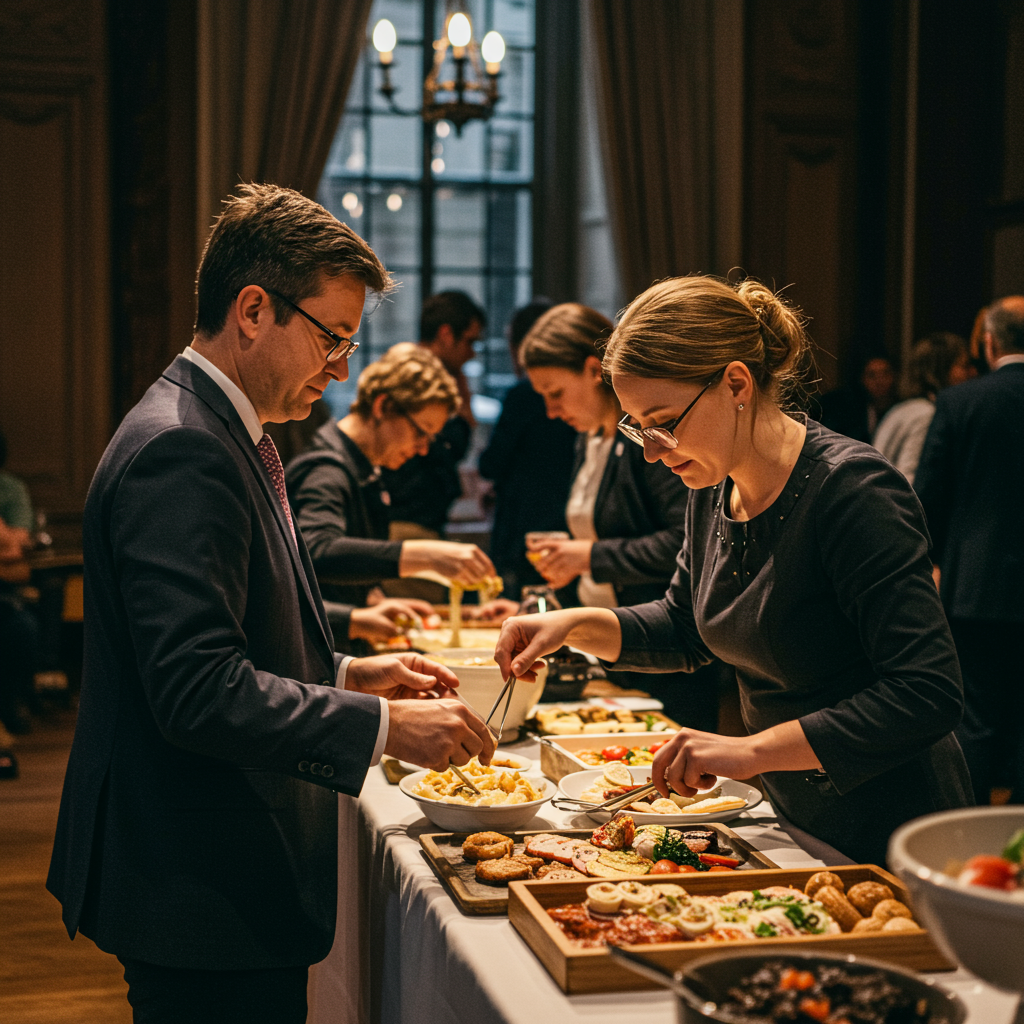
The Ultimate UK Catering Allergies Cultural Guide: Best Practices for Inclusive Hospitality
This article serves as an essential resource for catering and hospitality professionals in the United Kingdom. It provides a comprehensive framework for safely and respectfully managing food allergies, intolerances, and diverse cultural and religious dietary requirements. We delve into the legal landscape, including The Food Information Regulations 2014 and Natasha’s Law, and translate these requirements into actionable operational procedures. The benefits of adopting these best practices include enhanced customer safety, increased customer trust, improved brand reputation, and access to a wider market. Key performance indicators (KPIs) discussed include the reduction of allergen incidents to near-zero, achieving a Net Promoter Score (NPS) above +60 for dietary provision, and maintaining supplier compliance at over 99%. This guide is designed for head chefs, event managers, food and beverage directors, and all staff committed to delivering exceptional and inclusive culinary experiences.
Introduction
In the vibrant and multicultural landscape of the United Kingdom, the hospitality industry faces a critical and ever-growing challenge: catering to a diverse array of dietary needs. This is no longer a niche consideration but a fundamental aspect of professional service. From life-threatening food allergies to deeply held religious and ethical food choices, a caterer’s ability to respond with competence and care is paramount. This comprehensive uk catering allergies cultural guide is designed to equip businesses with the knowledge, processes, and confidence needed to excel in this complex environment. Failing to manage these requirements not only poses significant health risks to consumers but also exposes businesses to severe legal penalties, reputational damage, and financial loss. Conversely, those who master even catering unlock a powerful competitive advantage, building profound trust and loyalty with their clientele.
This guide adopts a systematic, risk-based methodology grounded in UK food law and industry best practices. We will explore the entire catering lifecycle, from initial client communication and meticulous menu planning to segregated kitchen production and transparent service delivery. Success will be measured through a series of key performance indicators (KPIs), including the rate of allergen-related incidents (target: <0.01% of covers), customer satisfaction scores related to dietary management (target: NPS > +60), staff competency assessment scores (target: >95% pass rate), and supplier compliance audits (target: 100% adherence to allergen information requests). By implementing the strategies outlined here, catering businesses can transform a daunting challenge into a hallmark of their quality and professionalism.
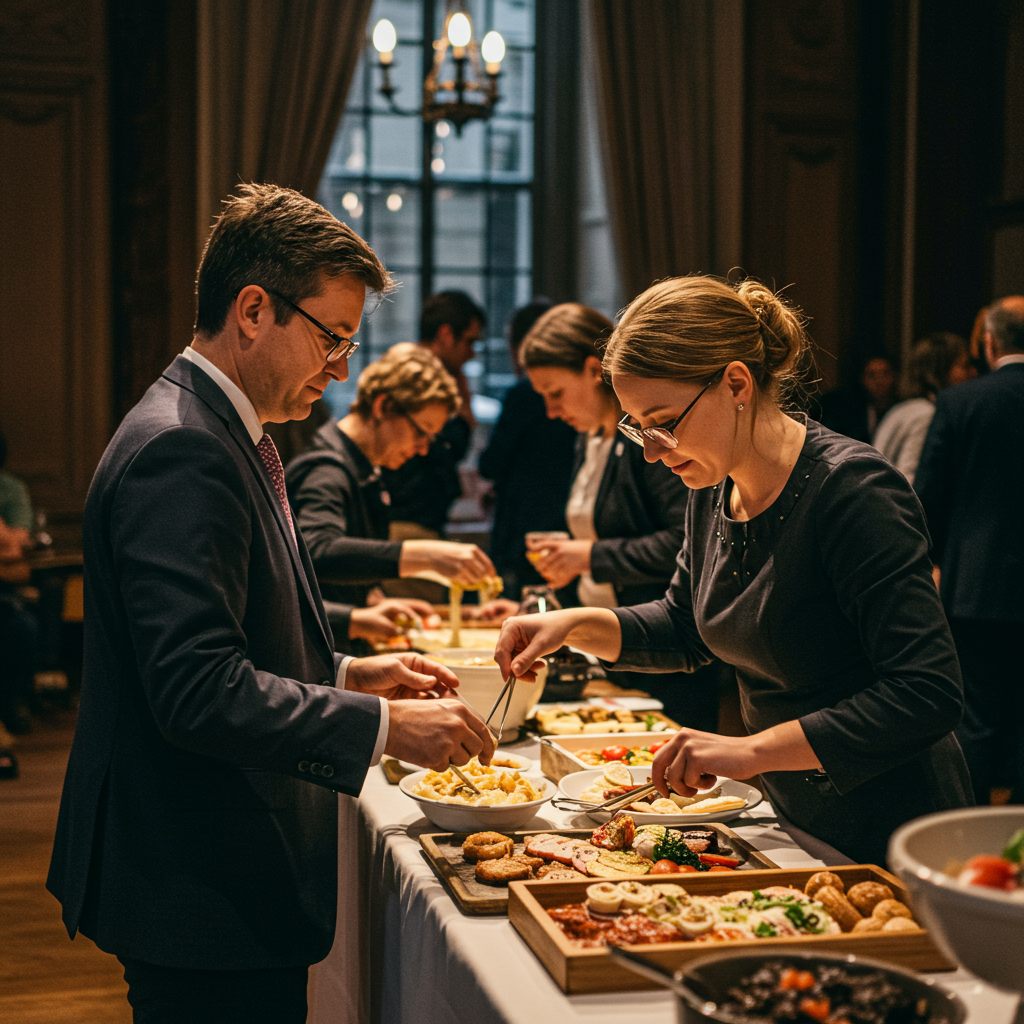
Vision, Values, and Proposition
Focus on Results and Measurement
Our vision is to foster a UK catering industry where every dining experience is safe, inclusive, and enjoyable for everyone guest. This is built on a foundation of core values: Safety First, where the well-being of guests is non-negotiable; Radical Transparency in all communications about ingredients and processes; Deep Respect for all cultural, religious, and ethical dietary choices; and a commitment to Operational Excellence. We apply the 80/20 principle by focusing intensive resources on preventing the most severe risks, particularly cross-contamination of the 14 major allergens mandated by UK law. All our processes are designed to meet or exceed standards set by the Food Standards Agency (FSA), SALSA (Safe and Local Supplier Approval), and the principles of HACCP (Hazard Analysis and Critical Control Points) as outlined in ISO 22000.
- Value Proposition: We offer peace of mind. For clients, this means the confidence that their guests’ needs will be handled with professional rigor. For guests, it’s the freedom to enjoy an event without fear or anxiety.
- Quality Criteria: Our success is not just measured by the absence of incidents, but by the positive feedback from guests who feel seen, understood, and cared for.
- Decision-Making Matrix for Suppliers: We use a weighted scorecard for all ingredient suppliers, prioritising those with third-party allergen-free certification (e.g., BRCGS), robust traceability systems, and transparent allergen communication policies over purely cost-based metrics. A supplier must score a minimum of 90/100 on our matrix to be considered for high-risk “free-from” menu items.
Core Services and Operational Excellence
Portfolio and Professional Profiles
Our services are specifically designed to address the challenges highlighted in this UK catering allergies cultural guide. We move beyond standard catering to offer specialized solutions, including: Bespoke Menu Development for guests with multiple or complex allergies; Cultural and Religious Menu Consultation (e.g., Halal, Kosher, Jain); On-site Allergen Champions for large events to oversee all dietary provision; and comprehensive Staff Training Programs certified by recognized bodies. Our team includes key professional profiles such as a Head of Nutrition & Safety with a dietetics background, Allergen-Specialist Chefs trained in “free-from” cooking techniques, and Client Managers skilled in capturing and translating complex dietary information into flawless operational plans.
Operational Process
- Phase 1: Detailed Requirements Capture. We use a proprietary digital form to gather granular detail on every dietary need, including the nature of the allergy/intolerance, severity, and cross-contamination risk level. KPI: Information accuracy rate > 99.5%.
- Phase 2: Menu Design & Risk Assessment.Our culinary and safety teams collaborate to design menus that are both delicious and safe. Each dish for a dietary-restricted guest comes with a documented risk assessment. KPI: Zero “high-risk” ingredients proposed for critical dietary meals.
- Phase 3: Sourcing & Segregation.We procure ingredients from vetted suppliers and enforce strict segregation protocols from goods-in to plating, using designated storage, equipment (e.g., purple chopping boards), and preparation areas. KPI: 100% compliance in internal kitchen audits.
- Phase 4: Execution & Communication.Dietary-specific meals are prepared last or in a dedicated timeframe, clearly labeled with the guest’s name and requirements, and delivered by a trained member of staff. KPI: Net Promoter Score (NPS) for dietary handling > +60.
- Phase 5: Post-Event Review. All feedback is logged, and any near-misses or incidents are subjected to a root cause analysis to drive continuous improvement. KPI: Implementation of corrective actions within 48 hours.
Performance Metrics Framework
| Objective | Key Performance Indicators (KPIs) | Core Actions | Expected Result |
|---|---|---|---|
| Achieve Zero Severe Allergen Incidents | Number of anaphylactic or severe reactions per 10,000 covers. | Implement comprehensive staff training, strict kitchen segregation (purple protocol), and a robust guest communication system. | <0.01 incidents per 10,000 covers annually. A 99% reduction from industry average. |
| Enhance Guest Confidence and Satisfaction | Net Promoter Score (NPS) from guests with dietary needs. Average rating on feedback forms (1-5 scale). | Proactive communication before the event, clear on-site labeling, knowledgeable FOH staff. | NPS score of +60 or higher. Average satisfaction rating of 4.8/5.0. |
| Ensure 100% Supplier Compliance | Percentage of suppliers providing complete and accurate allergen specification sheets. Audit failure rate. | Mandatory supplier vetting process, regular audits, and clauses in contracts requiring immediate notification of ingredient changes. | 100% of suppliers compliant. Supplier-related allergen errors reduced to zero. |
| Optimize Operational Efficiency | Time taken to produce a special dietary meal vs. a standard meal. Food waste percentage for “free-from” ingredients. | Standardised recipes for common dietary needs, batch preparation of base sauces/dressings in a controlled environment. | Production time deviation <10%. Food waste for specialized ingredients <5%. |

Event Management and Production
Professional Development and Management
The successful production of an inclusive event hinges on meticulous logistical planning and coordination that goes far beyond the kitchen. It involves a holistic approach to event management where dietary safety is a central thread. This includes developing segregated supply chains, where “free-from” products are sourced from certified suppliers and transported in sealed containers to prevent contamination en route. For large-scale events, we may establish a dedicated satellite kitchen or a completely isolated “safe zone” within the main kitchen. Our Event Production Managers are trained in food safety and hold at least a Level 3 Food Safety qualification, enabling them to oversee and audit the entire process from a compliance perspective. Calendars are structured to ensure that high-risk food preparation (e.g., baking with gluten flour, using nuts) does not occur at the same time as “free-from” meal preparation.
- Critical Documentation Checklist:
- Finalized Guest Dietary Matrix: A master spreadsheet listing every guest with a requirement, their specific needs, table number, and assigned meal. This is the “single source of truth” on the event day.
- Supplier Allergen Declaration Dossier: A binder containing signed specification sheets for every single ingredient used in dietary-specific meals.
- Kitchen Production Plan: A detailed timeline showing when and where each dietary meal will be prepared, including cleaning and sanitation breaks between different food types.
- Staff Briefing Sheets: Concise, one-page summaries for each FOH and BOH team member outlining their specific responsibilities regarding allergens and dietary needs for the event.
- Stock and Contingency Planning:
- Alternative Ingredients: For every key “free-from” ingredient, we identify a pre-approved alternative from a different supplier in case of last-minute stock issues.
- Emergency Meal Kits: We maintain a stock of pre-prepared, ambient, sealed meals covering a range of common dietary needs (e.g., gluten-free vegan pasta) to handle unexpected guests or last-minute requests that cannot be safely accommodated by the main kitchen.
- Medical Emergency Plan: A documented procedure for responding to an allergic reaction, including designated first aiders, location of adrenaline auto-injectors (if permitted), and clear instructions for contacting emergency services with precise location details.

Communication and Menu Engineering
Messages, Formats, and Conversions
Clear, consistent, and reassuring communication is the cornerstone of effective allergen and cultural needs management. Your content, from website copy to menu descriptions, should build confidence. The primary “hook” is not just about food, but about safety and respect: “Catering for Everyone, with Care for Everyone.” Calls to Action (CTAs) should be direct and empowering for the client, such as “Plan Your Inclusive Event” or “Discuss Your Dietary Needs With Our Specialist.” We conduct A/B testing on our dietary information request forms to see which format yields the most accurate and complete information from clients, measuring the conversion rate from initial inquiry to a fully documented dietary plan. The language used in menus is critical. Vague terms like “nut-free” are avoided in favor of precise statements like “Made in a kitchen that handles nuts. This dish is prepared with no nut-containing ingredients.” This transparency is a core tenet of our uk catering allergies cultural guide.
Content Production Workflow
- Information Gathering (Client Manager): Collect all dietary requirements using the optimized digital form. Liaise with the client to clarify any ambiguities.
- Menu & Allergen Matrix Draft (Head Chef & Safety Officer):The Chef designs the menu while the Safety Officer simultaneously populates a master allergen matrix, cross-referencing every ingredient against supplier declarations.
- Internal Review & Approval (Management):The draft menu and matrix are reviewed for safety, feasibility, and clarity.
- Client-Facing Content Creation (Client Manager): A simplified, clear version of the menu is created for the client, using an agreed set of symbols for dietary information (e.g., GF, V, H). This is sent for final approval.
- Production of On-Site Materials (Operations Team): Once approved, the team produces all necessary on-site collateral: individual place cards for guests with severe allergies, clearly labeled buffet signage, and cheat sheets for service staff.
- Digital Publishing (Marketing Team): For public-facing menus (e.g., in a restaurant), the information is uploaded to the website and digital menu platforms with filterable allergen information. Conversion is tracked by how many users engage with the dietary filters.

Training and Staff Development
Catalogue of Demand-Oriented Training Modules
A well-informed team is the first and best line of defense against dietary incidents. Our training programs are not one-off events but a continuous cycle of learning and reinforcement, tailored to different roles within the organization.
- Module 1: The Legal Imperative (All Staff): A 60-minute online module covering the Food Information Regulations 2014 and Natasha’s Law. Focuses on the legal duty of care and the consequences of non-compliance. Assessed via a multiple-choice test.
- Module 2: The Science of Allergies (Kitchen & FOH Staff): A 2-hour interactive workshop explaining the 14 major allergens, the difference between intolerance and allergy, and the physiology of anaphylaxis.
- Module 3: Kitchen Best Practices – The Purple Protocol (Kitchen Staff): A 4-hour practical session on preventing cross-contamination, including the use of color-coded (purple) equipment, designated prep areas, cleaning procedures, and safe ingredient storage. Assessed via direct observation of tasks.
- Module 4: Cultural & Religious Diets (Menu Planners, FOH Staff, Senior Chefs): A seminar covering the principles of Halal, Kosher, Hindu (vegetarian/Jain), and other significant dietary practices, focusing on ingredient restrictions and handling requirements.
- Module 5: The Art of Communication (FOH Staff & Client Managers): A role-playing workshop focused on how to take dietary information accurately, how to respond to questions from anxious guests, and what to do when you don’t know the answer.
- Module 6: Emergency Response Simulation (All Staff): An annual practical drill simulating a guest having an anaphylactic reaction. This includes practicing the emergency communication chain and the use of trainer adrenaline auto-injectors.
Methodology and Career Path
Our methodology is based on blended learning, combining e-learning for foundational knowledge with hands-on, scenario-based training for practical skills. Competency is evaluated using detailed rubrics during practical assessments. For example, a chef’s performance on the “Purple Protocol” module is scored on 10 specific criteria, from handwashing technique to correct storage of allergen-free ingredients. Successful completion of core modules is mandatory for all new hires and is a prerequisite for promotion to supervisory roles. We foster a culture of continuous professional development by providing a clear career path: a Commis Chef can progress to a “Dietary Specialist Chef” role by completing advanced modules and demonstrating consistent excellence in practice. We also partner with local colleges to offer placements for catering students, ensuring the next generation enters the workforce with a strong foundation in this critical area.
Operational Processes and Quality Standards
From Inquiry to Post-Event Analysis
A robust, documented process is essential for consistent and safe delivery. Our end-to-end operational pipeline ensures that every dietary request is handled with the same level of rigor, whether for a single guest or a thousand.
- Diagnosis & Information Capture:The process begins with the client inquiry. The client is immediately sent a link to our secure Dietary Information Portal. The deliverable is a completed form for each guest with a special requirement. Acceptance criteria: The form must be 100% complete; any ambiguities are flagged for a follow-up call within 4 working hours.
- Proposal & Risk Assessment:Based on the captured data, we develop a bespoke menu proposal and a preliminary risk assessment. The deliverable is a client-facing proposal including menu, pricing, and a clear statement of our safety procedures. Acceptance criterion: Client signs off on the proposal, acknowledging our shared responsibility model.
- Pre-Production Planning: This is the most critical phase. Deliverables include: a final, locked-down Guest Dietary Matrix; a complete ingredient procurement list with specified suppliers; a detailed Kitchen Production Schedule with designated “safe” time slots; and a full set of FOH briefing documents. Acceptance criterion: All documents are signed off by the Head Chef, Event Manager, and Safety Officer 72 hours before the event.
- Execution & Delivery:The plan is put into action. Key processes include: goods-in checks against specifications, segregated preparation, individual labeling of meals, and a “final check” by the Allergen Champion before a meal leaves the kitchen. Deliverable: Safely prepared and delivered meals. Acceptance criterion: 100% match between the delivered meal and the specification on the Dietary Matrix.
- Closure & Continuous Improvement:Post-event, we gather feedback from the client and guests. We conduct an internal debrief to discuss what went well and what could be improved. Deliverables: A client feedback summary and an internal Corrective Action Report for any identified issues. Acceptance criteria: The report is completed and actions are assigned within 5 working days of the event.
Quality Control and Service Level Agreements (SLAs)
- Roles & Responsibilities:The “Allergen Champion” (typically a senior chef) has ultimate authority in the kitchen to halt production if a safety protocol is breached. The “FOH Dietary Lead” is the single point of contact for guests with dietary needs during service.
- Escalation Protocol: Any uncertainty about an ingredient or a guest’s request is immediately escalated to the Allergen Champion. If a guest feels unwell, the FOH Lead immediately initiates the Medical Emergency Plan.
- Service Level Agreements (SLAs): We contractually commit to acknowledging all dietary information within 24 hours of receipt, providing a draft menu within 3 business days, and ensuring all on-site staff can answer basic questions about the 14 major allergens in the dishes being served.
| Phase | Key Deliverables | Quality Control Indicators | Risks & Mitigation Strategies |
|---|---|---|---|
| Diagnosis | Completed Dietary Information Form per guest. | Form completion rate >98%. Number of clarification calls needed. | Risk: Incomplete or inaccurate information from the client. Mitigation: Mandatory fields in the form; follow-up calls for any vague entries like “dairy issues”. |
| Pre-Production | Finalized Guest Dietary Matrix; Supplier spec sheets; Kitchen Production Plan. | Internal sign-off by all department heads. Zero discrepancies between matrix and production plan. | Risk: Last-minute ingredient substitution by a supplier. Mitigation: Contractual requirement for suppliers to notify of changes; pre-approved alternative ingredients list. |
| Execution | Individually prepared, labeled, and checked meals. | Number of “final check” rejections by Allergen Champion. FOH staff knowledge spot-checks. | Risk: Human error causing cross-contamination in a busy kitchen. Mitigation: Physical segregation (purple zone), dedicated utensils, reduced menu complexity for dietary meals. |
| Closure | Client feedback report; Internal Corrective Action Report. | NPS score; Number of positive/negative comments on dietary provision. Time to close corrective actions. | Risk: Failure to learn from near-misses. Mitigation: A “no-blame” reporting culture; making the debrief a mandatory part of the event closure process. |
Case Studies and Application Scenarios
Case Study 1: High-Profile Tech Conference for 500 Delegates
Challenge: A three-day conference for a global tech firm with 500 international delegates. The client provided a list of 75 attendees with specific dietary needs, including 5 with severe airborne nut allergies, 12 coeliacs, plus multiple requests for vegan, Halal, and Kosher meals. The venue was a historic building with a small, outdated kitchen.
Solution: We designated the entire on-site kitchen as a “nut-free zone” for the duration of the conference, banning all nut products from the premises. A separate, certified Kosher supplier was engaged to provide sealed, pre-prepared meals. All Halal meat was sourced from a certified supplier and handled with dedicated equipment. For the coeliac delegates, we created a dedicated gluten-free preparation and service station, using a separate oven and new, sealed equipment. We developed a mobile app for the event where delegates could view daily menus with full ingredient lists and allergen filters. Each delegate with a severe allergy received a personalized welcome call from our Head of Safety before the event to confirm their needs and build confidence.
KPIs and Results: The event was completed with zero allergen incidents. The post-event survey showed an NPS of +82 specifically for the food and beverage experience, with numerous comments praising attention to detail. Food cost was managed to within a 3% deviation of the budget, despite the premium for certified ingredients. The client signed a three-year contract for future events based on the success of the dietary management programme.
Case Study 2: Daily Catering for a 150-Pupil Independent School
Challenge: To provide daily lunch for a primary school where 10% of pupils had medically diagnosed food allergies, including dairy, egg, and soy. The challenge was to create nutritious, appealing meals for children while ensuring absolute safety and preventing any child from feeling singled out.
Solution: We implemented a “Free-From for All” menu design philosophy. The core daily menu was designed to be naturally free from the most common allergens at the school. For example, pasta sauces were made without dairy, and desserts were egg-free. This reduced the number of “special” meals required. For children with multiple or less common allergies, a dedicated “safe station” was established in the kitchen. We worked with the school to create a photo-ID system, where each child with an allergy had a coded symbol on their lunch card, which was discreetly checked by serving staff. We also run termly “tasting sessions” for parents of allergic children to sample the menu and ask questions directly to the chefs.
KPIs and Results: Over a full academic year, there were no cross-contamination incidents. A parent satisfaction survey showed a 40% increase in confidence in the school’s catering. The “Free-From for All” approach led to a 15% reduction in overall ingredient costs by simplifying procurement and reduced food waste by 20% as there were fewer unpopular “special” meals left over. The school achieved an “Excellent” rating for its food provision in its subsequent inspection.
Case Study 3: Large-Scale Public Festival Food Stall
Challenge: To operate a food stall at a multi-day music festival with 50,000 attendees. The environment was high-pressure, with temporary staff, limited space, shared washing facilities, and a high risk of environmental cross-contamination (e.g., gluten from a neighboring pizza stall).
Solution: Rather than trying to cater to all needs, we adopted a specialist approach. The stall was branded as “The Gluten-Free Grill.” The entire menu was 100% gluten-free, using certified GF bread, sausages, and sauces. This eliminated the risk of on-stall cross-contamination entirely. All ingredients arrived pre-prepared from our central, controlled kitchen. Staff, though temporarily, underwent a focused 2-hour training session specifically on coeliac disease and serving gluten-free consumers. Signage was bold and clear: “100% Gluten-Free, 100% Delicious.” We also provided a folder with full ingredient specifications for customers with other allergies to consult.
KPIs and Results: The stall consistently sold out, with revenue 30% above the initial projection, demonstrating the high demand for safe “free-from” options in public settings. We received over 50 positive mentions on social media, specifically tagging our brand for providing a “safe haven” for coeliacs. We achieved the maximum 5-star Food Hygiene Rating from the local authority inspectors, who praised our focused approach and clear documentation. This successful model has since been rolled out as a separate event-catering brand.
Step-by-Step Guides and Templates
Guide 1: How to Implement a “Purple Protocol” for Allergen Control
This guide provides a step-by-step process for creating a dedicated allergen-control system in your kitchen, primarily using purple-colored equipment as a visual cue.
- Step 1: Risk Assessment. Identify the highest-risk allergens for your business (e.g., gluten, nuts, dairy). Decide which of these will be managed under the Purple Protocol.
- Step 2: Procure Dedicated Equipment. Purchase a full set of food preparation equipment in purple. This must include: chopping boards, knives, tongs, spatulas, mixing bowls, and thermometers. Store these items in a dedicated, labeled purple container, separate from all other equipment.
- Step 3: Designate a Preparation Area. Allocate a specific counter or table in the kitchen that will be used exclusively for preparing “free-from” meals. This area should be clearly labeled “Purple Zone: Allergen-Free Preparation Only.”
- Step 4: Establish the Workflow. Create a strict rule: “free-from” meals are prepared first, before the main service, or at a designated quiet time. The chef preparing these meals must wash their hands thoroughly and put on a new, clean apron (ideally a purple one) before entering the Purple Zone.
- Step 5: Cooking and Service. If possible, use a dedicated fryer or oven for “free-from” cooking. When plating, use a clean plate from the bottom of the stack. The finished dish should be marked with a purple flag or sticker to identify it clearly for the service staff.
- Step 6: Cleaning and Storage. All purple equipment must be washed separately, either in a dedicated dishwasher cycle or by hand in a separate sink. It must then be dried and returned immediately to its designated purple storage container.
- Step 7: Train and Audit. Train all kitchen staff on the Purple Protocol. Conduct weekly spot-checks to ensure the rules are being followed without exception. Document these checks in your food safety log.
Final Checklist: Have you purchased equipment? Is the zone labelled? Is the workflow documented? Are staff trained? Is there an audit system in place?
Guide 2: Creating and Using a Guest Dietary Matrix
The Guest Dietary Matrix is the single most important document for any event. Here is how to create and use it effectively.
- Step 1: Design the Template. Create a spreadsheet with the following columns: Guest Full Name, Table Number, Seat Number, Dietary Requirement(s) (be specific, e.g., “Severe Peanut Allergy, Vegan”), Cross-Contamination Risk (Low/Medium/High), Meal Assigned (e.g., “GF Vegan Main Course”), Notes (e.g., “Guest carries EpiPen”), Confirmation Status (Confirmed with guest: Y/N).
- Step 2: Populate the Matrix. As you receive dietary information from the event organiser, meticulously enter it into the matrix. Do not use abbreviations. Be precise. If a guest lists “No red meat,” clarify if this is a preference or a religious requirement (e.g., for a Hindu guest).
- Step 3: Cross-Reference and Verify. Once the list is complete, the Head Chef and Event Manager must review it together. The chef confirms that a safe meal can be produced for every single requirement listed. Any high-risk requirements should trigger a direct, personal confirmation with the guest or organiser.
- Step 4: Create Production and Service Copies. Create tailored versions of the matrix. The Kitchen Copy should highlight the meal to be prepared. The FOH Copy should be organised by table number to allow servers to see at a glance who at their table has a special meal. This copy should be held by the FOH Dietary Lead only.
- Step 5: Use During Service. The kitchen uses their copy as a production checklist. When a meal is plated, it is ticked off the list. The FOH Lead uses their copy to direct servers to the correct guest and to verbally confirm the meal with them, e.g., “Mr. Smith, here is your gluten and dairy-free main course.”
- Step 6: Final Reconciliation. After the event, the FOH Lead and Head Chef reconcile their copies to confirm every meal was delivered as specified. This final document is archived as part of the event record.
Guide 3: A 5-Step Process for Vetting a New Food Supplier
Your safety procedures are only as strong as your supply chain. Use this process to vet new suppliers for allergen and cultural compliance.
- Step 1: Request Documentation. Before placing any order, request the supplier’s full product specification sheets for the ingredients you intend to buy. This must include a full ingredient list, a “free-from” statement if applicable, and a “may contain” warning for any of the 14 major allergens handled on their site. Also request a copy of their latest third-party audit certificate (e.g., SALSA, BRCGS).
- Step 2: Scrutinise “May Contain” Labels. A “may contain nuts” warning on a bar of chocolate is a critical piece of information. Assess this risk in the context of your business. Can you use this product, or do you need to find a supplier with a dedicated nut-free production line? Never ignore a “may contain” statement.
- Step 3: Query Their Process. Call the supplier’s technical manager. Ask them specific questions about their allergen segregation procedures. For example: “How do you prevent cross-contamination between your standard flour and your gluten-free flour?” Their ability to answer confidently and in detail is a good indicator of their competence.
- Step 4: Conduct a Trial Order and Goods-In Check. Place a small trial order. When it arrives, conduct a thorough goods-in check. Does the labelling on the physical product match the specification sheet you were sent? Is the packaging intact? Is the “free-from” product clearly distinguished from their other products?
- Step 5: Formal Approval and Continuous Monitoring. If the supplier passes all checks, add them to your “Approved Supplier List.” Your approval should be conditional on them agreeing in writing to inform you of any changes to ingredients or production processes before they are implemented. Schedule an annual review of their documentation.
Internal and External Resources (without links)
Internal Resources
- Allergen Matrix Template (Excel Spreadsheet)
- Supplier Vetting Questionnaire Form
- Kitchen Allergen Risk Assessment Checklist
- Standard Operating Procedure (SOP) for the Purple Protocol
- Staff Training Manual: “Inclusive Hospitality – Our Commitment to Safety and Respect”
- Medical Emergency Incident Report Form
External Resources of Reference
- Food Standards Agency (FSA) – Allergen guidance for food businesses
- The Food Information Regulations 2014 – Official UK Government Legislation
- The Food Safety Act 1990 – Official UK Government Legislation
- Natasha’s Law (The UK Food Information Amendment, 2019) – Official Legislation
- Anaphylaxis UK – Charity providing resources and training on severe allergies
- Coeliac UK – Charity providing catering guides and accreditation for gluten-free service
- The Halal Monitoring Committee (HMC) – UK certification body for Halal food
- The Kashrut Division of the London Beth Din (KLBD) – UK certification body for Kosher food
Frequently Asked Questions
What is Natasha’s Law and who does it apply to?
Natasha’s Law came into effect in the UK in October 2021. It requires all food businesses to provide full ingredient lists and allergen labelling on foods that are pre-packed for direct sale (PPDS). This applies to any food that is packed by you before the customer selects or orders it, on the same premises from which it is sold. Examples include sandwiches, salads, and cakes packed on-site ready for a grab-and-go service. It does not apply to food that is packed to order in front of the customer.
What is the difference between “gluten-free” and “coeliac-safe”?
While often used interchangeably, there’s a crucial distinction. “Gluten-free” is a legal term in the UK for food that contains 20 parts per million (ppm) of gluten or less. This is safe for most people with coeliac disease. However, “coeliac-safe” implies a broader commitment to preventing cross-contamination. A food item can be made with gluten-free ingredients but become contaminated with gluten during preparation (e.g., using a shared toaster). True coeliac-safe catering requires dedicated equipment and processes, as outlined in our Purple Protocol guide.
How should I handle a “may contain” label from a supplier?
A “may contain” or “made in a factory that handles…” statement is a voluntary warning from the manufacturer that there is a risk of accidental cross-contamination. You must take this warning seriously. You cannot ignore it or dismiss it. You must pass this information on to your customers. For a guest with a severe allergy, a “may contain” product should be considered unsafe. Your policy should be to source alternative ingredients that do not carry this warning for high-risk meals.
What are the key differences between Halal and Kosher food preparation?
Both are religious dietary laws, but they are distinct. Halal (permissible in Islam) primarily prohibits pork and alcohol, and requires that other meat comes from an animal slaughtered in a specific manner (Zabiha). Kosher (fit for consumption by Jewish law) also has rules about slaughter (Shechita) but includes a complete separation of meat and dairy products. This means they cannot be prepared, cooked, or eaten together, requiring separate sets of kitchen equipment. Both have complex rules, and for certified provision, it is best to work with specialist suppliers and certifiers.
Can I legally refuse to serve someone with a very severe allergy?
This is a complex area. Under the Equality Act 2010, you cannot discriminate against someone with a disability, and a severe allergy can be considered one. However, you also have a duty of care under food safety law. If you genuinely cannot safely provide a meal for a customer due to the complexity of their allergies and the limitations of your kitchen, you can refuse service. The key is that this decision must be based on a genuine, documented risk assessment, not on convenience. You should explain clearly and respectfully why you cannot serve them, focusing on your inability to guarantee their safety.
Conclusion and Call to Action
Mastering the complexities of catering for allergies and cultural needs is no longer an optional extra; it is a fundamental pillar of professional hospitality in the 21st-century UK. It is a journey that requires commitment, investment in training, and the implementation of robust, verifiable processes. As we have demonstrated, the benefits extend far beyond legal compliance. A business that builds a reputation for safety and inclusivity gains a powerful competitive edge, earns unwavering customer loyalty, and fosters a positive and responsible workplace culture. The potential rewards, measured in KPIs such as near-zero incident rates, high NPS scores, and market growth, are significant.
The journey to excellence begins with a single step. We urge you to use this uk catering allergies cultural guide not just as a source of information, but as a practical toolkit. Your immediate call to action is to perform a thorough audit of your current operations. Use the checklists and guides in this article to identify your strengths and, more importantly, your vulnerabilities. Empower your team with the training they need to act confidently and correctly. By embedding these principles into the heart of your business, you can transform a significant challenge into your greatest strength, ensuring every guest feels not just fed, but truly cared for.
Glosario
- Anaphylaxis
- A severe, potentially life-threatening allergic reaction. Symptoms can affect the entire body and include difficulty breathing, swelling, and a drop in blood pressure. It requires immediate medical attention.
- Allergen
- A substance, typically a protein, that can cause an allergic reaction. In the UK, 14 major allergens must be declared by law if they are used as ingredients.
- Cross-Contamination
- The unintentional transfer of an allergen from one food or surface to another. This is a primary cause of allergic reactions in catering environments.
- HACCP (Hazard Analysis and Critical Control Points)
- A systematic, preventative approach to food safety that identifies potential biological, chemical, and physical hazards in production processes and designs measures to reduce these risks to a safe level.
- Halal
- An Arabic term meaning “permissible.” In relation to food, it refers to what is permissible to eat under Islamic law. This includes specific rules on which animals can be eaten and how they must be slaughtered.
- Kosher
- A Hebrew term meaning “fit” or “proper.” It refers to food that is prepared in accordance with Jewish dietary laws (Kashrut). Key rules include the complete separation of meat and dairy.
- Natasha’s Law
- The informal name for The UK Food Information Amendment, 2019. It mandates full ingredient and allergen labelling on food that is Pre-Packed for Direct Sale (PPDS).
- PPDS (Pre-Packed for Direct Sale)
- Food that is packaged at the same place it is offered or sold to consumers and is in this packaging before it is ordered or selected.
Internal links
- Click here👉 https://uk.esinev.education/masters/
- Click here👉 https://uk.esinev.education/diplomates/
External links
- Princeton University: https://www.princeton.edu
- Massachusetts Institute of Technology (MIT): https://www.mit.edu
- Harvard University: https://www.harvard.edu
- Stanford University: https://www.stanford.edu
- University of Pennsylvania: https://www.upenn.edu