
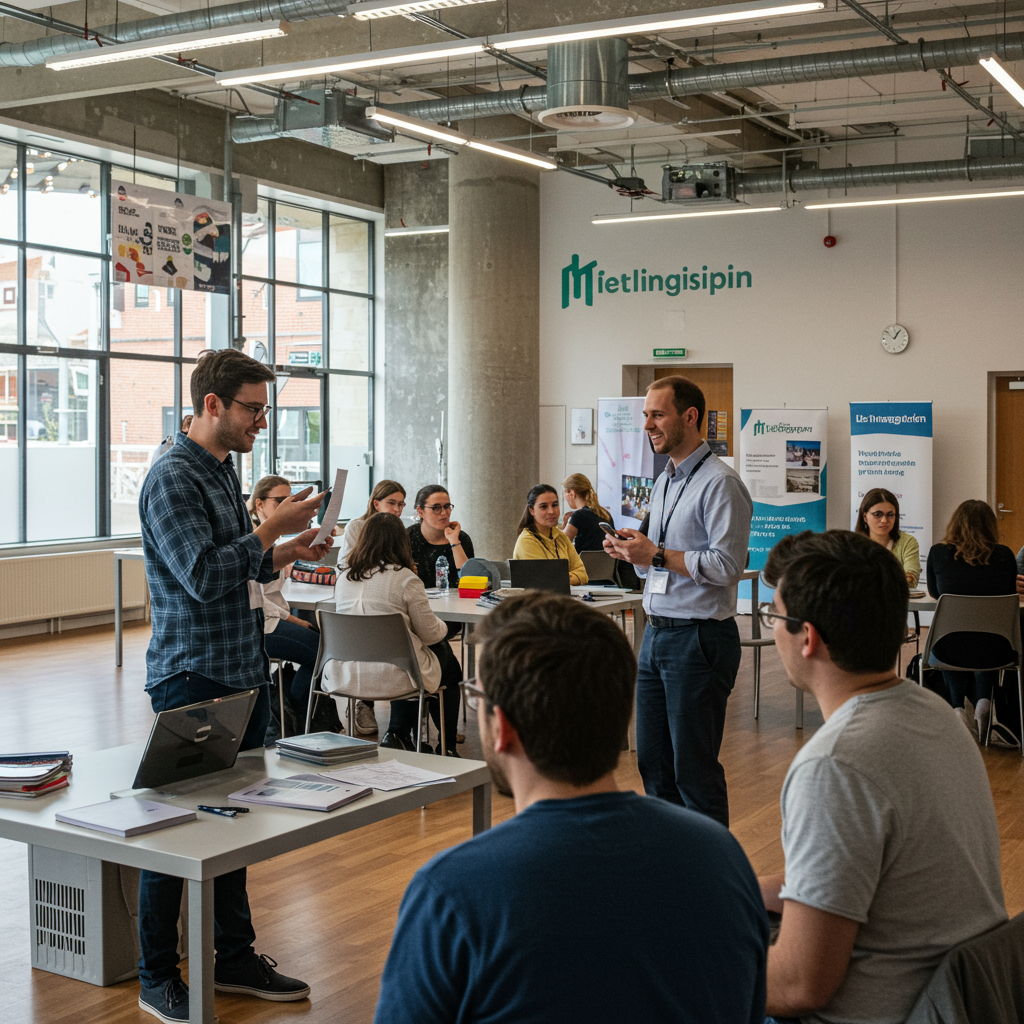
Open House and University Fair Management: Optimizing Flows and Communication
This article details a comprehensive methodology for managing open houses and university fairs, transforming these events into powerful recruitment tools. We cover everything from strategic planning and omnichannel communication to execution and post-event analysis. The focus is on optimizing the prospective student experience, maximizing lead conversion, and ensuring a tangible return on investment (ROI).
Through guides, case studies, and key metrics such as Cost Per Acquisition (CPA), Conversion Rate, and Net Promoter Score (NPS), we offer a framework for higher education institutions to convert interest into actual enrollments.
Introduction
In the competitive landscape of higher education, open days and university fairs have become critical touchpoints in the student journey. However, their success no longer depends solely on logistics. Effective higher education open days fair management is a strategic exercise that integrates marketing, communication, technology, and data analytics to create memorable and, above all, convertible experiences. This holistic approach transforms an event from a simple showcase into a talent acquisition engine, where every interaction is designed to guide prospective students toward enrollment. The transition to hybrid models, which combine the richness of the in-person experience with the reach of the virtual format, demands even more sophisticated planning and flawless execution.
Our methodology is based on a continuous improvement cycle: Plan, Execute, Measure, and Optimize. Each phase of the process is supported by clear key performance indicators (KPIs), such as registration rate, attendance percentage (in-person or virtual), the quality of leads generated (measured by a scoring system), cost per attendee, and finally, the conversion rate from attendee to applicant and from applicant to enrolled student. The goal is to provide institutions with a robust framework that not only ensures smooth and engaging events but also offers complete visibility into the return on investment (ROI) of each initiative.
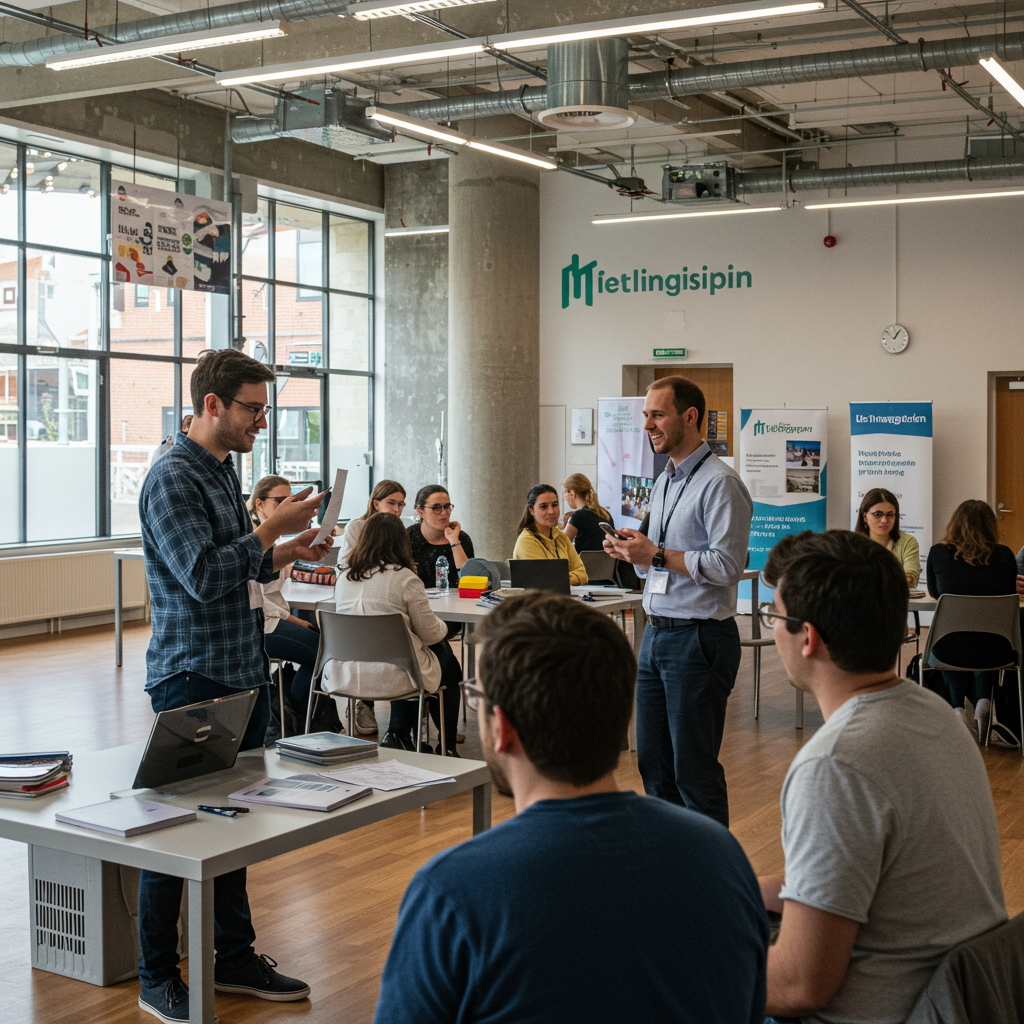
Vision, values, and proposal
Focus on results and measurement
Our vision is to transform event organization We transformed educational initiatives from a cost center to a demonstrably profitable one. We applied the Pareto principle (80/20), focusing on activities that have the greatest impact on brand acquisition and reputation. This means prioritizing a personalized attendee experience over superfluous logistical details and using technology not as an end in itself, but as a means to enhance interaction and gather valuable data. Our standards align with industry best practices, ensuring accessibility, sustainability, and data security for all the events we manage.
- ROI-Focused Value: Every euro invested must have a measurable return, whether in the form of qualified leads, enrollments, or improved brand positioning.
- Student-First Experience: We design every touchpoint (from the first email to the post-event survey) to be intuitive, informative, and aligned with Generation Z expectations.
- Data-Driven Decisions: We use predictive analytics to estimate attendance, A/B testing to optimize communication campaigns, and real-time dashboards to monitor event performance.
- Quality and Consistency: We implement a quality management system that ensures every event, regardless of size or format, meets the highest standards. (in-person, virtual, or hybrid), maintain a standard of excellence consistent with the institution’s brand.
Services, Profiles, and Performance
Portfolio and Professional Profiles
We offer a modular service portfolio that covers the entire lifecycle of open house and university fair management. From initial strategic consulting to turnkey execution and results analysis. Our team is comprised of specialized profiles: Event Project Manager (responsible for planning and budgeting), Marketing and Communications Specialist (in charge of promotion and engagement), Operations Coordinator (on-site and virtual logistics), and Data Analyst (measurement and reporting).
Operational Process
Phase 1: Diagnosis and Strategy (Weeks 1-2) Definition of objectives, target audience, budget, and KPIs. KPI: Approval of the strategic plan with an estimated budget deviation of <5%. Phase 2: Planning and Production (Weeks 3-8) Selection of platform/venue, program development, communication plan, and coordination of speakers and suppliers. KPI: Registration rate 20% higher than the attendance target. Phase 3: Execution and Monitoring (Day of the event) Real-time management, technical support, moderation, and data collection. KPI: Event Net Promoter Score (NPS) ≥ 40. Phase 4: Post-event and Analysis (Weeks 9-10) Satisfaction surveys, follow-up communication, data analysis, and ROI report preparation. KPI: Attendee-to-applicant conversion rate > 15%.
Tables and examples
Hands-on workshop “3D Print an Organ”, live chat with alumni, segmented post-event email marketing campaign.Generate 150 qualified leads; achieve a 20% conversion rate (30 applications).Improve the brand’s perception as an innovative center.NPS score; social media mentions with the event hashtag.Virtual tour of the laboratories with VR headsets, demos of research projects, speakers from leading technology companies.NPS > 50; 300% increase in positive hashtag mentions.Optimize cost per acquisition (CPA)Total event cost / Number of attributable new enrollments.Use of a virtual platform to reduce travel costs, automated communications, and sponsorship from companies in the sector.Reduce CPA by 15% compared to the previous year, bringing it below €800 per student.
| Objective | Key Performance Indicators (KPIs) | Key Actions | Expected Result |
|---|---|---|---|
| Increase applications for the Biomedical Engineering Degree by 10% | Number of attendees at the specific talk; Conversion rate of attendees to applicants. |
Representation, campaigns and/or production
Professional development and management
The flawless execution of a trade fair or open house depends on rigorous logistical and production coordination.
This includes managing suppliers (catering, audiovisual equipment, virtual platforms), obtaining permits if necessary, planning the layout of spaces (stands, rooms, networking areas), and designing signage to guide the flow of people. A detailed production schedule, with clear milestones and assigned responsibilities, is the essential tool. For hybrid events, the complexity doubles, requiring seamless integration between the physical and digital experiences, ensuring that both audiences feel equally catered for.
Technical Contingency Checklist:
Redundant internet connection (fiber + 4G/5G).
Backup audiovisual equipment (microphones, projectors).
Dedicated technical support for the virtual platform throughout the event.
Communication plan prepared for technical failures (email, SMS, social media).
Staff and Volunteer Checklist:
Roles and responsibilities defined in writing.
Mandatory pre-event training session.
Internal communication channel for the day of the event (e.g., group chat) WhatsApp).
- Protocol for handling difficult questions or crisis situations.
- Logistics Checklist:
- Confirmation from all suppliers 72 hours in advance.
- Detailed setup and teardown plan.
- Accessibility plan for people with reduced mobility.
- Management of accreditations and materials (welcome packs, brochures).

Messages, Formats, and Conversions
Content is the vehicle for the institution’s value proposition. In higher education event management, content must be authentic, relevant, and actionable. We use a multichannel content strategy that begins weeks before the event and extends well afterward. The initial hook might be a teaser video featuring current students. During the event, interactive content such as surveys, live Q&A sessions, and hands-on workshops maintains engagement. Post-event, content focuses on lead nurturing, offering session recordings, detailed program information, and clear calls to action (CTAs) such as “Schedule a meeting with an advisor” or “Start your application now.” We conduct A/B testing on email subject lines and landing page CTAs to optimize open and conversion rates.
Ideation and Planning: Defining key themes, formats (video, post, webinar, virtual tour), and editorial calendar. Responsible: Marketing Specialist.
Creation and Production: Copywriting, graphic design, video recording and editing. Responsible: Content Team.
Distribution and Promotion: Social media posting, email campaigns, paid advertising. Responsible: Digital Marketing Specialist.
Interaction and Moderation: Managing comments and questions during the promotion and live event. Responsible: Community Manager.
- Analysis and Optimization: Measuring the reach, engagement, and conversion of each piece of content to improve future campaigns. Responsible: Data Analyst.
Training and employability
Demand-driven catalog
Staff and volunteers are brand ambassadors during the event. Proper training is crucial to ensure they convey the right message and deliver an exceptional experience.
We develop customized training modules.
- Module 1: The Unique Value Proposition. Understanding and communicating the key differentiators of the institution and its programs.
- Module 2: Communication Techniques and Active Listening. How to interact effectively with prospective students and their families, responding to their real needs.
- Module 3: Using Lead Generation Tools. Hands-on training in the app or CRM system used to quickly and accurately register attendee data.
- Module 4: Event Protocol and FAQ Management. Knowing the program, the venues, and having answers prepared for the most common questions.
- Module 5: Brand Representation in a Virtual Environment. Best practices for on-camera interaction, Chat moderation and virtual room management.
Methodology
Our training methodology is eminently practical, based on role-playing common scenarios and the use of clear evaluation rubrics. We assess participants on their ability to communicate key messages, manage difficult conversations, and use technology efficiently. After the training, participants join a pool of “certified ambassadors” for future events, ensuring a high-performing team and improving their own employability by developing communication and representation skills.
Operational Processes and Quality Standards
From Request to Execution
-
- Diagnosis (1 week): Initial meeting to understand needs. Deliverable: Event Requirements Document. Acceptance Criteria: Client signature.
- Proposal (1 week): Concept development, preliminary budget, and timeline. Deliverable: Strategic and Financial Proposal. Acceptance Criteria: Budget approval with a maximum deviation of 10%.
- Pre-production (4-10 weeks): Detailed planning, vendor contracting, content creation, and campaign launch. Deliverable: Detailed Project Plan. Acceptance Criteria: Weekly milestones met.
- Execution (1-3 days): Event development. Deliverable: Live event. Acceptance Criteria: Meeting engagement and satisfaction KPIs in real time (e.g., >85% satisfaction in instant surveys).
- Closure (2 weeks): Feedback collection, data analysis, and final report. Deliverable: Performance and ROI Report. Acceptance Criteria: The report clearly demonstrates the achievement (or non-achievement) of the initial objectives.Quality Control
Roles: The Project Manager is ultimately responsible for quality. Each area leader (communication, operations) is responsible for quality within their domain.
Escalation: An escalation matrix is established to resolve issues, from minor incidents managed by the on-site team to major crises requiring intervention from the steering committee.
Acceptance Indicators: Each key deliverable has quantitative and qualitative acceptance criteria. For example, the “registration landing page must have a conversion rate > 25%”.
- SLAs: Service Level Agreements (SLAs) are defined with critical suppliers, especially with virtual platforms (e.g., “99.9% uptime”, “technical support with response time < 5 minutes”).
Low number of registrations. Mitigation: Diversify promotional channels, retargeting campaign. Platform failure. Mitigation: Hire a provider with robust SLAs, have a plan B (e.g., Zoom).ExecutionAttendee experience; Data capture.NPS > 40; Data capture error rate < 2%.Low attendance. Mitigation: Send SMS and email reminders the day before and the day of the event. Connection problems. Mitigation: Redundant connection, record sessions for on-demand viewing.ClosureROI report; Segmented lead database.Report delivered on time; Qualified leads > 70%.Insufficient data to calculate ROI. Mitigation: Implement tracking from the beginning (UTMs, surveys). Low-quality leads. Mitigation: Refine the registration form questions, use lead scoring.
| Phase | Key Deliverables | Control Indicators | Risks and Mitigation |
|---|---|---|---|
| Pre-production | Communication plan; Virtual platform selection. | Email open rate > 30%; Platform score in demos > 8/10. |
Application cases and scenarios
Case 1: Hybrid Open House for a Business School
Challenge: A prestigious public university needed to increase enrollment in its new Master’s in Sustainable Finance by 15%, attracting an international student profile.
Solution: A hybrid event was designed. The in-person component included an interactive case study with a leading company in the sector and networking with professors and alumni. The virtual component offered high-quality streaming of the main presentations, themed virtual rooms moderated by current students, and the possibility of scheduling one-on-one meetings with the master’s program director. The promotional campaign focused on LinkedIn and international postgraduate portals.
Results: The objective was exceeded, achieving an 18% increase in enrollments. 40% of the new students came from abroad and had attended the event virtually. The overall NPS was 52. The cost per acquisition was reduced by 10% thanks to the reach of the virtual format.
Case 2: Optimizing Presence at a National Education Fair
Challenge: A vocational school with a highly practical offering was competing at a crowded national fair. Its goal was to differentiate itself and capture at least 300 qualified leads during the two days of the event.
Solution: The traditional brochure-based booth was abandoned. An experiential space was designed with live demonstration stations (welding, 3D design, cooking). Instead of paper forms, tablets with a gamification app were used: visitors accumulated points by visiting the stations and participating, entering a scholarship draw. This incentivized interaction and ensured the capture of clean data with explicit consent.
Results: 412 leads were captured, of which 85% were classified as “highly interested” after segmentation. The lead-to-visit conversion rate in the following 4 weeks was 25%, double that of the previous year. The booth was mentioned as “the most innovative” in the event’s media coverage.
Case 3: Virtual “Applicant Day” for an Arts University
Challenge: An arts university needed to offer a personalized and engaging experience to students who had already applied, to convince them to accept their offer (improve the “yield rate”). An in-person event was logistically complex due to the geographical dispersion of the applicants.
Solution: An exclusive virtual event was created on an immersive platform that replicated the campus. Applicants could navigate with an avatar, visit studios and workshops, view exhibitions of final degree projects in virtual galleries, and, most importantly, participate in small-group portfolio reviews with professors from their major.
Results: The offer acceptance rate increased by 5 percentage points, from 35% to 40%. Feedback was overwhelmingly positive, with 95% of attendees stating that the event helped them make their final decision. The cost was 60% lower than that of an equivalent in-person event.
Case 4: Career Fair for Seniors
Challenge: A polytechnic university wanted to improve its employability metrics and strengthen its relationship with key companies in the technology sector. The goal was to facilitate at least 100 job interviews during the event.
Solution: A “reverse” job fair was organized. Instead of students wandering around booths, companies pre-selected candidates through an online platform and scheduled 15-minute interviews that took place in private spaces during the fair. In addition, “tech talks” and career development workshops (CV, personal branding) were organized for all attendees.
Results: 185 interviews were coordinated during the event. According to the 3-month follow-up survey, 35 students secured a contract or internship as a direct result of the fair. The Net Promoter Score of the participating companies was 65, consolidating the relationship and ensuring their future participation.
Step-by-step guides and templates
Guide 1: Planning an open house in 12 weeks
- Weeks 12-10 (Strategy): Define objectives, KPIs, target audience, and budget. Form the organizing committee.
- Weeks 9-7 (Planning): Reserve date, venue/platform. Define the preliminary program. Develop the communication plan.
- Weeks 6-5 (Production): Open registration. Launch the initial promotional campaign. Confirm speakers and staff.
- Weeks 4-2 (Intensification): Send reminders. Promote on social media and email. Finalize logistical details (catering, materials). Train ambassadors.
- Week 1 (Final Stretch): Complete technical rehearsal. Send the final program to registered participants. Prepare materials.
- Day of the Event: Execution according to plan. Real-time monitoring.
- Post-event (Weeks +1 and +2): Send thank-you notes and a satisfaction survey. Publish content on demand. Data analysis and preparation of the final report.
Guide 2: Checklist for an Effective Booth at a University Fair
- Design and Messaging: Is the design visually appealing and consistent with the brand? Is the main message clear and visible from a distance?
- Interactivity: Is there an element that encourages interaction (demo, game, touchscreen) beyond simply picking up a brochure?
- Staff: Is the staff trained, proactive, and easily identifiable? Is there a balance of admissions staff, faculty, and students?
- Lead Capture: Is the lead capture method fast and digital (e.g., scanning QR codes, tablet app)? Is only essential information requested?
- Materials: Are the brochures up-to-date? Is there digital material accessible via QR codes to reduce paper usage? Is any useful merchandise being offered?
- Logistics: Have electricity, internet, and furniture been confirmed? Are the setup and teardown times known?
Guide 3: Post-Event Communication Sequence to Nurture Leads
- Day +1: Personalized thank-you email. Include a link to the satisfaction survey and a “hook” for the next email (e.g., “we’ll share the recordings soon”).
- Day +3: Email with recordings of the main sessions and/or presentations. CTA: “Relive the day.”
- Day +7 (Segmented): Segmented email based on the lead’s shown interest (e.g., the talk they attended). Offer more detailed information about that specific program. CTA: “Download the full curriculum.”Day 14 (Segmented): Email with testimonials from students or alumni in your area of interest. CTA: “Talk to one of our students.”
Day 21: Invitation to a smaller, more specific event (e.g., webinar on career paths for degree X) or a one-on-one meeting with an advisor. CTA: “Schedule your personalized meeting.”
Internal and external resources (no links)
Internal resources
- Budget Template for Educational Events
- Hybrid Event Production Checklist
- Style Guide for Event Communication
- Event Performance and ROI Report Template
- Student Ambassador Training Manual
External reference resources
- Council for Advancement and Support of Education (CASE) best practices in student recruitment.
- Web Accessibility Standards (WCAG) for virtual platforms and content.
- General Data Protection Regulation (GDPR) applied to data collection at events.
- Industry reports and trends published by consultancies such as QS or Times Higher Education.
Frequently Asked Questions
How far in advance should I start planning an open house?
We recommend a minimum of 12 weeks for a virtual or medium-sized event, and up to 6-9 months for a large-scale in-person event. This allows for proper strategic planning, effective promotion, and negotiation with suppliers.
How can I measure the ROI of an event that doesn’t generate direct sales?
ROI is measured by assigning a value to each enrollment. The Cost Per Acquisition (CPA) is calculated by dividing the total cost of the event by the number of new students who attended. Luego se compara este CPA con el de otros canales de marketing. También se pueden medir retornos intangibles como el aumento de la notoriedad de marca.
¿Qué es más importante en un evento híbrido, la experiencia presencial o la virtual?
Ambas son igualmente importantes. El error más común es tratar al público virtual como un espectador pasivo. Una buena gestión de eventos híbridos busca crear una experiencia equitativa, con oportunidades de interacción y networking para ambos públicos y contenidos pensados específicamente para cada formato.
¿Cómo podemos asegurar que nuestro personal y voluntarios representan bien a la institución?
La clave es la formación y la preparación. Proporcionarles un briefing detallado, un manual con preguntas frecuentes, formación en habilidades de comunicación y, sobre todo, inculcarles pasión y autenticidad. Los estudiantes embajadores suelen ser los comunicadores más efectivos.
¿Cuál es el error más frecuente en la gestión de ferias y jornadas universitarias?
El error más común es la falta de seguimiento. Muchas instituciones invierten enormes recursos en organizar un evento fantástico, pero fallan en la fase posterior: no contactan a los leads de forma rápida, no personalizan la comunicación o no analizan los datos para aprender y mejorar. Una sólida estrategia de “lead nurturing” es lo que convierte el interés en matriculaciones.
Conclusión y llamada a la acción
La higher education open days fairs management ha evolucionado de una tarea puramente logística a una disciplina estratégica esencial para el éxito de cualquier institución de educación superior. Un enfoque data-driven, centrado en la experiencia del estudiante y obsesionado con la medición del rendimiento, es la única vía para asegurar que estos eventos no solo inspiren, sino que también conviertan. Al optimizar los flujos de trabajo, personalizar las comunicaciones y formar equipos de alto rendimiento, las universidades pueden transformar sus jornadas y ferias en sus herramientas de captación más potentes, con un ROI claro y defendible. La excelencia en la gestión de estos eventos es una inversión directa en la calidad y diversidad del alumnado futuro.
¿Está su institución maximizando el potencial de sus eventos de captación? Audite sus procesos actuales y descubra las oportunidades de mejora para convertir cada interacción en una matrícula.
Glosario
- CRM (Customer Relationship Management)
- Sistema de gestión de las relaciones con los clientes. En este contexto, se utiliza para gestionar la base de datos de potenciales estudiantes, registrar interacciones y automatizar comunicaciones.
- Evento Híbrido
- Evento que combina una audiencia presencial en un lugar físico con una audiencia virtual que participa de forma remota a través de una plataforma online.
- KPI (Key Performance Indicator)
- Indicador Clave de Rendimiento. Métrica cuantificable utilizada para evaluar el éxito de un objetivo específico. Ejemplos: tasa de conversión, coste por lead.
- Lead Nurturing
- Proceso de desarrollar relaciones con los potenciales clientes (leads) en cada etapa del embudo de ventas. En educación, es el proceso de comunicación continua con un potencial estudiante desde el primer contacto hasta la matriculación.
- NPS (Net Promoter Score)
- Métrica que mide la lealtad y satisfacción del cliente (o asistente) preguntando qué probabilidad hay de que recomiende el servicio/evento a un amigo o colega.
- ROI (Return on Investment)
- Retorno de la Inversión. Métrica de rentabilidad que mide el beneficio obtenido en relación con la inversión realizada. Para un evento, se calcula (Beneficio – Coste) / Coste.