
Security in Fan Zones and Sports Hospitality: Keys to an Unforgettable Brand Experience
This article offers a comprehensive framework for planning and executing sporting events that combine fan zones and hospitality areas. It focuses on the critical synergy between robust security and brand fit as pillars for generating memorable and profitable experiences. We address everything from risk assessment and crowd management to staff training and the integration of brand activations. The proposed methodology is based on continuous measurement through key KPIs such as Net Promoter Score (NPS), incident reduction, and Return on Investment (ROI). This is aimed at event directors, marketing managers, and security managers who want to optimize security in fan zones and sports hospitality to build loyalty and enhance their brand value.
Introduction
In today’s landscape of mass events, the fan experience has extended far beyond the 90 minutes of a match or the laps of a racetrack. Fan zones and hospitality areas have become vibrant ecosystems where brands, clubs, and sponsors connect with their audiences in a direct and emotional way. However, this opportunity comes with an unavoidable responsibility. Proper management of safety in fan zones and sports hospitality is not only a legal and moral obligation, but also the foundation upon which a positive and lasting brand experience is built. An incident, however minor, can erode consumer trust and generate a reputational crisis with devastating consequences. Therefore, operational excellence in security must go hand in hand with a coherent and well-executed brand strategy.
This analysis details a proven methodology for integrating these two seemingly disparate worlds. We propose a holistic approach that encompasses everything from strategic planning and risk assessment to flawless execution and post-event analysis. We will measure success through a dashboard with quantitative and qualitative Key Performance Indicators (KPIs), such as the incident rate per 1,000 attendees (target < 0.2), emergency response time (target < 3 minutes), attendee Net Promoter Score (NPS) (target > 50), and the Return on Investment (ROI) of brand activations. The ultimate goal is to transform fan zones from mere gathering points into strategic assets that strengthen the brand, foster loyalty, and ensure a safe environment for everyone.
 loading=”lazy”>
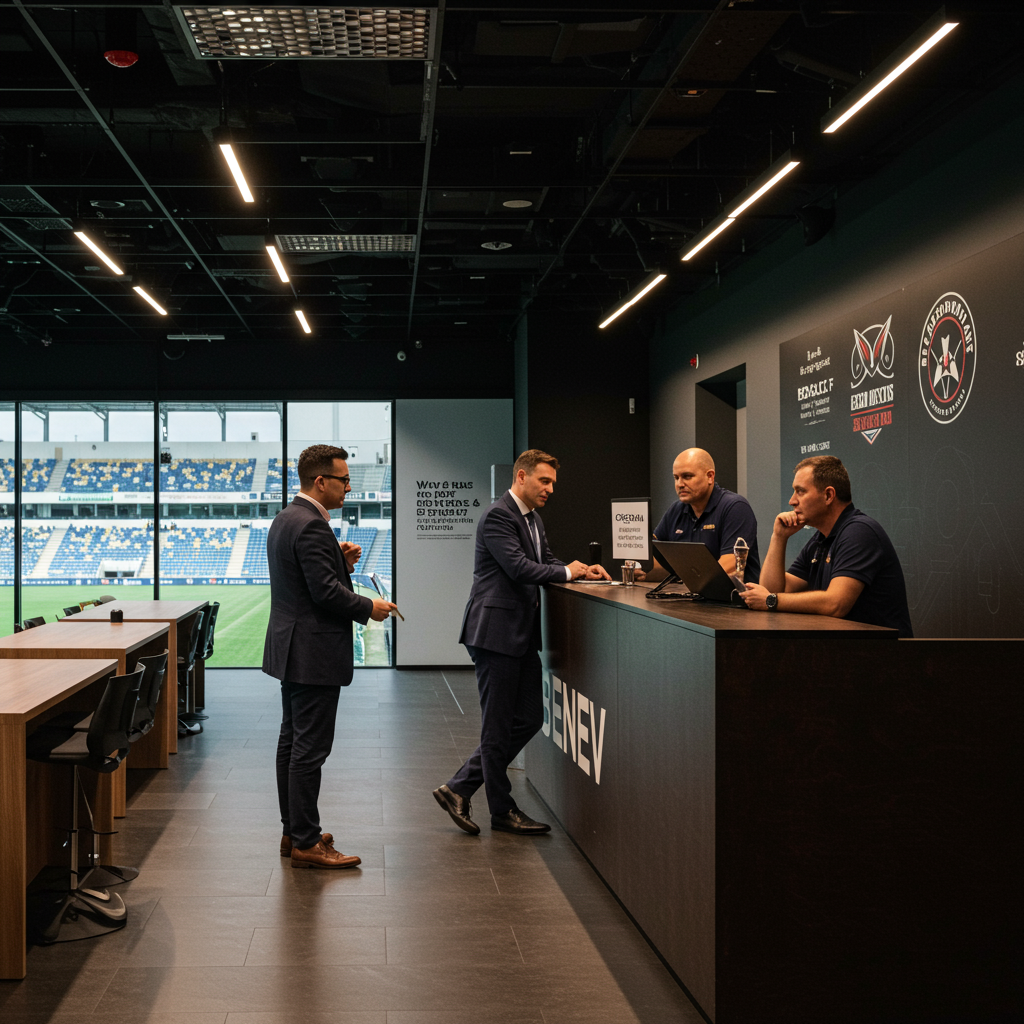
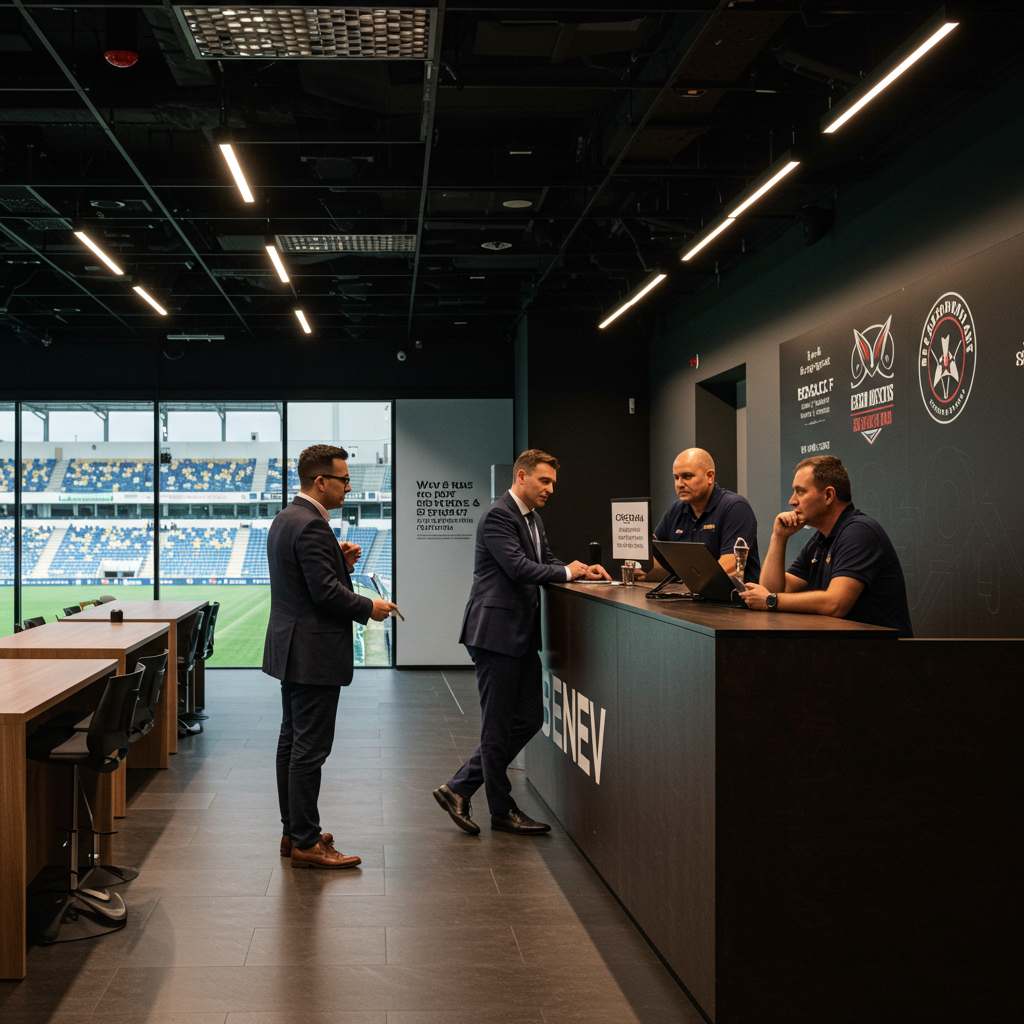
A well-designed fan zone integrates the excitement of the event with invisible yet effective security protocols, creating a memorable and protected environment for all attendees.
Vision, Values, and Proposition
Focus on Results and Measurement
Our vision is to transform every fan zone and hospitality space into an environment where top-tier security is the catalyst for an exceptional brand experience. We operate under four core values: Safety First (protecting life is non-negotiable), Fan-Centric Experience (every decision is made with the attendee in mind), Brand Integrity (operations must reflect and enhance the client’s values), and Measurable Excellence (everything we do is measured, analyzed, and improved). We apply the Pareto principle (80/20), focusing on the elements with the greatest impact: crowd flow design (entry, circulation, exit), training of public-facing staff, crisis communication protocols, and the integration of technology for real-time monitoring. We adhere to international standards such as ISO 20121 (Sustainable Event Management) and local regulations on safety in public venues.
Value Proposition: We offer a comprehensive solution that reduces operational and reputational risk while maximizing engagement and return on investment for sponsors and organizers.
Quality Criteria: Budget deviation less than 5%, 100% compliance with applicable regulations, Customer Satisfaction Score (CSAT) above 90%.
Supplier Decision Matrix: When selecting partners (security, catering, technology), we use a weighted matrix that evaluates proven experience in similar-scale events (40%), certifications and regulatory compliance (30%), cultural alignment with the brand (20%), and cost competitiveness (10%).
Innovation Technology: We implement solutions such as AI-powered people counting, CCTV systems with video analytics to detect anomalous behavior, and mobile applications with panic buttons and geolocation.
Services, Profiles, and Performance
Portfolio and Professional Profiles
Our service portfolio is designed to cover the complete lifecycle of event planning and execution, ensuring optimal security in fan zones and sports hospitality. These include: risk consulting and auditing, security and evacuation plan design, crowd flow modeling and simulation, security and service personnel management, coordination with law enforcement agencies, design and implementation of control centers (CCOs), and post-event analysis with intelligence reports. To achieve this, we have highly specialized professionals such as the Event Security Director (with international certifications), the Crowd Dynamics Analyst, the VIP Hospitality Manager (with experience in the luxury sector), the Brand Activation Coordinator, and the Emergency Response Specialist.
Operational Process
Phase 1: Diagnosis and Strategic Planning. A comprehensive risk assessment of the venue and event profile is conducted. Security and brand experience objectives are defined in collaboration with the client. KPI: Identification of 98% of potential risks. Timeframe: 4-6 weeks before the event.
Phase 2: Operational Design. The master security plan, crowd management plan, communication protocols, and design of hospitality and activation areas are created. KPI: Approval of the plans by all relevant authorities in the first review. Timeframe: 3-4 weeks before the event.
Phase 3: Implementation and Training. All staff are hired and trained, temporary and technological infrastructure is installed, and drills are conducted. KPI: 100% of staff complete training with a score higher than 8/10. Timeframe: 1-2 weeks before the event.
Phase 4: Execution and Live Monitoring. The event is managed from the control center, monitoring flows, wait times, and any anomalies in real time. KPI: Average incident resolution time less than 5 minutes. Timeframe: Day of the event.
Phase 5: Evaluation and Closure. All data (surveys, security metrics, activation performance) is collected, and a post-action report is prepared. KPI: Final report due within 7 business days.
Tables and Examples
| Objective | Indicators (KPIs) | Actions | Expected Result |
|---|---|---|---|
| Ensure the physical safety of attendees | Rate of serious incidents per 10,000 attendees; Medical response time | Implement a layered access control system; deploy first responders in strategic areas. | Incident rate < 0.1; Response time < 2 minutes. |
| Improve the fan experience | Net Promoter Score (NPS); Average wait time in queues (access, food and beverage) | Optimize signage; implement a cashless payment system; proactive customer service staff. | NPS > 60; Wait time < 8 minutes during peak hours. |
| Maximize sponsor ROI | Number of qualified leads; Social media mentions with the official hashtag | Design interactive brand activations (gamification); install a “social wall” on giant screens. | 25% increase in leads compared to the previous event; >50,000 mentions. |
| Ensure brand consistency (Brand Fit) | Social media sentiment analysis; Post-event brand perception surveys | Train all staff on brand values; ensure that decor, music, and communication tone are aligned. | >85% positive/neutral sentiment; 2-point improvement in “premium brand” perception. |

Representation, Campaigns and/or Production
Professional Development and Management
The production of a fan zone or hospitality area is a complex logistical undertaking that requires meticulous coordination. Our management encompasses everything from obtaining all the necessary municipal licenses and permits (public space occupancy, health, noise, self-protection plans) to selecting and overseeing a network of approved suppliers. We create a detailed execution schedule (Gantt chart) that synchronizes the assembly of structures, the electrical and telecommunications installation, the deployment of catering units, and the arrival of staff. The key to success lies in thorough planning and the creation of robust contingency plans for each critical element of the supply chain.
Critical Documentation Checklist: Public liability insurance policies (> €3 million), self-protection plans endorsed by the relevant professional association, security personnel training certificates (TIP), health registrations of food and beverage suppliers, and structural soundness certificates for all temporary facilities.
Contingency Plans:
Adverse Weather: Partial evacuation protocol to covered areas, additional anchors for structures, backup generators.
Power Outage: Automatic activation of generators for critical systems (emergency lighting, central control room, public address system) in less than 10 seconds.
Stock Issues (F&B): Agreements with secondary suppliers for emergency restocking in less than 60 minutes.
Serious Medical Emergency: Clear emergency evacuation routes (sterile corridors) and direct coordination with the local ambulance service for rapid extraction.
Interdepartmental Coordination: Weekly follow-up meetings (Production Meetings) are established with all team leaders (safety, logistics, marketing, F&B, technical) to ensure smooth communication and proactive resolution of potential conflicts.

A visual workflow like a Gantt chart is essential for coordinating dozens of tasks and vendors, minimizing the risk of delays and cost overruns.
Content and/or Media that Convert
Messages, Formats, and Conversions
Content generated and distributed within the fan zone and hospitality areas is a powerful tool for guiding attendee behavior, improving security, and achieving business objectives. The content strategy should be multichannel and adapted to the moment. For example, before the event, social media and email marketing are used to communicate access rules and prohibited items. During the event, giant screens, the PA system, and push notifications from the official app are used to guide flow, inform about wait times, or launch promotions. Content that reinforces safety in fan zones and sports hospitality doesn’t have to be boring. Animated videos or gamified infographics can be created to explain evacuation routes or promote responsible alcohol consumption, sponsored by a brand to enhance its association with positive values.
- Ideation and Strategy Phase: The marketing team, together with the security team, defines the key messages. Clear CTAs (Calls to Action) are established, such as “Download the app to skip the line” or “Enter our contest and win a VIP upgrade.”
- Content Production: Visual and audio assets are created. A/B testing is performed on different creative assets and copy for social media ads prior to the event, optimizing the click-through rate (CTR).Planning and Scheduling: A “run of show” is created for the content displayed on the venue’s screens, coordinated with key moments of the event (team arrivals, musical performances, etc.).
Live Distribution and Moderation: The community manager monitors social media in real time to answer questions and manage potential reputation crises, while the CCO operator manages the content on the screens.
Performance Analysis: Metrics such as engagement rate, number of app downloads, use of promotional QR codes, and overall sentiment analysis are measured. The conversion rate of the different campaigns is calculated.

Training and employability
Demand-driven catalog
The human factor is the most critical and, at the same time, the most powerful link in the chain of safety and customer experience. A well-trained staff not only responds better in an emergency, but also becomes a proactive brand ambassador. Therefore, we have developed a modular and specific training catalog for sports event staff.
- Module 1: Security and Emergency Protocols (8 hours). Includes identifying suspicious behavior, lost and found management, evacuation protocols, and first response to incidents (S.T.A.R.T. triage method).
- Module 2: Crowd Psychology and Dynamics (4 hours). Teaches how to read the “mood” of a crowd, nonverbal communication techniques for directing crowd flow, and strategies for verbal de-escalation in minor conflicts.
- Module 3: Excellence in Customer Service and Brand Ambassadorship (6 hours). Focused on customer-facing staff (stewards, servers, information officers). It covers brand values, complaint resolution, and how to create “magical moments” for fans.Module 4: VIP Hospitality Protocols (4 hours). Specific training for premium area staff, focused on discretion, proactivity, product knowledge, and managing the expectations of high-profile clients.
Module 5: Control and Communications Center Operator (12 hours). Technical training in the use of CCTV systems, incident management software, and radio communication protocols with standardized language.
Methodology
Our training methodology is eminently practical (70% practical, 30% theoretical). We use simulations and role-playing of realistic scenarios (e.g., managing a potential avalanche, attending to a dissatisfied VIP client). The evaluation is conducted using rubrics of observable competencies. Upon completion of the training, participants receive certification and are added to our job bank, connecting qualified professionals with leading event organizers in the sector. We expect our graduates to demonstrate a 30% reduction in conflict resolution time and a 15-point increase in attendee satisfaction surveys related to staff friendliness and efficiency.Operational Processes and Quality Standards
From Request to Execution
- Diagnosis (Week 1): We receive the client’s request. We hold an initial meeting to understand the objectives, scope, and budget. A technical site visit is conducted. Deliverable: Preliminary Feasibility Report. Acceptance Criteria: Alignment of client-supplier expectations.
- Proposal (Week 2): We develop a detailed technical and economic proposal. This includes the initial risk analysis, the concept of operations (CONOPS), a budget breakdown, and the schedule. Deliverable: Commercial Proposal. Acceptance Criteria: Contract signing.
- Pre-production (Weeks 3-8): Intensive planning phase. All operational plans are developed (safety, logistics, communication, etc.), permits are obtained, and suppliers and personnel are contracted. Deliverable: Complete Production Folder. Acceptance Criteria: Approval of all plans by the client and the relevant authorities.
- Assembly and Testing (Week 9): Execution of the assembly plan. Testing of all systems (PA, screens, emergency systems) and a full-scale drill (tabletop exercise) with all key personnel are performed. Deliverable: Venue ready for opening. Acceptance criterion: 100% completion of the commissioning checklist.Execution (Event Day): Event launch, with continuous monitoring from the CCO. Proactive management of workflows and incident resolution. Deliverable: Event completed. Acceptance criterion: Compliance with defined SLAs.
Closure and Analysis (Post-Event Week): Safe dismantling of the venue. Data collection and preparation of the post-action report. Closing meeting with the client. Deliverable: Final Report and Invoicing. Acceptance Criteria: Customer satisfaction with the results and the report.
Quality Control
- Defined Roles: An independent Quality Manager, separate from the operations team, conducts random audits during setup and the event.
- Problem Escalation: A clear escalation matrix is in place. Level 1 problems are resolved by field staff; Level 2, by the area supervisor; Level 3, by the Operations Manager at the CCO.
- Acceptance Indicators (SLAs): Maximum wait time for access: 10 minutes. Cashless payment system availability: 99.8%. Food & Beverage replenishment time: 20 minutes. Restroom cleaning: checked every 30 minutes during peak hours.
AssemblyStructures, Electrical Systems, SignageDaily workplace safety inspection (0 accidents). Electrical load testing at 100% capacity.Risk: Adverse weather conditions prevent assembly. Mitigation: Add 2 contingency days to the assembly schedule.ExecutionFlow Management, Incident ResponseMonitoring of crowd density (people/m²).Average incident resolution time.Risk: Communications system failure. Mitigation: Primary and secondary (backup) radio systems, plus a messenger network for physical communication in case of total failure.ClosurePost-Action Report100% collection of system data. Satisfaction surveys with a response rate > 10%.Risk: Loss of relevant data. Mitigation: Data redundancy in the cloud and on local disks. Hourly backup protocol during the event.
Quality Control Matrix by Phase Phase Key Deliverables Control Indicators Risks and Mitigation Pre-production Safety Plan, Logistics Plan Approval of plans by the police and fire department. 100% of key suppliers contracted 4 weeks in advance. Risk: Delay in obtaining permits. Mitigation: Initiate the procedures as far in advance as possible and assign a dedicated manager to the relationship with the administration. Application Cases and Scenarios
Case 1: Fan Zone for the Final of a European Football Tournament
Scope: A 50,000 m² space in the center of a European city for 80,000 fans over 3 days. It included a VIP hospitality area for 500 sponsor guests. The attendees were international and highly polarized between two teams.
Challenges: High risk of public disorder, elevated terrorist threat, managing a multicultural crowd with language barriers, and the need to project an image of a safe and welcoming city.
Challenges:
Solution: A triple-layered security perimeter was designed. The outer ring consisted of vehicle checkpoints and physical barriers. The second ring included non-invasive security checks and metal detectors. The inner ring was managed by stewards for flow control. A unified Command and Control Center (CCO) was implemented with the national police, local police, medical services, and private security, using common command and control software. Multilingual staff (stewards from the “Welcome Team”) were deployed. In the VIP area, biometric access controls were implemented, and a close protection security team was assigned.KPIs and Results:
- Serious incident rate: 0.
- Average peak-hour access time: 12 minutes (target < 15).
- Fan Zone NPS: 72.
- VIP guest satisfaction (survey): 9.5/10.
- Media ROI for the city (calculated in equivalent advertising value): €15 million.
Case 2: Corporate Hospitality Area at a Grand Prix Motor Racing Race
Scope: Management of a luxury hospitality suite for 200 CEOs and VVIP clients of a high-end automotive brand during a race weekend.
Challenges: Extremely high service expectations, a need for absolute discretion, integration of the sponsor’s brand experience into every detail, and coordination with overall circuit security.Solution: A seamless experience was created. The service began with a private chauffeur from the hotel. Access to the suite was through a private entrance, avoiding crowds. Staff were selected from 5-star hotels and received intensive training on the brand and the guest list (including allergies and preferences). A personal concierge service was offered. Technology was subtly integrated, with tablets for viewing in-car cameras and noise-canceling headsets for direct communication with the suite manager. Security was low-profile but constant, with plainclothes personnel and a discreet medical evacuation protocol.
KPIs and Results:
- Sponsorship contract renewal rate by guests: 85%.
- Average Daily Rate (ADR) per guest: €2,500.
- High-profile social media mentions (influencers, businesspeople): 250 posts with an estimated reach of 10 million.
- Service satisfaction score (scale 1-10): 9.8.
Case 3: Fan Zone for an International eSports Tournament
Scope: A 15,000 m² fan zone adjacent to a stadium for 20,000 attendees, mostly between 16 and 25 years old, for 4 days of competition.
Challenges: A digitally native audience with high technological expectations. The need for a robust network infrastructure for streaming and gaming. Risks associated with cybersecurity and crowd management during high-emotion moments (victories/defeats).Solution: A high-density Wi-Fi network capable of supporting 25,000 concurrent devices was deployed, with network segmentation to separate critical operations from the public network. A cybersecurity plan was implemented to prevent distributed denial-of-service (DDoS) attacks. Brand activations focused on technology: amateur tournaments, virtual reality gaming stations, and meet & greets with professional gamers streamed on Twitch. Security focused on preventing harassment and creating “decompression zones” or “chill-out” areas for people who felt overwhelmed. Communication was primarily channeled through Discord and the event app.
Solution:
KPIs y Resultados:- Disponibilidad de la red Wi-Fi: 99,95 %.
- Incidentes de seguridad reportados: Reducción del 40 % respecto al año anterior.
- Tasa de descarga de la app del evento: 70 % de los asistentes.
- Dwell time (tiempo medio de permanencia) en la fan zone: 3,5 horas.
Guías paso a paso y plantillas
Guía 1: Cómo Realizar una Evaluación de Riesgos para una Fan Zone
- Definir el Alcance: Establecer claramente los límites físicos, temporales y operativos del evento.
- Identificar Activos: Listar todo lo que necesita ser protegido: personas (asistentes, personal, VIPs), propiedad (estructuras, equipos) y reputación (marca, ciudad).
- Identificar Amenazas: Realizar un brainstorming de todas las posibles amenazas, tanto accidentales (incendios, fallos estructurales) como intencionadas (terrorismo, vandalismo, robos).
- Identificar Vulnerabilidades: Analizar las debilidades del plan o del recinto. Ej: puntos ciegos en CCTV, falta de formación del personal, un único punto de acceso.
- Estimar la Probabilidad: Para cada amenaza, asignar una puntuación de probabilidad (ej. de 1 a 5, de muy improbable a casi seguro).
- Estimar el Impacto: Para cada amenaza, asignar una puntuación de impacto si se materializa (ej. de 1 a 5, de insignificante a catastrófico).
- Calcular el Nivel de Riesgo: Multiplicar Probabilidad x Impacto para obtener una puntuación de riesgo para cada amenaza. Esto permite priorizar.
- Desarrollar Medidas de Mitigación: Para los riesgos altos y medios, proponer medidas de control. Hay cuatro tipos: Evitar (cancelar la actividad), Transferir (contratar un seguro), Mitigar (implementar medidas de seguridad) o Aceptar (para riesgos bajos).
- Re-evaluar el Riesgo Residual: Una vez aplicadas las medidas de mitigación, volver a calcular el nivel de riesgo. Este es el riesgo residual que se asume.
- Crear el Registro de Riesgos: Documentar todo el proceso en una tabla. Columnas: ID de Riesgo, Descripción, Probabilidad, Impacto, Nivel de Riesgo, Medidas de Mitigación, Riesgo Residual, Responsable.
- Comunicar y Revisar: Compartir el registro de riesgos con todas las partes interesadas. El documento debe ser vivo y revisarse periódicamente.
Guía 2: Plantilla de Plan de Respuesta a Emergencias (Índice)
-
- Introducción y Objetivos: Propósito del plan y alcance.
- Estructura de Mando y Control (ICS): Organigrama de emergencia, roles y responsabilidades (Jefe de Incidente, Jefe de Operaciones, Jefe de Seguridad, etc.).
–
- Centro de Control de Operaciones (CCO): Ubicación, equipamiento, personal.
- Protocolos de Comunicación: Canales de radio, palabras clave, matriz de comunicación (quién informa a quién y sobre qué).
- Procedimientos Específicos de Actuación:
- Evacuación (parcial y total).
- Confinamiento (Shelter-in-place).
- Emergencia Médica (código azul).
- Incendio (código rojo).
- Amenaza de Bomba (código negro).
- Persona o Paquete Sospechoso.
- Desórdenes Públicos.
- Recursos y Logística: Listado de recursos (extintores, DEAs, botiquines), puntos de encuentro de servicios de emergencia.
- Anexos: Mapas del recinto, contactos de emergencia, listado de personal clave.
Guía 3: Checklist para la Selección de Proveedores de Seguridad
- Licencias y Acreditaciones: ¿La empresa tiene todas las licencias nacionales y locales para operar? ¿Está inscrita en los registros correspondientes?
- Seguro de Responsabilidad Civil: ¿La póliza cubre eventos de la escala propuesta? ¿Cuál es el límite de cobertura? (Mínimo recomendado: 3-5 millones de euros).
- Experiencia Probada: ¿Pueden proporcionar referencias de al menos 3 eventos de tamaño y naturaleza similar en los últimos 2 años?
- Procesos de Selección y Formación del Personal: ¿Cómo reclutan, investigan los antecedentes y forman a su personal? ¿La formación es continua?
- Planificación y Gestión: ¿Presentan un borrador de plan operativo o simplemente ofrecen un número de vigilantes? ¿Tienen experiencia en la coordinación con la policía y servicios de emergencia?
- Capacidad Tecnológica: ¿Qué tecnología utilizan (sistemas de comunicación, software de gestión de incidencias, bodycams)?
- Salud Financiera: ¿La empresa es solvente? (Se puede solicitar un informe de crédito comercial).
- Alineación Cultural: ¿Su personal tiene la apariencia y las habilidades de comunicación adecuadas para representar a la marca del evento? (Importante para la seguridad en fan zones y hospitalidad deportiva).
Recursos internos y externos (sin enlaces)
Recursos internos
- Plantilla de Plan de Gestión de Multitudes
- Estándares de Servicio para Personal de Hospitalidad
- Guía de Estilo de Marca para Activaciones en Eventos
- Checklist de Inspección Diaria de Seguridad del Recinto
- Manual de Operaciones del Centro de Control
Recursos externos de referencia
- Guía de Buenas Prácticas para la Seguridad en Eventos Masivos (Protección Civil, Gobierno de España)
- Normativa UNE-ISO 20121:2013 Sistemas de gestión de la sostenibilidad en eventos
- Publicaciones del “Sports Grounds Safety Authority” (SGSA) del Reino Unido, como la “Guide to Safety at Sports Grounds” (Green Guide)
- Ley 19/2007, de 11 de julio, contra la violencia, el racismo, la xenofobia y la intolerancia en el deporte
- Manuales de la Agencia de la Unión Europea para la Cooperación Policial (Europol) sobre seguridad en eventos deportivos.
Preguntas frecuentes
¿Cuál es el ROI real de invertir en hospitalidad deportiva de alta calidad?
El ROI no es solo financiero a corto plazo. Se mide en la retención y fidelización de clientes clave (B2B), la generación de negocio en un ambiente relajado, el fortalecimiento de la imagen de marca y la obtención de valiosos datos de clientes de alto poder adquisitivo. Un evento bien ejecutado puede generar un ROI de 3:1 a 5:1 en términos de negocio cerrado en los siguientes 6-12 meses.
¿Cómo se mide el éxito en términos de seguridad si “no pasa nada”?
La ausencia de incidentes es el mayor indicador de éxito. Sin embargo, se mide proactivamente a través de KPIs como: tiempos de espera en accesos y servicios, número de quejas de los asistentes relacionadas con la seguridad, resultados de auditorías internas y externas, y el feedback cualitativo del personal y de los servicios de emergencia. Un evento seguro se siente fluido, organizado y relajado para el asistente.
¿Cuál es el ratio ideal de personal de seguridad por asistente?
No existe un “número mágico”. Depende del análisis de riesgos. Factores como el perfil del público, el tipo de evento (un partido de alto riesgo vs. un evento familiar), el diseño del recinto y la tecnología empleada (CCTV, analítica) influyen decisivamente. Puede variar desde 1:250 en eventos de bajo riesgo hasta 1:50 en situaciones de alto riesgo, pero siempre debe ser una decisión basada en datos, no en una fórmula genérica.
¿Cómo gestionar una crisis meteorológica repentina (ej. tormenta eléctrica)?
La clave es la anticipación y la comunicación. Se debe tener un servicio de monitorización meteorológica profesional. El plan de emergencia debe incluir un protocolo específico para clima adverso, con criterios claros para la suspensión temporal y la evacuación. La comunicación a los asistentes debe ser clara, concisa y transmitida por todos los canales disponibles (megafonía, pantallas, app) de forma simultánea.
¿Cómo asegurar que la empresa de seguridad externa entienda y respete el “brand fit”?
Esto debe ser un criterio de selección clave desde el principio. Involucre al departamento de marketing en la selección del proveedor. Una vez seleccionado, el proveedor debe recibir un briefing de marca exhaustivo. Su personal clave debe participar en las sesiones de formación de “Brand Ambassadorship” junto al resto del personal del evento. Defina en el contrato (SLA) los requisitos de uniformidad, apariencia y código de conducta.
Conclusión y llamada a la acción
La gestión de la seguridad en fan zones y la hospitalidad deportiva ha evolucionado de ser una función puramente reactiva y de contención a una disciplina estratégica que impacta directamente en la experiencia del cliente, la reputación de la marca y la rentabilidad del evento. Un enfoque integrado, que considera la seguridad como el lienzo sobre el cual se pinta una experiencia de marca memorable, es el único camino hacia la excelencia sostenible. Al adoptar una metodología basada en datos, con KPIs claros como la mejora del NPS, la reducción de incidentes a tasas inferiores al 0,1 % y la maximización del ROI de las activaciones, los organizadores pueden mitigar riesgos y, al mismo tiempo, crear un valor tangible y duradero. La seguridad ya no es un coste, es la inversión fundamental que garantiza que la magia del deporte pueda vivirse en un entorno de confianza y disfrute.
Si está listo para elevar el estándar de sus eventos y transformar sus espacios para aficionados en activos estratégicos seguros y rentables, contacte con nuestros expertos para una evaluación personalizada. Descubra cómo podemos ayudarle a diseñar e implementar una solución a medida que proteja a sus asistentes y potencie su marca.
Glosario
- Dinámica de Multitudes (Crowd Dynamics)
- El estudio científico del comportamiento de las personas en grupos grandes, utilizado para diseñar espacios seguros y flujos eficientes de personas.
- Matriz de Riesgo
- Una herramienta visual utilizada durante la evaluación de riesgos para mapear la probabilidad y el impacto de diferentes amenazas, permitiendo su priorización.
- SLA (Service Level Agreement)
- Acuerdo de Nivel de Servicio. Un contrato que define los niveles de servicio medibles que un proveedor se compromete a ofrecer.
- NPS (Net Promoter Score)
- Un indicador que mide la lealtad y satisfacción del cliente preguntando la probabilidad de que recomienden un producto o servicio. Se calcula restando el porcentaje de detractores al de promotores.
- Activación de Marca (Brand Activation)
- Una campaña, evento o interacción a través de la cual una marca genera conciencia y construye relaciones duraderas con su público objetivo.
- Ingress/Egress
- Términos técnicos para referirse a los procesos y rutas de entrada (ingreso) y salida (egreso) de un recinto.
Internal links
- Click here👉 https://uk.esinev.education/masters/
- Click here👉 https://uk.esinev.education/diplomates/
External links
- Princeton University: https://www.princeton.edu
- Massachusetts Institute of Technology (MIT): https://www.mit.edu
- Harvard University: https://www.harvard.edu
- Stanford University: https://www.stanford.edu
- University of Pennsylvania: https://www.upenn.edu