
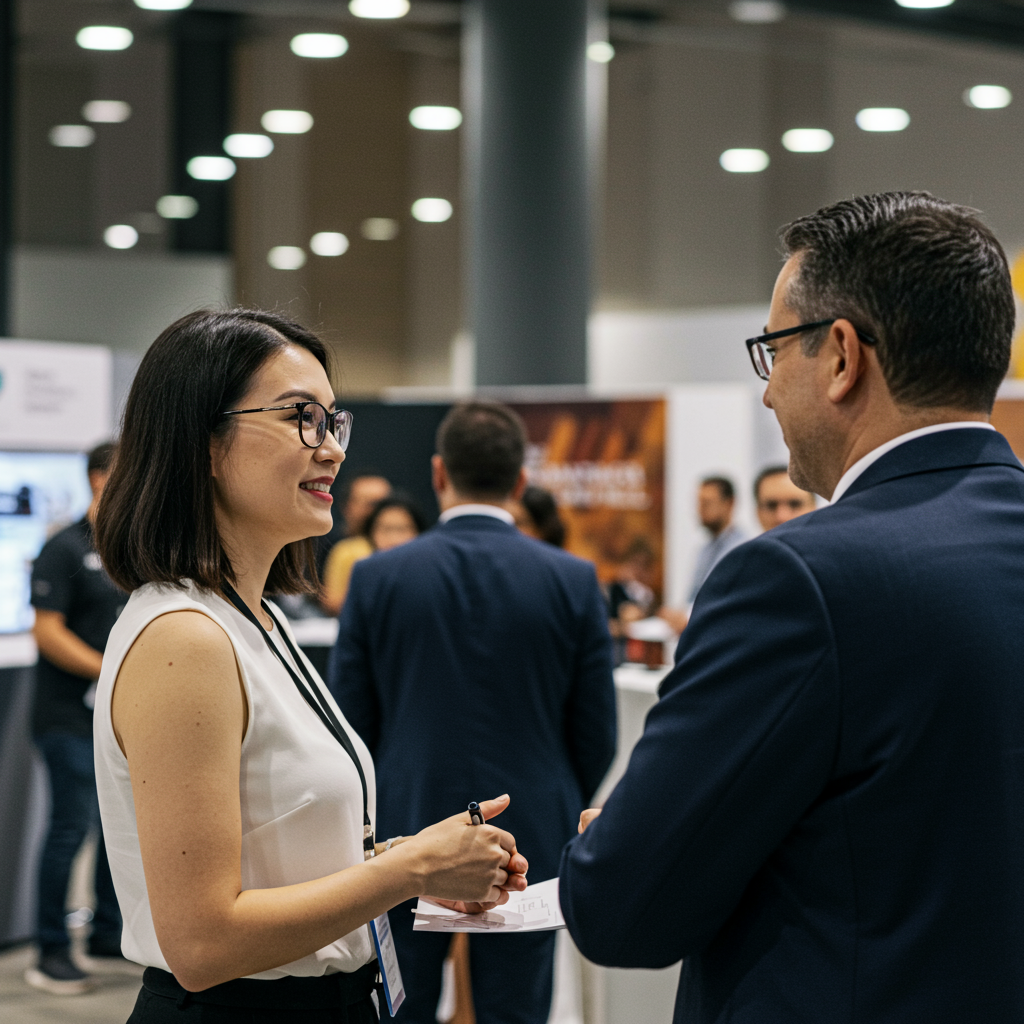
Successful Frameworks for Exhibitors: How to Boost Pipeline Generation at Trade Shows
Trade shows represent a significant investment of time and capital, but often lack a strategic approach that guarantees a measurable return. This article breaks down a comprehensive framework designed for exhibitors looking to transform their event presence into a predictable revenue engine. We address every phase of a trade show lifecycle, from strategic planning and defining key KPIs (Cost Per Qualified Lead, Conversion Rate to Opportunity, Pipeline Generated) to flawless booth execution and post-event follow-up that converts. It is aimed at marketing directors, event managers, and sales teams who need to justify their budgets and demonstrate a direct impact on the business, turning every interaction into a tangible opportunity for pipeline generation at trade shows.
Introduction
Trade shows are one of the most powerful and, at the same time, most expensive tools in the B2B marketing arsenal. Every year, companies invest billions of euros in booth design, space rental, and equipment deployment in the hope of connecting with potential customers and strengthening their brand. However, the reality is that many of these investments are made without a clear strategy, turning events into an exercise in “being present” rather than a measurable growth initiative. The fundamental challenge lies in moving from simply collecting business cards to a systematic pipeline generation at trade shows. This shift in mindset is crucial: it’s not about how many people visit the booth, but how many qualified conversations turn into real, quantifiable business opportunities.
This article presents a comprehensive framework for exhibitors, designed to structure every aspect of trade show participation. The proposed methodology focuses on three pillars: data-driven planning, conversion-focused execution, and automated, personalized tracking. In the following sections, we will detail the processes, tools, and KPIs needed to transform a trade show booth into a highly efficient demand generation hub. We will measure success not only by the number of leads captured, but also by business metrics such as event-specific Customer Acquisition Cost (CAC), pipeline velocity, and Return on Investment (ROI) calculated on closed opportunities.
Vision, Values, and Proposition
Focus on Results and Measurement
Our vision is to transform the perception of trade shows, shifting them from a marketing “cost center” to a predictable and scalable “revenue engine.” We are guided by values of transparency, accountability, and results-oriented approach. We apply the Pareto principle (80/20), focusing on activities that generate the greatest impact in the pipeline, such as pre-scheduling meetings with key accounts and intensive training for booth staff. Our value proposition is based on a methodological framework that integrates strategy, technology, and human talent to ensure that every euro invested in an event translates into a measurable multiple in the sales funnel. The technical standards we promote include native integration with CRM systems (such as Salesforce or HubSpot) and compliance with data privacy regulations such as GDPR in lead capture and management.
SMART Goal Setting: Each engagement must have specific, measurable, achievable, relevant, and time-bound goals (e.g., “generate €1.5 million in qualified pipeline within 90 days of the event”).
Rigorous Lead Qualification: We implement methodologies such as BANT (Budget, Authority, Need, Timeline) directly into the capture process to segment contacts in real time and prioritize follow-up.
Holistic Technology Integration: We encourage the use of a technology stack that encompasses everything from lead capture and meeting scheduling applications to marketing automation platforms for post-event nurturing.
- Visitor Experience as a Priority: We design booth interactions that educate and solve problems, rather than simply showcasing products. A positive experience is the first step toward a lasting business relationship.
- RoI Measurement at the Pipeline Level: Success isn’t measured at the end of the trade show, but 6-12 months later. We track the journey of event leads through the sales funnel to calculate an accurate ROI and justify future investments.
Services, Profiles, and Performance
Portfolio and Professional Profiles
We offer a portfolio of modular services that support the trade show pipeline generation strategy at every stage. These services are performed by specialized profiles such as event strategists, experience designers, marketing technologists, and sales team trainers. Our portfolio includes:
- Pre-Event Strategic Consulting: Analysis of event suitability, definition of objectives and KPIs, development of the core message, and budget planning.
- Conversion-Oriented Experience and Booth Design: Creation of spaces that not only attract attention but also guide visitors through a journey designed for qualification and action.
- Event Technology Implementation: Selection, configuration, and integration of lead generation software, meeting scheduling, and real-time data analysis.
- Booth Staff Training and Coaching: Intensive programs to equip the team with the skills needed to initiate conversations, qualify prospects, and conduct effective demonstrations.
- Pre- and Post-Event Marketing Campaign Management: Campaign execution Multichannel approach to generate qualified traffic to the booth and nurture captured leads until they become sales opportunities.
Operational Process
- Phase 1: Diagnosis and Strategy (12-16 weeks prior): Working sessions to define SMART objectives. KPIs: Agreement on ≥ 3 main KPIs (e.g., Cost per SQL, Pipeline generated).
- Phase 2: Creative and Tactical Planning (10-12 weeks prior): Development of the booth concept, content plan, and engagement strategy. KPIs: Approval of the conceptual design with fewer than 2 major revisions.
- Phase 3: Production and Logistics (4-10 weeks prior): Supplier management, material production, and technology setup. KPIs: 100% of deliverables produced on time and within budget (deviation <5%). Phase 4: Pre-Event Training and Activation (1-3 weeks prior): Team training, launch of email and social media campaigns. KPIs: Email campaign open rate >30%; ≥ 10 pre-scheduled meetings with key accounts.Phase 5: Execution and Capture (During the event): Booth management, agenda execution, lead capture and qualification. KPIs: Achieving 95% of the daily qualified lead target.
Phase 6: Follow-up and Nurturing (1-4 weeks post-event): Lead synchronization with CRM, initiation of follow-up sequences. KPIs: 100% of high-priority leads contacted within 24 hours.
Phase 7: Measurement and Optimization (4-24 weeks later): Performance analysis, ROI calculation, and lessons learned meeting. KPIs: Creating a detailed ROI report in 90 days.
Tables and examples
5-minute interactive demos, trained and qualified staff, lead scanner with custom fields.≤ €175 per SQLSchedule 30 meetings with key account decision-makersNumber of meetings scheduled and completed; Attendance rate.Customized pre-event outreach campaign, semi-private meeting area at the booth, integrated digital calendar.Meeting attendance rate ≥ 85%Increase brand awareness in a new market segment.Social media mentions with the event hashtag; Media Coverage.Organize a technical talk in the official program, offering an attractive “gift” in exchange for a social media post.≥ 50 organic mentions; ≥ 2 articles in trade press.Validate interest in a new product feature.Number of attendees at demos of the new feature; Qualitative feedback collected.Dedicated demo station, brief tablet surveys after the demo.Feedback from ≥ 75 potential users, NPS for the feature > 40.
| Objective | Indicators (KPIs) | Key Actions | Expected Result |
|---|---|---|---|
| Generate 200 Sales Qualified Leads (SQLs) | Number of leads with positive BANT qualification; Cost per SQL |

Representation, campaigns and/or production
Professional Development and Management
The flawless execution of a trade fair strategy depends on rigorous production management and logistical coordination. This process encompasses everything from selecting and negotiating with stand suppliers to managing the international logistics of materials and coordinating the assembly and dismantling schedule. Meticulous planning minimizes the risks of cost overruns and delays that can jeopardize the event’s success. On-site staff management is equally critical; it’s not just about having people physically present, but about a well-informed, motivated, and coordinated team that operates as an extension of the sales and marketing team. Clear roles are established (stand leader, demo specialist, lead qualifier), work shifts are scheduled to prevent fatigue, and daily 15-minute meetings are held to align objectives and share learnings.
Documentation and Permits Checklist: Verification of liability insurance, work permits for staff, and customs documentation for equipment and materials.
Supplier Planning: Contracts are finalized at least 3 months in advance for the stand builder, audiovisual equipment, and internet service. A backup plan is in place for critical suppliers.
Materials Logistics: Promotional materials and equipment are shipped with tracking, and delivery confirmation to the exhibition center is provided one week prior to setup. Emergency stock of critical materials (brochures, giveaways).
- Operational Contingency Plan: Procedures for technical failures (projector, lead generation app), unexpected staff absences (replacement list), and peak attendance management (extra staff on standby).
- Detailed Execution Schedule: Hourly schedule for setup, daily team meetings, demo schedule, catering, and final teardown.

Content and/or Media That Convert
Messages, Formats, and Conversions for Pipeline Generation at Trade Shows
Content is the fuel that powers conversations and conversions at a trade show. The content strategy should be omnichannel and cover the pre-event, during-event, and post-event phases. The goal is to attract the right audience to the booth, facilitate meaningful conversations, and nurture the relationship afterward. Each piece of content should have a clear hook that addresses a customer pain point and a specific call to action (CTA). For example, a hook could be: “Is your company losing 15% of revenue due to inefficient logistics?” The associated CTA at the booth could be: “Join our 5-minute assessment and discover your savings potential.” We conducted A/B testing on pre-event email campaigns, testing different subject lines and CTAs to maximize meeting booking rates. Key conversion metrics included email click-through rates, content downloads from event-specific landing pages, and, most importantly, the conversion rate of visitors to qualified leads at the booth.
Phase 1: Research and Planning (Responsible: Content Strategist): Analyze key event themes and attendee profiles. Define 2-3 main content themes aligned with business objectives.
Phase 2: Core Asset Creation (Responsible: Creative Team): Develop a high-value asset (e.g., a research report, an ROI calculator) that will serve as the cornerstone of the campaign.
Phase 3: Satellite Content Development (Responsible: Marketing Specialist): Create variations of the core content for different channels: blog articles, infographics, short videos, social media posts.
Phase 4: Pre-Event Distribution Plan (Responsible: Digital Marketing Specialist): Launch email and social media campaigns to promote attendance, schedule meetings, and drive traffic to an event landing page.
Phase 5: Booth Content (Responsible: Designer) Experiences): Adapt the content to interactive formats for the booth: video loops, tablet demos, graphic panels with key data.
Phase 6: Post-Event Content Strategy (Responsible: Marketing Automation Specialist): Design lead nurturing flows based on the level of interest and profile of the captured contact, delivering relevant content automatically.

Training and employability
Demand-driven catalog
The booth staff is the most critical and often the most overlooked factor for success at a trade fair. An impressive booth and cutting-edge technology are useless if the team doesn’t know how to interact effectively with visitors. That’s why we offer a catalog of intensive, hands-on training designed to transform any employee into an effective brand ambassador and a generator of qualified leads. Training is not a one-time event, but a process that includes e-learning, in-person workshops, and role-playing sessions.
Module 1: Trade Show Fundamentals. Understanding the why: objectives, KPIs, and the team’s role in the overall trade show pipeline generation strategy.
Module 2: The Art of Proactive Interaction. Techniques for breaking the ice, stepping outside the booth, and attracting the right visitors without being pushy. Includes body language and open-ended questions.
Module 3: Rapid and Effective Qualification. Training in methodologies such as BANT or MEDDPICC adapted to 3-minute conversations. How to Identify a Decision-Maker in a Crowd.
Module 4: The Irresistible Product Demo. How to structure and execute 2, 5, and 10-minute product demos focused on value and benefits, not features.
Module 5: Mastering Booth Technology. Hands-on training in lead capture applications, CRM, and any other interactive tools. The goal is a smooth and error-free operation.
Module 6: Closing and Next Steps. How to end a conversation professionally, set clear expectations for follow-up, and secure a commitment for the next step (a call, a meeting, etc.).
Methodology
Our training methodology is based on active learning and continuous assessment. We use detailed rubrics to evaluate performance in role-playing sessions, assessing skills such as active listening, qualification accuracy, and communication clarity. Participants must successfully complete a simulated “trade show day” to obtain certification. Upon completion, the top performers may be considered for “Booth Captain” roles at future events. We expect teams trained using our methodology to increase the visitor-to-qualified-lead conversion rate by at least 25% and improve the quality of captured data by 50% (measured by the completeness and accuracy of profiles in the CRM).
Operational Processes and Quality Standards
From Request to Execution
A standardized operational process is the backbone of successful and repeatable participation in trade shows. Our project management pipeline ensures that nothing is left to chance, from initial conception to post-mortem analysis.
Diagnosis and Proposal: Initial meeting to understand business objectives. A cost-benefit analysis of several potential events is conducted. Deliverable: “Business Case for the Event” document, with a preliminary budget and ROI forecast. Acceptance criterion: Client approval of the budget.
Strategic Planning: Project kick-off. The team, KPIs, main message, and engagement strategy are defined. Deliverable: “Event Master Plan” (document of >20 pages). Acceptance criterion: Full alignment of the marketing and sales departments on the objectives and metrics.
Pre-production and Design: Development of the booth design, content creation, supplier contracting, and technology setup. Deliverable: Final 3D design of the stand, content calendar, signed supplier contracts. Acceptance criteria: Final approval of the design and detailed budget with a deviation of <5%.
On-site Execution and Management: Assembly, final team training, daily stand management, follow-up meetings, and real-time problem resolution. Deliverable: Daily performance reports (leads captured, meetings scheduled vs. target). Acceptance criteria: Achievement of 90% of daily activity targets.
Post-Event Closure and Follow-up: Dismantling, reverse logistics, data transfer to the CRM, execution of the post-event communication plan. Deliverable: Clean and segmented lead database in the CRM within 48 hours. Acceptance Criteria: SLA for contacting high-priority leads met.
- Analysis and Final Report: Data collection and analysis, calculation of the generated pipeline and ROI, lessons learned session. Deliverable: “Event Performance and ROI Report”. Acceptance Criteria: Report presented to stakeholders within 90 days.
Quality Control
We implemented a rigorous quality control system with checkpoints at each phase, defined roles, and clear Service Level Agreements (SLAs).
- Roles: Project Manager (overall responsibility), Event Marketing Lead (strategy and promotion), Operations Lead (logistics and suppliers), Stand Captain (on-site management).
- Escalation: Operational issues are reported to the Stand Captain; If issues are not resolved within one hour, they escalate to the Operations Leader. Strategic issues escalate to the Project Manager.
- Acceptance Indicators: Each deliverable has clear acceptance criteria. For example, the booth design is not approved until it complies with the venue’s regulations, the brand manual, and visitor flow objectives.
- Critical SLAs:
- All leads must be in the CRM within 48 hours of the event’s end.
- Priority A (hot) leads must receive personalized contact from the sales team within 24 hours.
- Priority B (warm) leads must enter an automated nurturing sequence within 72 hours.
Pre-productionStand Design, Marketing Materials, Flights and HotelsZero Errors in Printed Materials; Suppliers Contracted 60 Days in AdvanceRisk: Supplier Delays. Mitigation: Contracts with Delay Penalties; Plan B for critical suppliers.ExecutionDaily qualified leads, meetings completedDaily lead KPI compliance >90%; no-show rate to meetings <15%Risk: Low attendance at the booth. Mitigation: Pre-event marketing campaigns, proactive engagement activities.Post-EventROI report, lead database in CRMLead follow-up SLA 100% met; final report delivered in 90 daysRisk: Slow follow-up that cools leads. Mitigation: Marketing automation and strict SLAs with the sales team.
| Phase | Key Deliverables | Control Indicators | Risks and Mitigation |
|---|---|---|---|
| Planning | Event Master Plan, Final Budget | 100% Marketing/Sales Alignment; Budget Deviation <5% | Risk: Unrealistic Objectives. Mitigation: Benchmarking with previous events and industry data. |
Application Cases and Scenarios
Case 1: B2B SaaS Revolutionizes its Presence at MWC Barcelona
Challenge: A telecommunications software-as-a-service (SaaS) company was investing over €250,000 annually in its booth at Mobile World Congress (MWC), but its sales team complained about the low quality of leads. The Cost Per Lead (CPL) was €350, and less than 5% were converting into real opportunities.
Solution: A comprehensive framework was implemented. First, the objective was redefined: it wasn’t about generating leads, but about generating a pipeline. The booth was redesigned to have three zones: an “attraction” zone with an interactive screen, a “demonstration” zone with four stations, and a “VIP zone” for pre-scheduled meetings. Staff received two days of intensive training in BANT qualification and the use of a scanning app that synced in real time with Salesforce, automatically assigning leads to the correct salesperson based on their territory. An email campaign was launched six weeks prior, targeting their key customer and prospect base, offering access to the VIP zone and personalized analytics.
Results: Total leads were captured by 20% (from 800 to 640), but the number of Sales Qualified Leads (SQLs) increased by 300% (from 40 to 120). The Cost per SQL was drastically reduced to €208. In the six months following the event, the pipeline generated directly attributable to the trade fair was €1.2 million, achieving an event ROI of 4.8:1. The sales team’s NPS for lead quality from the event improved from 2/10 to 9/10.
Case 2: Industrial Manufacturer Optimizes its Participation in Hannover Messe
Challenge: A manufacturer of high-precision industrial components was participating in Hannover Messe with a large stand showcasing its machines, but was struggling to attract senior engineers and purchasing managers. Conversations tended to be superficial, and the subsequent sales cycle was very long.
Solution: The strategy focused on exclusivity and technical content. Instead of an open stand, a more enclosed and intimate space was created, accessible only by invitation or after a brief qualification process at the entrance. Se organizaron “Sesiones Técnicas Profundas” de 30 minutos, dirigidas por sus ingenieros jefe, para grupos reducidos de 5-6 personas. La campaña pre-evento se enfocó en agendar estas sesiones con los contactos de sus 100 cuentas objetivo. La captura de leads se enfocó menos en la cantidad y más en la profundidad, utilizando tabletas con formularios detallados sobre los proyectos y desafíos técnicos de cada prospecto. El objetivo principal no era vender, sino conseguir una invitación para realizar una “visita de diagnóstico técnico” a la planta del cliente potencial.
Resultados: Se agendaron 45 sesiones técnicas (el objetivo era 30) y se realizaron 38. De estas, se consiguieron 22 invitaciones para visitas de diagnóstico, superando el objetivo de 15. Aunque el número total de leads fue bajo (aproximadamente 150), la calidad fue excepcional. El pipeline influenciado por el evento, medido a los 12 meses, alcanzó los 5 millones de euros. Además, la percepción de la marca pasó de “proveedor de componentes” a “socio de soluciones de ingeniería”.
Caso 3: Startup de MedTech consigue financiación en Web Summit
Desafío: Una startup de tecnología médica con un presupuesto muy limitado (20.000 €) necesitaba aprovechar el Web Summit de Lisboa para conseguir dos objetivos: generar interés en su primer producto y captar la atención de inversores para su ronda de financiación Serie A.
Solución: Se optó por un stand pequeño pero muy llamativo en el área de startups “ALPHA”. El foco no estaba en el stand físico, sino en la actividad generada a su alrededor. Se desarrolló una estrategia de PR y outreach muy agresiva 3 meses antes, utilizando la app del evento para contactar a periodistas e inversores relevantes, ofreciéndoles un embargo sobre su anuncio de lanzamiento. En el stand, en lugar de folletos, tenían un gran código QR que llevaba a una demo interactiva online y a su whitepaper técnico. Organizaron un “pitch de 1 minuto” cada hora, creando un punto de encuentro y generando expectación. La métrica clave para el equipo no era escanear credenciales, sino conseguir reuniones confirmadas para los días posteriores.
Resultados: Consiguieron 18 reuniones cualificadas con fondos de Venture Capital y 5 con inversores ángeles. Lograron cobertura en 3 publicaciones importantes del sector MedTech. La campaña de trade show pipeline generation se adaptó: el “pipeline” en este caso eran los contactos de inversión. Tres meses después, cerraron una ronda de financiación de 2,5 millones de euros, con dos de los inversores principales contactados inicialmente en el evento. El coste de adquisición por inversor cualificado fue inferior a 1.000 €.
Guías paso a paso y plantillas
Guía 1: Checklist Definitivo de Planificación Pre-Evento (T-6 Meses a T-1 Semana)
- T-6 a T-9 Meses: Estrategia y Presupuesto
- Definir los objetivos de negocio (pipeline, SQLs, reuniones).
- Seleccionar la feria basándose en la audiencia y el coste-beneficio.
- Aprobar el presupuesto preliminar (alquiler de espacio, diseño, viajes, marketing).
- Reservar el espacio del stand (la ubicación es clave).
- Iniciar el brainstorming del concepto y mensaje principal.
- T-4 a T-5 Meses: Diseño y Proveedores
- Finalizar el diseño conceptual del stand y el flujo de visitantes.
- Seleccionar y contratar al constructor del stand y proveedores audiovisuales.
- Desarrollar el plan de marketing del evento (pre, durante, post).
- Definir la oferta o “gancho” principal del stand.
- T-2 a T-3 Meses: Contenido y Promoción
- Crear todos los materiales gráficos y de contenido para el stand.
- Desarrollar la landing page del evento en el sitio web.
- Iniciar la campaña de email marketing para agendar reuniones.
- Reservar vuelos y alojamiento para el equipo.
- Seleccionar y configurar la tecnología de captura de leads.
- T-1 Mes: Formación y Logística Final
- Seleccionar el equipo final que asistirá al stand.
- Realizar la sesión de formación intensiva.
- Enviar los materiales y equipos al recinto ferial.
- Confirmar todos los servicios (internet, electricidad, etc.).
- Intensificar la promoción en redes sociales y el outreach personal.
- T-1 Semana: Verificación Final
- Reunión final con todo el equipo para repasar objetivos y roles.
- Verificar que todo el material ha llegado al destino.
- Enviar un email de recordatorio a todas las reuniones agendadas.
- Preparar el kit de emergencia del stand (cinta adhesiva, tijeras, analgésicos, etc.).
Guía 2: El Script de Conversación en 5 Pasos para el Stand
- Paso 1: El Rompehielos (15 segundos). Sal del stand, sonríe y haz una pregunta abierta y relevante al contexto. Evita “¿Puedo ayudarte?”. Prueba con: “¿Qué tecnología te ha parecido más interesante en la feria hasta ahora?” o “Veo que trabajas en [Empresa X], ¿qué desafíos os encontráis en el área de [nuestra especialidad]?”.
- Paso 2: La Cualificación Rápida (1-2 minutos). Una vez iniciada la conversación, introduce tus preguntas de cualificación de forma natural. Usa una versión conversacional de BANT. “¿En qué tipo de proyectos estáis trabajando actualmente?” (Need). “¿Quiénes en tu equipo suelen tomar las decisiones sobre nuevas herramientas?” (Authority).
- Paso 3: El Pitch de Valor (1 minuto). Basado en sus respuestas, presenta un pitch de 60 segundos centrado exclusivamente en el valor que puedes aportar para su problema específico. No hables de características. Habla de resultados: “Entiendo. Clientes como tú suelen usar nuestra solución para reducir los costes de X en un 20% en 6 meses.”
- Paso 4: La Demostración Enfocada (2-5 minutos). Si muestran interés, ofréceles una demo corta y enfocada. “Permíteme mostrarte rápidamente cómo funciona exactamente esa parte”. No muestres todo el producto, solo la parte que resuelve su problema.
- Paso 5: El Cierre y Siguiente Paso (30 segundos). Nunca termines una conversación sin un siguiente paso claro. “Parece que esto podría ser de gran ayuda. ¿Qué te parece si agendamos una llamada de 20 minutos la semana que viene con nuestro especialista para analizar vuestro caso en detalle?”. Usa tu app para agendar la reunión ahí mismo. Escanea su credencial y añade notas detalladas.
Guía 3: Plantilla de Email de Seguimiento Post-Evento
- Asunto: Re: Nuestra conversación en [Nombre de la Feria] sobre [Tema específico]
- Cuerpo (Personalización es CLAVE):
- Párrafo 1: Agradecimiento y Contexto. “Hola [Nombre], fue un placer conocerte en nuestro stand en [Nombre de la Feria] el pasado [Día]. Disfruté especialmente nuestra conversación sobre [mencionar un detalle específico que recuerdes de la conversación, p.ej., su desafío con la logística de última milla].”
- Párrafo 2: Aportar Valor. “Como continuación a lo que hablamos, aquí tienes [un enlace a un caso de estudio, un whitepaper, un artículo del blog] que creo que te resultará muy útil. Aborda directamente el problema de [su problema] que mencionaste.”
- Párrafo 3: El Siguiente Paso (CTA). “Como acordamos, he reservado un hueco para que hables con nuestro especialista, [Nombre del Especialista], para una sesión de diagnóstico más profunda. ¿Te viene bien el [Día] a las [Hora]? Si no, puedes elegir otro momento aquí: [Enlace al calendario].”
- Cierre: “Gracias de nuevo por tu tiempo, [Nombre]. ¡Espero que podamos ayudaros a [lograr el objetivo que mencionaron]!”.
- Firma: Tu nombre, cargo, empresa, y enlace a tu perfil de LinkedIn.
Recursos internos y externos (sin enlaces)
Recursos internos
- Plantilla de Presupuesto para Ferias Comerciales (Excel)
- Guía de Estilo y Manual de Marca para Stands y Eventos (PDF)
- Checklist Completo de Logística de Eventos (Project Plan)
- Argumentario de Ventas y Guía de Cualificación para el Personal del Stand
- Catálogo de Diseños de Stands Modulares y Reutilizables
Recursos externos de referencia
- Normativa de Seguridad y Sostenibilidad en Eventos (ISO 20121)
- Estudios y Benchmarks del Center for Exhibition Industry Research (CEIR)
- Guías de Buenas Prácticas de la International Association of Exhibitions and Events (IAEE)
- Reglamento General de Protección de Datos (RGPD) aplicado a la captura de leads en eventos
- Libro: “Exhibit Marketing and Trade Show Intelligence” por Robert Borlek
Preguntas frecuentes
¿Cómo se mide el Retorno de la Inversión (ROI) real de una feria comercial?
El ROI se calcula con la fórmula: ((Pipeline Generado y Atribuido al Evento x Tasa de Cierre de Ventas) – Coste Total del Evento) / Coste Total del Evento. El “Coste Total” debe incluir todo: espacio, diseño, construcción, viajes, sueldos del personal, marketing, etc. La clave es tener un sistema de atribución en el CRM que marque los leads y oportunidades originados en la feria y seguir su progreso durante al menos 6-12 meses.
¿Con cuánta antelación es recomendable empezar a planificar la participación en una feria importante?
Para ferias grandes e internacionales, el ciclo de planificación ideal es de 9 a 12 meses. Esto permite conseguir las mejores ubicaciones de stand, negociar mejores precios con proveedores y, lo más importante, desarrollar y ejecutar una estrategia de marketing pre-evento sólida para asegurar un flujo constante de visitantes cualificados.
¿Es mejor escanear la credencial de todo el que pasa por el stand o centrarse solo en los muy interesados?
Calidad sobre cantidad, siempre. Escanear indiscriminadamente solo crea una base de datos “sucia” y una enorme carga de trabajo para el seguimiento. El objetivo es tener conversaciones significativas y escanear solo a aquellos contactos que cumplan con un mínimo de criterios de cualificación predefinidos. Es mejor volver con 100 leads cualificados que con 500 contactos aleatorios.
¿Qué tecnología es absolutamente imprescindible en un stand moderno para maximizar la generación de pipeline?
La tecnología más crítica es una aplicación de captura de leads que (1) sea fácil y rápida de usar, (2) permita añadir notas y campos de cualificación personalizados, y (3) se sincronice en tiempo real o casi real con el CRM de la empresa. Esto último es vital para iniciar el proceso de seguimiento de forma inmediata. Elementos adicionales de gran valor son las pantallas interactivas para demos y una herramienta de programación de reuniones.
¿Cómo se puede mantener al equipo del stand motivado y enérgico durante varios días de feria?
La motivación se mantiene con una combinación de preparación, organización y reconocimiento. Establecer objetivos diarios claros y alcanzables (p.ej., 15 conversaciones cualificadas por persona). Implementar un sistema de rotaciones y descansos obligatorios para evitar el agotamiento. Designar un “Capitán de Stand” que sea responsable de la energía del equipo. Y, finalmente, celebrar las pequeñas victorias con reuniones diarias de cierre y ofrecer incentivos ligados a los resultados del equipo, no solo individuales.
Conclusión y llamada a la acción
Abandonar la esperanza como estrategia es el primer paso para transformar las ferias comerciales en una fuente de ingresos fiable. El éxito en el competitivo entorno de una exposición no es fruto de la casualidad, sino el resultado de un proceso disciplinado, medible y optimizable. Al adoptar un framework que abarca desde la definición estratégica de objetivos hasta el análisis riguroso del ROI, las empresas pueden justificar sus inversiones y convertir sus stands en verdaderos centros de negocio. La clave reside en la integración de personas, procesos y tecnología con un único fin: la generación de pipeline en ferias comerciales de alta calidad. Al seguir los pasos y aplicar las guías detalladas en este artículo, cualquier expositor puede pasar de simplemente “estar” a “ganar” en su próximo evento. Empieza a aplicar estos frameworks en tu próxima planificación y observa cómo tu participación en ferias se convierte en un motor de crecimiento predecible y valorado por toda la organización.
Glosario
- Pipeline
- Embudo de ventas. Representa el valor total de todas las oportunidades de venta que un equipo comercial está gestionando en un momento dado, en sus diferentes etapas.
- MQL (Marketing Qualified Lead)
- Lead Cualificado por Marketing. Un contacto que ha mostrado interés en el contenido de marketing y que tiene más probabilidades de convertirse en cliente que otros, pero que aún no está listo para una conversación de venta directa.
- SQL (Sales Qualified Lead)
- Lead Cualificado por Ventas. Un MQL que ha sido investigado y verificado por el equipo de ventas como un prospecto con un potencial real y listo para un contacto de venta directo.
- BANT
- Acrónimo de Budget (Presupuesto), Authority (Autoridad), Need (Necesidad) y Timeline (Plazo). Una metodología tradicional para la cualificación de leads de ventas.
- ROI (Return on Investment)
- Retorno de la Inversión. Métrica que mide la rentabilidad de una inversión. Para ferias, se calcula comparando el beneficio obtenido de las ventas generadas por el evento con el coste total del mismo.
- CRM (Customer Relationship Management)
- Gestión de Relaciones con el Cliente. Software que ayuda a las empresas a gestionar y analizar las interacciones con los clientes a lo largo de su ciclo de vida, con el objetivo de mejorar las relaciones comerciales.
Internal links
- Click here👉 https://uk.esinev.education/masters/
- Click here👉 https://uk.esinev.education/diplomates/
External links
- Princeton University: https://www.princeton.edu
- Massachusetts Institute of Technology (MIT): https://www.mit.edu
- Harvard University: https://www.harvard.edu
- Stanford University: https://www.stanford.edu
- University of Pennsylvania: https://www.upenn.edu