
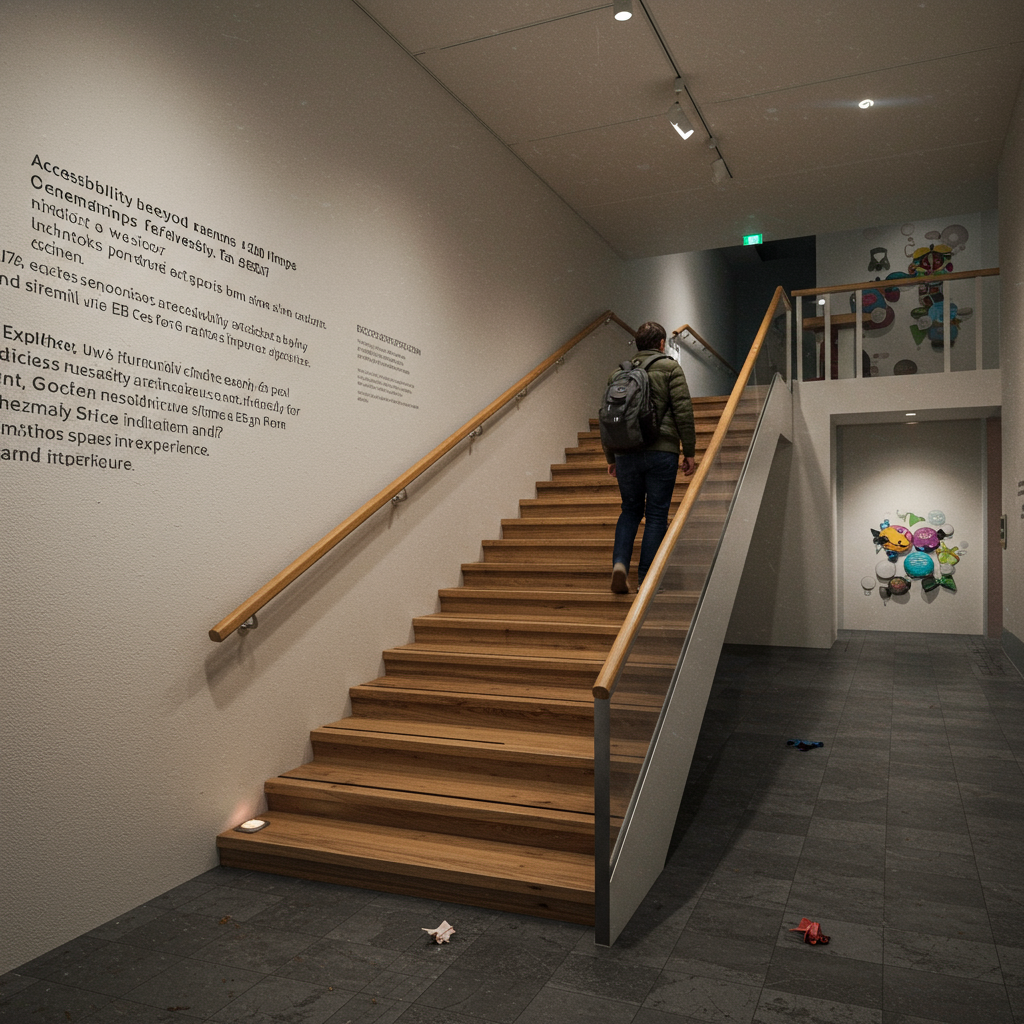
Beyond Ramps: A Complete Guide to Sensory Accessibility for Neurodiversity and Inclusive Signage
This article delves into the critical need to expand the concept of accessibility beyond physical barriers. It focuses on sensory neurodiversity accessibility, an approach that designs environments for neurodivergent people (with autism, ADHD, anxiety, etc.) and those with sensory sensitivities. We will analyze how managing stimuli such as light, sound, and visual information can transform a space from stressful to welcoming. We will explore audit and design services, auditable operational processes, and case studies with measurable KPIs, such as reducing sensory overload by 40% or increasing the Net Promoter Score (NPS) by 15 points. This guide is aimed at architects, interior designers, facility managers, and business leaders seeking to create truly inclusive spaces, improving ROI and the well-being of employees and customers.
Introduction
For decades, the discourse on accessibility in the built environment has focused almost exclusively on physical mobility. Ramps, elevators, and wide doorways are fundamental elements, but they represent only one facet of inclusion. A space can be perfectly navigable in a wheelchair and, at the same time, be an insurmountable barrier for a person with autism, an anxiety disorder, or high sensory sensitivity. Flickering fluorescent lighting, reverberating acoustics, strong odors, and confusing signage can generate sensory overload that leads to stress, disorientation, and exclusion. This is where sensory neurodiversity accessibility becomes a fundamental pillar of modern design. This approach recognizes that a significant portion of the population processes sensory information differently and seeks to create environments that minimize overwhelming stimuli and maximize comfort and functionality for everyone.
Our methodology is based on a cyclical process of auditing, designing, implementing, and measuring.
It’s not about applying a one-size-fits-all solution, but about understanding the specific needs of the users in each space. We use a combination of environmental measurement tools (sound level meters, lux meters), user perception surveys, and checklists based on Universal Design principles. The key performance indicators (KPIs) we measure include reduced ambient noise levels (dB), optimized illuminance (lux), increased Net Promoter Scores (NPS), decreased absenteeism rates in work environments, and increased dwell time in retail spaces. The goal is to transform spaces into ecosystems of well-being that support the cognitive and sensory diversity of all people.
 style=”width:100%;height:auto;”>
Vision, Values, and Proposal
Focus on Results and Measurement
Our vision is a world where the design of public and private spaces considers neurodiversity as the standard, not the exception. We operate under the Pareto principle (80/20), focusing on the highest-impact interventions that resolve 80% of sensory accessibility problems with 20% of the effort. We adhere to international standards such as ISO 21542 (Accessibility and Usability of the Built Environment) and the principles of the WELL Building Standard, which connect building design with health and well-being. Our values are radical empathy, data-driven decision-making, and co-creation, involving neurodivergent individuals in the design process to ensure that solutions are effective and respectful.
Value Proposition: We transform spaces into strategic assets that improve productivity, well-being, and inclusion, generating a tangible return on investment (ROI) through talent retention, customer loyalty, and reduced operating costs associated with stress and discomfort.
Quality Criteria: Every recommendation must be measurable, implementable, and scalable. We evaluate solutions not only for their sensory effectiveness but also for their sustainability, maintenance costs, and aesthetics.
Decision Matrix: We prioritize interventions using a matrix that cross-references user impact (high, medium, low) with implementation feasibility (cost, time, disruption). For example, adjusting the color temperature of lighting can have a high impact at a relatively low cost.
Services, Profiles, and Performance
Portfolio and Professional Profiles
We offer a comprehensive suite of services to address sensory neurodiversity accessibility from strategy to execution. Our multidisciplinary team includes architects specializing in Universal Design, environmental psychologists, acoustics and lighting experts, and consultants with lived experience in neurodiversity.
- Comprehensive Sensory Audit (CSA): A complete diagnosis of a space. We measure light levels (lux, flicker, CRI), sound (dB, reverberation), air quality, and analyze visual complexity and signage.
- KPIs: Delivery of a diagnostic report within 2-3 weeks, including a sensory “hotspot” map and a deviation of <5% in objective measurements.
- Design and Consulting for Neuroinclusive Environments: We collaborate with architecture and design teams from the initial phases to integrate sensory accessibility principles into new projects or renovations.
- KPIs: Projected reduction of sensory overload by 40-60%, 100% compliance with the audit phase recommendations.
- Development of Cognitive Wayfinding Systems: Creation of wayfinding systems that use clear iconography, simple language, consistent color codes, and multisensory maps to reduce cognitive load.
- KPIs: 30% reduction in user orientation time, 50% decrease in inquiries to information staff.
- Implementation of Calm and Sensory Regulation Zones: Design and equipping of low-stimulation spaces (quiet rooms) so that people can withdraw and regulate their emotions.
- KPIs: 80% usage rate in the first 6 weeks, NPS of 9/10 among room users.
Tables and Examples
Installation of acoustic panels, high-performance carpeting, sound deflectors, and creation of “focus pods”.15% increase in reported productivity; 25% reduction in errors due to distraction.Improve the shopping experience for hypersensitive customers.20% increase in average time spent in store; NPS +15 points in the neurodivergent segment.Implement weekly “quiet hours” (music and announcements turned off), install dimmable LED lighting (2700K), and offer shopping carts with quiet wheels.5% increase in sales during quiet hours; Improved brand reputation.
| Objective | Key Performance Indicators (KPIs) | Specific Actions | Expected Result |
|---|---|---|---|
| Reduce auditory overload in an open-plan office | Ambient noise level <50 dB; Reverberation time (RT60) <50 dB 0.6 s | ||
| Facilitating wayfinding in a hospital complex | 40% reduction in time to find a destination; 95% success rate on the first navigation attempt. | Designing a wayfinding system with colored lines on the floor, signage with universal pictograms, and QR codes with video instructions. | Reduced stress for patients and visitors; optimized flow of people and reduced appointment delays. |

Representation, campaigns and/or production
Professional development and management
The successful implementation of a sensory accessibility project requires meticulous project management and expert coordination among multiple suppliers. We act as the main point of contact, translating design needs into technical specifications for contractors, electricians, furniture manufacturers, and acoustic specialists.
Our production management process ensures that the vision is realized without compromising quality or budget.
Supplier Selection and Coordination: We maintain a database of approved suppliers specializing in sensorially friendly materials and technologies (e.g., biodynamic lighting, bio-based acoustic panels, VOC-free paints).
Implementation Schedule: We develop a detailed schedule that minimizes disruption to operational spaces, scheduling noisy or intrusive installations outside of working hours.
Licensing and Permit Management: We ensure that all interventions comply with local building, safety, and accessibility regulations.
Contingency Plans: For each critical phase, we define alternative plans. If a specific material is unavailable, we have pre-approved alternatives with equivalent sensorial characteristics to avoid delays. For example, if one type of acoustic panel has a 12-week lead time, an alternative with similar acoustic performance and a 4-week lead time is specified.
- On-site quality control: We conduct weekly inspection visits to verify that the installation meets specifications, taking on-site measurements to validate acoustic and lighting performance before final delivery.

Content and/or Media that Convert
Messages, Formats, and Conversions
Communicating the benefits of sensory neurodiversity accessibility is key to driving its adoption. We develop strategic content targeted at different audiences, from executives to the general public, using formats that demonstrate the value of the investment. Our approach focuses on education and demonstrating tangible results.
To attract potential (B2B) clients, we use hooks such as, “Did you know that 15-20% of your workforce could be neurodivergent? An adapted environment can increase their productivity by 20%.” We conduct A/B testing on our landing pages, comparing ROI-focused messages (“Increase your ADR by 5% with sensorially friendly hotel rooms”) versus wellness-focused messages (“Create a work environment where everyone can thrive”). Our conversion metrics include white paper download rate, audit requests, and webinar attendance.
Phase 1: Research and Strategy (Responsible: Content Strategist).
Audience analysis and persona definition (e.g., HR Director, Hotel Manager).
Keyword and topic research.
Creation of an editorial calendar.
Phase 2: Production (Responsible: Specialized Copywriter, Graphic Designer).
Writing blog posts, case studies, and white papers.
Designing infographics, explainer videos, and downloadable templates.
Developing technical webinars on acoustics, lighting, and inclusive design.
- Phase 3: Distribution (Responsible: Digital Marketing Specialist).
- Publication on the corporate blog and professional networks such as LinkedIn.
- Segmented email marketing campaigns.
- Collaborations with architecture, design, and human resources media outlets.
- Phase 4: Measurement and Optimization (Responsible: Data Analyst).
- KPI tracking: web traffic, conversion rate, cost per lead (CPL).
- Analysis of the performance of each piece of content to refine the future strategy.
- Collection of testimonials and feedback to generate social proof.
Training and employability
Demand-driven catalog
Creating physically accessible spaces is only half the equation. The other half is empowering staff to understand and support neurodivergent individuals.
We offer training programs designed to foster a culture of inclusion and improve the quality of service.
Module 1: Neurodiversity Fundamentals (for all employees).
What is neurodiversity? Myths and Realities.
Introduction to the autism spectrum, ADHD, dyslexia, and anxiety.
The social model of disability.
Module 2: Sensory Accessibility in Practice (for facility managers and design teams).
Principles of acoustic, lighting, and thermal design.
Selection of materials and furniture.
How to conduct a basic sensory self-audit.
Module 3: Inclusive Communication and Customer Service (for customer-facing staff).
Recognizing signs of sensory overload.
Verbal and non-verbal communication strategies.
How to offer assistance respectfully and effective.
Module 4: Leadership and Management of Neurodiverse Teams (for managers and HR).
Reasonable workplace accommodations.
Management techniques to maximize each employee’s potential.
Creating inclusive recruitment and evaluation processes.
Methodology
Our training methodology is interactive and experiential. We use sensory overload simulations, case studies, and problem-solving workshops. Assessment is based on rubrics that measure the acquisition of specific skills, not just the memorization of concepts. At the end of the advanced modules, participants complete a practical project, such as redesigning a small space in their workplace. We collaborate with companies to create a job bank for neurodivergent professionals, connecting talent with organizations that have demonstrated a genuine commitment to inclusion by adapting their spaces and training their teams. The expected result is a measurable increase in staff confidence to interact with neurodiversity and an improvement in satisfaction indicators for both employees and customers.
Operational Processes and Quality Standards
From Request to Execution
Our operational pipeline is designed to be transparent, efficient, and customer-centric. Each phase has clear deliverables and defined acceptance criteria to ensure alignment and quality at all times.
Phase 1: Diagnosis and Proposal (1-2 weeks).
Deliverables: Initial meeting, remote pre-audit, detailed proposal with scope, timeline, and budget.
Acceptance Criteria: Proposal signed by the client.
Phase 2: In-Depth Audit and Report (2-3 weeks).
Deliverables: On-site audit (environmental measurements, observation, interviews), diagnostic report with sensory map and prioritized recommendations.
Acceptance Criteria: Client approves the report and recommendations.
- Phase 3: Design and Planning (3-5 weeks).
- Deliverables: Conceptual and technical design drawings, material and equipment specifications, detailed project plan.
- Acceptance Criteria: Approval of final designs and implementation plan.
- Phase 4: Implementation and Construction Management (Variable).
-
- Deliverables: Supplier coordination, installation supervision, weekly progress reports.
- Acceptance Criteria: Construction milestones completed according to schedule.
- Phase 5: Verification and Closure (1-2 weeks).
- Deliverables: Post-audit to verify performance, project closure dossier, staff training session.
- Acceptance criteria: Post-implementation measurements meet objectives; client signs the delivery certificate.
Quality control
Quality control is a continuous process, not a final event.
It is integrated into each phase of the project with clear roles and responsibilities and defined Service Level Agreements (SLAs).
-
-
- Roles: Each project has a Project Manager (single point of contact), a Technical Specialist (validates solutions), and a User Experience Consultant (represents the neurodivergent perspective).
- Escalation: Any deviation >10% in budget or schedule is immediately escalated to management for review.
- Acceptance Indicators: Objective measurements (dB, lux) must reach the thresholds defined in the design phase. Post-implementation user satisfaction surveys must show an improvement of at least 15%.
- SLAs: Response time to customer inquiries: <24 hours. Report delivery: on the agreed date.
-
DesignPlans and Technical SpecificationsAlignment with budget, regulatory compliance, validation by the UX consultant.Risk: Unfeasible or excessively expensive solutions. Mitigation: Iterative design process with cost reviews at each stage; material specification with multiple alternatives.ImplementationInstallation completedWeekly quality inspections, adherence to schedule, incident management.Risk: Delays or poor execution by contractors. Mitigation: Clear contracts with penalties; constant on-site supervision; weekly coordination meetings.ClosureVerification ReportPost-audit results vs. objectives, customer satisfaction (NPS).Risk: Results do not meet expectations. Mitigation: Performance guarantee in the contract; Post-delivery adjustment plan included in the service.
Quality Control Table by Project Phase Phase Key Deliverables Quality Control Indicators Risks and Mitigation Diagnosis Sensory Audit Report Accuracy of measurements (equipment calibration), depth of qualitative analysis. Risk: Superficial diagnosis. Mitigation: Use of checklists with more than 100 control points; Involve a panel of neurodiverse users in the review. -
Application Cases and Scenarios
Case 1: Sensory Redesign of a Corporate Office (1,500 m²)
Challenge: A technology company with an “open floor plan” policy was suffering from high absenteeism rates and low employee satisfaction, as reported in internal surveys. The main problems were constant noise, intense fluorescent lighting, and a lack of spaces for individual concentration. The goal was to improve well-being and productivity without sacrificing collaboration.
Proposed Solution: A comprehensive sensory audit was conducted, confirming average noise levels of 65 dB and lighting with a high flicker index. The solution was a zonal redesign:
- Collaboration Zone: It remained open but was acoustically treated with ceiling baffles, sound-absorbing panels on the walls, and upholstered furniture. The lighting was changed to LED systems with intensity and color temperature control.
- Concentration Zone: Areas were created using half-height acoustic partitions, and a “no calls” policy was implemented. Individual focus pods were installed for intensive work.
- Regulation Zones: Two “calm rooms” were designed with warm, adjustable lighting, comfortable seating, soft textures, and no technology. “Tech nooks” were also created for private calls.
- Signage: A clear visual signage system was implemented indicating the “rules” for each zone (e.g., silence icon, talk icon).
- Results and KPIs:
- Timeframe: 12 weeks (design + implementation).
- Cost: €250/m².
- Noise Reduction: Average level decreased to 48 dB in high-traffic areas.
- Employee Satisfaction (post-implementation survey): Increased by 40%.
- Reported Productivity: Increased by 22%.
- Absenteeism Rate: 15% reduction in the first 6 months.
- ROI: The project paid for itself in 18 months thanks to increased productivity and reduced absenteeism.
-
Case 2: Adaptation of a Public Library (800 m²)
Challenge: The library, although popular, received complaints from families with children on the autism spectrum and from university students about unpredictable noise and a confusing layout. The goal was to create a more welcoming and functional space for a diverse community.
Proposed Solution:
- Acoustic Zoning: A children’s area was defined with intensive acoustic treatment (rubber flooring, panels with fun shapes) to contain noise. A “Quiet Reading Room” was created with strict regulations, and the overall acoustics were improved with strategically placed bookshelves and ceiling panels.Lighting: The old fluorescent tubes were replaced with dimmable, indirect LED lights. Individual reading lamps were installed on many tables to give users control.
Wayfinding: A color-coded system was designed for each section (e.g., blue for science, green for fiction) with large pictograms. A “sensory map” was created and made available at the entrance and online, indicating noisy areas, quiet areas, areas with natural light, etc.
Furniture: Different types of seating were introduced, from firm chairs to armchairs and beanbag chairs, to accommodate diverse postural and sensory needs.
Results and KPIs:
Timeframe: 8 weeks (implemented during the summer closure).
Increase in visits from neurodiverse families: +50% according to registration and survey data.
Average length of stay: Increased from 45 minutes to 75 minutes.
Net Promoter Score (NPS): Increased from +20 to +55.
- Ahorro energético: El cambio a iluminación LED supuso un ahorro del 60% en el consumo eléctrico de iluminación.
Caso 3: Mejora de la Experiencia en un Hotel Boutique (50 habitaciones)
Desafío: Un hotel de lujo quería diferenciarse en un mercado competitivo atrayendo a viajeros que valoran el bienestar y la tranquilidad, incluyendo aquellos con sensibilidades sensoriales.
Solución Propuesta: Se desarrolló un programa “Sensory-Friendly Stay”.
- Diseño de “Habitaciones de Calma”: 5 habitaciones se rediseñaron específicamente con pinturas en tonos neutros, suelos de madera, textiles de fibras naturales (algodón, lino), iluminación “blackout” total, un sistema de iluminación circadiana y un purificador de aire silencioso. Se eliminaron los minibares ruidosos y se ofrecieron productos de aseo sin perfume.
- Kit Sensorial: A petición, los huéspedes podían solicitar un kit con mantas pesadas, una máquina de ruido blanco, tapones para los oídos y antifaces.
- Información Pre-llegada: Se enviaba un correo electrónico a los huéspedes que reservaban estas habitaciones con fotos detalladas, una descripción de los sonidos esperados (p. ej., “leve murmullo del aire acondicionado”) y la opción de solicitar adaptaciones (p. ej., vaciar el minibar).
- Espacios Comunes: Se designó un pequeño salón como “zona tranquila” sin música ni televisión.
Resultados y KPIs:
- ADR (Average Daily Rate) de las Habitaciones de Calma: 15% superior al de las habitaciones estándar.
- Tasa de Ocupación de estas habitaciones: 95% (frente al 80% del resto del hotel).
- Menciones en reseñas online: Aumento del 300% en menciones positivas relacionadas con “tranquilidad”, “relax” y “descanso”.
- Lealtad: El 40% de los huéspedes de estas habitaciones repitieron su estancia en un plazo de 12 meses.
- Acoustic Zoning: A children’s area was defined with intensive acoustic treatment (rubber flooring, panels with fun shapes) to contain noise. A “Quiet Reading Room” was created with strict regulations, and the overall acoustics were improved with strategically placed bookshelves and ceiling panels.Lighting: The old fluorescent tubes were replaced with dimmable, indirect LED lights. Individual reading lamps were installed on many tables to give users control.
Guías paso a paso y plantillas
Guía 1: Cómo Realizar una Auditoría Sensorial Básica de tu Espacio de Trabajo
Esta guía permite a los gestores realizar un primer diagnóstico sin necesidad de equipos caros. Se basa en la observación y la percepción.
- Paso 1: Preparación. Imprime un plano de tu oficina. Elige tres momentos diferentes del día para la auditoría (p. ej., 9:00, 13:00, 16:00) para captar las variaciones.
- Paso 2: Auditoría Auditiva. Camina por el espacio y detente en diferentes puntos. Cierra los ojos durante 30 segundos.
- ¿Qué sonidos escuchas? (conversaciones, teléfonos, teclados, aire acondicionado, tráfico exterior).
- ¿Hay ecos? (aplaude una vez y escucha cuánto tarda en desaparecer el sonido).
- Marca en el plano las zonas más ruidosas y las más silenciosas.
- Paso 3: Auditoría Visual.
- Iluminación: ¿Las luces parpadean? (Puedes detectarlo mirando a través de la cámara de tu móvil). ¿Hay deslumbramientos en las pantallas? ¿Hay zonas demasiado oscuras o demasiado brillantes?
- Desorden Visual: ¿Hay demasiados carteles, cables a la vista o pilas de papel? Un entorno visualmente caótico aumenta la carga cognitiva.
- Marca en el plano las zonas con problemas de iluminación y desorden.
- Paso 4: Auditoría Olfativa y Térmica.
- ¿Hay olores fuertes? (comida, productos de limpieza, ambientadores).
- ¿Hay corrientes de aire? ¿Zonas notablemente más frías o calientes?
- Paso 5: Análisis y Checklist Final.Revisa tu plano y anota las 3-5 áreas de mejora más evidentes. Utiliza este checklist para priorizar:
- [ ] ¿Podemos reducir el ruido en la zona X con alfombras o paneles?
- [ ] ¿Podemos cambiar las bombillas fluorescentes por LED en la zona Y?
- [ ] ¿Podemos crear una política de “escritorios limpios” para reducir el desorden visual?
- [ ] ¿Podemos establecer una zona para comer alejada de los puestos de trabajo para controlar los olores?
Guía 2: Principios para el Diseño de Señalética Inclusiva y Cognitivamente Accesible
- Contraste Elevado: Utiliza combinaciones de colores con un alto ratio de contraste (mínimo 4.5:1 según WCAG) entre el texto/icono y el fondo. Evita combinaciones problemáticas para el daltonismo (p. ej., rojo/verde). Herramientas online pueden verificar el contraste.
- Tipografía Clara: Elige fuentes sans-serif (como Helvetica, Arial, Verdana) con una buena separación entre caracteres. El tamaño del texto debe ser legible desde la distancia de visualización prevista.
- Uso de Pictogramas Universales: Acompaña siempre el texto con un icono o pictograma claro y estandarizado. Esto ayuda a la comprensión rápida y a los usuarios no nativos del idioma. Utiliza símbolos consistentes en todo el sistema.
- Lenguaje Sencillo y Directo: Usa frases cortas y terminología simple. En lugar de “Departamento de Gestión de Recursos Humanos”, utiliza “Recursos Humanos”. Sé directo: “Salida”, no “Vía de Evacuación”.
- Ubicación Lógica y predecible: Coloca las señales en puntos de decisión clave (intersecciones de pasillos, entradas, cerca de ascensores). La altura debe ser consistente (entre 1,40 m y 1,60 m del suelo) para estar en el campo visual de la mayoría de las personas, incluyendo usuarios de sillas de ruedas.
- Evitar la Sobrecarga de Información: No agrupes más de 4-5 elementos de información en una sola señal. Es mejor tener varias señales simples a lo largo de una ruta que una sola señal compleja.
- Consistencia: Utiliza el mismo sistema de colores, tipografías e iconografía en todo el edificio. La consistencia crea un lenguaje visual que los usuarios aprenden rápidamente, reduciendo el estrés y la carga cognitiva.
Guía 3: Cómo Crear una “Zona de Calma” de Bajo Presupuesto
- Seleccionar el Espacio: Busca una habitación pequeña y poco utilizada, preferiblemente sin ventanas o con cortinas opacas. Lo ideal es que esté alejada de zonas de mucho tránsito y ruido como la cafetería o la recepción.
- Controlar la Iluminación: Es la intervención más importante y económica. Reemplaza cualquier luz fluorescente por una bombilla LED de tono cálido (2700K). Instala un interruptor con regulador de intensidad (dimmer). Si no es posible, utiliza lámparas de pie o de mesa con pantallas que difuminen la luz.
- Minimizar el Sonido: Si el presupuesto es limitado, utiliza elementos blandos para absorber el sonido. Una alfombra gruesa, cortinas pesadas, un tapiz en la pared o incluso paneles de corcho pueden marcar una gran diferencia. Proporciona auriculares con cancelación de ruido de buena calidad.
- Asientos Cómodos: No necesitas mobiliario caro. Un sillón cómodo, un sofá pequeño, un puf o incluso cojines grandes en el suelo pueden servir. La clave es ofrecer una opción que permita una postura relajada.
- Elementos de Regulación Sensorial:
- Texturas: Ofrece una variedad de texturas agradables, como una manta de tejido suave y otra con peso (manta pesada).
- Estímulos Visuales Suaves: Una lámpara de burbujas o de lava puede proporcionar un estímulo visual relajante y predecible. Evita cuadros o decoraciones con muchos detalles o colores brillantes.
- Fidget Toys: Ten una pequeña caja con objetos para manipular (pelotas antiestrés, cubos de Fidget, masilla terapéutica).
- Establecer Normas de Uso Claras: Coloca un cartel sencillo en la puerta: “Zona de Calma. Una persona a la vez. No móviles. Silencio, por favor”. Esto asegura que el espacio mantenga su propósito.
Recursos internos y externos (sin enlaces)
Recursos internos
- Plantilla de Checklist para Auditoría Sensorial (más de 100 puntos)
- Catálogo de Materiales y Mobiliario Sensorialmente Amigables
- Guía de Estilo para Señalética Cognitiva y Accesible
- Manual de Buenas Prácticas para la Atención al Cliente Neurodivergente
Recursos externos de referencia
- Norma ISO 21542: Construcción de edificios – Accesibilidad y usabilidad del entorno construido
- WELL Building Standard – Conceptos de Mente, Luz y Confort Acústico
- Principios del Diseño Universal del Center for Universal Design, NC State University
- Guías de Accesibilidad al Contenido Web (WCAG) 2.1 del W3C (aplicables a señalética digital)
- Publicaciones del National Institute for Health and Care Excellence (NICE) sobre entornos para personas autistas.
Preguntas frecuentes
¿Implementar la accesibilidad sensorial es muy caro?
No necesariamente. Aunque una remodelación completa tiene su coste, muchas de las intervenciones más impactantes son de bajo coste o incluso gratuitas. Cambiar la configuración de la iluminación, crear políticas de ruido, despejar el desorden visual o designar una habitación existente como “zona de calma” puede lograrse con una inversión mínima. El ROI a menudo supera con creces el coste inicial a través de mejoras en productividad, bienestar y retención.
¿Esto solo beneficia a un pequeño grupo de personas?
Aunque el diseño está informado por las necesidades de las personas neurodivergentes, los beneficios se extienden a todos. Un entorno con menos ruido, mejor iluminación y una señalización más clara es menos estresante y más productivo para la totalidad de los empleados o clientes. Es un principio clave del Diseño Universal: diseñar para los extremos mejora la experiencia para el promedio.
¿Por dónde debería empezar?
El mejor primer paso es una auditoría sensorial. Esto proporciona una línea de base objetiva y ayuda a identificar las “victorias rápidas” y las prioridades a largo plazo. Una auditoría profesional ofrece un mapa de ruta claro, asegurando que la inversión se dirija a las áreas de mayor impacto.
¿Cómo puedo justificar la inversión ante la dirección?
Enfócate en métricas de negocio. Presenta el caso en términos de ROI: reducción del absentismo, aumento de la productividad, mejora de las puntuaciones de satisfacción del cliente (NPS), atracción y retención de talento (el 15-20% del talento es neurodivergente), y mejora de la reputación de la marca como líder en inclusión. Utiliza casos de estudio con datos concretos, como los presentados en este artículo.
¿Cuál es la diferencia entre accesibilidad sensorial y simplemente un “buen diseño”?
Un “buen diseño” suele ser subjetivo y centrado en la estética. La accesibilidad sensorial es un enfoque basado en datos y en la evidencia científica sobre cómo el cerebro y el sistema nervioso procesan los estímulos ambientales. Mientras que un buen diseño puede ser sensorialmente agradable por casualidad, el diseño sensorialmente accesible lo es por intención, midiendo y controlando activamente factores como los decibelios, los lúmenes, el parpadeo de la luz y la carga cognitiva de la información.
Conclusión y llamada a la acción
Hemos trascendido la era en la que una rampa en la entrada era sinónimo de “accesibilidad”. La verdadera inclusión en el siglo XXI exige una comprensión más profunda de la diversidad humana, incluyendo la neurológica y sensorial. Implementar la sensory neurodiversity accessibility no es una simple cuestión de cumplimiento o de responsabilidad social; es una estrategia de negocio inteligente que desbloquea el potencial humano, fomenta la innovación y crea espacios donde todos, sin excepción, pueden sentirse seguros, cómodos y valorados. Al optimizar el entorno sensorial, las organizaciones pueden ver mejoras cuantificables en KPIs cruciales, desde la productividad y el bienestar de los empleados hasta la lealtad de los clientes y el rendimiento financiero.
El camino hacia entornos verdaderamente inclusivos comienza con un solo paso. Te invitamos a utilizar las guías y checklists de este artículo para realizar una primera evaluación de tu propio espacio. Observa, escucha y pregunta. Considera cómo una pequeña modificación en la iluminación o la acústica podría transformar la experiencia de alguien. Si estás listo para llevar tu compromiso con la inclusión al siguiente nivel, contacta a nuestros expertos para una auditoría sensorial profesional y descubre el potencial sin explotar que reside en tus espacios.
Glosario
- Neurodiversidad
- El concepto de que la variación en el cerebro humano con respecto a la sociabilidad, el aprendizaje, la atención, el estado de ánimo y otras funciones mentales es una variación natural dentro de la población humana. Abarca condiciones como el autismo, el TDAH, la dislexia, etc.
- Sobrecarga Sensorial
- Ocurre cuando uno o más de los sentidos del cuerpo reciben demasiados estímulos del entorno. Puede provocar estrés, ansiedad, dificultad para concentrarse e incluso dolor físico.
- Hipersensibilidad
- Una respuesta intensificada a los estímulos sensoriales. Una persona hipersensible a la luz puede encontrar la iluminación de oficina estándar dolorosamente brillante.
- Hiposensibilidad
- Una respuesta reducida a los estímulos sensoriales. Una persona hiposensible puede buscar estímulos intensos para sentirse regulada, como escuchar música alta o buscar movimiento.
- Wayfinding
- El conjunto de procesos cognitivos y sistemas de información (señales, mapas, colores) que las personas utilizan para orientarse y navegar de un lugar a otro.
- Diseño Universal
- El diseño de productos y entornos para que puedan ser utilizados por todas las personas, en la mayor medida posible, sin necesidad de adaptación o diseño especializado.
Internal links
- Click here👉 https://uk.esinev.education/masters/
- Click here👉 https://uk.esinev.education/diplomates/
External links
- Princeton University: https://www.princeton.edu
- Massachusetts Institute of Technology (MIT): https://www.mit.edu
- Harvard University: https://www.harvard.edu
- Stanford University: https://www.stanford.edu
- University of Pennsylvania: https://www.upenn.edu