
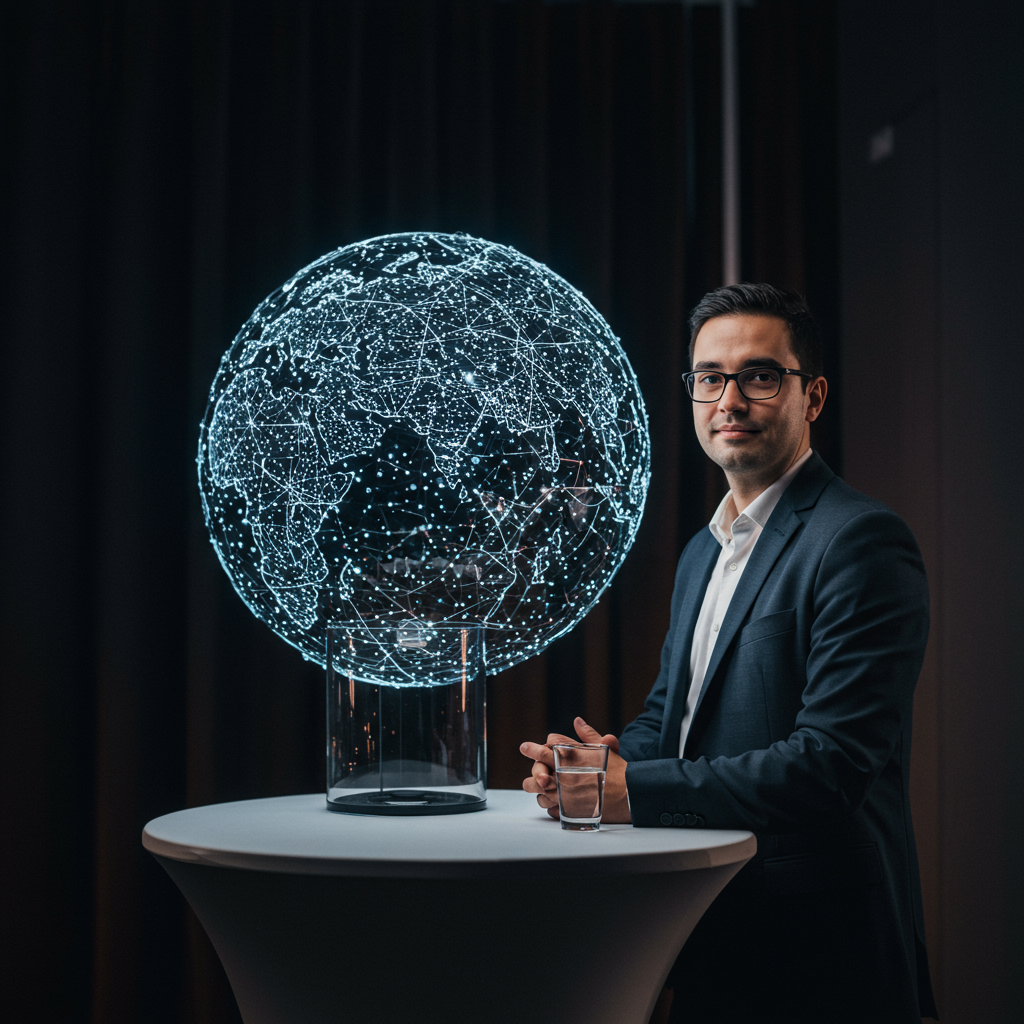
Practical AI for Events: Real-World Uses That Save Time and Optimize Results
This article demystifies the use of artificial intelligence in the events industry, focusing exclusively on functional and profitable applications. Far from science fiction, we explore how practical AI for events becomes a strategic ally for organizers seeking efficiency and greater impact. We detail services, from marketing automation to predictive attendance analytics, and provide auditable processes with clear KPIs such as reducing operating costs by 15-20%, increasing attendant satisfaction (NPS) by more than 10 points, and optimizing planning time by up to 30%. This guide is aimed at event managers, marketing directors, and MICE professionals who need to implement tangible technological solutions to maximize their results and offer memorable and personalized experiences.
Introduction
The events industry is at a technological crossroads. While the term “Artificial Intelligence” conjures up images of futuristic robots and total automation, the reality is much more accessible and useful in everyday life. The real value lies not in grandiosity, but in focused application. This article moves away from the media noise to focus on practical AI for events: a set of tools and methodologies that are already available and solve concrete problems. We’re talking about optimizing registration management, personalizing communication with thousands of attendees individually, analyzing survey sentiment in minutes instead of days, and predicting potential logistical bottlenecks before they occur. Adopting these technologies is not a future option, but a present competitive necessity for those seeking efficiency, profitability, and a superior user experience.
Our methodology is based on a pragmatic approach: identifying the repetitive, low-value tasks that consume most of an organizer’s time and then applying a specific AI solution. We will measure success through clear and quantifiable Key Performance Indicators (KPIs). The goal is not to replace the irreplaceable human touch of hospitality and creativity, but to enhance it. We will evaluate each application based on its Return on Investment (ROI), measured in work hours saved, increased booking conversion rate, improved Net Promoter Score (NPS), and reduced budget deviation. It’s about working smarter, not harder, using technology as a highly efficient copilot.
Vision, values, and proposal
Focus on results and measurement
Our vision is to democratize access to artificial intelligence in in the events sector, transforming it from an abstract concept into a daily work tool. We believe in an approach based on the Pareto principle (80/20): we identify the 20% of tasks that consume 80% of the resources to apply AI solutions that generate maximum impact with minimum complexity. Our values are transparency, efficiency, and measurable growth. We don’t propose technological solutions simply because they are innovative, but because they solve a real problem and offer a clear return. We prioritize open technical standards and interoperability across platforms to avoid vendor lock-in, ensuring our clients maintain control over their data and processes.
Main Value Proposition: Reduce operational management time by up to 30% and increase assistant engagement by 20% within the first six months of implementation.
Quality Criteria: Every AI solution must pass a decision matrix that assesses its impact on cost, time, and quality (CTQ). A budget deviation of less than 5% and an NPS increase of at least 5 points are required.
- AI Adoption Decision Matrix:
- Does it solve a recurring and time-consuming problem?
- Is the tool intuitive and easy to integrate into existing workflows?
- Does it comply with data protection regulations (GDPR)?
- Does it offer a measurable ROI in less than 12 months?
- Is it scalable for events of different sizes and formats (in-person, virtual, hybrid)?
- Ethical Approach: We guarantee that the use of AI, especially in personalization and data analysis, is carried out with the explicit consent of attendees and with full transparency regarding the data collected and its Purpose.
Services, Profiles, and Performance
Portfolio and Professional Profiles
We offer a portfolio of services designed to integrate practical AI for events at every stage of an event’s lifecycle. An advanced technical profile is not required from the client; our teams are made up of hybrid profiles: event consultants specializing in technology and data analysts with experience in the MICE sector. Key services include:
- AI Consulting and Diagnostics: We analyze your current processes to identify friction points and the most cost-effective automation opportunities.
- Support Chatbot Implementation: Deployment of virtual assistants trained with all event information (agenda, speakers, FAQs, logistics) to provide instant 24/7 answers to attendees, reducing the workload of support staff by up to 60%.
- Automated Content Marketing: Use of generative AI to create email drafts, social media posts, session descriptions, and blog articles, accelerating content production by 50%.
- Personalized Attendee Experience: Platforms that use AI to recommend sessions, speakers, and networking contacts based on user profile and behavior, increasing active engagement.
- Predictive and Sentiment Analysis: Models that analyze historical data to predict attendance, and tools that process thousands of survey and social media comments to extract key insights in real time.
Operational Process
- Phase 1: Audit (1 week): Meetings with the client team to map current workflows. KPI: Identification of at least 5 key processes that can be optimized.
- Phase 2: Solution Proposal (1 week): Presentation of a detailed action plan, including recommended AI tools, a timeline, and an ROI estimate. KPI: Proposal with a projected ROI exceeding 150% in the first year.Phase 3: Implementation and Configuration (2-4 weeks): Implementation of the tools, integration with existing systems (CRM, registration platform), and customization. KPI: 99% integration success rate.
Phase 4: Training and Support (1 week): Training the client’s team to manage the new tools independently. KPI: Training NPS above 8/10.
Phase 5: Measurement and Optimization (ongoing): Monitoring of defined KPIs and adjustments to maximize performance. KPI: Monthly performance reports with improvement proposals.
Tables and examples
Increase email open ratesOpen Rate; Click-Through Rate (CTR)Use AI to generate personalized subject lines and perform automated A/B testing.5% increase in open rate and 2% increase in CTR.Improve networking at virtual eventsNumber of 1-on-1 meetings scheduled; Qualitative feedbackImplement a matchmaking engine that suggests connections based on profiles and interests.40% increase in scheduled meetings; Networking NPS +15 points.Automated Executive Report Generation.
| Objective | Indicators (KPIs) | Actions (AI Implementation) | Expected result |
|---|---|---|---|
| Reduce repetitive support inquiries | Number of support tickets; Average response time (ART) | Implement a chatbot trained with FAQs, event agenda, and logistics. | 60% reduction in level 1 tickets; Time to Respond (TMR) from 2 minutes to 10 seconds. |
| Streamline post-event analysis | Time spent on survey analysis | Use AI for sentiment analysis and automatic classification of open-ended responses. | Reduction of analysis time from 3 days to 4 hours. |

Representation, Campaigns and/or Production
Professional Development and Management
In the production phase, where logistics reign supreme, AI becomes a tireless production assistant. Supplier management, resource allocation, and contingency planning are areas where artificial intelligence can significantly mitigate risks and optimize costs. For example, predictive analytics tools can model attendee flow in a venue based on the session schedule, enabling dynamic allocation of security and catering staff to prevent overcrowding and stockouts. AI can also analyze supplier contracts, highlighting risk clauses or comparing prices in a standardized way to facilitate negotiation. Coordination is simplified through smart calendars that automatically adjust for delays and notify all parties involved, creating a central nervous system for the entire operation.
- AI-Assisted Logistics Checklist:
- Supplier Management: Has an AI tool been used to analyze and compare at least 3 proposals for each main service (catering, AV, setup)?
- Space Planning: Has the flow of people been simulated to identify potential bottlenecks in entrances, food areas, and restrooms?
- Staff Allocation: Has staff scheduling been optimized with an algorithm that considers anticipated peak demand and scheduled breaks?
- Inventory Management: Is a predictive system being used to estimate consumable needs (food, beverages, welcome materials) and reduce waste by at least 15%?
- Dynamic Contingency Plans: AI can run simulations of crisis scenarios (e.g., cancellation of a keynote speaker, adverse weather conditions) and propose predefined action plans, reducing the organizing team’s reaction time.
- Documentation and Compliance: Natural Language Processing (NLP) tools can review documentation to ensure that all necessary permits and licenses are in order and up to date, flagging any potential regulatory non-compliance.

Content and/or Media that Convert
Messages, Formats, and Conversions with AI
Content is the heart of any event, and generative AI has revolutionized how it’s created, personalized, and distributed. Current tools can generate high-quality drafts for almost any format: from a magnetic hook for a TikTok promotional video to a post-event lead nurturing email sequence. The key is human oversight: AI is a formidable creative assistant, not a replacement. It allows you to perform A/B testing on a scale previously unthinkable, testing dozens of variations of an email subject line or call to action (CTA) to find the one that maximizes conversion. Furthermore, practical AI for events allows for hyper-personalization of content: each attendee can receive a recommended agenda, summaries of sessions they couldn’t attend, or articles of interest based on their interaction during the event, dramatically increasing the perceived value.
AI-Assisted Content Production Workflow:
Defining Objectives and Personas (Responsible: Marketing Director): Audience segments and conversion goals are defined for each piece of content.
Generating Ideas and Drafts (Responsible: Content Manager + AI): Generative AI tools with detailed prompts (e.g., “Write 5 email subject lines for a webinar on AI in events, targeted at marketing directors, with an urgent but professional tone”) are used to create multiple variations.
Human Editing and Refinement (Responsible: Copywriter): A professional reviews, edits, and adds the human touch, creativity, and brand voice to the generated drafts. AI provides the structure; the human, the soul.
Media Creation (Responsible: Graphic Designer): AI tools are used to generate supporting images, transcribe videos for subtitles, or even create avatars for presentations.
Distribution and A/B Testing (Responsible: Digital Marketing Specialist): Posts are scheduled, and automated multivariate tests are set up to optimize performance in real time. KPI: Average click-through rate (CTR) improvement of 1.5%.
- Analysis and Feedback (Responsible: Data Analyst): AI is used to analyze content performance and comments, identifying patterns that inform the strategy for future campaigns.

Training and employability
Demand-Driven Catalog
To empower professionals in the sector, we have designed a training catalog focused on practical skills in demand. The goal is for event organizers not only to understand AI, but also to know how to apply it to achieve measurable results.
-
- Module 1: AI Fundamentals for Event Professionals.
-
- What is and what isn’t AI?
Differences between generative AI, predictive AI, and machine learning.
-
- Module 1: AI Fundamentals for Event Professionals.
Essential glossary: Prompt, API, NLP, Algorithm, etc.
Key use cases in the event lifecycle.
Module 2: Prompt Engineering for Event Marketing.
How to write effective prompts for optimal results.
Creating a prompt library for email marketing, social media, and blogs.
Advanced techniques: “Chain of thought,” “Few-shot learning.”
Module 3: Communication and Support Automation.
Selecting and implementing chatbot platforms.
Training and maintenance of a bot: how to feed it with the right information.
Success metrics for a virtual assistant: resolution rate, user satisfaction.
Module 4: Data Analysis with AI: From Data to Decisions.
AI tools for analyzing surveys and qualitative feedback (sentiment analysis).
Predictive analytics basics: how to predict attendance and no-shows.
Creating visual dashboards with AI-assisted tools.
Module 5: Ethics and Privacy in the Use of AI.
GDPR compliance in data collection and processing.
Transparency with assistants: how to communicate the use of AI.
- Bias Management in Algorithms.
Methodology
Our training methodology is eminently practical (“learning by doing”). Each module concludes with a real-world project applied to a hypothetical event or, ideally, to the participant’s own event. Assessment is carried out using rubrics that measure the student’s ability to apply the concepts learned and the impact of their solutions. We offer an active job placement service, connecting certified professionals with companies in the sector seeking profiles with these new skills. The expected outcome is that 90% of participants will be able to implement at least one AI solution in their work within three months of completing the course, achieving a time saving of at least 5 hours per week.
Operational Processes and Quality Standards
From Request to Execution
The integration of AI into operational processes is designed to be seamless and add value at every stage, not to create technological bureaucracy. The pipeline is transparent and results-oriented.
- Phase 1: Diagnosis and Opportunity Analysis. A specialist meets with the client to understand their pain points. AI is used to analyze data from past events (costs, feedback, conversion rates) and detect patterns or inefficiencies.
- Deliverable: Diagnostic Report with 3-5 priority areas for improvement.
- Acceptance Criteria: The client validates the areas identified as critical.
- Phase 2: Technology and Process Proposal. A customized solution is designed, specifying the AI tools, workflow changes, and KPIs to be monitored.
- Deliverable: Detailed proposal with timeline, budget, and estimated ROI.
- Acceptance Criteria: Approval of the proposal and budget.
- Phase 3: Pre-production and Implementation. Configuration of the tools, integration with the client’s systems (CRM, web, etc.), and initial data loading.
- Deliverable: Functional testing environment.
- Acceptance Criteria: The client performs tests and validates that the tool functions as specified.
- Phase 4: Execution and Live Support. During the event, the performance of the tools is monitored in real time. A support team is available to resolve any issues.
- Deliverable: Real-time performance dashboards.
- Acceptance Criteria: Compliance with the defined SLAs (Service Level Agreements), such as 99.9% chatbot uptime.
- Phase 5: Closure and Post-Mortem Analysis. All data is collected, and AI is used to generate a comprehensive performance report against the objectives.
- Deliverable: Final report of results and lessons learned.
- Acceptance Criteria: The report demonstrates the ROI and provides actionable recommendations for future events.
Quality Control
Quality control is an ongoing process, not just a final check. It is based on defined roles, a clear escalation system, and constant monitoring of key indicators.
- Roles: Each project has a Project Manager, an AI Implementation Specialist, and a Data Analyst.
- Escalation: Incidents are classified by severity (low, medium, high, critical) with response times guaranteed by SLAs.
- Acceptance Indicators: Progress to the next phase does not occur until the deliverables of the current phase are validated by the client.
- Typical SLAs: Service availability > 99.8%; Response time to critical queries < 15 minutes; Final budget deviation < 5%.
ExecutionLive Monitoring Dashboard100% compliance with critical SLAs.Risk: Unexpected demand spike that overwhelms the system.Mitigation: Scalable cloud architecture and pre-event stress testing.ClosureFinal ROI ReportCustomer Satisfaction (NPS) > 8.Risk: Difficulty attributing results to AI.Mitigation: Establish clear baseline metrics in the diagnostic phase to compare before and after.
| Phase | Key Deliverables | Control Indicators | Risks and Mitigation |
|---|---|---|---|
| Diagnosis | Opportunities Report | 100% Customer Validation of Identified Pain Points. | Risk: Insufficient or poor quality historical data. Mitigation: Use industry benchmark data and conduct qualitative interviews. |
| Proposal | Detailed Project Plan | Projected ROI > 150%; Realistic and accepted timeline. | Risk: Misaligned customer expectations. Mitigation: Conduct a co-creation workshop for the solution and define KPIs together. |
| Pre-production | Platform configured and functional | User testing success rate > 95%. | Risk: Integration issues with legacy systems. Mitigation: Plan a thorough API testing phase and have contingency plans in place (e.g., manual data import). |
Application Cases and Scenarios
Case 1: International Technology Conference (2,500 attendees, hybrid format)
Problem: The organizer was facing an overload of repetitive email and phone inquiries, diverting staff from higher-value tasks. The virtual attendee experience was poor, with low engagement and networking rates. The planning timeframe was 9 months, with a historical budget variance of 10-15%.
Problem:
Solution: A practical AI strategy for events was implemented on three fronts:
-
- Multichannel Support Chatbot: A virtual assistant was deployed on the website, the event app, and WhatsApp, trained with over 500 frequently asked questions about registration, agenda, speakers, locations, visas, and technical support.
- Intelligent Matchmaking Engine: An algorithm was integrated into the virtual platform that suggested connections (attendees, exhibitors, speakers) based on job title, industry, declared interests, and sessions they had registered for. It facilitated scheduling meetings with a single click.
- Predictive Attendance Analytics: A machine learning model was used that, by analyzing data from previous events and registration behavior, predicted the no-show rate for the in-person component with 92% accuracy. This allowed for adjustments to catering orders and material production, preventing waste.Results:
Cost Reduction: €18,000 was saved on catering and materials thanks to adjustments based on no-show prediction. The cost of temporary support staff was reduced by 40%.
Operational Efficiency: The chatbot handled 75% of all incoming inquiries, freeing up 350 hours of work for the organizing team.
Improved Experience: The number of networking meetings scheduled through the platform increased by 120% compared to the previous year. El NPS global del evento pasó de 35 a 48 (+13 puntos).
- Plazo y Presupuesto: La desviación presupuestaria se redujo a un 3,5 %. El ROI de la inversión en IA se calculó en un 250 % solo en el primer evento.
Caso 2: Festival de Música al Aire Libre (30.000 asistentes)
Problema: La gestión de multitudes y la seguridad eran los mayores desafíos. Largas colas en accesos, barras y baños generaban una mala experiencia y afectaban al consumo. La comunicación de incidentes o cambios de horario era lenta e ineficaz.
Solución: Se aplicó IA para la optimización operativa en tiempo real.
-
-
- Análisis de Flujo de Multitudes: Se utilizaron cámaras con software de IA (respetando la privacidad, sin reconocimiento facial) para analizar la densidad de personas en tiempo real. Un dashboard central alertaba a los gestores sobre posibles aglomeraciones.
- Asignación Dinámica de Recursos: Basándose en los datos de flujo, el sistema sugería reubicar personal de seguridad, abrir más puntos de venta o enviar equipos de limpieza a las zonas de mayor congestión.
- Sistema de Notificaciones Inteligentes: Se integró un sistema que enviaba notificaciones push geolocalizadas a través de la app del festival, alertando a los asistentes sobre escenarios con menos gente, ofertas especiales en barras cercanas o cambios en la programación.
-
Resultados:
-
-
- Experiencia del asistente: El tiempo medio de espera en las barras se redujo en un 25 % (de 12 a 9 minutos en horas punta). Las quejas relacionadas con aglomeraciones y limpieza disminuyeron en un 50 %.
- Ingresos: El gasto medio por asistente aumentó un 8 %, atribuido a la reducción de colas y a las promociones dirigidas.
- Seguridad y Operaciones: El tiempo de respuesta a incidentes menores se redujo en un 30 %. Se optimizó el uso del personal, reduciendo las horas extras en un 15 %.
-
Caso 3: Lanzamiento de Producto para una Marca de Lujo (400 invitados VIP)
Problema: El objetivo no era la cantidad, sino la calidad de la interacción y la generación de leads cualificados para el equipo de ventas. Se necesitaba una forma de medir el engagement de los invitados de forma no intrusiva y personalizar el seguimiento post-evento.
Solución:
-
-
- Invitaciones Personalizadas con IA Generativa: Se creó un texto de invitación base y se utilizó IA para generar 50 variantes personalizadas, mencionando sutilmente los intereses específicos o interacciones pasadas de cada invitado VIP con la marca.
- Sistema de Lead Scoring por Comportamiento: Mediante balizas (beacons) y la app del evento, se medía el tiempo que cada invitado pasaba en las diferentes zonas de demostración del producto. Un algoritmo de IA asignaba una puntuación de “interés” en tiempo real.
- Seguimiento Automatizado y Personalizado: Al día siguiente, el sistema de CRM enviaba automáticamente un correo electrónico de agradecimiento personalizado. El contenido del email variaba según la puntuación de interés y las zonas visitadas: a un invitado que pasó 15 minutos en la demo del producto A se le enviaba información detallada y un enlace para agendar una cita con un especialista de ese producto.
-
Resultados:
-
- Tasa de conversión: La tasa de conversión de invitado a reunión de ventas cualificada aumentó del 15 % al 35 %.
- Eficiencia del equipo de ventas: Los vendedores recibieron un listado priorizado de leads “calientes” a las 9:00 del día siguiente, con información contextual sobre sus intereses, lo que les permitió realizar un seguimiento mucho más efectivo.
- Percepción de marca: El NPS entre los invitados fue de 65, destacando en los comentarios la “experiencia fluida y personalizada”.
Guías paso a paso y plantillas
Guía 1: Cómo Implementar un Chatbot de Eventos en 8 Pasos
- Definir el Objetivo Principal: ¿Qué problema quieres resolver? ¿Reducir emails de soporte, cualificar leads, mejorar la experiencia in-situ? Elige un único objetivo principal para empezar. Ejemplo: Reducir las consultas sobre la agenda y la logística en un 50 %.
- Recopilar y Estructurar el Conocimiento: Crea un documento de Preguntas Frecuentes (FAQ). Reúne todos los emails de consulta de eventos pasados. Exporta la agenda, la lista de ponentes y el mapa del recinto en un formato claro (CSV, JSON). Esta será la “comida” para tu IA.
- Seleccionar la Plataforma Adecuada: No todas las herramientas son iguales. Compara opciones basándote en: facilidad de uso (sin código), canales de integración (web, WhatsApp, app), capacidad multilingüe y coste. Herramientas de referencia: Tidio, Intercom, Drift.
- Entrenar al Chatbot (Fase Inicial): Sube tu documento de FAQs y el resto de la información a la plataforma. La mayoría de las herramientas modernas utilizan IA para “leer” y entender estos documentos automáticamente. Crea los “flujos” de conversación para las preguntas más complejas.
- Diseñar la Personalidad del Bot: ¿Será formal, amigable, divertido? Define un nombre y un avatar. Esto es clave para que no se sienta como una experiencia fría. Ejemplo: “Soy Evi, tu asistente virtual para el congreso X. ¿En qué puedo ayudarte?”.
- Realizar Pruebas Internas Exhaustivas: Pide a tu equipo que intente “romper” el chatbot. Hacedle preguntas ambiguas, mal escritas, complejas. Utiliza cada fallo como una oportunidad para mejorar sus respuestas.
- Lanzamiento y Promoción: Integra el chatbot en tu web y comunícalo a los inscritos. Añade un banner que diga “Hazme una pregunta” o “¿Tienes dudas? Chatea con nuestro asistente virtual”.
- Analizar y Optimizar (Ciclo Continuo): Revisa semanalmente el panel de análisis del chatbot. ¿Qué preguntas no sabe responder? Añade esas respuestas. ¿En qué punto del flujo abandonan los usuarios? Simplifica ese paso. Un chatbot no es un proyecto de “configurar y olvidar”.
Checklist Final:
- [ ] Objetivo definido y medible.
- [ ] Base de conocimiento con al menos 100 FAQs.
- [ ] Plataforma seleccionada e integrada.
- [ ] Personalidad del bot definida.
- [ ] Al menos 10 horas de pruebas internas.
- [ ] Plan de comunicación para el lanzamiento.
- [ ] Agenda de revisión semanal de analíticas.
Guía 2: Plantilla de Prompts para Marketing de Eventos con IA Generativa
- Prompt para Brainstorming de Temas: “Actúa como un experto en marketing de eventos para el sector [tu sector]. Genera 10 ideas de títulos para un webinar sobre [tu tema principal] que sean atractivos para un público de [tu público objetivo, p. ej., directores de RRHH]. Los títulos deben evocar curiosidad y prometer una solución a un problema común, como [un problema, p. ej., la alta rotación de personal].”
- Prompt para Posts en LinkedIn: “Escribe un post para LinkedIn de 150 palabras para promocionar nuestro próximo congreso [nombre del congreso]. El objetivo es conseguir inscripciones. Comienza con un ‘hook’ que capte la atención sobre [el principal problema que resuelve tu evento]. Menciona a 2-3 ponentes clave ([nombre y cargo]) y el beneficio principal de asistir. Termina con una pregunta para fomentar la interacción y una llamada a la acción clara con el enlace de registro. Usa 3-5 hashtags relevantes.”
- Prompt para Secuencia de Emails de Recordatorio: “Diseña una secuencia de 3 emails para recordar a los inscritos un webinar que tendrá lugar en una semana.
- Email 1 (7 días antes): Tono de expectación. Revela un detalle exclusivo sobre el contenido o un ponente. Asunto corto y intrigante.
- Email 2 (24 horas antes): Tono práctico. Incluye el enlace de acceso, instrucciones técnicas y un recordatorio de la agenda. Asunto claro y directo.
- Email 3 (1 hora antes): Tono de urgencia. Muy breve. “¡Empezamos en 1 hora!”. Incluye solo el enlace de acceso.
Escribe el texto para cada uno de estos emails.”
- Prompt para Descripción de Sesión: “Redacta la descripción para una sesión de 45 minutos en nuestro congreso. El título es ‘[Título de la sesión]’ y el ponente es [Nombre, Cargo]. La descripción debe tener 3 párrafos:
- Párrafo 1: Plantea el problema o la pregunta que la sesión abordará.
- Párrafo 2: Detalla los 3 puntos clave o ‘takeaways’ que los asistentes obtendrán.
- Párrafo 3: Breve biografía del ponente enfocada en por qué es una autoridad en este tema.
El tono debe ser profesional pero inspirador.”
Guía 3: Checklist para un Uso Ético de la IA en Eventos
- Transparencia Radical: ¿Informas claramente a tus asistentes sobre qué datos estás recogiendo y cómo la IA los utilizará para mejorar su experiencia? Esto debe estar en la política de privacidad y en puntos de contacto clave (p. ej., al registrarse en la app).
- Consentimiento Explícito, no Implícito: ¿Pides permiso de forma activa (opt-in) antes de usar datos para personalización, matchmaking o análisis de comportamiento? Una casilla premarcada no es consentimiento.
- Anonimización por Defecto: Para análisis de flujos o sentimiento, ¿estás utilizando datos agregados y anonimizados siempre que sea posible? El análisis no debería requerir la identificación de individuos.
- Derecho al Olvido y a la Portabilidad: ¿Dispones de un proceso claro y sencillo para que un asistente pueda solicitar la eliminación o exportación de sus datos personales? Esto es un requisito del RGPD.
- Auditoría de Sesgos: Si usas IA para matchmaking o para filtrar candidatos, ¿has evaluado si el algoritmo podría tener sesgos (de género, raciales, etc.)? Pide a tu proveedor de tecnología información sobre cómo mitigan estos riesgos.
- Seguridad de los Datos: ¿Están los datos de los asistentes almacenados de forma segura, con encriptación y controles de acceso estrictos? ¿Tu proveedor de IA cumple con certificaciones de seguridad como ISO 27001?
- Supervisión Humana: ¿Existe un responsable humano que pueda revisar y anular las decisiones tomadas por un algoritmo si estas son incorrectas o injustas? La IA debe ser una herramienta, no un juez final.
Recursos internos y externos (sin enlaces)
Recursos internos
- Plantilla de Propuesta de Implementación de IA para Eventos
- Checklist de Auditoría de Procesos de Eventos
- Biblioteca de Prompts para IA Generativa (Marketing y Comunicación)
- Guía de Buenas Prácticas para la Selección de Proveedores de Tecnología IA
- Estándar de Calidad para el Entrenamiento de Chatbots de Soporte
Recursos externos de referencia
- Reglamento General de Protección de Datos (RGPD) de la Unión Europea
- Norma ISO/IEC 27001 sobre Sistemas de Gestión de Seguridad de la Información
- Guías de la Event Industry Council (EIC) sobre innovación y tecnología
- Publicaciones de PCMA (Professional Convention Management Association) sobre tendencias tecnológicas
- Informes del EventMB sobre el estado de la tecnología en eventos
Preguntas frecuentes
¿Necesito saber programar para usar IA en mis eventos?
No. La gran mayoría de las herramientas de IA práctica para eventos están diseñadas con interfaces “no-code” o “low-code”. Esto significa que se manejan a través de paneles visuales, menús de arrastrar y soltar y campos de texto sencillos. La habilidad más importante no es la programación, sino la capacidad de definir claramente un problema y estructurar los datos (como crear un buen documento de FAQs para un chatbot).
¿Cuál es el presupuesto aproximado para empezar a usar IA?
El espectro es muy amplio. Puedes empezar a usar herramientas de IA generativa para contenido por menos de 50 € al mes. Un chatbot básico para un evento pequeño puede costar entre 100 y 300 € al mes. Proyectos más complejos como un motor de matchmaking a medida o un sistema de análisis predictivo pueden implicar una inversión inicial de varios miles de euros. La clave es empezar con una solución de alto impacto y bajo coste para demostrar el ROI antes de escalar.
¿Cómo se garantiza la privacidad de los datos de los asistentes?
Este es un punto crítico. Se garantiza mediante tres pilares: 1) Cumplimiento estricto del RGPD, obteniendo siempre consentimiento explícito. 2) Selección de proveedores tecnológicos que cumplan con los más altos estándares de seguridad y que permitan almacenar los datos en servidores europeos. 3) Aplicación del principio de minimización de datos, recogiendo solo la información estrictamente necesaria para la finalidad declarada.
¿La IA reemplazará a los organizadores de eventos?
No. La IA reemplazará tareas, no profesiones. Automatizará las partes repetitivas y administrativas del trabajo (responder los mismos emails, transcribir notas, analizar datos brutos), liberando tiempo para que los organizadores se centren en lo que los humanos hacen mejor: la creatividad, la estrategia, la negociación compleja, la construcción de relaciones y la resolución de problemas imprevistos. La IA es un copiloto, no el piloto.
¿Qué tipo de evento se beneficia más de la IA: grande, pequeño, virtual, presencial?
Todos los tipos de eventos pueden beneficiarse, pero el tipo de aplicación varía. Los grandes eventos presenciales se benefician enormemente de la IA para la logística y la gestión de multitudes. Los eventos virtuales y las comunidades online sacan el máximo partido de la IA para el networking y la personalización de contenidos. Los eventos pequeños pueden usar la IA para que un equipo reducido parezca mucho más grande, automatizando el marketing y la comunicación para competir con organizaciones de mayor tamaño.
Conclusión y llamada a la acción
Hemos recorrido el camino que separa la ficción de la funcionalidad, demostrando que la inteligencia artificial ya no es una promesa futura, sino una realidad tangible y rentable para la industria de los eventos. La clave del éxito reside en abandonar la fascinación por la tecnología en sí misma y adoptar un enfoque riguroso en la resolución de problemas. La implementación de una IA práctica para eventos se traduce en KPIs que hablan por sí solos: reducción de hasta un 30 % en el tiempo de planificación, aumento del engagement del asistente superior al 20 % y un ROI medible que justifica la inversión en menos de un ciclo. Desde la automatización del soporte con chatbots hasta la personalización masiva de la comunicación, las herramientas están a nuestro alcance para crear experiencias más eficientes, memorables y humanas.
El próximo paso no es esperar a la siguiente gran innovación, sino actuar ahora. Comienza por un diagnóstico honesto de tus propios procesos: identifica esa tarea repetitiva que consume tus horas y busca una solución de IA específica para ella. Empieza en pequeño, mide el impacto y escala lo que funciona. La transformación digital de tu gestión de eventos no es un salto al vacío, sino una serie de pasos inteligentes y calculados. Si estás listo para dejar de trabajar más y empezar a trabajar mejor, es el momento de integrar un copiloto de IA en tu equipo. Ponte en contacto con nosotros para una auditoría de oportunidad sin compromiso y descubre dónde puede la IA empezar a ahorrarte tiempo y dinero hoy mismo.
Glosario
- IA Generativa (GenAI)
- Tipo de inteligencia artificial capaz de crear contenido nuevo y original, como texto, imágenes o música, a partir de patrones aprendidos de datos existentes. Es la tecnología detrás de herramientas como ChatGPT.
- Procesamiento de Lenguaje Natural (PLN o NLP)
- Un campo de la IA que permite a las máquinas comprender, interpretar y generar lenguaje humano. Es fundamental para los chatbots y el análisis de sentimiento.
- Chatbot
- Un programa informático diseñado para simular conversaciones humanas a través de texto o voz. En eventos, se utiliza principalmente para soporte al cliente y FAQs.
- Análisis Predictivo
- Uso de datos históricos, algoritmos estadísticos y técnicas de machine learning para identificar la probabilidad de resultados futuros. En eventos, se usa para predecir asistencia, demanda de recursos, etc.
- Prompt
- La instrucción o pregunta que se le da a una IA generativa para que produzca un resultado. La calidad y el detalle del prompt determinan en gran medida la calidad de la respuesta.
- Análisis de Sentimiento
- Técnica de PLN utilizada para determinar si un fragmento de texto (un comentario, una reseña, un tuit) es positivo, negativo o neutro. Permite analizar grandes volúmenes de feedback rápidamente.
Internal links
- Click here👉 https://uk.esinev.education/masters/
- Click here👉 https://uk.esinev.education/diplomates/
External links
- Princeton University: https://www.princeton.edu
- Massachusetts Institute of Technology (MIT): https://www.mit.edu
- Harvard University: https://www.harvard.edu
- Stanford University: https://www.stanford.edu
- University of Pennsylvania: https://www.upenn.edu