
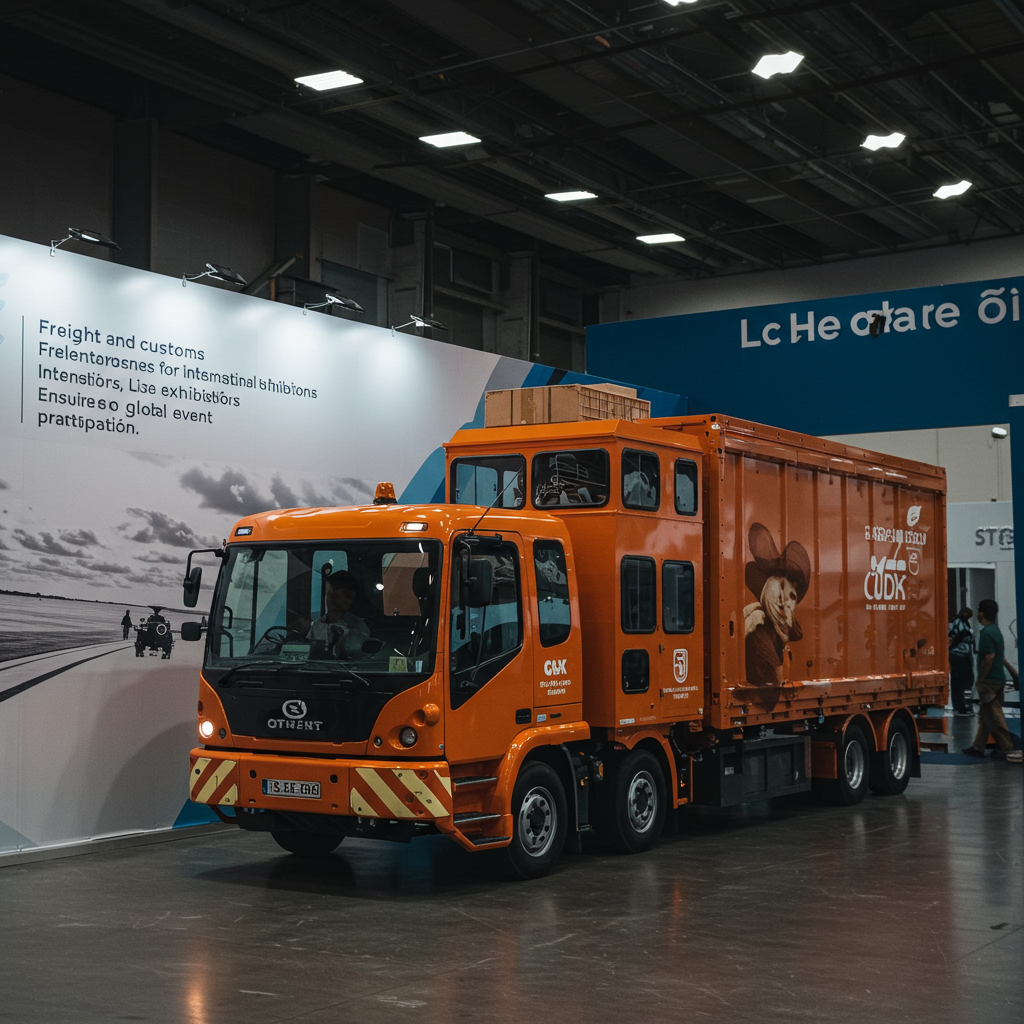
The Ultimate Guide to Logistics and Customs for International Exhibitors
This comprehensive guide is designed for marketing directors, export managers, and event coordinators who face the complex challenges of logistics and customs for international trade shows. We thoroughly address the transportation and customs management process, providing a strategic framework to plan, execute, and optimize every shipment. The goal is to transform a potential logistical nightmare into a competitive advantage, ensuring that your exhibit materials arrive on time, in perfect condition, and within budget. Through detailed processes, case studies, and practical guides, we demonstrate how to achieve key performance indicators (KPIs) such as a 20% reduction in logistics costs, a 99.5% first-time successful customs clearance rate, and a 90% improvement in on-time delivery to the booth. Our value proposition focuses on mitigating risks and maximizing the return on investment (ROI) of your participation in global events.
Introduction
Participating in an international trade fair is one of the most significant and strategic investments a company can make to expand its global reach, attract new customers, and strengthen its brand. However, the success of this investment depends critically on an often underestimated factor: flawless logistics and customs management. For international exhibitors, the challenge of moving goods, equipment, and promotional materials across borders is a monumental task, fraught with regulatory risks, costly delays, and potential damage. Poor management of the freight customs process for international exhibitors can not only result in missing key materials at the booth, but can also lead to fines, lengthy inspections, and irreparable damage to the company’s reputation. This article provides a detailed and actionable roadmap for navigating this complex ecosystem, ensuring your products reach their destination efficiently and predictably.
Our methodology is based on a proactive and holistic approach that covers everything from initial planning to merchandise returns. It focuses on three fundamental pillars: strategic planning, rigorous execution, and continuous evaluation. We will measure success through a set of clear and quantifiable KPIs, including Total Cost of Goods Sold (TCL) as a percentage of the total event budget, On-Time In-Full (OTIF) Delivery Rate, Customs Clearance Cycle Time, and the Net Promoter Score (NPS) of the logistics service. The goal is to equip exhibitors with the knowledge and tools necessary to take control of their event supply chain, minimizing uncertainty and maximizing the impact of their international presence.
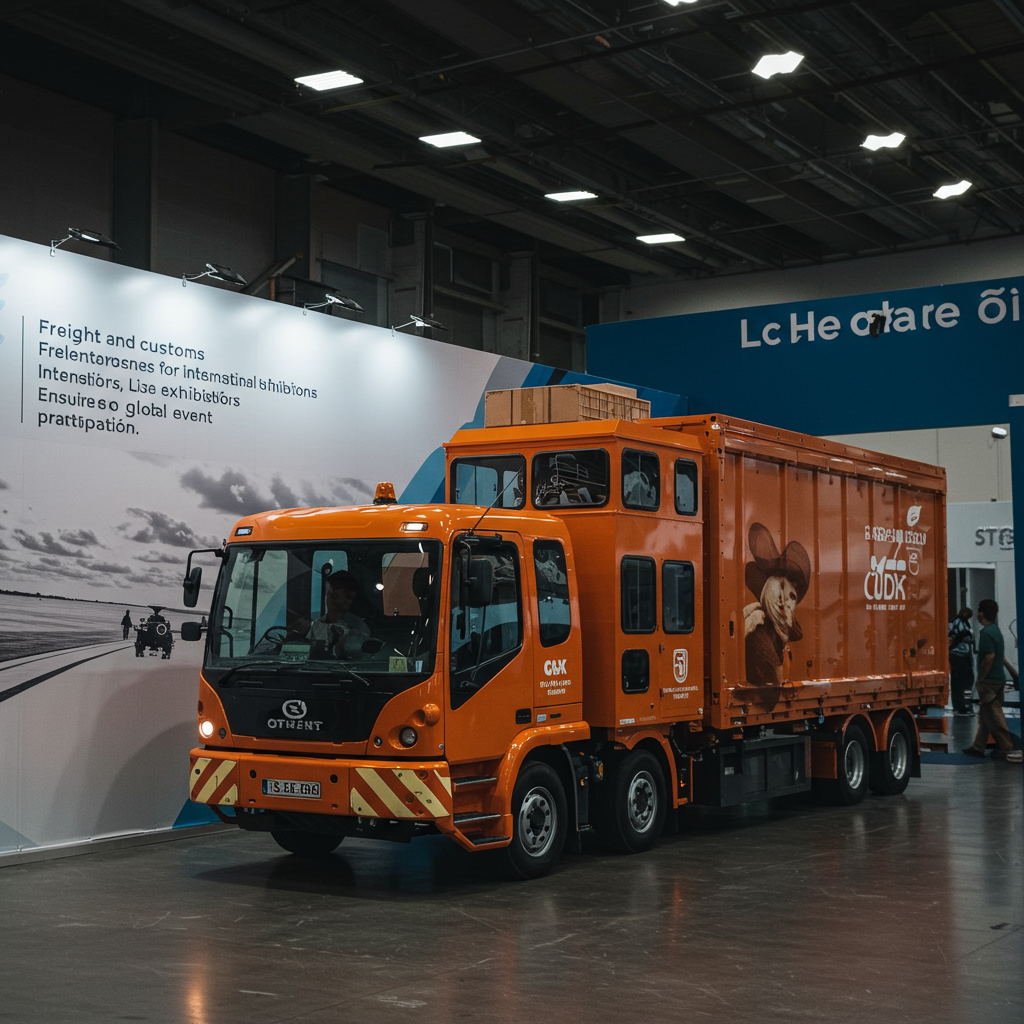
Vision, values, and proposal
Focus on results and measurement
Our vision is to be the leading strategic partner for any company seeking excellence in its participation in international trade fairs, eliminating logistical and customs friction. We are guided by the values of transparency, reliability, and proactivity. We apply the Pareto principle (80/20), focusing on the critical control points that generate 80% of success: correct tariff classification, impeccable documentation, and the selection of the right logistics partner. Our technical standards align with ISO 9001 (Quality Management) regulations and the best practices established by the World Customs Organization (WCO). The value proposition is not simply moving boxes, but offering peace of mind and predictability, allowing marketing and sales teams to focus on what they do best: generating business.
- Key Value Proposition: Risk mitigation and cost optimization through expert planning and transparent execution.
- Quality Criteria: Customs clearance success rate >99.5%, logistics budget deviation <5%, proactive communication with 24-hour status updates.
- Logistics Partner Decision Matrix: We evaluate suppliers based on a weighted matrix that includes global network coverage (30%), trade show and event specialization (30%), technological capabilities (20%), cost structure (10%), and customer references (10%).
- Sustainable Commitment: We promote sustainable transportation options. Multimodal transport and cargo consolidation to reduce the carbon footprint, aiming for a 15% emissions reduction target per managed event.
Services, Profiles, and Performance
Portfolio and Professional Profiles
We offer an end-to-end service portfolio designed to cover all facets of freight customs for international exhibitors. Our services are modular and adapt to the specific needs of each client, from a one-off consultation to comprehensive project management. The team is composed of specialists with key profiles: the Event Logistics Coordinator, the Customs Specialist, and the On-Site Operations Supervisor. The Coordinator is the client’s single point of contact and orchestrates the entire process. The Customs Specialist ensures regulatory compliance, manages ATA Carnets, and handles temporary imports. The On-Site Supervisor is responsible for receiving, handling at the fairgrounds, and coordinating return packaging.
Operational Process
Phase 1: Diagnosis and Planning (12 to 8 weeks): Analysis of the packing list, destination country requirements, and venue requirements. The strategy is defined (Incoterms, mode of transport, type of shipment). KPI: Delivery of the detailed logistics plan within 5 business days.
Phase 2: Preparation and Collection (8 to 4 weeks): Advice on packaging and labeling. Coordination of collection at the client’s facilities. KPI: 100% of the shipment collected on the agreed date and time.
Phase 3: International Transit (4 to 1 weeks): Management of the main transport (air or sea), real-time tracking, and preparation of customs documentation. KPI: 100% shipment visibility through the tracking portal.
Phase 4: Customs Clearance and Booth Delivery (1 week to 1 day): Filing of declarations, management of inspections, and coordination of final delivery to the booth before setup begins. KPI: Customs clearance completed within an average of 48 hours of arrival.
Phase 5: On-Site Support and Reverse Logistics (During and Post-Event): Management of empty packaging storage, coordination of post-event collection, and management of return shipments. KPI: On-site service NPS > 80.
Tables and examples
Savings of 15-25% compared to non-specialized management.Guarantee on-time delivery.On-Time In-Full (OTIF) rate.Planning with safety margins; selection of high-performing carriers; proactive tracking.99% OTIF rate for on-site delivery before the assembly date.Minimize customs risks.Number of inspections; clearance time.Pre-documentation audit; use of ATA Carnet; Expert tariff classification.80% reduction in customs-related delays.Ensuring the integrity of the goods.Incident rate (damage, loss).Specialized packaging advice; comprehensive cargo insurance; Supervision at critical handling points.Incident rate less than 0.1% of the total value of the merchandise.
| Objective | Indicators | Actions | Expected result |
|---|---|---|---|
| Reduce logistics costs | Cost per kg/m³; % of total budget | Consolidation of loads with other exhibitors; Optimization of routes and modes of transport. |

Representation, campaigns, and/or production
Professional development and management
We act as the client’s outsourced event logistics department, representing them throughout the entire supply chain.
Supply chain management: carriers, customs brokers, bonded warehouses, exhibition center operators, and authorities. This comprehensive representation frees exhibitors from an overwhelming administrative burden. Management includes obtaining all necessary permits, such as temporary import licenses, health certificates for specific products, and registration for special vehicles. We coordinate all suppliers under a single master plan, with a detailed execution schedule that synchronizes collection, air/sea freight, customs clearance, and final delivery. Our approach is based on preventing problems through meticulous planning and the creation of robust contingency plans.
-
- Critical Documentation Checklist:
- Detailed pro forma or commercial invoice (with customs values).
- Packing list per package, with weights and dimensions.
- HS Code (Harmonized System) for each item.
- ATA Carnet (if applicable).
- Certificate of origin (if required for any tariff benefits).
- Transport insurance policy.
- Clear letters of instruction for the customs broker.
- Contingency Plan for Critical Stock:
-
- Identify items “showstoppers” (e.g., the main prototype).
Consider duplicate shipments via different routes or carriers.
-
- Critical Documentation Checklist:
Have a backup plan for local production of printed materials.
Purchase insurance with coverage for “loss of market share” or “mitigation costs”.
Supplier Coordination:
Weekly follow-up meetings with all stakeholders.
Use of a collaborative platform to share documents and real-time updates.
Establish clear SLAs (Service Level Agreements) with each supplier.

Content and/or media that convert
Messages, formats, and conversions: documentation as key content
In the context of trade fair logistics, “content that converts” is not marketing brochures, but rather documentation that facilitates a fast and frictionless transit. A poorly written commercial invoice, an ambiguous packing list, or an incorrect tariff classification are “content” that does not convert: they fail to achieve the desired “conversion,” which is customs clearance. Our approach focuses on creating a perfect “documentary content package.” The “hook” is a clear and concise description of each item. The “CTA” (Call to Action) for the customs agent is documentation so clear that the only possible action is to clear the merchandise. We conducted A/B tests on how to describe complex products to see which generates fewer customs inquiries. The conversion metric is simple: the percentage of shipments cleared without inspections or delays. The optimization of freight customs for international exhibitors depends directly on the quality of this content.
Documentary Content Production Workflow:
(Responsible: Client, with Consultation) Information Gathering: The client provides a preliminary list of items.
(Responsible: Customs Specialist) Enrichment and Classification: We research and assign the correct HS code to each item, requesting additional technical information if necessary.
(Responsible: Logistics Coordinator) Draft Creation: Drafts of the pro forma invoice and packing list are generated in a standardized format optimized for the destination customs office.
(Responsible: Client) Validation: The client reviews and validates that the quantities, descriptions, and Values are correct.
- (Responsible: Customs Specialist) Final Compliance Review: A final audit is conducted to ensure that all documents comply with local and international regulations.
- (Responsible: Logistics Coordinator) Digital Distribution: The final document package is distributed digitally to the carrier, the customs broker at origin and destination, and the client.

Training and Employability
Demand-Oriented Catalog
We train our clients’ teams to become active and efficient participants in the logistics process, improving their employability and internal skills. We offer practical, results-oriented training modules designed for marketing, operations, and logistics staff involved in event organization.
Module 1: Introduction to Trade Fair and Event Logistics. Key concepts, stakeholders, and process phases.
Module 2: Mastering the ATA Carnet. When and how to use it, application process, completion, and bond management.
Module 3: Incoterms 2020 for Exhibitors. How to choose the correct Incoterm (EXW, FCA, DDP) and understand the associated responsibilities and costs.
Module 4: Packaging and Labeling for Export. International standards (ISPM-15 for wood), best practices for protecting goods, and labeling requirements for easy handling.
- Module 5: Navigating Customs: Documentation and Compliance. How to create foolproof pro forma invoices, understand tariff classification, and avoid the most common mistakes.
- Module 6: Risk Management and Insurance in Event Logistics. Types of policies, how to calculate the insured value, and what to do in case of a claim.
Methodology
Our training methodology is eminently practical (“learning by doing”). We use real-world case studies and workshops where participants work on the documentation for their next event. Assessment is based on rubrics that measure the ability to apply the acquired knowledge, for example, by correctly completing an ATA Carnet form or creating an error-free pro forma invoice. At the end of the training, participants receive templates and checklists that they can implement immediately. For companies with high turnover or ongoing needs, we offer a “Train the Trainer” program. The expected results are a 50% reduction in internally generated document errors and greater autonomy for the client team to manage the initial phases of the process.
Operational Processes and Quality Standards
From Request to Execution
Our operational pipeline is standardized to ensure consistency and quality in every project. It is structured in clear phases with defined deliverables and acceptance criteria that the client can verify.
- Diagnosis: We receive the initial request and preliminary packing list. We conduct a discovery call to understand the objectives, budget, and critical points. Deliverable: Requirements summary. Acceptance Criteria: Written confirmation from the client.Proposal: We prepare a detailed proposal that includes several service options (e.g., Priority Air vs. Consolidated Air), a transparent cost breakdown, and a preliminary schedule. Deliverable: Commercial and technical proposal. Acceptance Criteria: Proposal signature.
Pre-production/Planning: Project team assignment. Creation of the Master Logistics Plan, including a detailed schedule, communication plan, risk matrix, and document management. Deliverable: Master Logistics Plan. Acceptance Criteria: Formal approval of the plan by the client.
Execution: Implementation of the plan: coordination of pickup, transport, customs clearance, and delivery. The client receives proactive updates and has access to a tracking portal. Deliverable: Regular status reports. Acceptance Criteria: Compliance with schedule milestones.
Closure: Coordination of reverse logistics, consolidation of final invoice against the quote, and feedback session with the client to identify lessons learned. Deliverable: Final invoice and post-event report. Acceptance Criteria: Confirmation of receipt of all returned merchandise.
Quality Control
Quality control is an ongoing process, not a final phase. It is based on defined roles, a clear escalation system, and measurable SLAs.
Roles: The Logistics Coordinator is responsible for the overall quality of the project. The Customs Specialist audits all documentation. The On-Site Supervisor verifies the integrity of the load at each handling point.
Escalation: Any deviation from the plan (e.g., a pickup delay) is immediately communicated to the client along with a corrective action plan. Problems that cannot be resolved by the Coordinator are escalated to an Operations Director in less than 2 hours.
- Acceptance Indicators and SLAs:
- Response to inquiries: < 4 business hours.
- Quotation accuracy: Maximum deviation of 5% in the final invoice (excluding changes requested by the client).
- Document quality: Document rejection rate at customs < 0.5%.
- Online tracking availability: 99.9% of the time.
Reverse LogisticsRepacking instructions; Re-export documentation.Post-event collection time; Return inventory accuracy.Risk: Abandonment of goods or problems at return customs. Mitigation: Re-export process planned from the beginning; comprehensive inventory.
| Phase | Deliverables | Control Indicators | Risks and Mitigation |
|---|---|---|---|
| Planning | Master Logistics Plan; Detailed Budget. | Customer Approval on Time; Clarity and Completeness of the Plan. | Risk: Incomplete Customer Information. Mitigation: Comprehensive Requirements Checklists and Structured Kick-Off Call. |
| Preparation and Picking | Packing Guide; Pick-up Confirmation. | Percentage of Packages Correctly Labeled; Pick-up On Time. | Risk: Inadequate Packaging. Mitigation: Provide clear specifications and sample photos; offer packing services. |
| Transit and Customs | Proof of Shipping (AWB/BL); Status updates; Proof of clearance. | Transit time vs. planned; Customs clearance time. | Risk: Transit delays; Customs inspection. Mitigation: Choose reliable carriers; prepare impeccable documentation; have a proactive customs broker. |
| Delivery and On-Site Support | Proof of Delivery (POD); Cargo status report. | OTIF on-stand; Incident rate (damage). | Risk: Damage during handling on the premises. Mitigation: On-site supervision of unloading; comprehensive insurance. |
Application Cases and Scenarios
Case 1: Robotics Company (USA) to Automation Fair in Hanover (Germany)
Challenge: A robotics manufacturer in Boston needed to transport three high-value prototypes (valued at €250,000 each), a complex modular booth, and 500 kg of promotional material to the most important trade fair in its sector in Germany. The deadlines were extremely tight, with only 4 weeks from final shipment confirmation to the assembly date. The main risk was a customs delay that would prevent the robots from being exhibited, representing a loss of a multi-million euro business opportunity.
Solution: A multimodal strategy was designed. Due to their high value and sensitivity, the three robots were shipped via priority insured air freight, using an ATA Carnet to expedite the temporary import and re-export process. The booth and promotional materials were shipped via less-than-container load (LCL) sea freight three weeks in advance to optimize costs. A thorough audit of the robots’ technical documentation was conducted to ensure accurate tariff classification and avoid any issues with German customs authorities. A supervisor from our team was present at the pickup in Boston to verify the specialized packaging (wooden crates with impact sensors) and at the reception at Hanover Airport to coordinate immediate clearance.
Results:
- Delivery time: The robots arrived at the exhibition center 72 hours before the start of assembly, exceeding the target. The booth arrived one week ahead of schedule.
- KPIs achieved: OTIF rate: 100%. Customs clearance time for robots: 8 hours. Budget deviation: -2% (savings thanks to the multimodal strategy). Incident rate: 0%.
- ROI/ADR: The client reported closing deals worth €3.5 million during the trade show, a result directly enabled by the impeccable and functional presence of their prototypes. Our service’s NPS was 95.
Case 2: Luxury Cosmetics Brand (South Korea) at a Beauty Expo in Paris (France)
Challenge: An emerging cosmetics brand from Seoul was participating for the first time in a prestigious trade show in Paris. They needed to send a wide range of products (more than 300 different SKUs), including samples, testers, and stock for direct sale, as well as a very elegantly designed booth. The complexity lay in the strict European Union regulations for cosmetic products (Regulation EC 1223/2009), which require specific notification and documentation (PIF – Product Information File). Furthermore, the goods were classified into two types: temporary import (stand, equipment) and permanent import (samples, products for sale).
Solution: A dual logistics plan was implemented. For the stand elements and audiovisual equipment, an ATA Carnet was used. For the cosmetic products, we worked closely with the client’s “Responsible Person” in the EU to ensure that all products were correctly registered on the CPNP (Cosmetic Products Notification Portal) before shipment. A consolidated air shipment was prepared. The key was an extremely detailed packing list, where each SKU was identified with its HS code, CPNP registration number, and a distinction between “sample with no commercial value” and “item for sale.” This allowed our customs agent in Paris to carry out a dual clearance: part as a temporary import and part as a permanent import with payment of the corresponding duties and VAT.
Results:
Regulatory Compliance: 100% compliance with EU cosmetic regulations, avoiding any detention or penalties.
KPIs Achieved: Destination inventory accuracy: 99.8%. Clearance time: 36 hours despite complexity. Total logistics cost: 8% of the event budget, within target.
Business Impact: The availability of the entire product catalog and samples allowed the client to hold a successful presentation, securing distributors in 3 new European countries. El cliente destacó la tranquilidad que le proporcionó nuestra gestión experta de la compleja normativa.
Caso 3: Fabricante de Maquinaria Pesada (España) a Feria Minera en Antofagasta (Chile)
Desafío: Un fabricante de maquinaria de Zaragoza tenía que exhibir una perforadora de roca de 15 toneladas y 8 metros de largo en una feria minera en Chile. Los retos eran enormes: la logística de carga sobredimensionada (OOG – Out of Gauge), la obtención de permisos especiales de transporte por carretera tanto en España como en Chile, y la coordinación con equipos de grúas de gran tonelaje en el recinto ferial del desierto de Atacama.
Solución: El proyecto se gestionó como una operación de “project cargo”. La máquina se transportó desde Zaragoza hasta el puerto de Barcelona en un camión góndola de cama baja con permisos especiales. Se embarcó en un buque Ro-Ro (Roll-on/Roll-off) para asegurar una manipulación mínima. Nuestro socio en Chile, un especialista en carga de proyectos, gestionó el proceso de importación temporal, las fianzas aduaneras y los complejos permisos de transporte desde el puerto de Antofagasta hasta el recinto ferial. Se realizó un estudio de ruta (“route survey”) para asegurar que los puentes y carreteras podían soportar el peso y las dimensiones. La entrega en el stand se coordinó con una precisión milimétrica, utilizando una grúa de 100 toneladas para posicionar la máquina en su ubicación final. Todo el proceso fue supervisado presencialmente por un gestor de proyectos de nuestro equipo.
Resultados:
- Ejecución sin incidentes: A pesar de la alta complejidad, la operación se completó sin ningún incidente de seguridad o daño al equipo.
- KPIs alcanzados: Adherencia al cronograma del proyecto: 100%. Cumplimiento del presupuesto: Desviación < 4%. Cumplimiento regulatorio y de permisos: 100%.
- Valor estratégico: La impresionante exhibición de la máquina en funcionamiento fue el punto central de la feria, generando un interés masivo y posicionando a la empresa como un actor principal en el mercado minero sudamericano. El cliente valoró especialmente la gestión integral del riesgo y la coordinación de múltiples actores especializados. La gestión experta del freight customs for international exhibitors de maquinaria pesada fue el factor clave del éxito.
Guías paso a paso y plantillas
Guía 1: Cómo Completar un Carnet ATA para una Feria Internacional
- Paso 1: Contactar a la Cámara de Comercio Local. El Carnet ATA es emitido por las Cámaras de Comercio. Contacta con la tuya para solicitar los formularios e informarte sobre los costes y la fianza requerida (normalmente un porcentaje del valor total de la mercancía).
- Paso 2: Rellenar la “Lista General”. Este es el corazón del Carnet. Debes listar cada artículo que viajará bajo el Carnet. Para cada uno, indica:
- Número de orden.
- Descripción comercial detallada (ej. “Monitor LED de 27 pulgadas, Modelo XYZ”).
- Cantidad.
- Peso (en kg).
- Valor comercial (en la moneda de tu país, ej. €).
- País de origen.
Consejo: Sé extremadamente preciso. No agrupes ítems (“Caja de cables”). Lista cada tipo de cable por separado.
- Paso 3: Cumplimentar las Hojas de Viaje (Volet). El Carnet tiene hojas de diferentes colores para cada operación: exportación (amarillo), importación (blanco), re-exportación (blanco), re-importación (amarillo) y tránsito (azul). Debes indicar en cada una los números de orden de la Lista General que corresponden a los artículos que viajan en ese momento.
- Paso 4: Presentación y Validación. Presenta toda la documentación y paga las tasas y la fianza en tu Cámara de Comercio. Ellos revisarán, sellarán y te entregarán el documento oficial.
- Paso 5: Uso en las Aduanas. En cada frontera (al salir de tu país, al entrar al país de la feria, al salir de él y al volver a tu país), debes presentar el Carnet a los agentes de aduanas. Ellos sellarán y retirarán la sección (matriz) correspondiente de la hoja de viaje. Es tu responsabilidad asegurarte de que lo sellan correctamente en cada paso.
- Paso 6: Cancelación del Carnet. Una vez de vuelta, debes presentar el Carnet a tu Cámara de Comercio con todos los sellos para demostrar que toda la mercancía ha retornado. Esto es crucial para que te devuelvan la fianza.
- Checklist Final:
- [ ] ¿He contactado con mi Cámara de Comercio?
- [ ] ¿La Lista General es 100% precisa y detallada?
- [ ] ¿El valor total declarado es correcto y justificable?
- [ ] ¿He planificado quién presentará el Carnet en cada aduana?
- [ ] ¿Entiendo el proceso para recuperar la fianza?
Guía 2: Checklist de Embalaje para Proteger su Inversión
- Evaluar la Fragilidad y el Valor: Clasifica todos los artículos en categorías: robustos, frágiles, electrónicos, de alto valor. Esto determinará el tipo de embalaje.
- Elegir el Contenedor Adecuado:
- Cajas de cartón de doble o triple canal: Para material promocional, cables, artículos no frágiles.
- Cajas de madera con tratamiento NIMF-15: Obligatorio para envíos internacionales. Ideal para equipos pesados o semi-frágiles.
- Flight cases a medida: La mejor opción para equipos electrónicos, prototipos y audiovisuales. Son reutilizables y ofrecen la máxima protección.
- Protección Interna: No dejes espacios vacíos. Usa espuma a medida, plástico de burbujas, cojines de aire o poliestireno para inmovilizar completamente el contenido. Para equipos sensibles, utiliza bolsas antiestáticas.
- Etiquetado Claro y Consistente: Cada bulto debe tener al menos dos etiquetas en lados adyacentes con la siguiente información:
- Nombre del expositor y número de stand.
- Nombre de la feria y dirección del recinto.
- Número de bulto (ej. “1 de 15”, “2 de 15”).
- Peso bruto y neto, y dimensiones.
- Iconos internacionales de manipulación (frágil, este lado arriba, no mojar).
- Crear la Lista de Empaque (Packing List): Mientras embalas, crea una lista de empaque detallada que especifique el contenido exacto de CADA bulto. Esta lista es vital para aduanas y para la gestión en el stand.
Guía 3: Plantilla para Calcular el Coste Logístico Total (TLC)
- Recopilar Información Base: Necesitarás la lista de empaque final con pesos y volúmenes de cada bulto.
- Solicitar Cotizaciones Detalladas: Pide a tu proveedor logístico un desglose completo. No aceptes un precio “todo incluido” sin entender los componentes.
- Rellenar la Plantilla de Costes:
Plantilla de Cálculo de Coste Logístico Total (TLC) Componente del Coste Estimación (€) Coste Real (€) Notas Costes en Origen Recogida en tus instalaciones Embalaje (si se externaliza) Despacho de aduanas de exportación Transporte Principal Flete (aéreo/marítimo) Basado en peso tasable Recargos (combustible, seguridad) Suelen ser un % del flete Seguro de transporte Normalmente ~0,5-1% del valor asegurado Costes en Destino Gastos de manipulación en terminal (THC) Despacho de aduanas de importación Aranceles e impuestos (si aplica) Calcular sobre el valor CIF Transporte hasta el recinto ferial Costes en el Recinto (On-site) Descarga y entrega en stand Suele cobrarse por kg/tonelada Almacenamiento de embalajes vacíos Suele cobrarse por m³ Recogida del stand post-evento Costes de Logística Inversa Repetir el proceso de origen y transporte TOTAL (TLC) 0,00 0,00 - Analizar y Presupuestar: Usa el TLC estimado para tu presupuesto general del evento. Compara el coste real final con la estimación para evaluar el rendimiento de tu proveedor y mejorar futuras planificaciones.
Recursos internos y externos (sin enlaces)
Recursos internos
- Plantilla de Factura Proforma para Ferias Internacionales.
- Checklist de Documentación Pre-envío.
- Guía de Clasificación Arancelaria para Productos Tecnológicos.
- Estándar de Procedimiento Operativo (SOP) para Logística de Eventos.
- Catálogo de Soluciones de Embalaje Especializado.
Recursos externos de referencia
- Web de la Organización Mundial de Aduanas (OMA) para consultar el Sistema Armonizado.
- Reglamento (UE) n.º 952/2013 del Código Aduanero de la Unión.
- Convenio Aduanero sobre Cuadernos ATA para la importación temporal de mercancías (Convenio ATA).
- Normas Internacionales para Medidas Fitosanitarias N.º 15 (NIMF 15) sobre embalajes de madera.
- Reglas Incoterms® 2020 publicadas por la Cámara de Comercio Internacional (CCI).
Preguntas frecuentes
¿Con cuánta antelación debo empezar a planificar la logística de mi feria?
Recomendamos empezar la planificación logística entre 12 y 16 semanas antes de la fecha de montaje, especialmente si involucra transporte marítimo o destinos con aduanas complejas. Para envíos aéreos dentro del mismo continente, 8 semanas puede ser suficiente, pero una mayor antelación siempre permite optimizar costes y reducir riesgos.
¿Qué es un Carnet ATA y cuándo debo usarlo?
El Carnet ATA es un documento aduanero internacional, también conocido como el “pasaporte para las mercancías”. Permite la importación temporal de bienes para ferias, exposiciones o como material profesional, sin tener que pagar aranceles ni impuestos. Es ideal para todo lo que va a retornar a su país de origen en el mismo estado, como el stand, equipos, herramientas y prototipos. No es válido para artículos consumibles, desechables o productos que se van a vender.
¿Cuál es la diferencia entre una factura proforma y una factura comercial para un envío de feria?
Una factura comercial se utiliza cuando hay una venta. Para un envío a una feria, donde no hay venta, se utiliza una factura proforma. Esta debe incluir una descripción detallada de los productos, su cantidad, valor individual y total, y el país de origen. Es crucial que incluya la frase “No commercial value, value for customs purposes only” (Sin valor comercial, valor solo a efectos aduaneros) para evitar que las autoridades piensen que se trata de una venta no declarada.
¿Qué Incoterm es el más recomendable para un expositor?
No hay un único Incoterm perfecto, pero para un expositor que busca la máxima tranquilidad, un servicio “Delivered at Place” (DAP) o “Delivered Duty Paid” (DDP) hasta el recinto ferial es a menudo la mejor opción. Esto significa que el proveedor logístico se encarga del transporte y los trámites hasta un punto convenido. DDP es el más completo, ya que incluye el pago de aranceles e impuestos. Sin embargo, un servicio “Ex Works” (EXW) o “Free Carrier” (FCA) puede dar más control y potencialmente reducir costes si se tiene experiencia y buenos agentes en destino.
¿Cómo puedo asegurar mi mercancía y qué cubre el seguro?
Nunca confíe en la responsabilidad limitada de los transportistas. Debe contratar un seguro de carga a todo riesgo (“all-risk”) específico para su envío. Este seguro debe cubrir el valor total de la mercancía desde que sale de su almacén hasta que regresa. Asegúrese de que la póliza cubra explícitamente la participación en ferias y exposiciones, incluyendo la manipulación en el recinto. En caso de daño o pérdida, el seguro le indemnizará por el valor declarado, permitiéndole recuperar su inversión.
Conclusión y llamada a la acción
La excelencia en la gestión del freight customs for international exhibitors es un pilar no negociable para el éxito de cualquier participación en ferias globales. Como hemos detallado, un enfoque proactivo, basado en la planificación meticulosa, la documentación perfecta y la elección de socios estratégicos, transforma la logística de un centro de costes y riesgos a un facilitador clave del negocio. Lograr KPIs como una entrega 100% a tiempo, una desviación presupuestaria inferior al 5% y cero incidencias aduaneras no es una cuestión de suerte, sino el resultado de un proceso riguroso y especializado. Dejar estos aspectos críticos al azar es poner en peligro toda la inversión y el potencial de negocio del evento.
No permita que la complejidad de la cadena de suministro internacional eclipse su oportunidad de brillar en el escenario mundial. Dé el siguiente paso hacia una participación en ferias sin estrés y con resultados predecibles. Contáctenos hoy para una consulta gratuita y descubra cómo nuestra experiencia puede optimizar la logística de su próximo evento, garantizando que su único enfoque sea conectar con sus clientes y hacer crecer su negocio.
Glosario
- Carnet ATA
- Documento aduanero internacional que permite la importación temporal de mercancías libres de aranceles e impuestos para fines específicos como ferias y exposiciones.
- Código HS (Harmonized System)
- Sistema Armonizado de Designación y Codificación de Mercancías. Un sistema internacionalmente estandarizado de nombres y números para clasificar los productos comercializados.
- Incoterms
- Términos de la Cámara de Comercio Internacional que definen las responsabilidades de vendedores y compradores en el comercio internacional, especificando quién paga qué y quién asume el riesgo en cada punto del transporte.
- Factura Proforma
- Documento que declara el valor de las mercancías a efectos aduaneros cuando no existe una venta comercial. Es fundamental para los envíos a ferias.
- NIMF-15 (ISPM-15)
- Norma Internacional para Medidas Fitosanitarias N.º 15. Regulación global que exige que los embalajes de madera (palets, cajas) sean tratados térmicamente o fumigados para prevenir la propagación de plagas.
- Logística Inversa
- El proceso de planificación y ejecución del retorno de las mercancías desde el recinto ferial hasta el punto de origen una vez finalizado el evento.
Internal links
- Click here👉 https://uk.esinev.education/masters/
- Click here👉 https://uk.esinev.education/diplomates/
External links
- Princeton University: https://www.princeton.edu
- Massachusetts Institute of Technology (MIT): https://www.mit.edu
- Harvard University: https://www.harvard.edu
- Stanford University: https://www.stanford.edu
- University of Pennsylvania: https://www.upenn.edu