
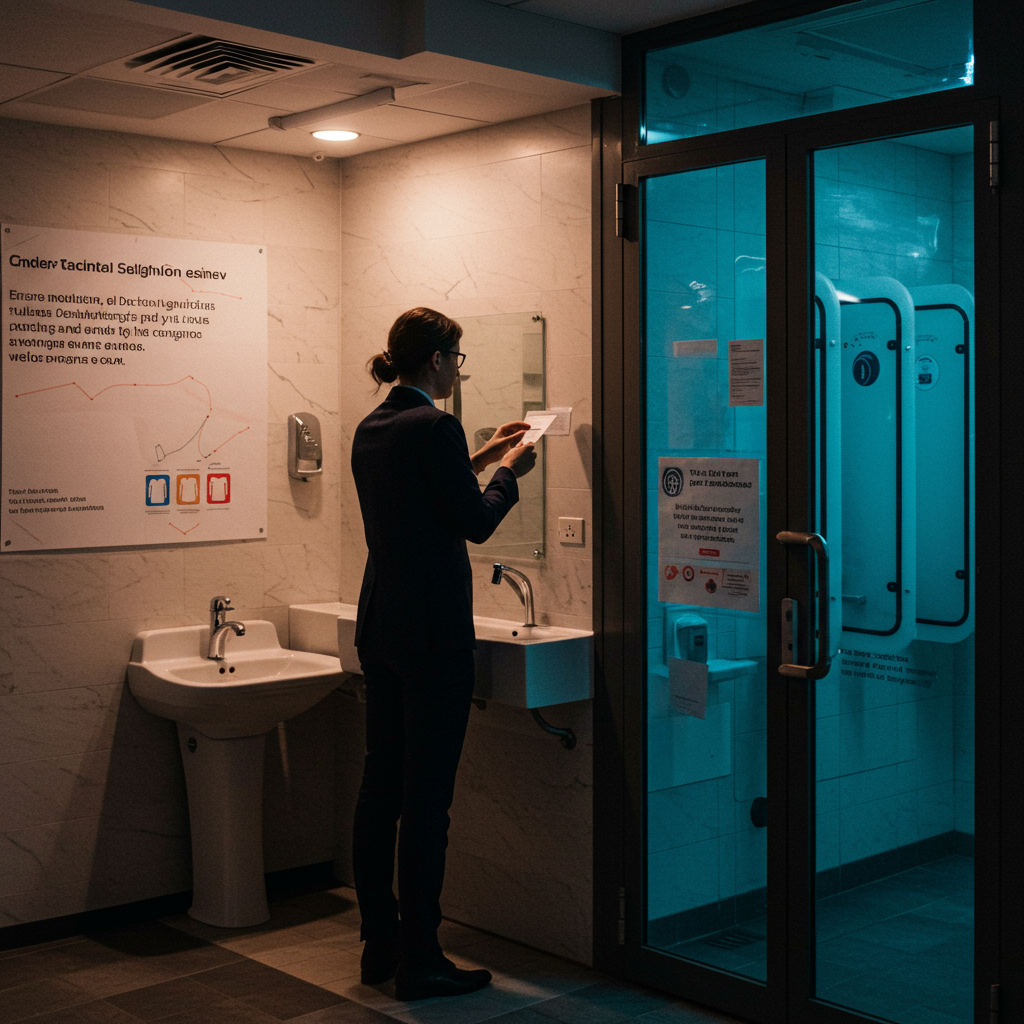
The Definitive Guide to Gender-Neutral Facilities and Signage in Venues
The adoption of gender-neutral facilities and signage has become a key differentiator for modern venues, from stadiums and convention centers to theaters and corporate spaces. This comprehensive guide offers a strategic and operational framework for planning, designing, and implementing these inclusive spaces. We cover the entire project lifecycle: from initial audits and conceptual design to construction management, strategic communication, and impact measurement. The target audience includes venue managers, architects, interior designers, and diversity and inclusion officers. Our value proposition focuses on transforming spaces so that they not only comply with accessibility and non-discrimination regulations, but also generate a tangible return on investment through improved brand reputation (increased Net Promoter Score, NPS), optimized flow of people (reduction of queues by 15-20%) and the attraction of a wider and more diverse clientele. We explore how **gender-neutral facilities signage venues** solutions are an investment in equity, efficiency, and operational excellence.
Introduction
In today’s competitive landscape, public and private venues are no longer evaluated solely on their capacity or aesthetics, but also on their commitment to inclusion and user experience. Creating safe and welcoming spaces for all people, regardless of gender identity, has gone from being a marginal consideration to a strategic priority. In this context, the proper implementation of **gender-neutral facilities signage venues** is fundamental. This concept encompasses much more than simply changing the signs on restroom doors; it involves a rethinking of spatial design, functionality, and communication to reflect a genuine commitment to diversity. This guide provides a detailed roadmap for venue managers to navigate this process with confidence, minimizing risks and maximizing benefits.
Our methodology is based on a holistic approach that combines technical analysis, user-centered design, and rigorous project management. We will measure success through a set of quantitative and qualitative Key Performance Indicators (KPIs). These include reducing wait times in high-traffic restrooms (target: <15%), increasing visitor satisfaction scores (Net Promoter Score, NPS > 50), achieving 100% compliance with local and national accessibility and non-discrimination regulations, and achieving a return on investment (ROI) measured by increased event bookings from clients with explicit diversity and inclusion (DEI) policies. This approach ensures that every decision is data-driven and aligned with the venue’s strategic objectives.
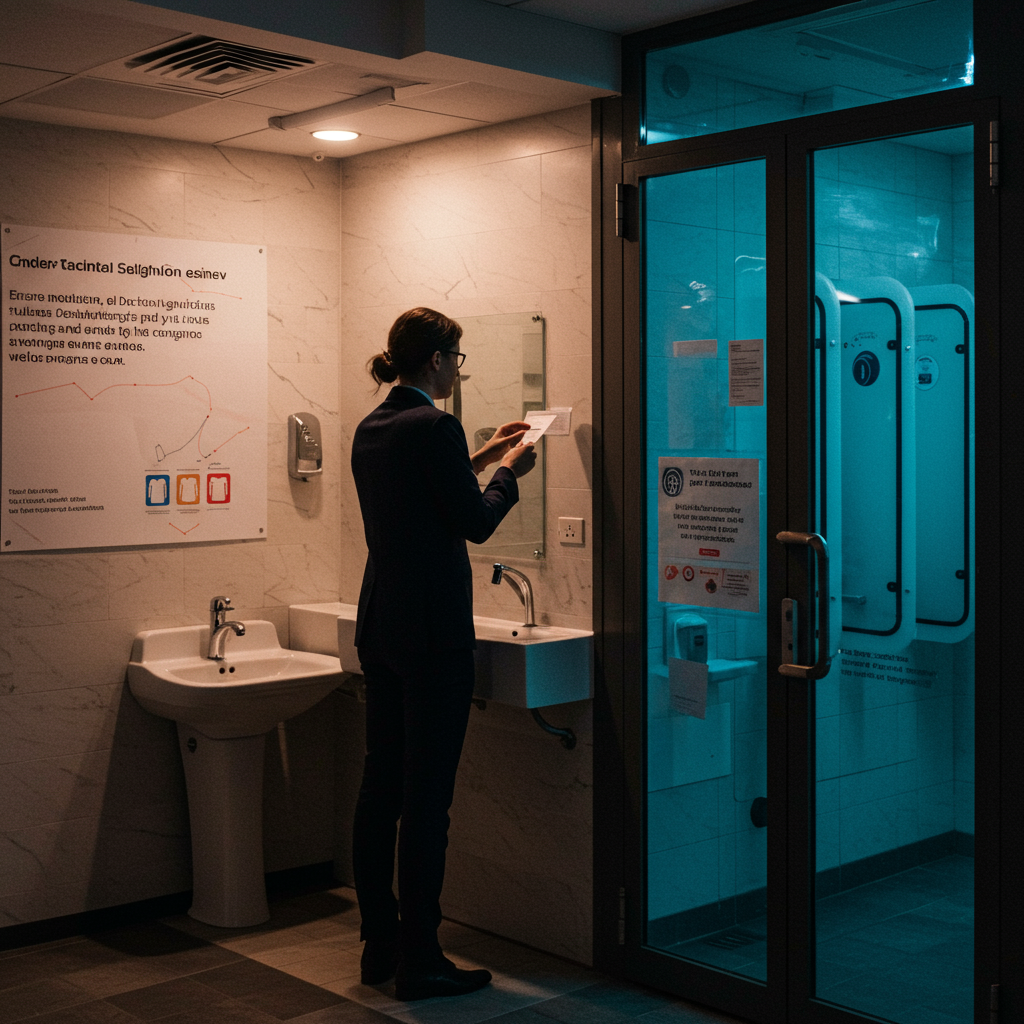
Focus on Results and Measurement
Our vision is a future where all public spaces are inherently inclusive, safe, and functional for every individual. We are guided by the values of equity, innovation, and operational excellence. We apply the Pareto principle (80/20), focusing on interventions that generate the greatest impact on user experience and the efficiency of the space with the most optimized investment. Our work aligns with international technical standards such as ISO 21542 on accessible construction and the built environment, as well as universal design guidelines and local building and non-discrimination regulations. We believe that inclusive design is not a cost, but a strategic investment that enhances the brand, builds customer loyalty, and mitigates legal and reputational risks.
Inclusion Value: Projects that increase the Net Promoter Score (NPS) by at least 10 points across diverse user segments.
Efficiency Value: Designs that optimize the flow of people and reduce waiting times in restrooms during peak hours by 15-25%.
Compliance Value: Guarantee of 100% compliance with current accessibility regulations and building codes, avoiding penalties and litigation.
Decision Matrix: We prioritize solutions that balance cost (target: < €150/m² for renovations) and impact on user experience (measured by satisfaction surveys). and durability of materials (useful life > 10 years).
- Quality Criteria: All our proposals must pass a usability evaluation with a diverse user panel before final implementation.
Services, Profiles, and Performance
Portfolio and Professional Profiles
We offer a portfolio of consulting and project management services designed to guide venues through each stage of their transition to inclusivity. Our teams are comprised of multidisciplinary professionals, including architects specializing in universal design, graphic designers with expertise in signage and wayfinding, PMP-certified project managers, DEI consultants, and data analysts. Our main services related to **gender-neutral facilities signage venues** include:
- Space Audit and Diagnosis (Phase 1): Comprehensive analysis of existing facilities to identify barriers, inefficiencies, and opportunities for improvement. KPIs: Report delivery within 2 weeks, survey accuracy > 98%, identification of at least 3 intervention scenarios with cost-benefit analysis.
- Conceptual and Technical Design (Phase 2): Development of architectural plans, signage designs, and material specifications. KPIs: Design proposals with estimated budget deviation < 10%, verified regulatory compliance, positive feedback > 85% in user testing.
- Comprehensive Project Management (Phase 3): Oversight of the bidding process, supplier contracting, and execution of the work or installation. KPIs: On-time project completion in 95% of cases, final budget deviation < 5%, zero workplace accidents.Communication and Training Strategy (Phase 4): Development of internal and external communication plans and training programs for staff. KPIs: 90% increase in staff confidence in managing the new facilities, positive media coverage, 70% reduction in user inquiries or complaints post-launch.
Tables and Examples
| Objective | Indicators | Actions | Expected Result |
|---|---|---|---|
| Improve the efficiency of people flow | Average waiting time in restrooms; Utilization rate per stall | Convert two gender-specific restrooms into one larger multi-user restroom; install occupancy indicators | 20% reduction in waiting time during high-traffic events; Increase in booth turnover rate by 15%. |
| Increase the perception of inclusivity | Net Promoter Score (NPS); Social media mentions; Satisfaction surveys | Launch a communication campaign about the new spaces; install clear and universal signage | NPS increase of 10 points in 6 months; positive/negative mention ratio of 5:1. |
| Guarantee privacy and security | Number of reported incidents; Perception of security in surveys | Design floor-to-ceiling booths; ensure adequate lighting (min. 200 lux); install assistance buttons | 95% reduction in privacy complaints; Safety rating > 4.5/5 in surveys. |
| Optimize lifecycle cost | Annual maintenance cost; Water and energy consumption | Select vandal-resistant and easy-to-clean materials; install low-flow faucets and cisterns | Reduce maintenance costs by 10% annually; 15% energy and water savings. |

Representation, campaigns and/or production
Professional development and management
The execution of a facility renovation project requires impeccable logistics and production management. Our role as client representatives is to coordinate all stakeholders to ensure smooth execution aligned with the objectives. This includes managing building permits and licenses, a process that can vary significantly between municipalities and which we proactively manage to avoid delays. We develop a detailed execution schedule (Gantt chart) that synchronizes the tasks of demolition, plumbing, electrical work, masonry, equipment installation, and signage. Supplier coordination is key: we conduct a rigorous selection process based on proven experience, financial solvency, and commitment to quality, and we manage contracts to protect our client’s interests.
- Critical Documentation Checklist:
- Technical project report endorsed by the relevant professional association.
- Existing and proposed renovation plans (architecture, plumbing, electrical).
- Health and safety study.
- Detailed budget broken down by item.
- Building permit applied for and granted.
- Property liability insurance policies for all contractors.
- Contingency Planning:
- Identification of alternative suppliers for key materials (sanitary ware, lighting, signage) Mitigating the risk of stockouts.Allocation of a contingency fund in the budget (typically 8-10%) for unforeseen events.
Pre-approved crisis communication plan to manage potential disruptions or complaints during construction.
Definition of execution phases that allow for maintaining operational parts of the site if necessary.
- Identification of alternative suppliers for key materials (sanitary ware, lighting, signage) Mitigating the risk of stockouts.Allocation of a contingency fund in the budget (typically 8-10%) for unforeseen events.

Content and/or Media That Convert
Messages, Formats, and Conversions: The Importance of Signage
“Content” in the context of gender-neutral facilities is primarily manifested in signage and the communication surrounding it. Poorly designed signage can generate confusion, anxiety, and rejection, negating the investment made. Our approach is based on information design, seeking maximum clarity with minimal cognitive load. We use universal visual “hooks”: recognizable symbols (such as the toilet) combined with pictograms that indicate the facilities available inside (urinals, baby changing facilities, accessibility). The implicit Call to Action (CTA) is “This space is for you.” We conduct A/B testing with signage mockups in diverse user groups to determine which combination of icons, text, and colors is most intuitive and welcoming. The conversion metrics here are speed of comprehension (time to understand the purpose of the space < 2 seconds) and error rate reduction (percentage of people who hesitate or go to the wrong door).
Developing effective communication around gender-neutral facilities signage venues is equally crucial. We create content for the venue website (FAQs, blog articles), press releases, and social media posts that explain the “why” of the transition, highlighting the benefits of inclusion and efficiency. This content not only informs but also transforms a facilities renovation into a powerful brand statement, appealing to an audience that values diversity.
Research Phase: Analysis of the client’s brand style guides and study of international best practices in inclusive signage. Responsible: UX/UI Designer.
- Conceptualization Phase: Creation of 3-5 iconography and typography design proposals. Responsible: Graphic Designer.
- Prototyping and Testing Phase: Production of full-scale mockups and usability testing with a panel of at least 20 diverse users. Responsible: User Research Specialist.
- Refinement Phase: Design iteration based on collected feedback. Final client approval. Responsible: Project Manager.
- Supporting Content Production Phase: Writing FAQs, press releases, and social media posts. Responsible: Communications Specialist.
- Production and Installation Phase: Supervision of the manufacturing and installation of physical signage. Responsible: Project Manager.

Training and employability
Demand-driven catalog
Inclusive infrastructure is only effective if the staff managing it are properly trained. We offer a catalog of training modules designed to equip teams with the knowledge and skills necessary to support and maintain a welcoming environment. These modules are customizable according to the type of facility and the employee’s profile (cleaning, security, customer service, management).
- Module 1: Fundamentals of Diversity and Gender Inclusion (2 hours): Basic concepts (gender identity, gender expression), respectful terminology, and the importance of inclusive spaces. For all staff.
- Module 2: Operational Management of Inclusive Facilities (3 hours): Cleaning and maintenance protocols, privacy management, answering frequently asked questions from users, and using incident reporting systems. For operations and cleaning staff.
- Module 3: Customer Service in a Diverse Environment (4 hours): Inclusive communication techniques, conflict de-escalation, handling complaints or negative feedback, and how to be an active ally. Aimed at security and customer service personnel.
- Module 4: Strategic Communication and Inclusive Leadership (4 hours): How to communicate company values, manage external communication about facilities, and lead diverse teams. Aimed at middle management and executives.
Methodology
Our training methodology is eminently practical and participatory. We use case studies, role-playing, and group discussions to ensure the assimilation of concepts. Assessment is carried out through rubrics that measure the acquisition of key competencies, such as the ability to respond to complex scenarios respectfully and effectively. Upon completion of the training, employees receive a certificate and access to an online resource bank. The expected results are measurable: an increase in staff confidence (measured with pre- and post-training surveys, target: +30%), a reduction in incidents or complaints reported by users (target: -50%), and an improvement in employee satisfaction metrics.
Operational Processes and Quality Standards
From Request to Execution
Our operational process is designed to be transparent, efficient, and customer-centric. Each phase has clear deliverables and defined acceptance criteria to ensure the project progresses as planned.
Diagnosis and Proposal (1-2 weeks):
Deliverable: Preliminary Audit and Proposal Report.
Acceptance Criteria: The report must include a SWOT analysis, a survey of the current state, at least three intervention scenarios with cost estimates (+/- 20%), timelines, and ROI.
Design and Planning (3-6 weeks):
Deliverable: Complete Design Package (technical drawings, 3D renderings, signage catalog, final budget).
Acceptance Criteria: Written client approval, validation of regulatory compliance by an independent technician.
- Pre-production and Tendering (2-4 weeks):
- Deliverable: Comparative table of contractor bids, signed contracts.
- Acceptance Criteria: Contractor selection based on a scoring matrix (price, experience, quality), contracts with defined SLAs.
- Execution and Supervision (according to scope):
- Deliverable: Weekly progress reports, site completion reports.
- Acceptance Criteria: Meeting quality milestones in each phase (plumbing, electrical, finishes), compliance with the safety plan.
- Closure and Evaluation (1-2 weeks):
- Deliverable: Final work acceptance certificate, post-implementation impact report (KPI measurement), maintenance manual.
- Acceptance Criteria: Zero major defects in delivery, post-launch KPIs reach at least 80% of the target within the first 3 months.
Quality Control
Quality control is an ongoing process, not a final event.
We assign a quality manager to each project and establish a clear escalation protocol for any deviations.
Roles: The Project Manager is ultimately responsible, supported by the Technical Architect (construction execution control) and the DEI Consultant (user experience validation).
Escalation: Minor deviations are resolved at the construction level. Deviations with an impact on budget (>2%) or schedule (>1 week) are escalated to the project monitoring committee with the client.
- Acceptance Indicators (SLAs): Finish tolerances according to UNE standards, incident response times < 24 hours, load testing of installations.
ClosureFinal acceptance certificate; KPI reportPunch list 100% complete; Initial NPS > 40Risk: Customer dissatisfaction with the final result. Mitigation: Joint validation process with the client at each key project milestone.
| Phase | Deliverables | Control Indicators | Risks and Mitigation |
|---|---|---|---|
| Diagnosis | Audit Report | Data Collection Accuracy (>98%); Compliance with delivery deadline | Risk: Incomplete data. Mitigation: Double on-site verification and use of 3D scanning technology. |
| Design | Technical drawings and detailed budget | Deviation from estimated budget < 10%; User feedback > 4/5 | Risk: Non-functional or over-budget design. Mitigation: Co-creation workshops with the client and early usability testing. |
| Execution | Work certifications; Weekly reports | Schedule deviation < 5%; Zero serious non-conformities in quality inspections | Risk: Supplier delays; construction defects. Mitigation: Contracts with penalties, daily on-site supervision by a qualified technician. |
Application Cases and Scenarios
Case 1: Restroom Renovation in a 50,000-Season Sports Stadium
Challenge: The stadium experienced long queues at the women’s restrooms during halftime, while the men’s restrooms had unused capacity. The goal was to balance the flow, improve the experience for all fans, and project a modern and inclusive image.
Solution: A project was carried out to convert 10 restroom blocks (5 for men and 5 for women) into 10 high-capacity, universal restroom blocks during the preseason. Each new block included a combination of floor-to-ceiling toilet cubicles for maximum privacy and a urinal area with visual dividers. Digital signage was installed at the entrances, indicating the number of available cubicles in real time. The total project cost was €350,000, at a rate of approximately €210/m².
Results:
- Efficiency KPI: The average wait time during breaks was reduced by 35%, from over 8 minutes to less than 5.
- Satisfaction KPI: The stadium’s overall NPS increased by 8 points in the first season. Specific surveys showed a 92% satisfaction rate with the new restrooms.Reputation KPI: The project generated 5 positive articles in national sports and architecture media.
Timeline: The project was completed in 14 weeks, meeting the planned schedule.
ROI: Although direct ROI is difficult to calculate, the stadium attributed a 5% increase in season ticket sales for the following year to this and other improvements.
Case 2: Convention and Exhibition Center
Challenge: A 20,000 m² convention center was missing out on business opportunities with clients in the technology sector and NGOs, who required inclusive facilities as a requirement in their tender specifications. The objective was to modernize its facilities to attract this high-value market segment.
Solution: A mixed strategy was adopted. The large men’s and women’s restroom blocks were retained but completely renovated to improve their quality and accessibility. Additionally, eight new gender-neutral, fully accessible individual restrooms (with wheelchair space, adult changing facilities, etc.) were created and strategically distributed throughout the premises. New signage was designed for the entire building, improving overall wayfinding and clearly indicating the location of all restroom options.
Results:
- Business KPI (ADR): In the first year after the renovation, the center secured three major international conferences that had previously declined to host them. An increase in revenue of €500,000 is estimated from this source.
- Compliance KPI: The venue obtained Universal Accessibility certification (UNE 170001), a key factor in bidding for public events.
- Customer Satisfaction KPI (B2B): Feedback from event organizers improved, highlighting the facilities as a strength. The organizers’ NPS increased by 15 points.Budget: The project cost €180,000, with a final deviation of +2% over budget.
Case 3: Corporate Headquarters of a Multinational Company
Challenge: As part of its new global Diversity, Equity, and Inclusion (DEI) policy, a technology company needed to adapt its 5,000 m² headquarters to reflect its values and serve an increasingly diverse workforce, including transgender and non-binary employees.
Solution: An audit was conducted, and it was decided to convert all multi-user restrooms on each floor into gender-neutral restrooms. To ensure privacy, the stall doors were replaced with floor-to-ceiling models with locks and a visual occupancy indicator. Urinals were removed from the common areas and installed in individual stalls within the restrooms. Communication was key: information sessions were held with all staff two months before the work to explain the changes and answer any questions.
Results:
Workplace Climate KPIs: The annual workplace climate survey showed a 12% increase in the response to the question “I feel that the company cares about my well-being.” En entrevistas cualitativas, los empleados trans y no binarios reportaron una reducción significativa del estrés diario.
- KPI de Talento: El departamento de RRHH utilizó esta iniciativa como un punto fuerte en sus campañas de atracción de talento, reportando un aumento del 20 % en candidaturas cualificadas para puestos de alta demanda.
- Coste y Plazo: La obra se realizó por fases, planta por planta, durante 8 semanas para no interrumpir el trabajo. El coste fue de 95.000 €.
Guías paso a paso y plantillas
Guía 1: Cómo Realizar una Auditoría de Instalaciones y Señalética
- Fase 1: Preparación y Recopilación de Documentación.
- Obtener los planos actualizados del edificio (CAD o PDF).
- Recopilar datos de afluencia: número de visitantes por día/evento, distribución demográfica si se dispone.
- Revisar la normativa local, autonómica y nacional sobre edificación, accesibilidad y no discriminación.
- Fase 2: Inspección Física In Situ.
- Realizar un recorrido completo, mapeando la ubicación de todos los aseos y señalética existente.
- Para cada aseo: medir dimensiones, contar el número de aparatos (inodoros, urinarios, lavabos), verificar el estado de conservación.
- Evaluar la accesibilidad según la normativa (ancho de puertas, barras de apoyo, espacio de giro, altura de los accesorios).
- Fotografiar toda la señalética direccional y de puerta existente.
- Fase 3: Análisis de Flujos y Uso.
- Realizar observaciones directas en momentos de máxima afluencia (si es posible) para identificar cuellos de botella y tiempos de espera.
- Lanzar una breve encuesta a los usuarios (online o mediante códigos QR en el recinto) para recoger su percepción sobre la comodidad, limpieza, seguridad y claridad de la señalética.
- Fase 4: Síntesis y Elaboración del Informe.
- Consolidar todos los datos en un documento estructurado.
- Crear un “mapa de calor” de problemas y oportunidades.
- Desarrollar un análisis DAFO (Debilidades, Amenazas, Fortalezas, Oportunidades) específico para las instalaciones.
- Proponer al menos tres escenarios de actuación: Mínima Intervención (cambio de señalética), Intervención Media (reconfiguración sin grandes obras) e Intervención Completa (renovación total).
- Checklist Final de Auditoría:
- [ ] Planos verificados.
- [ ] Inventario completo de instalaciones.
- [ ] Checklist de accesibilidad cumplimentado.
- [ ] Registro fotográfico completo.
- [ ] Datos de encuestas/observaciones analizados.
- [ ] Informe DAFO redactado.
- [ ] Escenarios de intervención definidos con estimación de costes.
Guía 2: Diseño de Señalética Inclusiva y Eficaz
- Investigar y Definir el Lenguaje Visual: Decidir qué combinación de pictogramas se utilizará. La opción más común y clara es un pictograma de un inodoro, complementado con otros que indiquen las facilidades interiores (urinario, cambiador de bebé, accesibilidad). Evitar símbolos abstractos o confusos.
- Seleccionar Tipografía y Colores: Usar una tipografía sans-serif de alta legibilidad (ej. Helvetica, Arial). Asegurar un alto contraste entre el texto/pictograma y el fondo, siguiendo las directrices de accesibilidad web (WCAG) como referencia (ratio de contraste mínimo de 4.5:1).
- Crear un Sistema Jerárquico: Diseñar un sistema de señalización coherente. Esto incluye:
- Señales Direccionales: Desde los puntos de acceso y decisión (pasillos, vestíbulos) que guíen hacia los aseos.
- Señales de Identificación: En la puerta o pared adyacente al aseo, que indiquen claramente su función.
- Señales Informativas: En el interior, si es necesario, para indicar facilidades específicas.
- Prototipar y Testear: Imprimir las señales a tamaño real y colocarlas temporalmente en el espacio. Observar cómo interactúan los usuarios con ellas. Realizar entrevistas breves: “¿Qué crees que significa esta señal? ¿Te resultó fácil de encontrar?”. Iterar el diseño basándose en los resultados.
- Especificaciones de Producción: Documentar claramente los materiales, colores (con códigos PANTONE o RAL), dimensiones y ubicación de montaje para el fabricante. Considerar materiales antivandálicos y de fácil limpieza.
Guía 3: Plan de Comunicación para la Transición a Instalaciones Inclusivas
- Mapeo de Stakeholders: Identificar todos los públicos a los que se necesita comunicar el cambio: empleados (todos los niveles), clientes/visitantes, proveedores, prensa, comunidad local.
- Elaboración de Mensajes Clave: Para cada stakeholder, desarrollar mensajes claros y positivos que expliquen el qué, el porqué y el cómo del cambio. Enfocarse en los beneficios: mayor comodidad, menos esperas, un espacio más acogedor para todos. Preparar un argumentario para anticipar y responder a preguntas difíciles o críticas.
- Cronograma de Comunicación (Timing):
- Pre-Lanzamiento (1-2 meses antes): Comunicación interna a los empleados, explicando la iniciativa y ofreciendo formación.
- Durante la Obra: Señalización clara que indique las obras y dirija a los aseos alternativos. Pequeños comunicados sobre el avance.
- Lanzamiento (Semana de la apertura): Comunicado de prensa, publicaciones en redes sociales con fotos, actualización de la página web, cartelería informativa en el recinto.
- Post-Lanzamiento (Primeros 3 meses): Recopilación activa de feedback, publicación de testimonios positivos, monitorización de redes sociales.
- Selección de Canales: Utilizar una mezcla de canales para maximizar el alcance: reuniones internas, email, intranet, web del recinto, perfiles de redes sociales (LinkedIn, Instagram, Twitter), cartelería física, contacto directo con medios de comunicación.
- Creación de un Kit de Prensa: Preparar un dossier para periodistas que incluya el comunicado de prensa, fotos de alta calidad de las nuevas instalaciones y la señalética, y una hoja de datos con los KPIs y beneficios clave del proyecto.
Recursos internos y externos (sin enlaces)
Recursos internos
- Plantilla de Auditoría de Instalaciones y Señalética
- Checklist de Cumplimiento de Normativa de Accesibilidad (basado en normativa local)
- Catálogo de Diseños de Señalética Inclusiva Pre-aprobados
- Plantilla de Plan de Comunicación para Proyectos de Renovación
- Manual de Formación para Personal sobre Gestión de Espacios Inclusivos
Recursos externos de referencia
- Norma ISO 21542: “Construcción de edificios – Accesibilidad y usabilidad del entorno construido”
- Norma UNE 170001: “Accesibilidad universal. Sistema de gestión de la accesibilidad universal”
- Web Content Accessibility Guidelines (WCAG) 2.1 (aplicables por analogía al contraste en señalética)
- Publicaciones del Stalled! project, una iniciativa de investigación y diseño sobre aseos públicos inclusivos
- Guías de diseño y buenas prácticas de asociaciones LGTBIQ+ y de personas con discapacidad
Preguntas frecuentes
¿Qué es exactamente una instalación de género neutro?
Una instalación de género neutro, también llamada de género inclusivo o universal, es un espacio (típicamente un aseo) que puede ser utilizado por cualquier persona, sin importar su género. Pueden ser de dos tipos: individuales (una sola cabina con inodoro y lavabo) o multi-usuario (varias cabinas privadas y una zona común de lavabos). La clave es que el acceso no está restringido por género.
¿La implementación de estos aseos compromete la privacidad y la seguridad?
Al contrario, un buen diseño puede mejorar la privacidad y la seguridad para todos. Las mejores prácticas incluyen cabinas individuales completamente cerradas (de suelo a techo y sin huecos en los laterales de la puerta) y una zona de lavabos común, abierta y bien iluminada, lo que aumenta la visibilidad y la seguridad pasiva. La seguridad no depende del género de las personas que usan el espacio, sino de un diseño y una gestión adecuados.
¿Es mucho más caro transformar los baños existentes?
No necesariamente. El coste varía enormemente según el alcance del proyecto. Un cambio simple de señalética en aseos individuales existentes tiene un coste mínimo. Una renovación completa es una inversión mayor, pero comparable al coste de renovar un aseo tradicional. A menudo, la conversión de dos aseos de género en un único aseo universal más grande puede ser más eficiente en términos de espacio y número de aparatos, optimizando la inversión.
¿Qué dice la ley en España sobre los aseos de género neutro?
La legislación está en evolución. Si bien el Código Técnico de la Edificación (CTE) establece dotaciones mínimas de aparatos sanitarios que tradicionalmente se han separado por sexo, no prohíbe explícitamente los aseos universales. Además, diversas leyes autonómicas y nacionales de igualdad y contra la discriminación LGTBI promueven la creación de espacios inclusivos. La tendencia es facilitar su implementación, y es fundamental consultar la normativa específica local y autonómica para garantizar el cumplimiento.
¿Cómo puedo gestionar la posible resistencia al cambio por parte de algunos usuarios o empleados?
La clave es una comunicación proactiva, transparente y educativa. Es fundamental explicar las razones del cambio, centrándose en los beneficios para todos (como la reducción de colas y la mejora de la acogida para padres con hijos de otro género, personas que necesitan asistencia, y personas trans y no binarias). La formación al personal es crucial para que puedan actuar como embajadores del cambio y resolver dudas de forma informada y respetuosa.
Conclusión y llamada a la acción
La implementación de **gender neutral facilities signage venues** ha dejado de ser una opción de nicho para convertirse en un estándar de excelencia en la gestión de recintos. Como hemos demostrado a lo largo de esta guía, los beneficios van más allá del cumplimiento normativo y la imagen de marca. Se traducen en mejoras operativas medibles, como la optimización del flujo de personas y la reducción de tiempos de espera, y en un impacto directo en el negocio, al atraer a un público más amplio y a organizadores de eventos que priorizan la inclusión. Un proyecto bien ejecutado, que considera desde el diseño arquitectónico hasta la comunicación estratégica, genera un entorno más seguro, cómodo y acogedor para cada visitante y empleado.
El camino hacia la plena inclusión requiere un compromiso decidido y un socio experto. Si está considerando modernizar su recinto para responder a las demandas de una sociedad diversa, el momento de actuar es ahora. Le invitamos a contactarnos para una evaluación inicial de sus instalaciones. Juntos, podemos diseñar un plan a medida que alinee sus espacios con sus valores, mejore su rendimiento operativo y posicione su recinto como un líder en la creación de experiencias excepcionales para todos.
Glosario
- Accesibilidad Universal
- La condición que deben cumplir los entornos, procesos, bienes, productos y servicios, así como los objetos o instrumentos, herramientas y dispositivos, para ser comprensibles, utilizables y practicables por todas las personas en condiciones de seguridad y comodidad y de la forma más autónoma y natural posible.
- Cisgénero
- Término que describe a una persona cuya identidad de género se corresponde con el sexo que se le asignó al nacer.
- Diseño Universal
- El diseño de productos y entornos para ser usados por todas las personas, en la mayor medida posible, sin necesidad de adaptación ni diseño especializado.
- Género No Binario
- Término paraguas para las identidades de género que no se identifican exclusivamente como hombre o mujer. Las personas no binarias pueden identificarse como ambos, ninguno o una combinación de géneros.
- Net Promoter Score (NPS)
- Un indicador para medir la lealtad y satisfacción del cliente. Se calcula a partir de la respuesta a una única pregunta: “¿Con qué probabilidad recomendaría nuestro servicio/producto/empresa a un amigo o colega?”.
- Transgénero
- Término que describe a una persona cuya identidad de género no se corresponde con el sexo que se le asignó al nacer.
Internal links
- Click here👉 https://uk.esinev.education/masters/
- Click here👉 https://uk.esinev.education/diplomates/
External links
- Princeton University: https://www.princeton.edu
- Massachusetts Institute of Technology (MIT): https://www.mit.edu
- Harvard University: https://www.harvard.edu
- Stanford University: https://www.stanford.edu
- University of Pennsylvania: https://www.upenn.edu