Mastering the Spotlight: A Definitive Guide to Corporate Stage Lighting Trends in the UK for 2024
This article provides a comprehensive analysis of the evolving landscape of corporate event lighting in the United Kingdom. We move beyond simple visibility to explore lighting as a strategic tool for brand storytelling, audience engagement, and creating memorable experiences. The content is tailored for event planners, production managers, marketing directors, and technical teams seeking to leverage cutting-edge technology and design principles. We will delve into key trends such as sustainability through LED adoption, the rise of immersive environments via video mapping and kinetic lighting, and the importance of data-driven design. The core proposition is to demonstrate how a strategic approach to lighting can yield measurable results, including enhanced Net Promoter Scores (NPS), significant energy savings, and a quantifiable Return on Investment (ROI) for corporate events.
Introduction
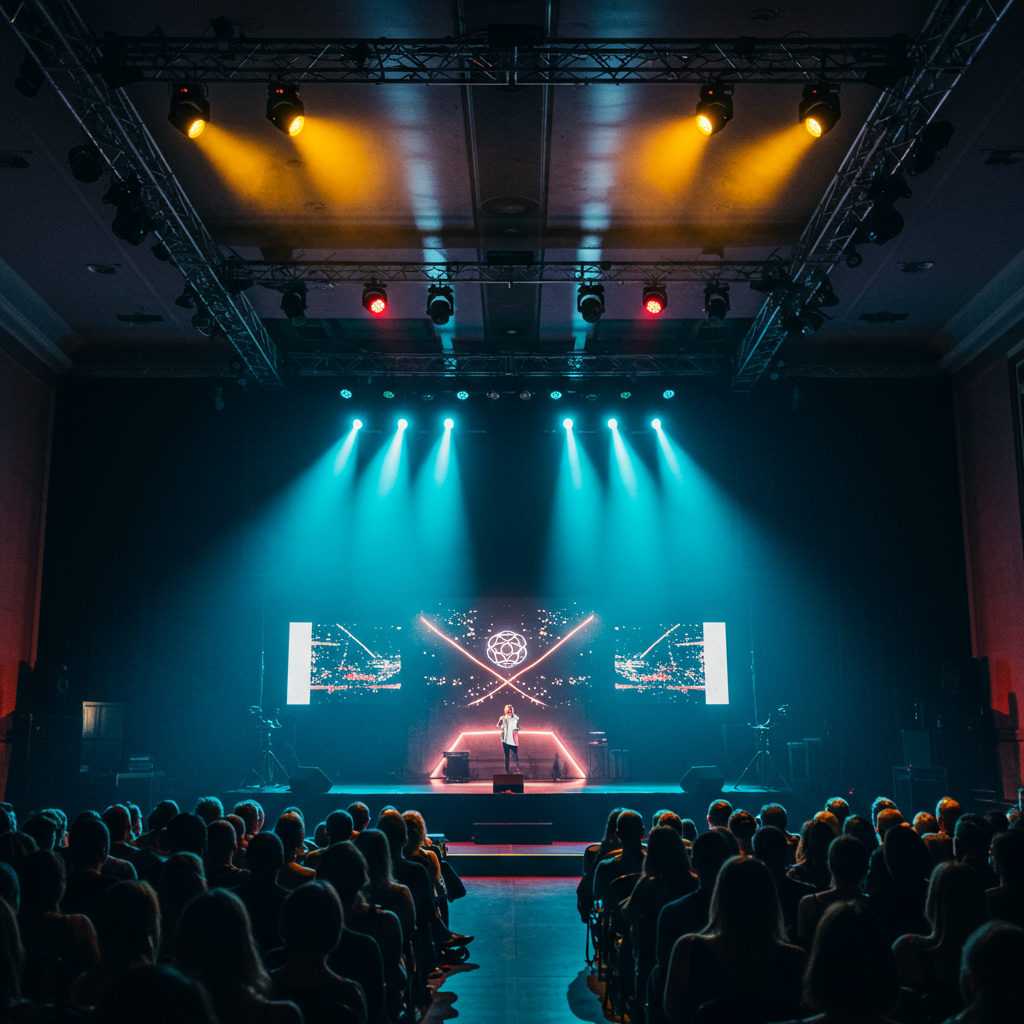
In the highly competitive UK corporate events sector, the difference between a forgettable presentation and an impactful brand experience often lies in the details. Among the most transformative of these details is stage lighting. No longer a purely functional utility, modern lighting design has become a sophisticated, dynamic medium for communication, capable of shaping atmosphere, guiding attention, and reinforcing brand identity. Understanding the latest corporate stage lighting trends uk professionals are adopting is crucial for anyone tasked with therefore delivering events that resonate with today’s discerning audiences. From product launches in Manchester to financial conferences in London, the strategic application of light is what separates the mundane from the magnificent, transforming passive viewers into active participants.
This guide employs a multi-faceted methodology, combining market analysis of current trends with practical, actionable frameworks. We will examine the technological drivers, creative concepts, and operational best practices that define excellence in modern event production. Success and performance will be assessed through a lens of tangible Key Performance Indicators (KPIs). These include audience engagement metrics (e.g., dwell time, social media interaction), operational efficiencies (e.g., energy consumption reduction in kWh, budget variance under 5%), and overall event impact (e.g., Net Promoter Score, lead generation, and ROI). Our goal is to provide a blueprint for planning, designing, and executing lighting schemes that not only look spectacular but also deliver on key business objectives.
Vision, values and proposal
Focus on results and measurement
Our vision positions corporate lighting design not as an operational expense, but as a strategic investment in brand communication. We operate on a value-driven model prioritizing measurable outcomes, adhering to the 80/20 principle: focusing 80% of our resources on the 20% of design elements that deliver the greatest impact. Our core values are innovation, sustainability, and reliability. Every project is underpinned by rigorous technical standards, including adherence to UK regulations such as BS 7909 (Code of practice for temporary electrical systems for entertainment) and ensuring all equipment is PAT tested and certified. Our proposal is to be a strategic partner, translating a company’s brand values and event objectives into a cohesive and compelling visual language.
- Experiential Focus: We move beyond simple lighting to create immersive, brand-aligned atmospheres that captivate audiences and facilitate deeper engagement. Decision criteria are based on the desired emotional journey of the attendee.
- Sustainability by Design: We prioritize low-energy LED solutions, intelligent power management, and recyclable materials. Our goal is to reduce an event’s carbon footprint by up to 80% compared to traditional tungsten-based systems, offering a clear environmental and financial benefit.
- Measurable ROI: We link lighting design choices to tangible business outcomes. By tracking metrics such as social media mentions prompted by “Instagrammable” lighting features or dwell time at product displays, we demonstrate a clear return on investment.
- Technological Integration: Our approach ensures lighting works in seamless harmony with all other production elements, including audio, video, scenic design, and interactive technology, creating a unified and powerful sensory experience.
Services, profiles and performance
Portfolio and professional profiles
We offer a full suite of end-to-end services tailored to the corporate events market, addressing the full spectrum of corporate stage lighting trends uk clients demand. Our portfolio includes: Conceptual Design and Mood Boarding, photorealistic 3D Visualization (using industry-standard software like Vectorworks, Capture, and WYSIWYG), detailed Technical Specification and CAD plotting, Equipment Sourcing and Logistics, and On-site Implementation, Programming, and Operation. Our team consists of seasoned professionals including Creative Lighting Designers (LDs), meticulous Project Managers, certified Production Electricians, and expert Lighting Programmers and Operators, ensuring both creative vision and technical excellence.
Operational process
-
- Phase 1: Consultation & Briefing. Deep dive into client objectives, brand identity, audience demographics, and key messaging. KPI: Client Requirement Document signed off with a satisfaction score > 9/10.
- Phase 2: Concept & 3D Visualization. Development of creative concepts and presentation of realistic 3D renders, allowing stakeholders to visualize the end result. KPI: Design concept approved within a maximum of two revision cycles.
- Phase 3: Technical Specification & Budgeting. Creation of detailed equipment lists, power plots, and rigging plans, accompanied by a transparent, line-item budget. KPI: Final budget approved with a forecast deviation of less than 5%.
- Phase 4: Pre-production & Logistics. Sourcing of all equipment, booking of crew, and meticulous planning of all logistical elements. KPI: All equipment fully prepped, tested, and ready for dispatch 48 hours prior to load-in.
- Phase 5: On-site Execution & Programming. Efficient and safe load-in, rigging, and focusing of all lighting fixtures, followed by detailed programming of all lighting cues. KPI: 100% adherence to the agreed production schedule.
Phase 6: Show Operation & Post-event Analysis. Flawless execution during the live event, followed by a comprehensive debrief and performance report. KPI: Zero critical technical failures during the show; final report delivered within 5 working days.
Tables and Examples
Table>
Strategic ObjectiveKey Performance Indicators (KPIs)Lighting Design ActionsExpected ResultBoost Brand PresenceNumber of mentions on social media with the event hashtag; Brand recognition in post-event surveys.Use of custom gobos with the company logo; programming of color palettes that match the brand’s style guide; architectural lighting of the venue in the brand’s colors.Increase >30% in social media engagement; brand recall score >85%.
Improve Audience Engagement
Time spent in interactive zones; number of questions in Q&A sessions; engagement scores in the event app.
Design of interactive lighting activated by audience movement; use of follow spots to highlight speakers; subtle changes in ambiance to maintain alertness.
Net Promoter Score (NPS) of the event > 50; 20% increase in app interaction.Optimize Budget and SustainabilityReduced energy consumption (kWh); percentage of total budget; event carbon footprint (tCO2e).Specification of 100% LED equipment; use of an intelligent power control system; modular design to reduce assembly time.Reduced energy consumption by 70-80% compared to older systems; Lighting costs kept within 15% of the total production budget.

Representation, campaigns, and/or production
Professional development and management
The execution of a first-class lighting design, especially for multi-venue or large-scale events in the UK, demands impeccable production management. This encompasses the complex logistics of coordinating trusted equipment suppliers, managing teams of qualified technicians, and efficiently scheduling transport and storage. We handle all aspects of regulatory compliance, obtaining the necessary licenses and permits, such as traffic management plans for loads in city center locations like London or Birmingham. Safety is paramount; therefore, we produce comprehensive Risk Assessments and Statements of Methods (RAMS) that comply with UK Health and Safety Executive (HSE) regulations to ensure a safe working environment for staff, clients, and visitors.
- Critical Pre-Production Checklist:
- Site technical survey completed and signed.
- Power requirements calculated, verified, and approved by the site technical manager.
- Detailed rigging plan, approved and signed by a qualified structural engineer if required.RAMS documentation completed and distributed to all personnel.
Contingency plan established, with an inventory of critical spare equipment (e.g., spare projector, backup lighting console) available on site.
Confirmation of liability and equipment insurance policies. Detailed production schedule distributed to all stakeholders (venue, client, production teams).

Content and/or media that convert
Messages, formats, and conversions: Illuminating the new trends in corporate stage lighting in the UK
In modern event marketing, lighting is not just a support for content, it *is* the content. Trends are shifting towards dynamic and experiential designs that create shareable moments and, therefore, organically amplify the event’s reach. Elements such as immersive light tunnels at the entrance, interactive light installations, or projection mapping that transforms the stage into a digital canvas act as powerful visual hooks. These elements encourage attendees to capture and share their experience, turning them into brand ambassadors. We measure the effectiveness of these elements through direct conversion metrics, such as tracking engagement with a specific event hashtag on user-generated images. During rehearsals, we can conduct A/B tests of different lighting sequences (e.g., a dramatic product reveal versus a more subtle one) and measure the test audience’s response to optimize the emotional impact before the live event.
Ideation Phase: Brainstorming “lighting as content” concepts that align with the event’s core message. Responsible: Lighting Designer, Creative Director.
- Visualization Phase: Creation of 3D animations and renders to present the concept to the client and production team. Responsible: 3D Visualizer.
- Technical Development Phase: Selection of appropriate technology (e.g., motion sensors, projection mapping software, addressable LED strips) and integration planning. Responsible: Technical Director.
- Content Creation Phase: If projection mapping is used, custom video content is developed. Responsible: Video Content Creator.
- Programming and Integration Phase: Programming of lighting sequences and interactive triggers, ensuring seamless integration with audio and video. Responsible: Lighting Programmer.Testing and Refinement Phase: Extensive on-site testing to calibrate responsiveness and visual impact, making adjustments based on feedback. Responsible: The entire team.

Training and employability
Demand-driven catalogue
To nurture talent and ensure the highest standards in the industry, we offer training programs designed to meet the demands of the UK live events sector. These modules combine theoretical knowledge with intensive practical training.
-
- Module 1: Fundamentals of Sustainable Lighting for Events. Focused on LED technology, efficient energy management, carbon footprint calculation, and the principles of the circular economy in event production.
- Module 2: Advanced Lighting Control and Networking. Hands-on training on industry-leading consoles (e.g., MA Lighting, Avolites) and data network protocols (Art-Net, sACN) for controlling large-scale lighting systems.
- Module 3: 3D Design and Visualization for Events. Intensive courses on software such as Vectorworks Spotlight, Capture, and WYSIWYG, enabling designers to create and present technical plans and photorealistic renderings.
- Module 4: Health and Live Event Safety (BS 7909 Compliance). An essential course covering safe temporary electrical distribution, working at height, rigging, and RAMS documentation, crucial for employability in the UK.
Module 5: Projection Mapping and Media Servers. Exploring the use of high-brightness projectors and media servers (e.g., Disguise, Resolume) to create dynamic visual experiences.
Methodology
Our training methodology is based on project-based learning. Students work on simulations of real-world events, from receiving the brief to the final design presentation. Assessment is carried out using clear rubrics that measure both creativity and technical feasibility. We actively encourage internships and shadowing opportunities with partner production companies, providing a direct pathway to employment. Graduates of our advanced programs are expected to enter the job market as skilled lighting technicians or junior designers, with a target employability rate of 85% within six months of completion.
Operational Processes and Quality Standards
From Request to Execution
A standardized and transparent operational process is key to delivering consistent, high-quality results, ensuring the client’s vision is realized on time and within budget.
- Phase 1: Diagnosis and Briefing (Week 1). Initial workshop with the client to define objectives, audience, brand message, site constraints, and KPIs. Deliverable: A detailed and agreed-upon Project Brief. Acceptance Criteria: Client signature on the brief document.Phase 2: Creative and Budget Proposal (Week 2). Development of an initial design concept, mood boards, preliminary 3D renders, and an estimated budget. Deliverable: Design and Budget Proposal. Acceptance Criteria: Client approval to proceed to pre-production.
Phase 3: Pre-production and Technical Planning (Weeks 3-6). Creation of detailed CAD drawings, final equipment lists (kit list), power and rigging plans, and staff booking. Deliverable: Complete Production Package. Acceptance Criteria: Technical review and approval by all stakeholders.
Phase 4: On-Site Execution (Week 7). Loading, assembly, focusing, programming, and rehearsals. Deliverable: A stage ready for the show. Acceptance Criteria: Completion of all safety checks and client approval of the final design during rehearsal.
Phase 5: Show Operation and Dismantling (Week 7). Seamless operation of the live event, followed by safe and efficient dismantling and handover of the venue. Deliverable: Venue returned to its original condition. Acceptance Criteria: Venue completion sheet signed by the venue manager.
Phase 6: Closure and Evaluation (Week 8). Final budget reconciliation, client feedback session, and delivery of a post-event report analyzing performance against KPIs. Deliverable: Final Project Report. Acceptance Criteria: Final invoice settlement.
Quality Control
Quality control is integrated into every phase of our process, ensuring that standards are met and expectations are exceeded.
- Clear Roles: Each project has a designated Project Manager as the single point of contact for the client, ensuring clear communication.
- Escalation Protocols: A defined escalation system to resolve any technical or creative issues quickly and efficiently.
- Acceptance Indicators: Clear milestones and deliverables with predefined acceptance criteria at each phase of the project.
- Service Level Agreements (SLAs): We guarantee response times for communications and delivery deadlines for key project deliverables.
Risk: Equipment incompatibility or lack of availability. Mitigation: Cross-checking with suppliers and a technical site visit at an early stage.On-site executionStage ready for the show100% of the safety checklist completed; all sequences programmed and tested; the client has approved the final look.Risk: Setup delays due to unforeseen issues at the site. Mitigation: The production schedule includes a 15% contingency time.ClosureFinal Project ReportThe report includes an analysis of all predefined KPIs; The final budget is within the 5% variance.Risk: Disputes over final expenses. Mitigation: Transparent change order process for any additions to the scope during the project.
| Project Phase | Key Deliverables | Quality Control Indicators | Potential Risks and Mitigation Strategies |
|---|---|---|---|
| Diagnosis | Project Brief | The brief is signed and contains SMART objectives. | Risk: Unclear client objectives. Mitigation: Structured discovery workshop with key stakeholders. |
| Pre-production | Production Package (CAD, Kit List, RAMS) | All drawings are to scale; the equipment list matches supplier availability; RAMS are site-specific. |
Application Cases and Scenarios
Case 1: Launching a Technology Product at Manchester Central Convention Complex
Challenge: A client in the global technology sector needed to launch their new AI product with an event that conveyed innovation, power, and a futuristic atmosphere. The goal was to generate significant social media buzz and media coverage.
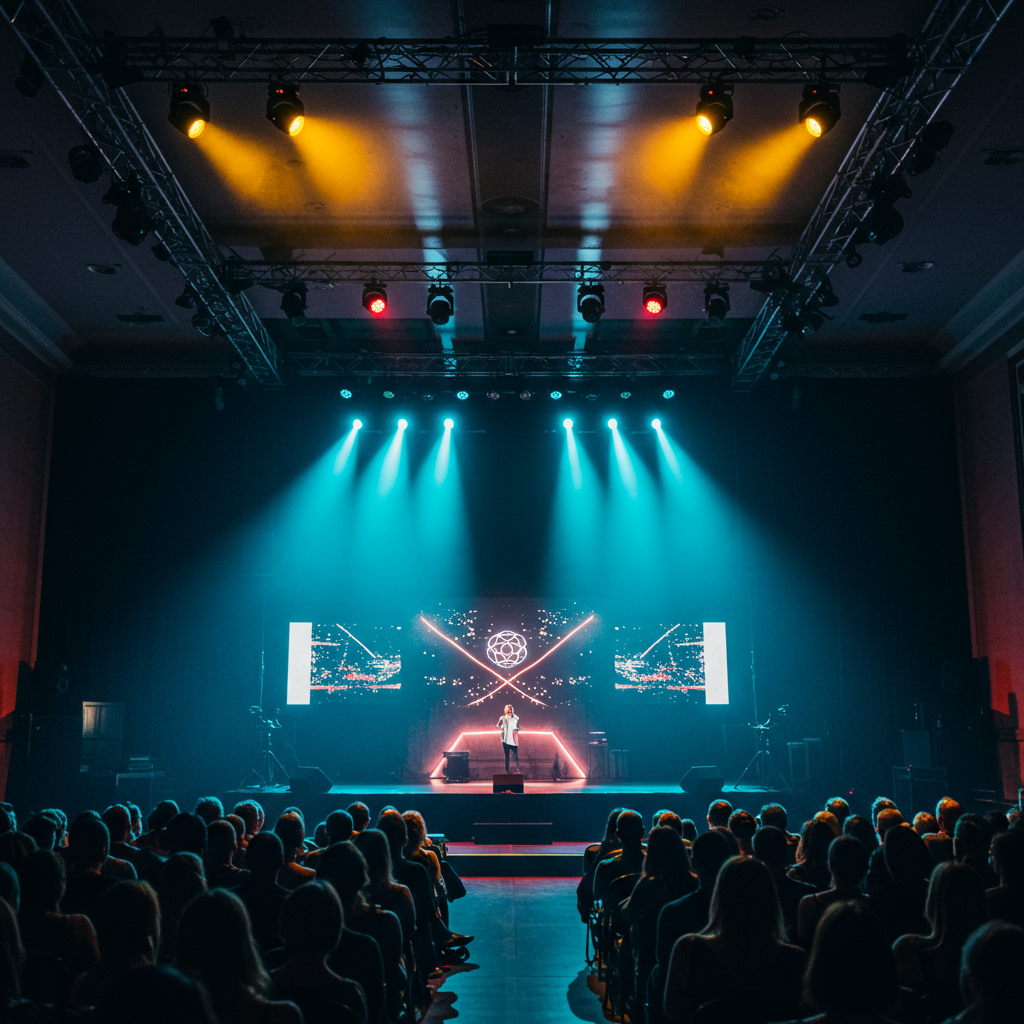
Solution: We designed a stage dominated by a 20-meter-wide, high-resolution LED video wall displaying generative content that reacted to the speaker’s presentation in real time. On stage, an array of 50 kinetic LED strips moved in fluid formations, synchronized to a custom-designed soundtrack. A light mist was used to accentuate the crisp beams of light from the moving heads, creating a three-dimensional light architecture. The catwalk lighting for the product reveal was programmed to follow the product as it moved, creating a dramatic and focused moment.
Results and KPIs: A 45% increase in social media engagement (mentions of the event hashtag) was achieved compared to the previous year’s launch. The event was covered by five major UK technology publications. The project was delivered with a budget variance of only 1.5%. The turnaround time was 8 weeks from the initial brief to the day of the event. The client reported a 4:1 ROI based on media value gained and leads generated.
Case 2: Annual Financial Services Conference at The O2, London
Challenge: For a one-day conference for 2,000 delegates, the client wanted an environment that conveyed confidence, stability, and professionalism, while also keeping the audience visually engaged for eight hours of dense content.
Solution: An architectural and clean approach was chosen. Speaker lighting was paramount, utilizing soft, even front lighting with a three-point setup (key, fill, and backlight) using high CRI (>95) fixtures to ensure natural skin tones and excellent clarity for video streaming. The minimalist stage design was subtly “painted” with the brand colors using LED washes. The lighting conditions evolved throughout the day: crisp white light (5600K) for the energetic opening session, gradually warming to softer tones (3200K) for the afternoon panel sessions, helping to manage the room’s energy.
Results and KPIs: Audience attention analytics, tracked through the event app, showed only a 10% drop in engagement during the final session, a significant improvement over the previous year’s 25%. The post-event survey yielded a Net Promoter Score (NPS) of +65. Thanks to a 100% LED lighting system, energy consumption was reduced by 70% compared to the 2022 conference, resulting in cost savings of over £12,000 in energy and generation.
Case Study 3: Sustainable Brand Awards Gala at We The Curious, Bristol
Challenge: The production design for an awards gala focused on sustainability had to embody the event’s principles. The aim was to create a beautiful and uplifting atmosphere with a near-zero carbon footprint.
Solution: The lighting design relied exclusively on low-energy technologies. A 100% LED and laser system was used, powered by an on-site battery bank that was charged during the day via the venue’s solar panels. The stage design was minimalist, using reclaimed wood and organic textiles. Instead of large washes of color, we used energy-efficient LED profile spotlights to precisely highlight architectural elements and centerpieces. Gobos with leaf and water motifs were used to project textures into the space, creating an organic ambiance without the need for additional physical scenery.
Results and KPIs: The lighting production achieved carbon-neutral certification from an external verification agency. The event received extensive positive media coverage, highlighting its sustainable approach, which resulted in an estimated ROI of 3:1 based on sponsorship value and public relations. Attendees’ surveys showed 98% positive feedback on the event’s atmosphere, with many noting the “beautiful and respectful lighting.”
Case 4: Multi-City Automotive Roadshow for an Electric Vehicle
Challenge: Launch a new electric vehicle with a roadshow across three UK cities (Birmingham, Glasgow, and London), each in a different venue (a converted warehouse, an exhibition center, and a television studio). The objective was to create a consistent, high-impact, and technologically advanced brand experience at each location.
Solution: We designed a modular and transportable lighting package that could be adapted to the different dimensions and capacities of the venues. Key design elements included an entrance “tunnel of light” constructed with 100 pixel-addressable LED tubes, creating an immersive experience for guests upon arrival. For the car reveal, a dramatic sequence was programmed using 24 fast-beam moving heads to create high-energy aerial effects, culminating in a single profile spotlight that perfectly followed the car as it drove onto the stage. Consistency was ensured through extensive pre-programming in a 3D visualizer.
Results and KPIs: The roadshow generated an average of over 500 test drive registrations per location, exceeding the target by 25%. A 95% brand consistency score was maintained across all three events, as measured through attendee surveys. El proyecto se completó un 10% por debajo del presupuesto debido a la eficiencia logística de tener un paquete de gira estandarizado y un equipo de técnicos de gira principal.
Guías paso a paso y plantillas
Guía 1: Cómo Redactar un Brief de Diseño de Iluminación Eficaz
- Paso 1: Defina los Objetivos de su Evento (El “Porqué”). No empiece con “necesitamos luces”. Empiece con lo que quiere conseguir. ¿Es para lanzar un producto, formar al personal, celebrar un éxito? Sea específico. Ejemplo: “Nuestro objetivo es crear un ambiente de alta energía para el lanzamiento de nuestro nuevo producto que haga que los asistentes se sientan entusiasmados con el futuro”.
- Paso 2: Describa a su Audiencia y el Ambiente Deseado. ¿Quién estará en la sala? ¿Son ejecutivos, ingenieros, clientes? ¿Qué quiere que sientan? ¿Inspirados, tranquilos, curiosos, confiados? Esto influye directamente en la paleta de colores, la intensidad y el dinamismo.
- Paso 3: Proporcione las Directrices de la Marca. Incluya siempre su guía de estilo de marca. Especifique los colores primarios y secundarios (con valores Pantone, CMYK o RGB), las fuentes y el tono general de la marca. Esto garantiza que la iluminación refuerce su identidad, no que entre en conflicto con ella.
- Paso 4: Detalle las Especificaciones Técnicas y del Lugar. Proporcione planos del lugar (los archivos DWG o PDF son los mejores), incluyendo las dimensiones de la sala, la altura del techo, la ubicación de los puntos de anclaje y la disponibilidad de energía. Si no tiene esto, indique el nombre y la dirección del lugar.
- Paso 5: Esboce el Programa/Agenda. Proporcione un borrador del programa del evento, indicando los momentos clave: paseo de los invitados, discursos de apertura, revelación del producto, paneles de discusión, entretenimiento, cierre. Esto permite al diseñador crear un arco narrativo con la iluminación.
- Paso 6: Establezca un Rango Presupuestario Realista. Sea franco sobre su presupuesto. Esto no es para que el diseñador lo gaste todo, sino para que proponga una solución que sea a la vez creativa y económicamente viable. Un rango (por ejemplo, 15.000-20.000 libras) es más útil que una cifra única.
Checklist Final del Brief:
- ☐ ¿Se han incluido los datos de contacto del responsable principal?
- ☐ ¿Se han especificado los plazos clave (propuesta, decisión, evento)?
- ☐ ¿Se han identificado todas las partes interesadas que necesitan aprobar el diseño?
- ☐ ¿Se ha adjuntado toda la documentación de apoyo (guía de marca, planos del lugar)?
Guía 2: Checklist para una Visita Técnica al Lugar
- Energía: Localice todas las fuentes de energía disponibles (por ejemplo, tomas de 32A trifásicas, tomas de 13A). Mida la distancia desde la fuente hasta el escenario. Fotografíe los conectores. Confirme con el director del lugar quién es el responsable de la conexión.
- Rigging: Inspeccione todos los puntos de anclaje/vigas disponibles. Confirme sus Cargas de Trabajo Seguras (SWL) con la documentación del lugar. Mida la altura exacta desde el suelo hasta los puntos de anclaje y cualquier obstrucción (por ejemplo, conductos de aire, candelabros).
- Acceso: Mida las dimensiones de todas las puertas de carga, pasillos y ascensores. Compruebe la capacidad de peso del ascensor. Identifique la ruta de carga desde el vehículo hasta el espacio del evento. Confirme las disposiciones de aparcamiento para los camiones de producción.
- Condiciones de la Sala: Anote cualquier fuente de luz ambiental (por ejemplo, ventanas, claraboyas) y confirme si se pueden oscurecer. Identifique las superficies reflectantes (espejos, suelos pulidos) que puedan causar reflejos no deseados. Verifique cómo se controlan las luces de la casa (encendido/apagado, regulables).
- Seguridad y Logística: Localice las salidas de incendios, los extintores y los paneles de alarma. Identifique las zonas de almacenamiento seguras para las cajas de transporte vacías. Confirme las restricciones de ruido u horarias del lugar para el montaje y desmontaje.
Guía 3: Iluminación Básica de Tres Puntos para un Ponente Corporativo
- Paso 1: La Luz Principal (Key Light). Esta es su principal fuente de luz. Coloque una luminaria de perfil (como un Source Four LED) en un ángulo de aproximadamente 30-45 grados a un lado de la cámara y 30-45 grados por encima del ponente, apuntando hacia su cara. Esta luz crea la forma y la dimensión.
- Paso 2: La Luz de Relleno (Fill Light). Esta luz suaviza las sombras creadas por la luz principal. Coloque una segunda luminaria, idealmente un fresnel más suave, en el lado opuesto de la cámara a la luz principal. Ajústela a una intensidad más baja (alrededor del 50-70% de la luz principal) para rellenar las sombras sin eliminarlas por completo.
- Paso 3: La Luz de Contorno (Back Light). Esta luz separa al ponente del fondo. Coloque una tercera luminaria detrás del ponente, en un ángulo alto, apuntando a la parte superior de su cabeza y hombros. Esto crea un sutil borde de luz (o “luz de pelo”) que añade profundidad y evita que el ponente se funda con el fondo.
Consejo profesional: Utilice siempre luminarias con un alto Índice de Reproducción Cromática (CRI) de 90 o superior. Esto garantiza que los tonos de piel se vean naturales y precisos, especialmente importante para la grabación de vídeo y la transmisión en directo. Utilice geles de corrección de color (CTO para calentar, CTB para enfriar) para hacer coincidir la temperatura de color de sus luces con la de las pantallas de vídeo o las luces de la sala.
Recursos internos y externos (sin enlaces)
Recursos internos
- Plantilla Estándar de Brief de Diseño de Iluminación
- Checklist de Visita Técnica al Lugar
- Plantilla de Informe de KPI Post-Evento
- Catálogo de Equipos de Iluminación Estándar
- Manual de Políticas de Salud y Seguridad de la Empresa
Recursos externos de referencia
- PLASA (Professional Lighting and Sound Association): Normas técnicas y orientación.
- HSE (Health and Safety Executive): Publicación “The Event Safety Guide” (HSG195).
- BS 7909:2011: Código de prácticas para sistemas eléctricos temporales para entretenimiento.
- Publicaciones de la industria como “The Stage” y “Lighting and Sound International (LSi)”.
- Programas de software de diseño: Vectorworks Spotlight, Capture, WYSIWYG.
Preguntas frecuentes
¿Cuánto cuesta la iluminación de un escenario corporativo en el Reino Unido?
El coste varía enormemente en función de la escala, la complejidad y la ubicación. Un paquete básico para un escenario de panel simple puede empezar en torno a las 2.000-3.000 libras. Una producción de tamaño medio para una conferencia de un día podría oscilar entre 8.000 y 25.000 libras. Un lanzamiento de producto a gran escala o un evento de gala con vídeo integrado, iluminación cinética y programación compleja puede superar las 50.000 libras. Los factores clave que influyen en el coste son la cantidad y el tipo de equipos, los días de mano de obra para el montaje y el desmontaje, el transporte y los honorarios del diseño y la gestión del proyecto.
¿Con cuánta antelación debo contratar los servicios de iluminación?
Lo ideal es entre 3 y 6 meses antes de la fecha del evento. Este plazo permite un proceso de diseño y planificación exhaustivo, incluyendo visitas al lugar, revisiones del diseño y la obtención de los mejores equipos y personal. Para eventos muy grandes o complejos, se recomienda un plazo de 9 a 12 meses. Para eventos más pequeños y sencillos, es posible un plazo de 4 a 6 semanas, pero puede limitar las opciones creativas y la disponibilidad de equipos.
¿Cuál es la diferencia entre una luz de “wash” y una de “spot”?
Una luz de “wash” (como un PAR LED o un fresnel) crea un campo de luz suave y de bordes difusos, ideal para cubrir grandes áreas como un escenario o una pared con un color uniforme. Una luz de “spot” o “profile” (como un Source Four o un cabezal móvil de spot) crea un haz de luz de bordes duros y definidos. Se utilizan para resaltar con precisión a una persona o un objeto, o para proyectar patrones (gobos).
¿Pueden incorporar el logotipo de nuestra empresa en la iluminación?
Sí, absolutamente. Esto se consigue más comúnmente utilizando un “gobo”. Un gobo es una pequeña plantilla (de metal o de cristal) que se inserta en una luminaria de perfil para proyectar una imagen, que puede ser su logotipo, un texto o cualquier otro patrón. Para logotipos en color o imágenes animadas, se puede utilizar un proyector de vídeo o cabezales móviles de gobo digitales.
¿Qué hace que una instalación de iluminación sea “sostenible”?
La iluminación sostenible se centra en minimizar el impacto medioambiental. Los componentes clave incluyen: el uso exclusivo de luminarias LED, que consumen hasta un 80% menos de energía que las antiguas de tungsteno; una gestión inteligente de la energía para garantizar que los equipos solo se enciendan cuando sea necesario; una logística eficiente para reducir las emisiones del transporte; y la elección de proveedores que den prioridad a las prácticas sostenibles y a los equipos fabricados con materiales reciclables.
Conclusión y llamada a la acción
El panorama de la iluminación de escenarios corporativos ha experimentado una profunda transformación. El enfoque ha pasado de la mera iluminación a la creación de experiencias inmersivas, sostenibles e integradas que impulsan los objetivos empresariales. Al adoptar la tecnología LED, el diseño basado en datos y los conceptos creativos que convierten los escenarios en entornos dinámicos, las empresas pueden mejorar significativamente el impacto de sus eventos. El éxito ya no se mide solo por la estética, sino por métricas cuantificables como la participación de la audiencia, el alcance en las redes sociales y el retorno de la inversión. Al mantenerse a la vanguardia de las corporate stage lighting trends uk las organizaciones no solo iluminan un escenario, sino que crean momentos de marca inolvidables. Para descubrir cómo un diseño de iluminación estratégico puede elevar su próximo evento corporativo, póngase en contacto con nuestro equipo de expertos para una consulta inicial.
Glosario
- LED (Light Emitting Diode)
- Diodo emisor de luz. Una fuente de luz de estado sólido altamente eficiente energéticamente que es la base de la iluminación moderna para eventos.
- Gobo
- Una plantilla de metal o vidrio que se coloca dentro de una luminaria de perfil para proyectar una forma o patrón específico, como un logotipo de empresa.
- DMX (Digital Multiplex)
- El protocolo estándar de la industria para controlar a distancia las luminarias inteligentes, los dimmers y los dispositivos de efectos especiales.
- Rigging
- El proceso de suspender de forma segura equipos (como luces, sonido y vídeo) de la estructura de un techo o de un sistema de truss.
- CRI (Colour Rendering Index)
- Índice de reproducción cromática. Una medida de la capacidad de una fuente de luz para revelar fielmente los colores de los objetos en comparación con una fuente de luz natural. Una puntuación de 90 o más se considera excelente para eventos corporativos.
- Haze
- Una fina niebla atmosférica creada por una máquina de neblina. Se utiliza para hacer visibles los haces de luz en el aire, añadiendo profundidad y dimensión a un diseño de iluminación.
Internal links
- https://uk.esinev.education/
- https://uk.esinev.education/strategic-alliances/
- https://uk.esinev.education/international-internships/