
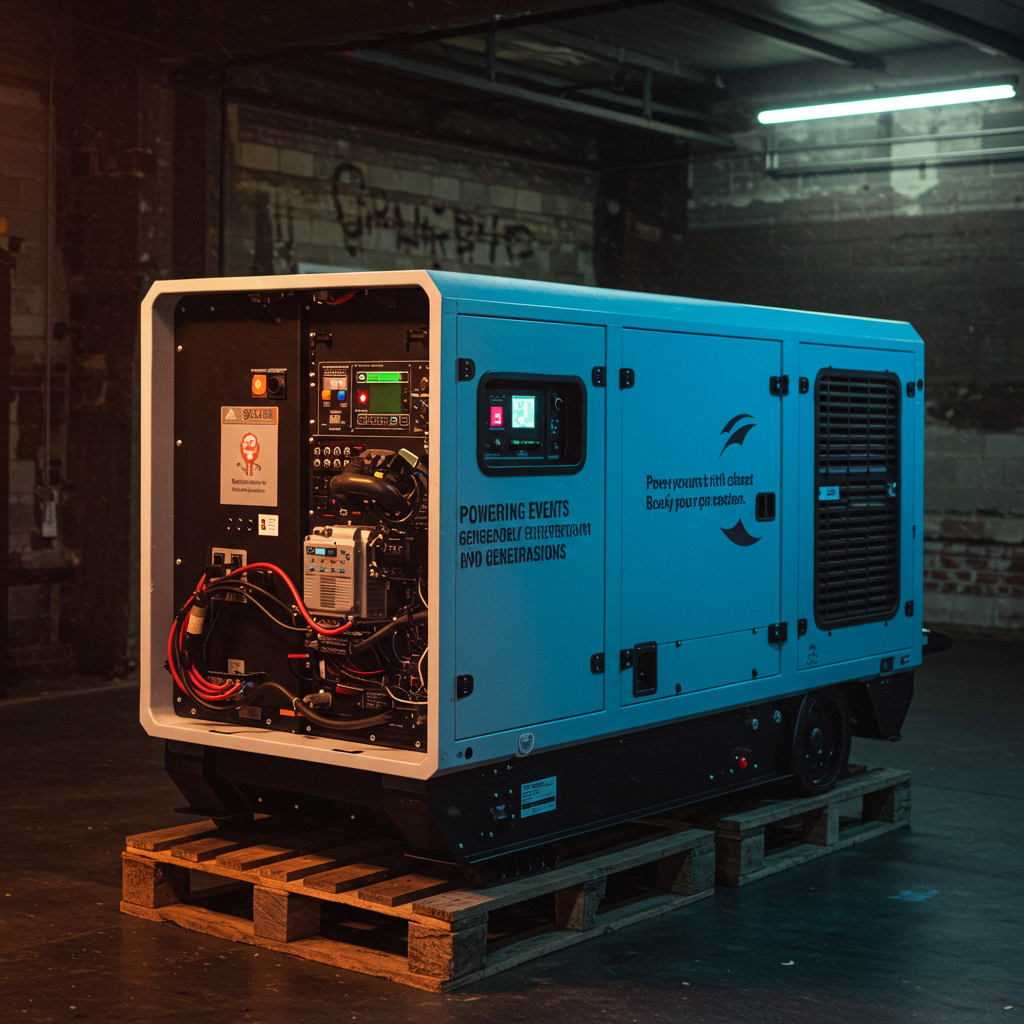
Powering Events Sustainably: A Guide to HVO Generators, Mains, and Hybrids
The demand for sustainable practices in the events industry has never been higher. This comprehensive guide addresses the critical challenge of providing reliable, cost-effective, and environmentally friendly power. We delve into the primary solutions available to event planners, production managers, and sustainability coordinators, with a special focus on the transformative impact of HVO generators for events. This analysis compares Hydrotreated Vegetable Oil (HVO) fuel with traditional diesel, mains power connections, and innovative hybrid battery systems. We provide a framework for decision-making based on key performance indicators (KPIs) such as carbon footprint reduction (CO₂e), cost per kWh, noise pollution (dB), and operational reliability. This article is designed to equip you with the technical knowledge and practical steps needed to design and implement a sustainable power strategy that enhances your event’s brand reputation and meets stringent environmental, social, and governance (ESG) goals.
Introduction
In the dynamic world of live events, power is the invisible yet essential element that brings experiences to life. From the lighting rigs of a music festival to the audiovisual systems of a corporate conference, a stable and sufficient energy supply is non-negotiable. However, the traditional reliance on diesel generators has cast a long shadow over the industry’s environmental credentials. As stakeholders and audiences alike demand greater accountability, event organizers face the urgent need to transition towards more sustainable power solutions. The primary challenge lies in balancing three core requirements: unwavering reliability, budget consciousness, and a minimal ecological footprint. This is where modern solutions, particularly the use of **HVO generators for events**, are reshaping the landscape, offering a viable path to dramatically reduce carbon emissions without compromising on performance.
This guide provides a systematic evaluation of the available power options. Our methodology is data-driven, comparing solutions across a spectrum of quantifiable metrics. We will analyze performance based on Key Performance Indicators (KPIs) including, but not limited to: net carbon dioxide equivalent (CO₂e) emissions, fuel efficiency in liters per hour, cost per kilowatt-hour (£/kWh), noise levels in decibels (dB), and system uptime percentage. By examining real-world case studies and providing actionable step-by-step processes, we aim to empower event professionals to make informed decisions that align with both their operational needs and their sustainability commitments. We will explore not just the technology itself, but also the logistical and procedural shifts required for a successful green energy transition.
Vision, Values, and Proposition
Focus on Results and Measurement
Our vision is to catalyze the event industry’s transition to carbon-neutral power solutions, making sustainable events the industry standard, not the exception. We operate on a foundation of three core values: radical transparency, engineering excellence, and measurable impact. We apply the 80/20 principle to event power, recognizing that the two most critical decisions—fuel choice and accurate system sizing—account for the vast majority of an event’s energy-related environmental impact. Our proposals and strategies are grounded in internationally recognized technical standards, including ISO 20121 (Event Sustainability Management Systems), BS 7909 (Code of practice for temporary electrical systems for entertainment and similar purposes), and the latest engine emission regulations (Tier V). This commitment ensures our solutions are not only sustainable but also safe, compliant, and reliable.
- Value Proposition: We deliver end-to-end sustainable power solutions that reduce an event’s carbon footprint by up to 90%, enhance brand reputation, and often lead to long-term operational efficiencies.
- Quality Criteria: Every project is assessed against power reliability (goal: 99.99% uptime), budget adherence (goal: <5% variance from quote), and sustainability targets (e.g., specific CO₂e reduction percentage).
- Decision Matrix: We assist clients in choosing the optimal solution by evaluating options against four key pillars:
- Sustainability: Net CO₂e emissions, Particulate Matter (PM), Nitrogen Oxides (NOx), and source of fuel.
- Operational Feasibility: Site access, equipment footprint, noise constraints, and fuel logistics.
- Financial Viability: Total cost of ownership, including equipment hire, fuel consumption, labor, and potential carbon offsetting costs.
- Resilience: Redundancy levels, technical support response times, and contingency planning for equipment or grid failure.
Services, Profiles, and Performance
Portfolio and Professional Profiles
We offer a comprehensive suite of services designed to cover every aspect of sustainable temporary power for events. Our team consists of seasoned professionals, including Certified Power System Engineers, BS 7909-qualified Event Electricians, Sustainability Consultants specializing in carbon accounting, and dedicated Logistics Managers. Our core services are tailored to meet the diverse needs of the events industry, from small corporate functions to large-scale festivals.
- Sustainable Power Auditing and Strategy Design: A full assessment of your event’s power requirements to create a bespoke, efficient, and sustainable power plan.
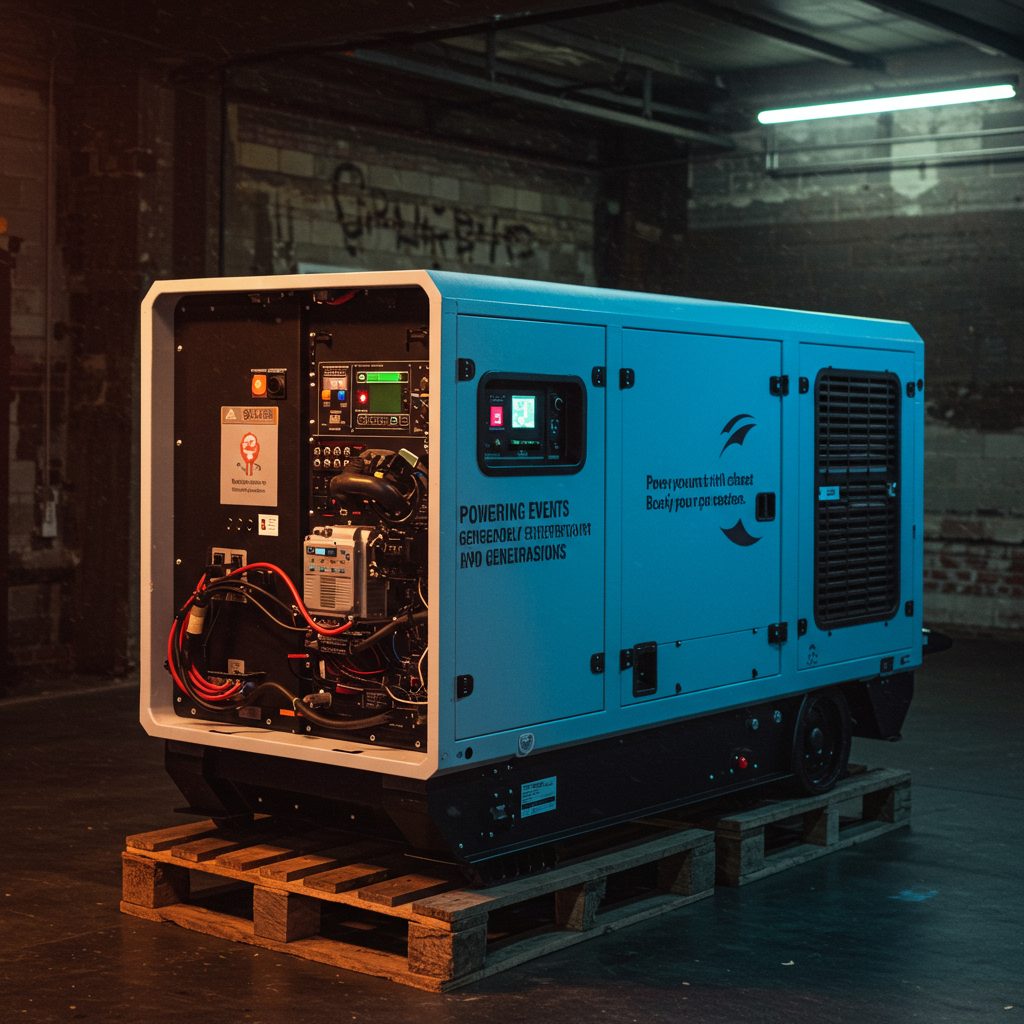
- Hire of Tier V **HVO Generators for Events**: Supplying modern, efficient, and low-emission generator sets, fully compatible with HVO and other paraffinic fuels.
- Hybrid Power Solutions: Integrating battery energy storage systems (BESS) with generators to create hybrid solutions that drastically cut fuel consumption, emissions, and noise.
- Mains Power Connection and Distribution: Managing connections to the local grid where feasible, providing the greenest power source available, along with all necessary distribution hardware.
- On-site Fuel Management: Secure and responsible management of HVO fuel on-site, including delivery scheduling, deployment of bunded fuel bowsers, and consumption monitoring.
- Real-time Energy Monitoring and Post-Event Reporting: Providing clients with a live dashboard of energy usage and a detailed post-event report quantifying energy consumed, costs, and carbon emissions saved.
Operational Process
- Phase 1: Discovery & Power Assessment: We engage with your team to understand the event’s scope, technical riders, and sustainability goals. (KPI: Initial power assessment completed within 48 hours of receiving full information).
- Phase 2: System Design & Proposal: Our engineers designed the most efficient power system, providing a detailed quotation with transparent costings and projected environmental savings. (KPI: Proposal cost to final invoice variance of less than 5%).
- Phase 3: Logistics & Pre-Deployment: We coordinate all logistics, including equipment transport, HVO fuel delivery, and personnel scheduling. (KPI: On-time and in-full equipment delivery rate of 99.5%).
- Phase 4: On-site Installation & Commissioning: Our qualified technicians install, test, and certify the entire system according to BS 7909 standards. (KPI: Zero health and safety incidents during setup and operation).
- Phase 5: Live Event Monitoring & Support: We provide on-site or remote monitoring throughout the event, with rapid-response support. (KPI: Technical support response time of under 15 minutes for critical alerts).
- Phase 6: Decommissioning & Impact Reporting: Safe and efficient removal of all post-event equipment, followed by the delivery of a comprehensive Sustainability Impact Report. (KPI: Final report delivered within 5 working days of event closure).
Comparative Performance of Power Solutions
| Power Source | Net CO₂e Reduction (vs. Diesel) | Indicative Cost per kWh | Typical Noise Level (dBA @ 7m) | Ideal Use Case |
|---|---|---|---|---|
| Standard Diesel Generator | 0% (Baseline) | £0.45 – £0.65 | 65-75 dBA | Legacy applications where sustainability is not a primary driver. |
| HVO Generator | Up to 90% | £0.50 – £0.75 | 65-75 dBA | Most events seeking significant and immediate carbon reduction without operational changes. |
| Hybrid System (HVO + Battery) | Up to 95% (via reduced runtime) | £0.60 – £0.90 | 0 dBA (on battery) / 65 dBA (charging) | Events with variable or low overnight loads, or strict noise curfews. |
| Mains Power (UK Grid) | ~50-60% (variable) | £0.30 – £0.40 | 0 dBA | Venues with existing, sufficient grid capacity. The greenest option when sourced from a renewable tariff. |

Production and Logistics Management
Professional Development and Management
The successful implementation of a sustainable power solution is as much about meticulous planning and logistics as it is about the technology itself. Our production management process ensures a seamless flow from warehouse to event site and back, minimizing risks and guaranteeing compliance. This involves detailed coordination of transport, obtaining necessary permits and licenses from local authorities, and synchronizing our activities with all other on-site suppliers (staging, lighting, sound, etc.) to ensure a cohesive and safe working environment. We create a detailed execution calendar with critical path analysis to ensure all milestones are met on time.
- Critical Documentation Checklist:
- Completed Site Survey (incl. ground conditions, access routes, overhead hazards).
- Risk Assessment and Method Statements (RAMS) for all power-related activities.
- BS 7909 Electrical Installation Completion Certificate.
- Public Liability Insurance Certificate.
- HVO Fuel Specification Sheet (confirming EN15940 compliance and sustainable feedstock).
- Noise Abatement Plan (if required by local authority).
- Stock and Alternatives: We maintain a robust inventory of generators, cables, and distribution boards. For every critical component, we have a pre-identified backup or alternative, ensuring equipment failure does not impact the event. This includes maintaining relationships with multiple HVO fuel suppliers to mitigate any supply chain disruptions.
- Contingency Planning: Every power plan includes a detailed contingency strategy. For a single generator setup, this might be a pre-agreed rapid-deployment replacement. For larger events, we recommend a twin-pack or synchronized generator set, where one unit can seamlessly take over the full load if the other fails, providing N+1 redundancy. We also model for extreme weather events, ensuring equipment is secured and protected against wind and rain.

Content and Media That Converts
Messaging, Formats, and Conversions
In today’s market, sustainability is a powerful narrative. The choice to use cleaner energy solutions like **HVO generators for events** is not just an operational decision; it’s a valuable marketing asset. We help clients leverage their investment in sustainability to create compelling content that resonates with audiences, sponsors, and stakeholders. Our primary “hook” is to move beyond generic “green” claims and provide verifiable data. Instead of saying “we’re a green event,” we enable clients to say “we reduced our power-related carbon emissions by 87%, saving 35 tons of CO₂e.” This data-driven approach builds trust and demonstrates genuine commitment.
Our content strategy focuses on translating technical achievements into engaging stories. We develop post-event sustainability reports that are not just spreadsheets but visually appealing infographics and case studies. These can be shared on social media, included in sponsorship proposals, and used in annual reports to showcase ESG performance. Key Calls to Action (CTAs) we build our service around include “Get a Free Sustainability Power Audit” and “Calculate Your Event’s Carbon Footprint.” We can even A/B test messaging with clients’ audiences to see whether cost savings, carbon reduction, or brand image is the most powerful conversion driver.
- Content Production Workflow:
- Pre-Event (Strategy): Collaborate with the client’s marketing team to understand their sustainability messaging goals. A designated Project Manager sets the content plan.
- Pre-Event (Forecasting): Based on the power plan, our Sustainability Consultant generates a pre-event emissions forecast, providing a baseline and a target for reduction.
- During Event (Data Capture): Our on-site technicians and remote monitoring systems capture real-time data on fuel consumption, kWh produced, and generator run-time.
- Post-Event (Analysis & Creation): The data is analyzed to calculate the actual CO₂e savings. Our team then creates a bespoke Sustainability Impact Report, including key metrics and visualizations.
- Post-Event (Distribution): The client receives the report in various formats (PDF, infographic PNGs, key bullet points) for easy integration into their own communication channels.

Training and Employability
Demand-Oriented Catalogue
To facilitate the industry-wide adoption of sustainable power practices, we believe in empowering event professionals with the necessary knowledge and skills. We offer a catalog of training modules designed for production managers, site managers, and aspiring event technicians. These courses are practical, hands-on, and focused on the real-world challenges of temporary event power.
- Module 1: Fundamentals of Temporary Power Systems (101): Understanding volts, amps, watts, kVA, and basic power distribution.
- Module 2: Power Load Calculation and System Sizing (201): A practical workshop on how to accurately assess an event’s power needs to avoid over-specification and waste.
- Module 3: Sustainable Power Technologies Deep Dive (301): A detailed comparison of HVO, biodiesel, hydrogen fuel cells, battery storage, and solar options for events.
- Module 4: Managing and Operating **HVO Generators for Events** (Practical): A hands-on session covering safe refueling, routine checks, and basic troubleshooting of HVO-powered generator sets.
- Module 5: Hybrid Power Systems in Practice (302): Designing and managing generator and battery hybrid systems for maximum efficiency and silent operation.
- Module 6: BS 7909: A Manager’s Guide to Electrical Safety and Compliance: Understanding the legal responsibilities and practical requirements of the UK’s standard for temporary electrical installations.
Methodology
Our training methodology is based on a “learn, do, review” cycle. Theoretical concepts are immediately followed by practical exercises, such as sizing a generator for a hypothetical festival or programming a battery storage system. Competency is assessed using detailed rubrics that measure both the accuracy of calculations and the understanding of safety procedures. We partner with leading event production companies to offer an internship and placement programme, providing a direct pathway to employment for high-achieving graduates of our advanced modules. The expected outcome is a new generation of event professionals who are not only technically proficient but also have sustainability embedded in their operational DNA, leading to a demonstrable increase in the adoption of clean power solutions across the industry.
Operational Processes and Quality Standards
From Request to Execution
Our operational process is a structured pipeline designed for clarity, efficiency, and quality control at every stage. Each phase has defined deliverables and acceptance criteria, ensuring the client is fully informed and the project stays on track.
- Phase 1: Diagnostic & Scoping:
- Activities: Initial client call, review of technical riders and site plans, high-level power requirement analysis.
- Deliverable: A formalized Project Requirements Brief.
- Acceptance Criteria: Client signs off on the brief, confirming our understanding of their needs.
- Phase 2: Proposal & System Design:
- Activities: Detailed load calculations, selection of equipment, creation of power distribution schematics, HVO fuel planning, and sustainability impact forecast.
- Deliverable: A comprehensive Technical and Commercial Proposal including SLAs.
- Acceptance Criteria: Client issues a Purchase Order or signed contract.
- Phase 3: Pre-production & Logistics:
- Activities: Equipment allocation, creation of RAMS, scheduling of crew and transport, coordination with other on-site suppliers.
- Deliverable: A detailed Project Implementation Plan (PIP) shared with the client.
- Acceptance Criteria: Client approves the PIP, including delivery windows and on-site protocols.
- Phase 4: Execution & Live Operation:
- Activities: Delivery, installation, system testing, BS 7909 certification, live event monitoring, and on-call support.
- Deliverable: A fully commissioned and operational power system and access to a live monitoring dashboard (if applicable).
- Acceptance Criteria: Successful completion of all tests and formal handover to the client’s site manager.
- Phase 5: Closure & Reporting:
- Activities: Safe de-rigging and removal of all equipment, site clean-up, final data analysis.
- Deliverable: A Post-Event Sustainability Impact Report and the Final Invoice.
- Acceptance Criteria: Client confirms satisfactory site clearance and accepts the final report.
Quality Control
Quality is maintained through a system of defined roles, clear escalation paths, and stringent performance indicators.
- Roles: The Project Manager is the single point of contact for the client. The Lead Power Engineer holds ultimate technical responsibility. On-site Technicians are responsible for the day-to-day safe operation of the equipment.
- Escalation Protocol: Any on-site issue is first addressed by the On-site Technician. If unresolved within 10 minutes, it is escalated to the remote Lead Power Engineer. Critical issues are escalated to the Operations Director.
- Service Level Agreements (SLAs) & Acceptance Indicators: We contractually guarantee 99.9% power uptime. Electrical installations must pass all BS 7909 tests before going live. All staff must hold relevant industry certifications (e.g., ECS card). Fuel deliveries must be accompanied by a certificate of analysis.
| Phase | Key Deliverables | Quality Control Indicators | Risks and Mitigation |
|---|---|---|---|
| Proposal | Detailed Quote, Power Plan | Load calculation accuracy >95%; Cost variance <5%. | Risk: Under-specifying power. Mitigation: Rigorous review of all technical riders and adding a 25% contingency headroom to all calculations. |
| Pre-production | Project Implementation Plan | RAMS approved by client; All logistics confirmed 72h prior. | Risk: Delivery access issues. Mitigation: Mandatory pre-delivery site survey or detailed review of site plans with the client. |
| Execution | Commissioned System, BS 7909 Cert | Zero safety incidents; 99.9% power uptime; Noise levels within permitted limits. | Risk: Equipment failure. Mitigation: Using N+1 redundancy (e.g., twin-pack generators) for all critical applications. |
| Closure | Impact Report, Cleared Site | Report data accuracy 100%; Site left clean. | Risk: Inaccurate sustainability data. Mitigation: Using calibrated digital fuel meters and energy monitors for all data capture. |
Cases and Application Scenarios
Case 1: 40,000-Capacity Greenfield Music Festival
Challenge: To power four main stages, dozens of food vendors, a VIP area, and production compounds for a 4-day festival in a rural location. The client had a strong sustainability mandate and needed to minimize noise pollution for nearby residents.
Solution: A decentralized power strategy was implemented. A synchronized “farm” of eight 500 kVA generators running exclusively on HVO powered the main event area. This setup provided full redundancy and allowed for generators to be powered down during periods of low load to save fuel. For the boutique camping and backstage areas, which required overnight power for security and refrigeration, we deployed two large-scale hybrid systems. These consisted of a 200 kVA HVO generator paired with a 120 kWh battery storage unit. The generators ran for only 6 hours a day to charge the batteries, which then provided silent, emission-free power for the remaining 18 hours.
Results: Over the event, the solution saved an estimated 115 tonnes of CO₂e compared to using red diesel, a 90% net reduction. The use of hybrid systems for overnight loads resulted in a 75% reduction in generator runtime in those areas, saving an additional 8,000 liters of fuel and eliminating all generator noise between 10 pm and 8 am. The festival received a highly commended award for its sustainability initiatives, with the power solution being a key factor. Power uptime was maintained at 100% throughout the 96-hour event. The Net Promoter Score (NPS) from the production client was 10.
Case 2: High-Profile Corporate Product Launch in a Historic Venue
Challenge: The event required significant power for complex projection mapping, an extensive lighting rig, and live-streaming equipment within a Grade I listed building in central London. The venue’s mains supply was insufficient, and they had a strict policy against disruptive or polluting temporary equipment.
Solution: We specified two super-silent 250 kVA twin-pack generators, which were carefully craned into a small service yard at the rear of the venue. Both units run on HVO to eliminate particulate emissions and reduce the carbon footprint, aligning with the corporate client’s ESG policy. Extensive cable runs were meticulously planned to be hidden from guest view, preserving the venue’s aesthetics. A dedicated on-site engineer monitored the system throughout the event.
Results: The event was a complete success, with flawless power delivery for the high-tech production elements. The use of HVO fuel met the venue’s stringent environmental requirements, and the low noise output of the generators meant they were unnoticed by guests. The project was delivered 5% under budget due to efficient fuel management. The solution demonstrated that even the most demanding productions in sensitive locations can be powered sustainably.
Case 3: Multi-Location Film Production
Challenge: A film production company needed to power its unit base, lighting, and camera equipment across several remote and ecologically sensitive locations, including a national park. The key requirements were mobility, reliability, and the lowest possible environmental and acoustic impact.
Solution: A flexible, mobile power solution was designed around a 100 kWh towable battery unit and a 60 kVA road-towable HVO generator. For scenes requiring quiet on-set, the battery provided all necessary power for hours at a time. The generator was located further away at the base unit and used to recharge the battery pack between takes or overnight. This hybrid approach provided the best of both worlds: silent, emission-free power close to the filming action, and the reliability and energy density of a generator for recharging.
Results: The production successfully filmed in all sensitive locations without any complaints or environmental incidents. The sound department reported significantly improved audio recording quality due to the absence of generator noise. The solution reduced total fuel consumption by over 60% compared to using a traditional generator for the entire shoot. This translated to a cost saving of over £15,000 in fuel over the 8-week production period. The production company has since adopted this hybrid model as its standard for all location shoots.
Case 4: Winter Wonderland Style Christmas Market
Challenge: To provide power for over 100 market stalls, festive lighting, an ice rink, and catering outlets for a six-week period in a city-centre park. The power demand was highly variable, peaking in the evenings and weekends. The city council required a low-emissions solution to comply with its clean air zone policy.
Solution: We installed a central power distribution hub using two synchronized 750 kVA **HVO generators for events**. A smart load-management system was employed, which automatically started the second generator only when demand exceeded 60% of the first generator’s capacity, ensuring optimal fuel efficiency. All power was distributed via a network of protected cabling, eliminating the need for individual stallholders to bring their own noisy, polluting small generators. Real-time monitoring allowed the event organizers to see energy consumption patterns and identify opportunities to save power.
Results: The solution provided uninterrupted power for the entire six-week run. By using HVO, the project avoided emitting over 50 tons of CO₂e in the city centre. The load-on-demand system saved an estimated 20% in fuel consumption compared to running both generators continuously. The centralized system improved safety and aesthetics, and the client received positive press coverage for their commitment to a sustainable event. The ADR (Average Daily Rate) for stallholders was justified by the provision of reliable, green power, leading to a 100% re-booking rate for the following year.
Step-by-Step Guides and Templates
Guide 1: How to Accurately Calculate Your Event’s Power Load
- Step 1: Create an Equipment Inventory. Go through every area of your event (stages, catering, bars, production, etc.) and list every single item that requires electricity. Be exhaustive. Includes everything from a 10,000-watt moving light to a 50-watt phone charger.
- Step 2: Find the Power Rating. For each item, find its power rating. This is usually on a sticker or plate on the device. It will be listed in Watts (W), Kilowatts (kW), or Amps (A).
- Step 3: Standardize to Kilowatts (kW). Convert all values to kW. If it’s in Watts, divide by 1,000 (e.g., 500W = 0.5kW). If it’s in Amps, use the formula: (Amps × Volts) / 1000 = kW. In the UK, use 230V for single-phase or 400V for three-phase.
- Step 4: Sum the Total kW. Add up the kW values for all equipment to get your total connected load.
- Step 5: Apply a Diversity Factor. Not all equipment will run at maximum power simultaneously. Apply a diversity factor to estimate the actual peak load. For lighting, this could be 0.9 (90%), for catering it could be 0.6 (60%). A conservative overall factor is often 0.7-0.8. Multiply your total connected load by this factor.
- Step 6: Convert to kVA. Generators are rated in kVA (kilo-volt-amperes). To convert your peak kW load to kVA, divide by the power factor, which is typically 0.8 for event equipment. Formula: kVA = kW / 0.8.
- Step 7: Add Headroom. Always add a safety margin. A generator should not run at more than 80% of its maximum capacity for extended periods. Add at least 25% headroom to your calculated kVA requirement. This gives you your final required generator size.
- Final Checklist:
- Have you included power for site lighting and emergency lighting?
- Have you accounted for the production and site offices?
- Is the power for heating or air conditioning included?
- Have you checked if any equipment has a large start-up current (inrush)?
- Has a qualified electrician reviewed your calculations?
Guide 2: Site Selection Checklist for a Temporary Generator
- Ground Conditions: Is the ground firm and level? A generator must be level to operate correctly. Soft ground may require trackway or a solid base.
- Access: Can a large delivery truck and potentially a crane access the proposed location? Check for turning circles, width restrictions, and overhead obstacles like tree branches or power lines.
- Proximity to Load: The closer the generator is to the main distribution point, the shorter the cable runs, which saves cost and reduces voltage drop.
- Public Safety & Security: The location must be secured from public access. A 1.8-metre high security fence (Heras) is the minimum standard. Ensure clear signage is visible.
- Noise Considerations: Position the generator as far as practically possible from residential areas or noise-sensitive event spaces (e.g., seminar tents). Orienting the exhaust away from these areas can also help.
- Ventilation & Exhaust: Ensure there is at least 2 metres of clear space around the generator for air circulation. The engine exhaust must be directed away from buildings, air intakes, and flammable materials.
- Refuelling Access: A fuel tanker or bowser will need regular access to the generator. Plan a safe and clear route for refuelling that does not cross public footpaths.
- Environmental Protection: Ensure the generator is a double-bunded unit or is placed on a self-contained drip tray to prevent any fuel or oil spills from contaminating the ground. Have a spill kit readily available.
Guide 3: The 5-Step Process for Switching an Event to HVO Fuel
- Step 1: Confirm Equipment Compatibility. Contact your power supplier and confirm that their generator fleet is approved by the manufacturer for use with HVO fuel that meets the EN15940 standard. Most modern Tier IV and Tier V engines are compatible, but it is essential to verify.
- Step 2: Source a Reputable HVO Supplier. Not all HVO is created equal. Choose a supplier who can provide documentation proving their product is made from 100% renewable and sustainable feedstocks (e.g., ISCC certified). Request a specification sheet to confirm it meets the EN15940 standard.
- Step 3: Update Your Budget and Logistics Plan. HVO fuel typically costs 10-20% more per litre than red diesel. Update your event budget accordingly. Discuss delivery logistics with your chosen fuel supplier, as lead times may be longer than for diesel. Ensure your on-site fuel bowser is clean and clearly labelled for HVO to prevent cross-contamination.
- Step 4: Brief Your Team. Inform your entire on-site team, including the site manager, production manager, and any refuelling personnel, about the switch. While HVO is a drop-in replacement, it’s crucial that everyone is aware of the change and the importance of not adding diesel to an HVO tank.
- Step 5: Track and Report Your Success. Work with your power provider to measure the amount of HVO consumed. Use a standard conversion factor (approx. 2.68 kg CO₂e per litre for diesel vs. approx. 0.27 kg CO₂e for HVO) to calculate the carbon emissions you have saved. Promote this achievement in your post-event communications.
Internal and External Resources (No Links)
Internal Resources
-
- Template: Event Power Load Calculation Spreadsheet
- Internal Document: Approved HVO-Compatible Generator Fleet List
– Internal Standard: Quality and Safety Protocol for Temporary Electrical Installations
- Template: Post-Event Sustainability Impact Report
– Internal Guide: Best Practices for Hybrid Power System Optimisation
External Resources of Reference
- Standard: ISO 20121 – Event sustainability management systems
- Standard: BS 7909 – Code of practice for temporary electrical systems for entertainment and similar purposes
- Regulation: Non-Road Mobile Machinery (NRMM) Emission Standards (Tier V)
- Guidance: UK Health and Safety Executive (HSE) – Electrical safety at events
- Standard: EN 15940 – Automotive fuels – Paraffinic diesel fuel from synthesis or hydro-treatment – Requirements and test methods
Frequently Asked Questions
What exactly is HVO fuel?
HVO stands for Hydrotreated Vegetable Oil. It is a premium-quality renewable diesel alternative, also known as a paraffinic diesel fuel. It is produced from sustainable raw materials such as waste vegetable oils and animal fats through a specialised hydro-treatment process. Unlike first-generation biodiesel, its chemical structure is almost identical to mineral diesel, making it a stable, high-quality “drop-in” fuel.
Are HVO generators for events more expensive than standard diesel ones?
The hire cost for the generator itself is typically identical, as the same physical machine is used. The primary cost difference is in the fuel. HVO fuel is generally 10-20% more expensive per litre than red diesel. However, this cost can be partially offset by improved engine efficiency, reduced maintenance requirements, and the significant marketing and ESG value derived from the dramatic carbon reduction.
Can I use HVO fuel in any diesel generator?
HVO is a “drop-in” replacement for diesel, meaning no engine modifications are required. However, it is crucial to use it only in generators where the manufacturer has officially approved its use. Virtually all modern Tier IV and Tier V compliant generator engines are approved for HVO, but it is always best practice to confirm with your power supplier to ensure warranty and performance are not affected.
What are the main benefits of HVO compared to traditional diesel?
The key benefit is a reduction of up to 90% in net CO₂e (carbon dioxide equivalent) emissions. Additionally, it significantly reduces other harmful emissions, including up to 30% less Particulate Matter (PM) and up to 10% less Nitrogen Oxides (NOx). It also has better cold-weather performance, a longer storage life (up to 10 years), and is biodegradable and non-toxic.
What is a hybrid power system and when should I use one?
A hybrid power system combines a traditional generator with a Battery Energy Storage System (BESS). The generator runs periodically in its most efficient range to charge the batteries, and the batteries provide power to the event. This system is ideal for events with fluctuating power demands or those with low overnight loads (e.g., for security, refrigeration, or site lighting). It allows the generator to be shut down for long periods, drastically reducing total fuel consumption, emissions, and, most importantly, noise.
Conclusion and Call to Action
The transition to sustainable event power is no longer a distant aspiration but a present-day reality, driven by technological innovation and a collective will for change. As we have demonstrated, a portfolio of robust, reliable, and green solutions exists to meet the energy demands of any event, regardless of scale or location. From the straightforward, high-impact switch to HVO fuel, to the intelligent application of hybrid battery systems and the fundamental preference for mains power, the tools are at our disposal. The successful implementation of these technologies hinges on meticulous planning, accurate load assessment, and a partnership with knowledgeable power experts. By adopting a data-driven approach and focusing on verifiable KPIs, event organisers can achieve significant reductions in their environmental footprint, often while improving operational efficiency and brand value.
The use of **HVO generators for events** stands out as the most accessible and immediately impactful step an event can take on its sustainability journey. It offers a near-total decarbonisation of on-site power generation with minimal operational change. The future of event energy is smart, silent, and sustainable. The time to act is now. We invite you to take the next step in powering your event more responsibly.
Contact our team today for a complimentary, no-obligation power audit for your next event. Let us help you design a solution that meets your performance needs, aligns with your budget, and showcases your commitment to a sustainable future.
Glossary
- HVO (Hydrotreated Vegetable Oil)
- A second-generation renewable diesel fuel made from waste fats and vegetable oils. It is a paraffinic diesel that can reduce net CO₂e emissions by up to 90%.
- kVA (kilo-volt-ampere)
- A measure of “apparent power” in an electrical circuit. It is the standard unit for rating the size of a generator.
- Tier V Engine
- The most recent and stringent European emissions standard for engines used in non-road mobile machinery (NRMM), including temporary generators. It severely limits the output of Particulate Matter and Nitrogen Oxides.
- BS 7909
- The British Standard that serves as the code of practice for the design, installation, and testing of temporary electrical systems for entertainment and similar purposes. Compliance is considered best practice for event safety.
- CO₂e (Carbon Dioxide Equivalent)
- A standard unit for measuring carbon footprints. It converts the impact of different greenhouse gases into the equivalent amount of carbon dioxide.
- Hybrid Power
- A system that combines a fossil-fuelled generator with a Battery Energy Storage System (BESS) to improve efficiency and reduce runtime, fuel consumption, noise, and emissions.
Internal links
- Click here👉 https://uk.esinev.education/masters/
- Click here👉 https://uk.esinev.education/diplomates/
External links
- Princeton University: https://www.princeton.edu
- Massachusetts Institute of Technology (MIT): https://www.mit.edu
- Harvard University: https://www.harvard.edu
- Stanford University: https://www.stanford.edu
- University of Pennsylvania: https://www.upenn.edu