
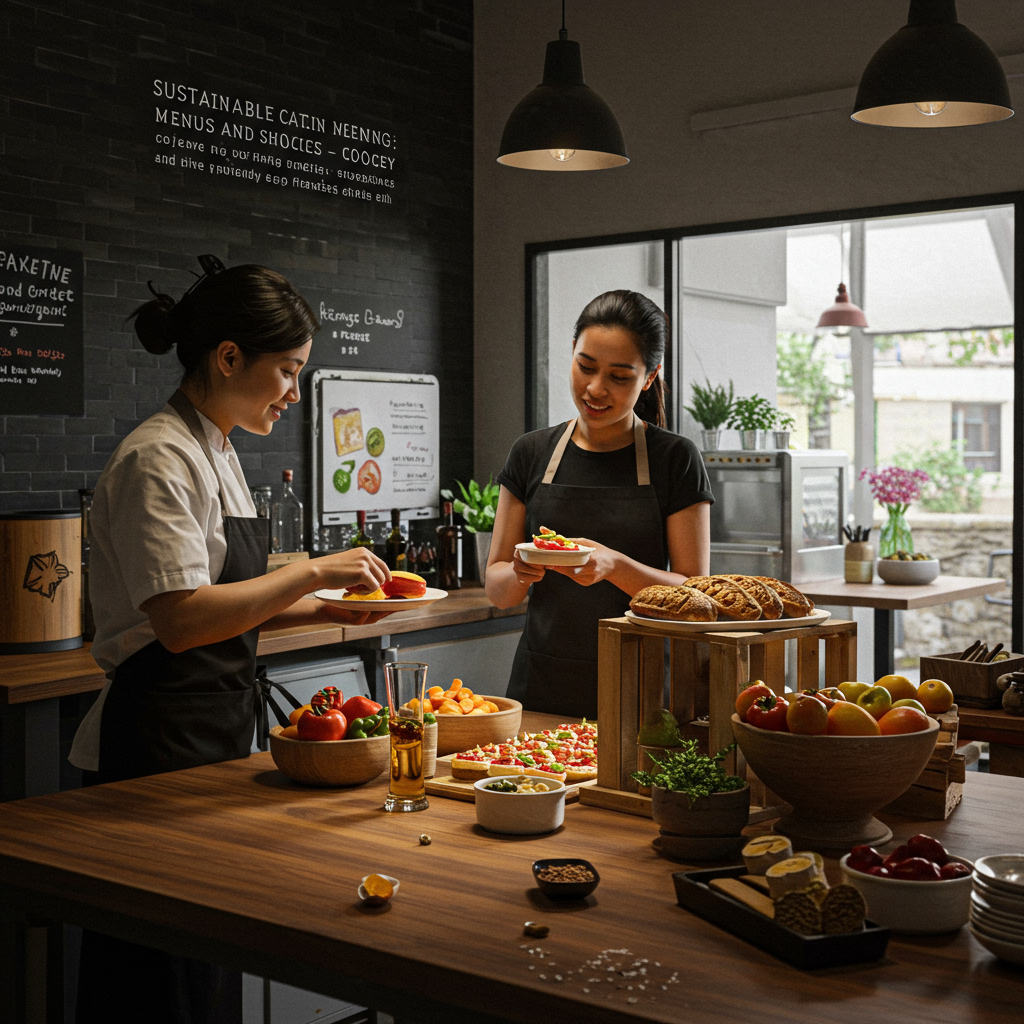
Sustainable Catering: A Complete Guide to Menus, Waste Management, and Supplier Selection
This article offers a comprehensive guide to implementing sustainable catering practices in any food service operation. We address three fundamental pillars: creating low-impact menus, comprehensive waste management, and a rigorous methodology for supplier selection. The content is aimed at catering managers, event planners, chefs, and hospitality professionals who seek not only to improve their environmental footprint but also to generate tangible added value.
Through detailed processes, checklists, and case studies, we will demonstrate how these practices can reduce operating costs by up to 15%, decrease food waste by more than 30%, and improve the Net Promoter Score (NPS) by more than 10 points. The value proposition lies in a practical, data-driven approach to making sustainability a driver of profitability and reputation.
Introduction
In the hospitality and events sector, the demand for environmental and social responsibility has gone from being a trend to a business imperative. Clients, both corporate and private, are increasingly evaluating their suppliers based on their commitment to the planet. In this context, the adoption of sustainable catering practices not only responds to an ethical requirement but also positions itself as a decisive competitive advantage. Implementing a sustainable catering model involves a holistic review of the value chain: from the origin of the ingredients and menu design to resource management during service and post-event waste disposal. This comprehensive approach allows for cost optimization, strengthens brand image, and creates memorable and meaningful dining experiences.
The methodology presented in this document is based on a continuous improvement cycle: Measure, Analyze, Implement, and Verify. Emphasis will be placed on quantifying results through specific Key Performance Indicators (KPIs), such as the percentage reduction in carbon footprint per cover, the landfill waste diversion rate (expressed as a percentage), the cost per kilogram of food wasted, and the Net Promoter Score (NPS) associated with sustainability initiatives. Through practical guides and real-world case studies, we will demonstrate that sustainability is a profitable and strategic path for the future of the sector.
Vision, values, and proposal
Focus on results and measurement
Our vision is a catering sector where operational excellence and environmental responsibility are inseparable. The values that guide this vision are transparency, innovation, and local impact. We apply the Pareto principle (80/20) to prioritize actions with the greatest transformative potential: reducing food waste and optimizing the supply chain typically account for 80% of the positive impact with only 20% of the initial effort. Our value proposition focuses on transforming catering operations into resilient, efficient business models aligned with current market expectations. We adhere to recognized standards such as the ISO 14001 guidelines for environmental management and the UN Sustainable Development Goals (SDGs), especially SDG 12 (Responsible Consumption and Production).
Quality Criterion: Every key supplier must pass a sustainability audit with a minimum score of 85 out of 100 on our assessment matrix.
Decision Matrix for Initiatives: New practices are evaluated on an axis of “Environmental/Social Impact” vs. “Complexity/Cost of Implementation.” Only those in the high-impact and low/medium complexity quadrant are prioritized.
- Transparency Value: Quarterly publication of a sustainability report with key KPIs (e.g., kg of CO₂e per event, % of waste recycled/composted) for clients and employees.
- Focus on Local Impact: Goal of sourcing at least 60% of ingredient spending from producers within a 150 km radius, strengthening the local economy and ensuring freshness.
Services, Profiles, and Performance
Portfolio and Professional Profiles
To effectively implement sustainable catering practices, we offer a portfolio of services that covers all operations. This includes consulting for the design of seasonal and low-impact menus, conducting waste and energy efficiency audits, developing a network of verified sustainable suppliers, and planning and executing zero-waste events. These services are carried out by specialized professionals such as the Sustainability Coordinator, responsible for strategy and KPI monitoring; the Executive Chef specializing in circular gastronomy, who is an expert in root-to-stem resource utilization techniques; and the Green Logistics Specialist, who optimizes transport routes and manages low-emission fleets.
Operational Process
- Phase 1: Diagnosis and Planning (Weeks 1-2): Initial audit of current operations. Waste flows, energy consumption, and supplier profiles are measured. KPI: Establishment of a measurable baseline for at least 5 key indicators (e.g., kg of waste per diner).Phase 2: Strategy Design (Weeks 3-4): Co-creation of an action plan with SMART objectives (Specific, Measurable, Achievable, Relevant, Time-bound). KPI: Approval of a plan projecting a 20% reduction in food waste within 6 months.
Phase 3: Implementation and Training (Weeks 5-12): Deployment of new practices, such as the introduction of cyclical menus and training for kitchen and front-of-house staff. KPI: 95% of staff complete waste separation training.
Phase 4: Execution and Monitoring (Ongoing): Application of the new protocols at every event. KPIs are continuously monitored. KPI: Deviation of less than 10% from monthly targets.
Phase 5: Reporting and Optimization (Quarterly): Analysis of collected data, presentation of impact reports, and adjustment of the strategy. KPI: Identification of 3 new areas for improvement in each review cycle.
Tables and examples
Reduce food consumption from 250g/person to 187.5g/person; achieve a 150% ROI on investment through savings in purchasing.Increase local sourcing to 70% of food spending.Allocate a percentage of the purchasing budget to local suppliers (within 150 km).Develop a database of local producers; adjust menus to regional seasonality; sign long-term agreements.Improve product freshness (NPS +5 points); 40% reduction in the carbon footprint of transportation.Eliminate single-use plastics in service.Number of disposable plastic items per event.Replace with reusable, compostable (PLA, palm leaf), or bamboo tableware; install filtered water stations.Zero plastic waste sent to landfill; improved brand perception among corporate clients with CSR policies.
| Objective | Indicators | Actions | Expected result |
|---|---|---|---|
| Reduce food waste by 25% in 12 months. | Kg of organic waste per diner; % of ingredients used. | Implement “root-to-stem” menus; adjust portions based on historical data; Donate surplus food to food banks. |

Representation, Campaigns and/or Production
Professional Development and Management
Executing a sustainable catering event requires impeccable logistical coordination that extends far beyond the kitchen. It involves managing a complex supply chain and planning every detail to minimize environmental impact. This includes obtaining necessary certifications, such as permits for on-site composting or agreements with specialized recycling cooperatives. Coordination with suppliers is crucial: contracts must include specific clauses regarding packaging type (returnable or compostable), delivery schedules to optimize routes, and clear contingency plans for seasonal product variability. Developing a detailed implementation schedule, from planting certain products with partner farmers to the post-event sustainability report, is fundamental to ensuring the model’s consistency and success.
Documentation Checklist: Organic certifications from suppliers, technical data sheets for biodegradable cleaning products, and licenses for transporting organic waste.
Supply Contingency Plans: List of at least three validated alternative suppliers for each critical ingredient category (e.g., vegetables, proteins).
Transportation Protocol: Route planning to consolidate deliveries and pickups, prioritizing electric or low-emission vehicles. Objective: Reduce kilometers traveled by 20%.
Event Staff Management: Specific training (“green briefing”) before each service, detailing waste separation points, how to communicate the story behind the dishes to diners, and water and energy saving protocols.
Coordination with the Client and Venue: Pre-event meeting to align the venue’s sustainability policies (e.g., energy efficiency, water management) with those of the catering service.
Figure

A well-designed logistics flow is the backbone of a sustainable event, minimizing operational risks and ensuring that sustainability principles are applied at every stage.
Content and/or Media that Convert
Messages, Formats, and Conversions
Effective communication is key to capitalizing on sustainable catering practices. It’s not enough to be sustainable; you have to know how to tell the story. Messages must be authentic, transparent, and value-driven. Effective hooks include narratives about local producers (“The story behind our tomatoes”), quantified impact data (“This menu saved 2,000 liters of water”), and a focus on the sensory experience (“Savor the freshness of what’s just been harvested”). Calls to action (CTAs) should be clear, such as “Request a proposal for your zero-impact event” or “Download our guide to planning a sustainable wedding.” We conduct A/B testing on our digital communications to optimize conversion rates. For example, we test whether a message focused on cost savings performs better than one focused on environmental impact for different customer segments. Key conversion metrics include the rate of quote requests through the website, the open rate of themed newsletters, and engagement on posts highlighting our sustainability achievements.
Sustainable Content Production Workflow
- Story Identification (Sustainability and Marketing Team): Monthly meeting to identify milestones, achievements, or new partnerships (e.g., a new Fairtrade coffee supplier, a record waste reduction).
- Asset Creation (Photographer/Videographer): Planning sessions to capture high-quality images and videos that illustrate the story: farm visits, kitchen processes, setting up recycling stations at events.
- Writing and Design (Copywriter and Graphic Designer): Developing copy for blogs, social media, case studies, and sales materials. Creation of infographics with impactful data and engaging visual designs.
- Multichannel Distribution (Digital Marketing Manager): Coordinated publication across the blog, LinkedIn, Instagram, and newsletters. The format is adapted to each channel (e.g., carousel on Instagram, white paper on LinkedIn).
- Analysis and Reporting (Data Analyst): Measurement of content performance after 30 days: reach, engagement, website clicks, and conversions (leads generated). Use of this data to refine the strategy for the following month.

Training and Employability
Demand-Driven Catalogue
To ensure the correct implementation and scalability of sustainable catering practices, it is essential to have a well-trained and motivated team. We have developed a catalogue of internal and external training designed to meet the needs of the current and future job market in the sustainable hospitality sector.
- Module 1: Fundamentals of Sustainability in Hospitality. Key concepts: circular economy, carbon footprint, water footprint, SDGs. Aimed at all staff.
- Module 2: Circular Gastronomy and Waste Reduction. “Root-to-stem” and “nose-to-tail” cooking techniques, preservation methods, waste calculation and monitoring. Aimed at kitchen staff.
- Module 3: Sustainable Purchasing and Sourcing. Supplier selection criteria, negotiation of sustainability clauses, certification, and traceability. Aimed at the purchasing team and chefs.
- Module 4: Communicating and Selling Sustainability. Storytelling techniques, sales pitches, handling objections, and communication at the point of service. Aimed at front-of-house, sales, and marketing staff.
- Module 5: Operational Management of Low-Impact Events. Green logistics, on-site waste management, impact measurement, and post-event reporting. Aimed at operations managers and event managers.
Methodology
Our training methodology is eminently practical (“learning by doing”). Assessments are carried out using rubrics that measure specific competencies, such as a chef’s ability to design a zero-waste menu from a basket of surprise ingredients. We encourage internships at partner companies and maintain an active job bank with profiles specializing in sustainability. The expected results are clear: a 15% reduction in operational errors related to waste management in the first 3 months after training, and a 10% increase in mentions of sustainability aspects in positive customer reviews.
Operational Processes and Quality Standards
From Request to Execution
A standardized process is vital to ensuring consistent quality and flawless execution of sustainable catering practices. Our operational pipeline is designed to integrate sustainability at every customer touchpoint.
- Diagnosis (Initial Contact): Upon receiving a request, an initial questionnaire is administered to understand the customer’s sustainability goals. Deliverable: Customer Requirements Sheet. Acceptance Criteria: Clear understanding of expectations and budget.Proposal (Days 2-5): 2-3 menu options are developed with estimates of their carbon and water footprints. Waste management measures are detailed. Deliverable: Detailed Commercial Proposal. Acceptance Criteria: Proposal approved and signed by the client.
Pre-production (Weeks prior): Confirmation of suppliers, logistical planning, and design of the waste management plan for the event. Deliverable: Event Operational Dossier. Acceptance Criteria: All suppliers confirmed and 100% of necessary materials in stock or with guaranteed delivery.
Execution (Day of the event): Setup, service, and teardown following sustainability protocols. Active supervision by the Sustainability Coordinator. Deliverable: Event completed. Acceptance Criteria: Completion of at least 95% of the items on the operational checklist.
Closure and Reporting (Follow Week): Data collection (waste, consumption), results analysis, and preparation of an impact report for the client. Deliverable: Event Sustainability Report. Acceptance Criteria: Report delivered and feedback meeting with the client completed.
Quality Control
Quality control is ensured through a system of defined roles and checkpoints at each stage. The Executive Chef approves all menus, the Head of Purchasing validates each supplier, and the Sustainability Coordinator has the authority to stop any process that does not meet the established standards. The acceptance indicators are strict and are defined in internal and client Service Level Agreements (SLAs).- Roles: Sustainability Coordinator (final responsibility), Executive Chef (culinary quality and resource utilization), Head of Operations (logistics and personnel).
- Escalation: Any deviation >10% from a target KPI is immediately escalated to the Sustainability Coordinator for corrective action.
- Acceptance Indicators: Composted/recycled waste rate >90%; 100% compliance in the elimination of single-use plastics; customer satisfaction score >8.5/10.
- SLAs: Guarantee that at least 80% of fruits and vegetables will be seasonal and locally sourced (<150 km). Response time to a quality incident during the event: <15 minutes.
Mitigation: Initial educational session on what is feasible within your budget.ProposalCommercial Proposal with Impact MetricsProposal conversion rate; qualitative client feedback.Risk: Perceived cost is too high. Mitigation: Present the long-term ROI and intangible benefits (brand).Pre-productionEvent Operational Dossier100% supplier confirmation 2 weeks prior; 0% stock issues.Risk: Failure of a key supplier. Mitigation: Maintain a list of pre-validated backup providers.
Quality Control Table by Operational Phases Phase Deliverables Control Indicators Risks and Mitigation Diagnosis Customer Requirements Sheet Clarity of sustainability objectives (scale of 1 to 5). Risk: Unrealistic customer expectations. Implementation Live Monitoring Checklist On-site Audit Score (>95%); number of incidents reported. Risk: Cross-contamination in waste separation. Mitigation: Clearly marked waste stations and dedicated staff to supervise them. Closure Sustainability Report Data Accuracy; % deviation between projected and actual (<10%). Risk: Inaccurate waste data. Mitigation: Use of calibrated scales and a standardized weighing protocol.
Application Cases and Scenarios
Case 1: Annual Corporate Gala (Client: Technology Company, 600 guests)
The challenge was to organize a high-level gala dinner that reflected the client’s values of innovation and social responsibility. The goal was to achieve a “carbon-neutral” event with minimal food waste. The planning period was 4 months. A 5-course tasting menu, predominantly vegetarian, was designed using ingredients from hyperlocal producers (within a 50 km radius). An online pre-ordering system was implemented for guests to confirm their attendance and main course selection, allowing for 98% accurate production adjustments. During the event, 10 waste separation stations were set up, managed by trained staff. All unserved food (approximately 30 kg) was donated to a local soup kitchen through a strategic partnership. The results were exceptional: a 40% reduction in carbon footprint was achieved compared to the previous year’s gala, food waste per guest was only 72 grams (compared to an industry average of 250 g), and the event’s NPS reached 9.5, with 60% of comments positively mentioning the sustainable initiative. ROI was measured in terms of positive media coverage, valued at over €20,000.
Case 2: Wedding at a Rustic Estate (180 guests)
The couple wanted an “eco-chic” celebration that was elegant yet respectful of the estate’s natural environment. The main KPI was to achieve a zero-waste-to-landfill event. A market-style menu was used, with live cooking stations that prepared food to order, drastically reducing overproduction. 100% of the tableware, glassware, and cutlery was reusable. Linen and recycled wood were used for serving items such as napkins and coasters. Plastic water bottles were completely eliminated, replaced with dispensers of water infused with seasonal fruits. All organic waste (150 kg) was composted on-site for use as fertilizer. The result was a complete success: 99% of the waste generated was diverted from the landfill. The cost per guest was 5% lower than that of a similar-sized traditional wedding thanks to savings in waste management and direct purchases from producers. The experience generated high engagement on social media, serving as a powerful success story for attracting new partners.
Case 3: Office Catering Contract (Daily Service, 250 Employees)
A company sought to improve employee well-being and meet its CSR objectives through its daily cafeteria service. The challenge was to implement a gradual but steady shift towards sustainability without disrupting service. It began with a comprehensive waste audit and a satisfaction survey. The action plan was developed over the course of a year. In the first quarter, “Meatless Mondays” were introduced and portion sizes were optimized. In the second quarter, the waste management system was redesigned and a composting system was installed. In the third quarter, 50% of purchases were made from local and eco-friendly suppliers. In the fourth quarter, an internal communication campaign was launched to educate employees. After 12 months, food waste was reduced by 42%, red meat consumption decreased by 30%, and employee satisfaction with the cafeteria service increased by 25 percentage points. The net savings in procurement and waste management costs was €2,500 per month.
Case 4: Music Festival (Management of 25 food stalls, 15,000 attendees/day)
The organizer of a large music festival hired us to develop and implement a food sustainability strategy for all food vendors. The goal was to reduce the overall environmental impact of the event. We created a mandatory “Sustainable Vendor Manual,” which included requirements such as: a total ban on single-use plastics, an obligation to offer at least two vegetarian/vegan options, and participation in the centralized waste management program. We conducted training workshops for all vendors before the event. During the festival, a team of “green patrols” audited compliance and helped attendees properly separate their waste. Three tons of organic waste were managed for composting, and the use of more than 100,000 plastic containers was avoided. The festival received a sustainable event certification and significantly improved its reputation, attracting sponsors aligned with these values.
Step-by-step guides and templates
Guide 1: How to Conduct a Food Waste Audit in 10 Steps
- Define the Scope: Decide what you are going to measure. Just cooking, or also what comes back on the plates (customer waste)? During a service, a day, a week? To begin, a week is a good reference period.Train the Team: Gather your kitchen and front-of-house staff. Explain the purpose of the audit (to improve, not to blame) and how the process will be carried out. Asigna un responsable.
- Preparar las Estaciones de Medición: Habilita un espacio con contenedores claramente etiquetados para cada tipo de residuo: Pre-preparación (pieles, recortes), Producción (quemado, derrames), Sobreproducción (comida no servida) y Plato (lo que deja el cliente).
- Conseguir el Equipo: Necesitarás una báscula digital precisa, los contenedores, guantes y hojas de registro o una tablet con una hoja de cálculo.
- Iniciar la Medición: Durante el periodo definido, todo residuo alimentario debe ser clasificado en su contenedor correspondiente antes de ser desechado.
- Pesar y Registrar: Al final de cada turno o día, pesa el contenido de cada contenedor. Anota el peso, la fecha y el tipo de residuo. Es útil registrar también el número de comensales de ese día.
- Analizar los Datos: Al final del periodo, suma los totales. Calcula el desperdicio total y el desperdicio por comensal (total kg / total comensales). Identifica cuál es la principal fuente de desperdicio (p. ej., el 60 % viene de la sobreproducción).
- Identificar las Causas Raíz: Organiza una reunión de equipo para discutir los resultados. ¿Por qué hay tanta sobreproducción? ¿Las porciones son demasiado grandes? ¿Hay algún ingrediente que se estropea siempre?
- Crear un Plan de Acción: Define 3-5 acciones específicas para atajar las principales causas. Por ejemplo: “Reducir el tamaño de la guarnición de patatas en un 15 %”, “Hacer un inventario diario de productos frescos”.
- Medir de Nuevo: Después de implementar los cambios durante uno o dos meses, repite la auditoría para medir el progreso y celebrar los éxitos.
Guía 2: Plantilla de Evaluación de Proveedores Sostenibles
Utiliza un sistema de puntuación (p. ej., de 1 a 5) para cada criterio y establece un umbral mínimo para aceptar a un proveedor.
- Certificaciones: ¿Posee sellos reconocidos (ecológico, comercio justo, bienestar animal)? (Ponderación: 25 %)
- Proximidad Geográfica: ¿A qué distancia se encuentra? Menos distancia, más puntos. (Ponderación: 20 %)
- Prácticas de Embalaje: ¿Utiliza embalajes reciclados, reciclables, retornables o a granel? ¿Evita el plástico? (Ponderación: 20 %)
- Transparencia y Trazabilidad: ¿Puede proporcionar información clara sobre el origen y los métodos de producción de sus productos? (Ponderación: 15 %)
- Impacto Social: ¿Es una cooperativa, una empresa familiar o tiene políticas de contratación inclusiva? (Ponderación: 10 %)
- Calidad y Consistencia del Producto: La sostenibilidad no puede comprometer la calidad. (Ponderación: 10 %)
Guía 3: Checklist para Diseñar un Menú de Bajo Impacto
- Base Vegetal: ¿Al menos el 50 % de los platos del menú son vegetarianos o veganos?
- Estacionalidad: ¿Todos los ingredientes principales están en su temporada óptima en nuestra región?
- Proximidad: ¿Hemos priorizado ingredientes de productores locales (<150 km)?
- Aprovechamiento Integral: ¿El diseño del menú permite usar todas las partes de los ingredientes (p. ej., las hojas de zanahoria para un pesto, los huesos para un caldo)?
- Proteínas de Bajo Impacto: Si hay carne, ¿hemos priorizado aves o cerdo sobre la ternera? ¿Ofrecemos legumbres y otras fuentes de proteína vegetal?
- Flexibilidad Incorporada: ¿El menú tiene variantes sencillas para adaptarse a la disponibilidad real del mercado sin alterar la estructura?
- Control de Porciones: ¿Hemos analizado datos históricos para definir tamaños de porción que satisfagan sin generar un exceso de sobras en el plato?
- Historia Comunicable: ¿Cada plato tiene una historia interesante que contar sobre su origen o su diseño sostenible?
Recursos internos y externos (sin enlaces)
Recursos internos
- Plantilla de Hoja de Registro para Auditoría de Residuos
- Cuestionario de Evaluación de Sostenibilidad para Proveedores
- Manual de Buenas Prácticas Sostenibles para el Personal de Cocina y Sala
- Checklist de Sostenibilidad para la Planificación de Eventos
- Catálogo de Proveedores Locales y Sostenibles Verificados
Recursos externos de referencia
-
- Guía de la FAO para la Reducción del Desperdicio de Alimentos en el Sector HORECA
- Normativa de la Unión Europea sobre Etiquetado Ecológico (Eurohoja)
– Principios y Guías de la Red de Soluciones para el Desarrollo Sostenible (SDSN)
- Estándares de la Certificación B Corp para Empresas con Impacto Positivo
- Publicaciones del World Resources Institute sobre Alimentación Sostenible
Preguntas frecuentes
¿Implementar prácticas de catering sostenible es más caro?
Existe la percepción de que la sostenibilidad es más cara, pero es una visión a corto plazo. Si bien algunos productos ecológicos o de comercio justo pueden tener un coste de adquisición mayor, el enfoque integral de las sustainable catering practices genera ahorros significativos en otras áreas. La reducción del desperdicio alimentario, por ejemplo, disminuye directamente los costes de compra de materias primas y de gestión de residuos. La eficiencia energética en la cocina reduce las facturas de suministros. A medio y largo plazo, la mayoría de las empresas experimentan una reducción neta de los costes operativos, con un ROI demostrable.
¿Cómo se gestionan las restricciones alimentarias en un menú sostenible?
La gestión de alergias y restricciones alimentarias es perfectamente compatible y, de hecho, se ve facilitada por un enfoque sostenible. Los menús que priorizan los vegetales y las materias primas frescas y sin procesar son naturalmente más versátiles y a menudo libres de muchos alérgenos comunes. La relación directa con productores locales permite una trazabilidad total, lo que ofrece una mayor seguridad. Un buen chef especializado en sostenibilidad sabe cómo crear platos deliciosos y seguros para celíacos, veganos o personas con alergias, utilizando ingredientes creativos y de temporada.
¿Cuál es la acción más impactante que un servicio de catering puede tomar para empezar?
Si tuviera que elegir una sola acción, sería centrarse obsesivamente en medir y reducir el desperdicio alimentario. Es el área con el mayor potencial de triple impacto: económico (ahorro en compras y residuos), social (posibilidad de donar excedentes) y ambiental (reducción de emisiones de metano en vertederos y de la presión sobre los recursos). Realizar una primera auditoría de residuos, como la descrita en nuestras guías, es un primer paso revelador y transformador.
¿Cómo puedo convencer a mis clientes de que elijan la opción de catering sostenible?
La clave es comunicar el valor, no solo los valores. En lugar de hablar únicamente de “salvar el planeta”, enfócate en los beneficios directos para el cliente. Para clientes corporativos, destaca cómo un evento sostenible refuerza su imagen de marca, cumple con sus metas de RSC y genera contenido positivo para sus comunicaciones. Para clientes privados, como en bodas, subraya la calidad superior y la frescura de los ingredientes locales, la experiencia única y memorable que ofrece un menú con historia, y la sensación de celebrar de una manera coherente con sus principios.
¿Qué se hace exactamente con la comida que sobra después de un evento?
Se aplica una jerarquía estricta. La prioridad número uno es no generar sobras gracias a una buena planificación. Si aun así hay excedentes, la jerarquía es la siguiente: 1) Reprocesar creativamente en la cocina para otros usos (p. ej., convertir pan sobrante en crutones o budín). 2) Donar a personas: la comida no servida que ha mantenido la cadena de frío se entrega a bancos de alimentos o comedores sociales. 3) Alimentación animal: ciertos residuos orgánicos se destinan a granjas locales. 4) Compostaje: es la última opción para los restos orgánicos, convirtiéndolos en abono para la agricultura. El objetivo es que nada termine en el vertedero.
Conclusión y llamada a la acción
La transición hacia un modelo de catering sostenible es una de las transformaciones más significativas y estratégicas que puede emprender un negocio en el sector de la hostelería actual. Lejos de ser un coste o un obstáculo, la adopción de sustainable catering practices se revela como un motor de eficiencia, innovación y diferenciación. Como hemos detallado, un enfoque sistemático en la selección de menús, la gestión de residuos y la elección de proveedores puede llevar a reducciones de costes de hasta el 15 %, una disminución del desperdicio alimentario superior al 30 % y un incremento notable en la lealtad y satisfacción del cliente. Estos no son solo números, son indicadores de un negocio más resiliente, rentable y relevante. El camino hacia la sostenibilidad comienza con un primer paso. Te invitamos a utilizar las guías y plantillas de este artículo para realizar una autoevaluación de tus operaciones. Empieza por algo manejable, como una auditoría de residuos de un día. Los resultados te sorprenderán y te proporcionarán la motivación y los datos necesarios para iniciar un cambio profundo y duradero.
Glosario
- Catering Sostenible
- Servicio de restauración que busca minimizar su impacto ambiental y maximizar su impacto social positivo en toda su cadena de valor, desde la compra de ingredientes hasta la gestión de residuos.
- Huella de Carbono
- La totalidad de gases de efecto invernadero (GEI) emitidos por efecto directo o indirecto de un individuo, organización, evento o producto. En catering, se mide a menudo en kg de CO₂ equivalente por comensal.
- Economía Circular
- Modelo de producción y consumo que implica compartir, alquilar, reutilizar, reparar, renovar y reciclar materiales y productos existentes todas las veces que sea posible para crear un valor añadido y extender su ciclo de vida.
- Sourcing Local
- Práctica de adquirir bienes y servicios de proveedores situados en un radio geográfico cercano (generalmente entre 100 y 250 km) para reducir la huella de carbono del transporte y apoyar la economía local.
- Upcycling (de alimentos)
- También conocido como supra-reciclaje, es el proceso de transformar subproductos, residuos o ingredientes no deseados en nuevos productos de mayor calidad o valor gastronómico. Por ejemplo, usar cáscaras de cítricos para hacer licores o mermeladas.
- Desperdicio Alimentario
- Se refiere a la comida que se descarta a lo largo de toda la cadena de suministro, desde la producción agrícola hasta el consumo final en el hogar o restaurante. Se distingue de la “pérdida de alimentos” que ocurre en las fases iniciales (producción, post-cosecha).
Internal links
- Click here👉 https://uk.esinev.education/masters/
- Click here👉 https://uk.esinev.education/diplomates/
External links
- Princeton University: https://www.princeton.edu
- Massachusetts Institute of Technology (MIT): https://www.mit.edu
- Harvard University: https://www.harvard.edu
- Stanford University: https://www.stanford.edu
- University of Pennsylvania: https://www.upenn.edu