
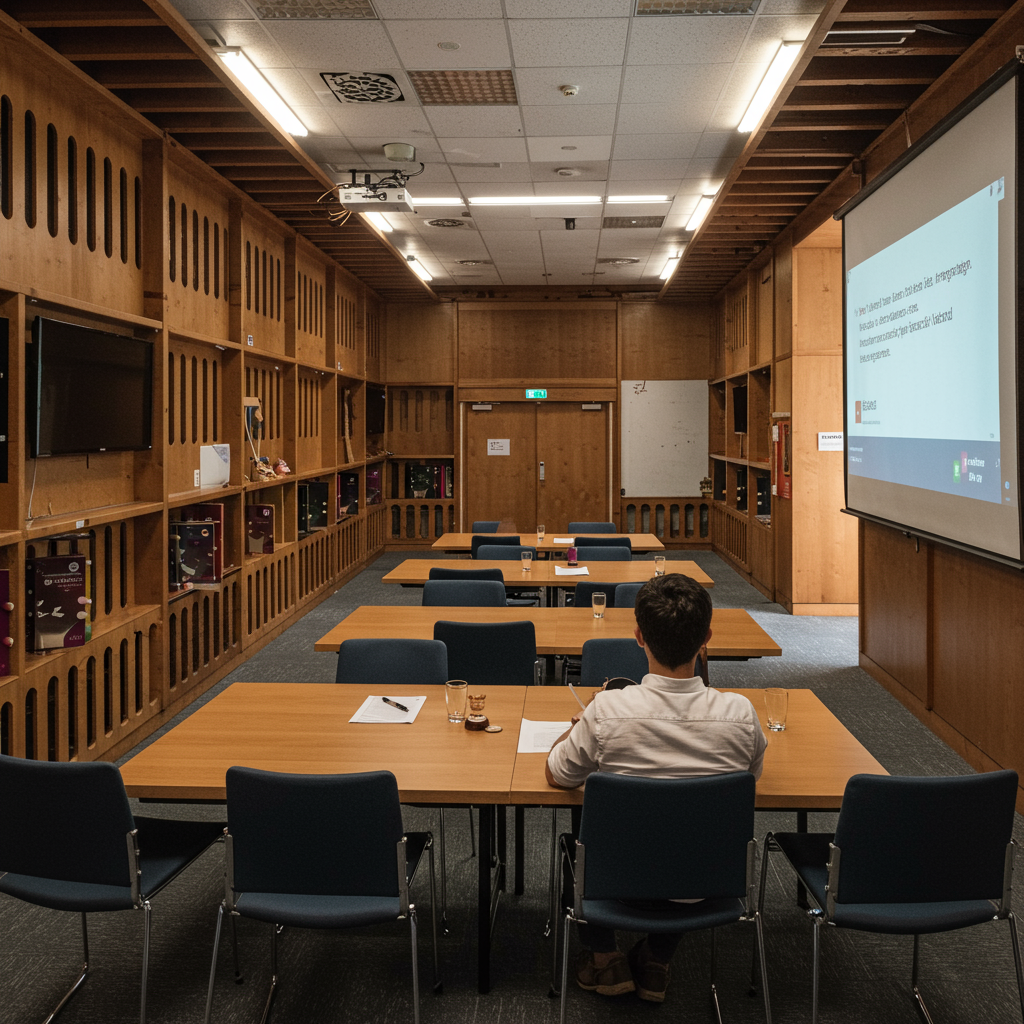
University Conference Venues: A Complete Guide to Pros, Cons, and Pricing
Choosing a venue is one of the most critical factors in the success of any conference. University campuses are emerging as a powerful alternative to traditional hotels and convention centers, offering a unique blend of academic prestige, advanced technological infrastructure, and excellent value. This definitive guide is designed for event organizers, marketing directors, and conference managers looking to optimize their resources and elevate the attendee experience. Through a detailed analysis of pros, cons, and pricing models, this document provides a practical framework. We will explore fundamental KPIs such as Cost Per Attendee, Net Promoter Score (NPS) for the event, and Return on Investment (ROI), offering templates, checklists, and case studies to facilitate informed and strategic decision-making.
Introduction
In an increasingly saturated and competitive events market, differentiation is key. Organizations are constantly looking for venues that not only meet logistical requirements but also provide tangible added value. University campuses, often underutilized for corporate events, represent a significant strategic opportunity. They offer an environment of innovation and knowledge, access to cutting-edge technology, and a cost structure that can be considerably more favorable than commercial options. This university conference venues guide has been created to demystify the process of selecting and contracting these spaces, providing a clear roadmap from initial evaluation to post-event execution. The goal is to empower organizers to make data-driven decisions, aligning venue selection with the conference’s strategic objectives.
Our methodology is based on a comprehensive approach that combines qualitative and quantitative analysis. We will evaluate venues not only for their capacity or location, but also for their impact on the event’s brand perception and the attendee experience. We will measure success through a set of Key Performance Indicators (KPIs) such as cost reduction per square meter (with a target savings of 15-30% compared to traditional venues), budget variance (target <5%), the event’s Net Promoter Score (NPS) (target >40), and Return on Investment (ROI) for sponsors.
This approach ensures that choosing a university venue is a strategic lever for the overall success of the event.
Vision, values, and proposition
Focus on results and measurement
The value proposition of university venues transcends the mere rental of a physical space. It is based on alignment with values of excellence, innovation, and intellectual rigor. By choosing a campus, an event is intrinsically associated with the brand and prestige of the academic institution, which can raise its profile and attract a higher-quality audience. Our approach follows the Pareto principle (80/20): we focus on the 20% of factors that generate 80% of the value. These factors include the quality of the technological infrastructure (high-density Wi-Fi, integrated AV equipment), the prestige of the institution, accessibility, and complementary services (libraries, green spaces, sports facilities). We prioritize functionality and strategic impact over superfluous luxuries, ensuring that every euro invested contributes directly to the event’s objectives.
-
- Quality Criteria: All recommended venues must meet minimum technical standards, including internet connectivity of at least 1 Gbps, climate control systems with CO₂ regulation, and compliance with universal accessibility standards (UNE 170001).
- Strategic Decision Matrix: We use a weighted matrix to evaluate candidate venues, assigning scores to key criteria:
-
- Total Cost (weighting: 30%)
- Brand Prestige and Alignment (weighting: 20%)
- Technology and AV Infrastructure (weighting: 20%)
- Space Capacity and Flexibility (weighting: 15%)
Location and accessibility (weighting: 10%)
-
Support and catering services (weighting: 5%)
Added Value: We actively seek opportunities for collaboration with the university, such as the participation of academics as speakers, the involvement of students as qualified volunteers, or access to laboratories and research centers for demonstrations, thus enriching the event’s content.
Services, profiles, and performance
Portfolio and professional profiles
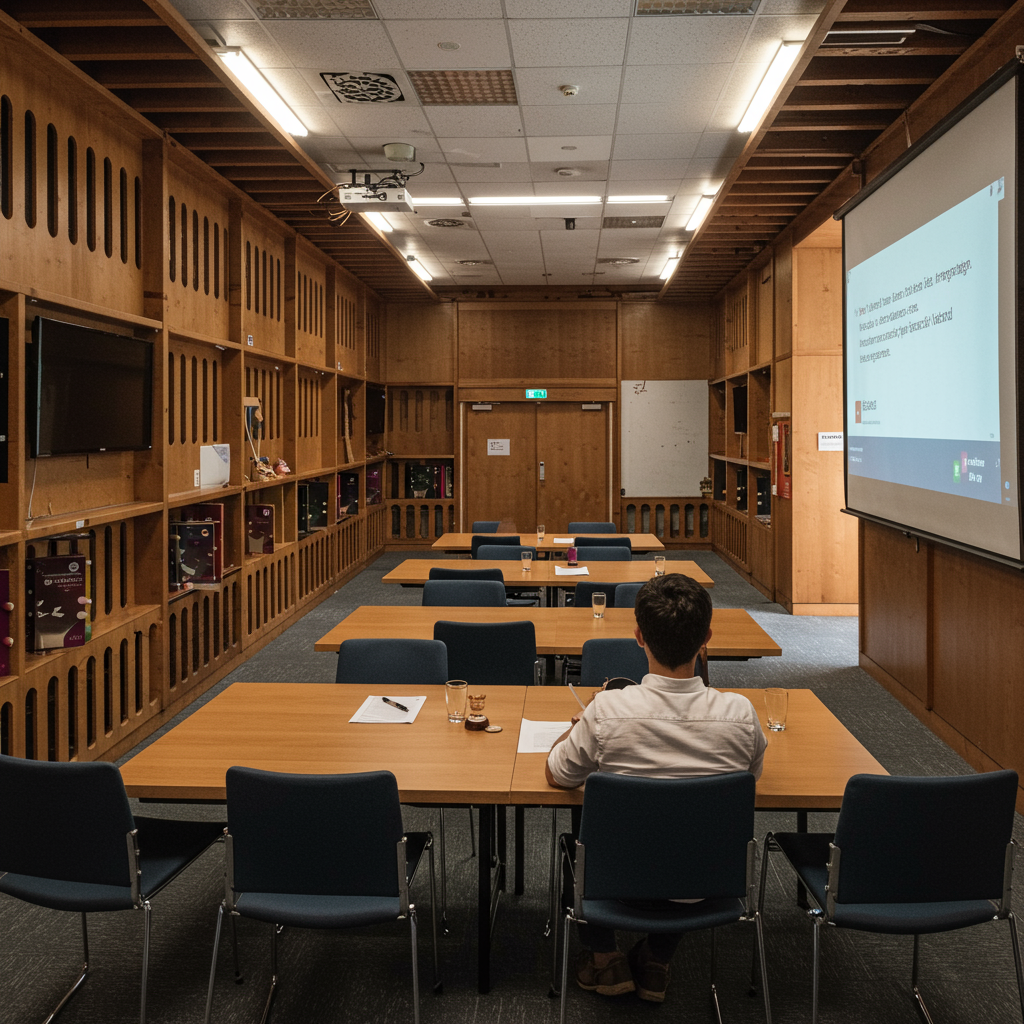
The portfolio of spaces on a university campus is incredibly diverse, far exceeding the standard offering of a hotel. This guide to university venues for conferences covers the management and selection of a wide range of venues. This includes everything from large lecture halls and auditoriums with capacity for over 1,000 people, equipped with state-of-the-art projection systems and professional acoustics, to seminar rooms for interactive workshops, laboratories equipped for technical demonstrations, and even unique spaces such as historic cloisters or modern science parks for receptions and networking. The management team is composed of specialized profiles: the university Venue Manager, who acts as the main point of contact; the AV Technical Coordinator, responsible for all audiovisual infrastructure; and the Campus Services Manager, who coordinates catering, security, and cleaning.
Operational Process
Requirements Analysis (Phase 1): Initial meeting to define the scope, objectives, budget, and technical needs of the event. KPI: Requirements form completed with 98% detail by the first meeting.
- Pre-selection and Technical Visit (Phase 2): Identification of 2-3 campuses that meet the criteria. Coordination of on-site visits to evaluate spaces, logistics, and infrastructure. KPI: Technical visit report with a checklist of more than 50 points completed per campus.
- Proposal and Negotiation (Phase 3): Request for detailed proposals (RFP) and negotiation of service packages. The goal is to obtain a fixed package that includes space, basic AV, Wi-Fi, and support. KPI: Proposal received within 7 business days; negotiation of a volume discount > 10%.
- Planning and Execution (Phase 4): Development of the production plan, schedules, coordination with suppliers and university staff. KPI: Zero critical incidents during setup; 100% of the schedule milestones were met on time.
- Post-Event Evaluation (Phase 5): Gathering attendee feedback (NPS), analyzing budget execution, and preparing a results report. KPI: Satisfaction survey with a response rate > 25%. Final report delivered in <10 business days.
-
Tables and examples
Improve the technology experience (Tech NPS > 50)Tech-specific NPS; Number of Wi-Fi incidentsUtilize the campus’s high-density AV and Wi-Fi infrastructure. Hire a dedicated university technician.Tech satisfaction rating of 9.2/10. Fewer than 5 connectivity incidents reported.Increase value for sponsors (ROI > 200%)Leads generated per sponsor; Access to talentOrganize a job fair with senior students.Facilitate 1-on-1 meetings in faculty offices.Each main sponsor contacted an average of 25 qualified candidates. Average ROI of 225%.
Resource Optimization Table for a 300-Person Conference Objective Indicators Actions Expected result Reduce venue costs by 20% Cost per attendee; Cost per m² Choose a university instead of a centrally located hotel. Negotiate during the academic off-season (July). Savings of €12,000 on the main venue rental. Reduced cost per attendee from €150 to €110. 
This diagram illustrates the operational flow from the initial consultation to the post-event evaluation, highlighting the quality control points and KPIs that guarantee a reduction in costs and time, while maintaining high service quality.

Representation, Campaigns, and/or Production
Professional Development and Management
Producing an event on a university campus requires meticulous management and fluid communication with multiple departments within the institution. Unlike a convention center with a single point of contact, here it is necessary to coordinate with the venues department, the audiovisual services department, security, cleaning, and often, an exclusive catering provider. The logistics of setup and teardown must be planned with military precision to avoid interfering with academic activities. This includes managing access schedules for suppliers, allocating loading docks, and processing internal permits for the installation of signage or temporary structures. A detailed execution schedule, shared and approved by all parties, is the fundamental tool for success.
- Critical Documentation Checklist:
- Space rental agreement signed by the competent university authority.
- Public liability insurance policy with a minimum coverage of €1,000,000.
- Occupational Risk Prevention Plan for all external personnel.
- List and accreditation of all suppliers who will have access to the campus.
- Written approval of the event’s signage and branding plan.
- Contingency Plans:
- Adverse Weather: Have an alternative indoor space pre-reserved for any planned outdoor activities (receptions, coffee breaks).
- AV Technical Failure: Contract with an SLA guaranteeing an on-call technician with a response time of less than 10 minutes. Backup equipment (projector, microphones) available on-site.
- Security Issues: Direct communication protocol with campus security and a specific evacuation plan for the event spaces, communicated to all attendees.

Content and/or Media that Convert
Messages, Formats, and Conversions: Campus Event Marketing
Choosing a university venue is a powerful marketing asset in itself. The main message should revolve around the prestige, innovation, and knowledge environment that the campus offers. Communication hooks can be along the lines of: “Join industry leaders in the same place where future innovators are trained” or “Be inspired in an environment of academic excellence.”
Calls to action (CTAs) should be clear and direct: “Reserve your spot and experience Campus X.” We conduct A/B testing on email marketing campaigns, comparing subject lines that highlight the event content versus those that emphasize the prestigious venue. Conversion metrics, such as open rate and click-through rate (CTR), tell us which message resonates more. Our experience shows that highlighting the venue can increase registration rates by up to 15%.
Ideation and Strategy Phase (Responsible: Marketing Director):
Define the unique value proposition of the event + venue combination.
Create a marketing dossier for sponsors highlighting the benefits of the location.
Content Production (Responsible: Content Manager):
Professional photo and video shoot of the campus spaces.
Creation of a 360° virtual tour of the main venue.
Interviews with a relevant academic from the university on the conference topic.
Dissemination Phase (Responsible: Marketing Specialist):
Digital):
- Launch of a dedicated landing page for the event with a strong visual component showcasing the venue.
- Social media campaign (LinkedIn, Twitter) targeted at professionals, using images of the campus.
- Email marketing to the database, with A/B testing of subject lines.
- Measurement and Optimization (Responsible: Data Analyst):
- Real-time monitoring of conversion rates by channel.
- Adjustment of advertising investment towards the best-performing channels.
- Weekly progress report towards registration goals.

Training and Employability
Demand-Driven Catalog
Event management in academic settings is a specialization with growing demand. We offer specific training modules for professionals who wish to master this niche, as well as collaboration opportunities that foster the employability of students from the host university itself. Involving students not only reduces costs but also enriches their education and brings unique energy and enthusiasm to the event.
Module 1: Strategy and Selection of University Venues. Learn to evaluate and compare campuses using a data-driven decision matrix. Includes contract negotiation and understanding university administrative structures.
Module 2: Campus Logistics and Operations. Master coordinating multiple university departments, managing suppliers in a regulated environment, and planning for campus-specific contingencies.
Module 3: Marketing and Commercialization of Academic Events. How to use the university brand as an asset to attract attendees and sponsors. Communication strategies and content creation.
Module 4: University-Business Integration and Collaboration. Design of volunteer programs, internships, and job fairs that benefit both the event and the student community.
Methodology
Our training methodology is eminently practical. Assessment is carried out using rubrics that evaluate the student’s ability to solve real-world case studies. Internships in the organization of real events on campus are encouraged, providing invaluable experience. We maintain an active job board with opportunities in the event organization sector, boasting an 85% post-training employability rate within the first 6 months. The expected results are professionals capable of autonomously and efficiently managing a medium- to large-scale event at any university campus, optimizing the budget and maximizing the impact.
Operational Processes and Quality Standards
From Request to Execution
A standardized and transparent operational process is fundamental to guaranteeing quality and efficiency. Our service pipeline is designed to minimize uncertainty and maximize control at every stage.
Diagnosis and Feasibility (Week 1):
Activity: Discovery session to understand the objectives, audience, format, and budget.
Deliverable: Event Requirements Document (ERD).
Acceptance Criteria: ERD signed by the client.
Proposal and Selection (Weeks 2-3):
Activity: Shortlist of 3 campuses, Request for Proposals (RFP), technical visits, and comparative analysis.
Deliverable: Comparative report of venues and detailed commercial proposal.
Acceptance Criteria Acceptance: Selection of the final venue and approval of the preliminary budget (maximum expected deviation < 10%).
Pre-production and Planning (Weeks 4-12):
Activity: Contract signing, development of the production plan, master schedule, and contracting of suppliers.
Deliverable: Complete Production Plan, including blueprints, schedules, and risk plan.
Acceptance Criteria: Approval of the plan by the client and the university.
Execution and Control (Day of the Event):
Activity: Setup, on-site coordination, incident management, and supervision of all services.
- Deliverable: The event as planned.
- Acceptance Criteria: 95% completion of the schedule; Incident response SLA < 15 minutes.
Closure and Evaluation (Post-Event Week):
Activity: Dismantling, invoice reconciliation, satisfaction survey, balance sheet meeting.
Deliverable: Final Event Report, including KPI analysis and lessons learned.
Acceptance Criteria: Submission of the report and complete financial closure.
Defined Roles: Each project has an Event Manager as the single point of contact for the client, a Production Lead for the technical aspects, and a University Liaison for the Internal coordination.
Incident Escalation: A three-tiered system (on-site support, production manager, operations director) ensures that any problem is resolved quickly.
Acceptance Indicators: Each deliverable has clear and measurable criteria. For example, the space plans must be approved by both the client and the campus security department.
- Clear SLAs: Service Level Agreements (SLAs) are established in writing for all critical services, especially for AV technical support and internet connectivity.
ClosureFinal Report, Billing ClosedReport delivered in <10 days. Invoices paid in <30 days.Risk: Disputes over additional costs. Mitigation: A written change order system for any expenses not included in the initial budget.
| Phase | Key Deliverables | Control Indicators | Risks and Mitigation |
|---|---|---|---|
| Diagnosis | Event Requirements Document (ERD) | Completed and signed ERD. | Risk: Unclear or changing requirements. Mitigation: Use a comprehensive ERD template and a formal signing process to freeze the initial scope. |
| Pre-production | Production Plan, Contracts signed | 100% Pre-production checklist. Suppliers confirmed 30 days in advance. | Risk: Delays in client decision-making. Mitigation: Establish a timeline with clear decision milestones and automatic reminders. |
| Execution | Live event | Event NPS > 40. Budget variance < 5%. 0 accidents. | Risk: Critical technical failure (e.g., power outage). Mitigation: Contingency plan including backup generators for critical areas and uninterruptible power supplies (UPS) for AV equipment. |
Application Cases and Scenarios
Case 1: International Artificial Intelligence (AI) Conference
Scenario: An international AI association needed to organize its annual conference for 800 experts from around the world. The objectives were threefold: to project a cutting-edge image, to facilitate networking between academia and industry, and to keep registration costs competitive to attract young researchers. The organization timeframe was 12 months.
Solution: The campus of a renowned polytechnic university, known for its computer science department, was selected. The main lecture hall was used for plenary sessions, 15 classrooms were equipped for parallel sessions, and the main hall was used for the exhibition and poster area. Use of the campus’s high-density Wi-Fi network (Eduroam) was arranged, and doctoral students were hired to provide technical support. Accommodation was arranged in the university residence, which was available during the summer.
Results and KPIs:
- Cost per attendee: €350, 25% less than the previous edition held at a convention center (€465).
- NPS: 48. Feedback particularly praised “the inspiring academic atmosphere” and “the impeccable technical organization.”
- ROI for Sponsors: Sponsors (technology companies) reported an average ROI of 280%, thanks to a talent fair that resulted in the hiring of 15 highly qualified engineers.
- Budget Deviation: -1.5% (less was spent than budgeted thanks to the efficient use of university resources).
Case 2: Product Launch for a Fintech Company
Scenario: A fintech startup was planning the launch of its new mobile app. They needed a memorable, technologically flawless event for 200 people (investors, press, and early adopters) that conveyed innovation, but with a very tight budget of €20,000.
Solution: The business school of a modern urban university was chosen. A 250-seat auditorium with an integrated 4K projection and streaming system was rented for one afternoon. Catering was limited to a networking cocktail reception in the school’s courtyard, using a food truck hired by the university, which reduced costs. The event was streamed live on YouTube using the university’s fiber optic connection.
Results and KPIs:
- Total Cost: €18,500, meeting the budget.
- Media Coverage: The event generated 25 articles in specialized media, with an equivalent advertising value (EAV) of €75,000.
- Lead Generation: Data was captured from 180 of the 200 attendees, and the live stream generated 5,000 views and 1,200 new subscribers to the company’s channel.
- Adoption Rate: 40% of attendees downloaded and registered on the app during the event.
Case 3: National Meeting of a Franchise Network
Scenario: A network of 120 retail franchises needed to hold its annual meeting for 250 store managers. The two-day event required a plenary session, eight rooms for simultaneous workshops, and a gala dinner. The objective was to foster training and team building in an environment away from the daily routine.
Solution: A university campus located on the outskirts of a city, with ample green spaces and good sports facilities, was chosen. The event was scheduled during a school break. The auditorium was used for the plenary session, and classrooms in the teacher training building were used for the workshops. The gala dinner was held in the historic cloister of the rectorate, creating a unique atmosphere. A team sports competition was organized on the university grounds.
Resultados y KPIs:
- Satisfacción del Asistente (encuesta post-evento): 9,4 sobre 10. La valoración del entorno y la originalidad de la sede fueron los puntos más altos.
- Participación en Talleres: Tasa de asistencia media del 98% en todas las sesiones.
- Ahorro de Costes: El paquete completo (espacios, catering y actividad de team building) fue un 30% más económico que la opción hotelera barajada inicialmente.
- NPS interno: 55, un aumento de 15 puntos respecto a la reunión del año anterior.
Guías paso a paso y plantillas
Guía 1: Checklist Definitiva para la Visita Técnica a una Sede Universitaria
- Accesibilidad y Ubicación:
- Verificar la conexión con transporte público (metro, autobús).
- Evaluar la disponibilidad y coste del aparcamiento para asistentes y personal.
- Revisar la accesibilidad para personas con movilidad reducida en todos los espacios (rampas, ascensores, baños adaptados).
- Medir las distancias a pie entre los diferentes espacios a utilizar (plenaria, talleres, comedor). ¿Son razonables?
- Espacios Principales (Auditorio / Aula Magna):
- Confirmar la capacidad real y la visibilidad desde todos los asientos.
- Probar el sistema de sonido (micrófonos de mesa, de mano, de diadema). ¿Hay zonas muertas?
- Verificar la calidad y luminosidad del proyector y la pantalla. ¿Es compatible con diferentes formatos de vídeo?
- Revisar las conexiones disponibles en el atril (HDMI, USB-C, red).
- Comprobar el sistema de climatización y ventilación. ¿Es ruidoso?
- Espacios Secundarios (Aulas / Salas de Taller):
- Confirmar la flexibilidad del mobiliario. ¿Se puede configurar en diferentes formatos (escuela, teatro, U)?
- Verificar la disponibilidad de proyectores, pizarras (tradicionales y digitales) y flip charts.
- Evaluar la insonorización entre salas contiguas.
- Infraestructura Tecnológica:
- Realizar un test de velocidad y estabilidad de la red Wi-Fi para invitados. ¿Cuál es el proceso de conexión?
- Identificar la ubicación y número de tomas de corriente disponibles para los asistentes.
- Preguntar por la política de uso de la red cableada para streaming o equipos críticos.
- Logística y Servicios:
- Identificar los muelles de carga, montacargas y rutas de acceso para material.
- Revisar los espacios de catering: cocina, office, zonas para coffee breaks.
- Hablar con el responsable de seguridad para entender los protocolos y el personal disponible.
- Confirmar las políticas de señalización y branding. ¿Dónde se pueden colocar carteles, lonas o roll-ups?
- Checklist Final:
- [ ] Planos detallados de todos los espacios recibidos.
- [ ] Contactos del personal clave (técnico, seguridad, catering) obtenidos.
- [ ] Normativa interna de la universidad (horarios, ruido, alcohol) recibida y entendida.
- [ ] Todas las preguntas de esta lista han sido respondidas satisfactoriamente.
Guía 2: Proceso de Negociación con una Institución Académica
- Investigación Preliminar: Antes de contactar, investiga su estructura. ¿Tienen una oficina de eventos dedicada o debes hablar con gerencia? Entiende su calendario académico para proponer fechas en periodos no lectivos (verano, vacaciones), que suelen tener mayor disponibilidad y mejores precios.
- Primer Contacto y Solicitud de Información (RFI): Sé claro y conciso en tu primer email. Presenta tu evento, las fechas tentativas y las necesidades básicas (capacidad, número de salas). Solicita un dossier de espacios y tarifas estándar.
- Construir una Relación: El personal universitario a menudo no tiene un perfil puramente comercial. Enfoca la conversación en la colaboración y el beneficio mutuo, no solo en el precio. Muestra respeto por su misión educativa.
- Paquetizar la Oferta: En lugar de negociar cada elemento por separado, solicita un “paquete por delegado” o un “paquete de alquiler de día completo” que incluya el espacio, el equipamiento AV estándar, el Wi-Fi, la limpieza y el soporte técnico básico. Esto simplifica el contrato y reduce costes ocultos.
- Flexibilidad en los Detalles: Las universidades pueden ser rígidas en ciertos aspectos (proveedores de catering exclusivos, políticas de seguridad). Identifica dónde puedes ser flexible y dónde debes mantenerte firme. Por ejemplo, acepta su catering pero negocia un menú personalizado o un descuento por volumen.
- Cierre del Contrato: Revisa el contrato detenidamente. Asegúrate de que todas las condiciones acordadas verbalmente estén por escrito. Presta especial atención a las cláusulas de cancelación, los seguros requeridos y las responsabilidades de cada parte.
Guía 3: Diez Preguntas Clave antes de Firmar el Contrato
- ¿El IVA está incluido en todos los precios cotizados? (Las instituciones públicas a veces facturan de forma diferente).
- ¿Quién es mi punto de contacto único durante el día del evento para todas las incidencias?
- ¿El personal de soporte técnico AV está incluido en el precio o se factura por horas? ¿Cuál es su horario?
- ¿Cuál es la política exacta sobre la colocación de material de branding y señalética? ¿Hay costes asociados?
- ¿El servicio de limpieza durante el evento (especialmente en los baños y zonas de catering) está incluido?
- ¿Qué sucede si mi número de asistentes es finalmente menor o mayor de lo previsto? ¿Cuáles son los plazos para confirmar cifras?
- ¿Podemos acceder el día anterior para el montaje? ¿Cuál es el coste de estas horas extra?
- ¿Qué seguros específicos exige la universidad y cuáles son los límites de cobertura requeridos?
- ¿Cuáles son las cláusulas de cancelación? ¿Son diferentes si cancela la universidad (por causa de fuerza mayor) o si cancelamos nosotros?
- ¿Hay algún otro evento en el campus el mismo día que pueda interferir con el nuestro (en términos de ruido, aparcamiento o flujo de personas)?
Recursos internos y externos (sin enlaces)
Recursos internos
- Plantilla de Solicitud de Propuesta (RFP) para Sedes Universitarias
- Checklist Completo de Visita Técnica (formato PDF editable)
- Modelo de Contrato de Alquiler de Espacios Académicos (comentado con cláusulas clave)
- Calculadora de Presupuesto para Eventos en Campus (Hoja de Cálculo)
- Guía de Proveedores Homologados por las Principales Universidades Españolas
Recursos externos de referencia
- Código Técnico de la Edificación (CTE) – Documento Básico SI (Seguridad en caso de Incendio)
- Norma UNE 170001 sobre Accesibilidad Universal
- Guías de Buenas Prácticas de la Asociación de Organizadores de Congresos y Eventos (OPC Spain)
- Reglamento General de Protección de Datos (RGPD) – Aplicación en la gestión de asistentes
- Convenzione Collettiva Nazionale di Lavoro (CCNL) per i dipendenti di aziende del settore Turismo (para referencias de estándares laborales en servicios)
Preguntas frecuentes
¿Organizar un evento en una universidad es realmente más barato que en un hotel o centro de convenciones?
Generalmente, sí. El coste del alquiler del espacio físico suele ser entre un 20% y un 40% más bajo. El ahorro principal proviene de que su negocio principal no es la organización de eventos, por lo que no buscan maximizar el beneficio de la misma manera. Sin embargo, es crucial analizar el coste total, ya que servicios como el catering o el personal técnico adicional pueden tener tarifas fijas que equilibren la balanza. La mayor ventaja económica se obtiene en periodos no lectivos.
¿Qué tipo de restricciones son las más comunes al usar sedes universitarias?
Las restricciones más habituales suelen estar relacionadas con el branding (dónde y cómo se puede mostrar la marca del evento/patrocinadores), el consumo de alcohol (limitado a ciertas áreas y horarios), los horarios de montaje y desmontaje (para no interferir con las clases), y la exclusividad de proveedores, especialmente el servicio de catering, que suele estar adjudicado a una única empresa para todo el campus.
¿El equipamiento audiovisual y el soporte técnico están siempre incluidos?
Normalmente, el equipamiento básico integrado en la sala (proyector, pantalla, sistema de sonido principal) está incluido en el alquiler. Sin embargo, cualquier elemento adicional (micrófonos extra, sistema de traducción simultánea, streaming, grabación) o la asistencia de un técnico dedicado exclusivamente al evento suele facturarse aparte. Es vital clarificar este punto en el contrato, especificando el nivel de soporte incluido en el precio base.
¿Puedo utilizar mi propio servicio de catering?
En la mayoría de los casos, no. Las universidades suelen tener un contrato de exclusividad a largo plazo con una empresa de catering para todos los servicios del campus. Aunque esto limita la elección, también puede ser una ventaja, ya que el proveedor conoce perfectamente la logística, los espacios y las normativas del lugar, lo que reduce los riesgos operativos. Se puede y se debe negociar la personalización de los menús.
¿Cómo influye el calendario académico en la planificación de mi evento?
De forma decisiva. Se deben evitar a toda costa los periodos de exámenes (normalmente enero-febrero y mayo-junio) y el inicio de los semestres, ya que la disponibilidad de espacios es casi nula y el campus está saturado. Los mejores momentos son las vacaciones (Navidad, Semana Santa y, sobre todo, verano, de julio a principios de septiembre), así como puentes o semanas específicas de menor carga lectiva. Planificar con al menos 6-9 meses de antelación es crucial.
Conclusión y llamada a la acción
Las sedes universitarias ofrecen una alternativa estratégica, rentable y de alto impacto para la organización de conferencias y eventos. Más allá del ahorro económico, que puede superar el 30% en comparación con sedes tradicionales, el valor reside en el prestigio, el acceso a tecnología avanzada y un entorno que fomenta el conocimiento y la innovación. Como hemos demostrado, el éxito en la utilización de estos espacios depende de una planificación meticulosa, una comprensión de su cultura operativa y un enfoque en la medición de resultados a través de KPIs como el NPS, el ROI y el control presupuestario. Esperamos que esta university conference venues guide sirva como una herramienta práctica y de referencia en sus futuros proyectos. Le animamos a utilizar las checklists y plantillas proporcionadas para evaluar su próxima sede universitaria y dar el paso hacia la organización de eventos más memorables, eficientes y rentables.
Glosario
- AV (Audiovisual)
- Término que se refiere al equipamiento de sonido, vídeo y proyección utilizado en un evento.
- Aula Magna
- El salón de actos principal y más solemne de una universidad o facultad, generalmente utilizado para eventos importantes.
- NPS (Net Promoter Score)
- Un indicador que mide la lealtad y satisfacción de los clientes (en este caso, los asistentes al evento) a través de la probabilidad de que recomienden el evento a otros.
- Periodo no lectivo
- Periodo del calendario académico en el que no se imparten clases regulares, como vacaciones de verano, Navidad o Semana Santa. Son las fechas ideales para organizar eventos.
- RFP (Request for Proposal)
- Solicitud de Propuesta. Un documento formal que una organización envía a varios proveedores (sedes, en este caso) para solicitar una propuesta comercial detallada para un servicio o producto específico.
- SLA (Service Level Agreement)
- Acuerdo de Nivel de Servicio. Un contrato o parte de un contrato que define el nivel de servicio esperado, las métricas por las cuales se medirá y las penalizaciones en caso de incumplimiento.
Internal links
- Click here👉 https://uk.esinev.education/masters/
- Click here👉 https://uk.esinev.education/diplomates/
External links
- Princeton University: https://www.princeton.edu
- Massachusetts Institute of Technology (MIT): https://www.mit.edu
- Harvard University: https://www.harvard.edu
- Stanford University: https://www.stanford.edu
- University of Pennsylvania: https://www.upenn.edu